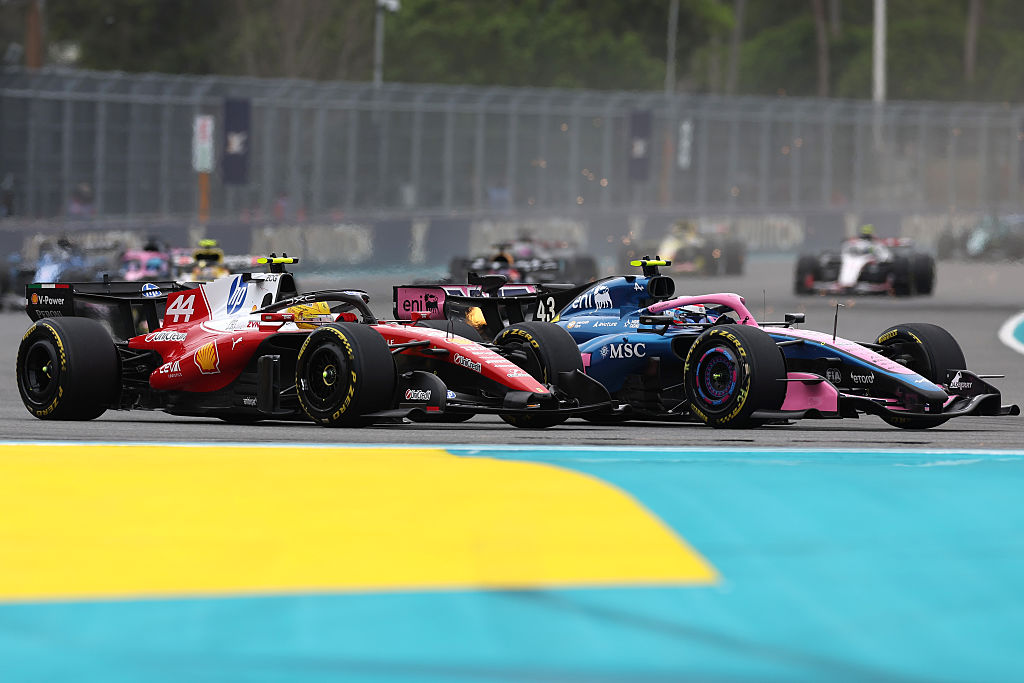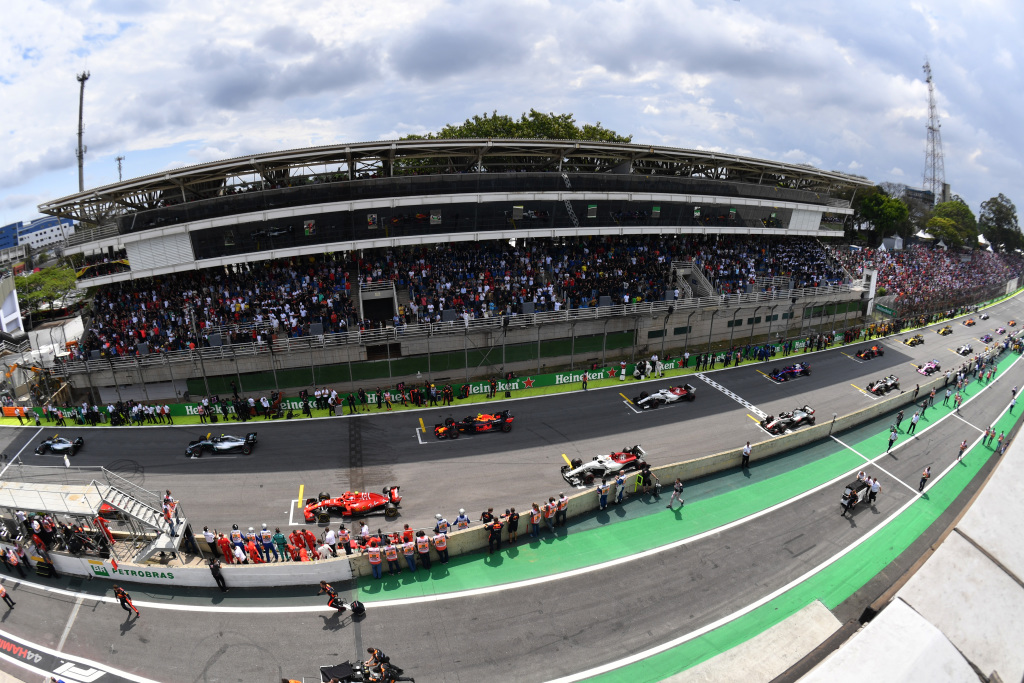
Jerry Andre/Motorsport Images
STRAW: Is F1 ready for new teams?
Formula 1’s regulations permit up to 26 cars to be entered for the world championship, yet we haven’t seen that many cars on the grid since the 1995 Monaco Grand Prix -- the last for the ailing Simtek team before it went into liquidation. It has always been tough and expensive to run a grand prix team, as the mortality rate of those that try proves, but the challenge has become exponentially more difficult in recent years to the point where few even seriously attempt to.
Yet the world is full of accomplished racing teams with proven track records both for building and preparing race-winning cars and raising the significant funds needed to do so. There was a time when it would be a logical step for a strong team in the junior categories in Europe, yet the chasm between an F2 and F1 team today is so vast that its absurd to look at one as a bigger version of the other. In reality, they are completely different entities. Even a top IndyCar team such as Ganassi, Penske or Andretti would effectively be starting from scratch were they to take on F1.
F1 teams today are huge engineering undertakings. To design, develop and build the cars requires enormous resources before you even consider what it takes to run the cars. After all, each team is allowed 60 operational personnel (defined as those involved with the running of the cars) in the paddock and they all use their full allocation because they are required.
But with F1 changing rapidly thanks to the introduction of what is initially a $175 million cost cap in 2021 -- with agreement close to lowering it to $145m in response to the COVID-19 pandemic -- and the simplification of the technical rules now due a year after, some hope this could bring new teams into F1.
The reality is a little more complicated. Despite the mooted Team Panthera Asia recently confirming it is still eyeing a place, possibly in 2022, it will remain ferociously difficult to make a new team work. After all, the bar for convincing F1 and the FIA that you are worth an entry is set extremely high and the public statements from them on aspiring entrants in recent times hasn’t been very encouraging.
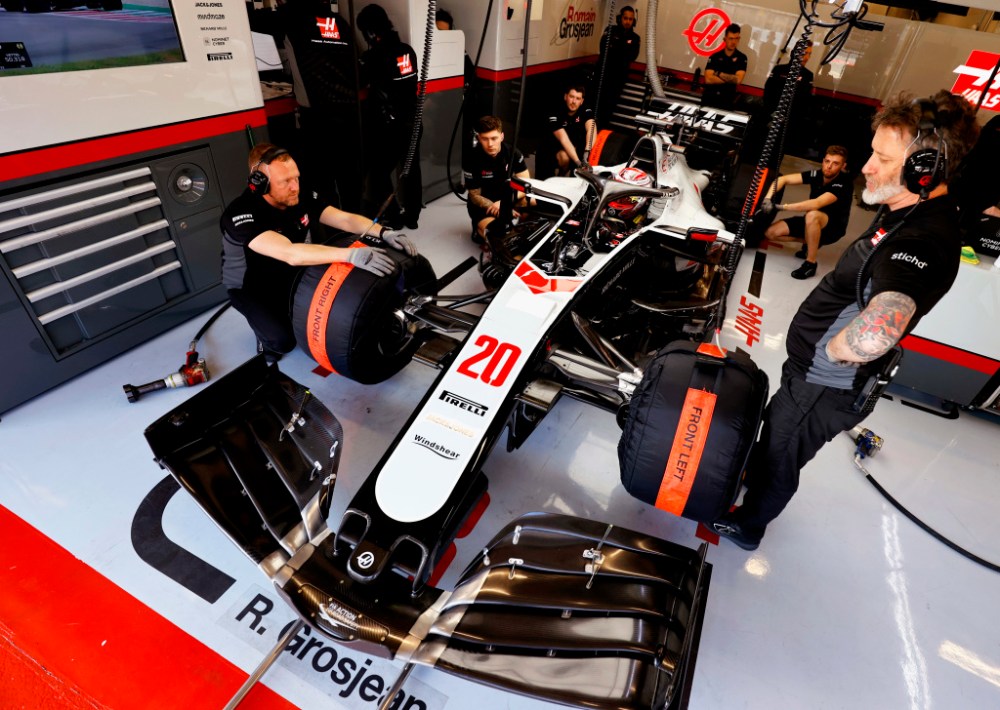
Haas has shown a way to immediately crack into F1 with a credible effort, but it would be a difficult path for others to follow. Image by Andy Hone/Motorsport Images
F1 teams today are hugely complicated. Haas is the only organization to have created a start-up team this century that is still operating and, despite being held up as proof it is possible, it’s really only part of a team. Haas is entirely dependent on its technical partnership with Ferrari and the use of Dallara as chassis partner to be able to produce its cars.
While controversial among some rival teams, it’s a perfectly legitimate way to set up according to the rules and it has allowed Haas to perform credibly in its four years in F1. Even so, owner Gene Haas suggested at the start of the year that he would be re-evaluating his team’s ongoing participation because of how difficult it is to make the numbers add up even with this unique structure. If what is effectively F1’s ‘poster child’ is struggling to see light at the end of the tunnel, what does that say about the impossibility of breaking into F1?
While customer cars remain a bone of contention, with Red Bull team principal Christian Horner advocating them as a possible way to help tackle the current financial crisis in F1 (it would certainly be very convenient for the Red Bull-owned AlphaTauri team), they are not legal. The regulations require teams to design and own the intellectual property to key areas of the car -- most significantly the aerodynamic surfaces. And aero is the key to performance, with development hugely costly.
This means the Haas model is workable, but only if you can be sure to get a close alliance with another team and can find a chassis design company capable, like Dallara is, of producing an F1 car. The fact is that there are very few of those around with the necessary experience and setup to do so. And even then, you need just over 250 employees and a significant budget just to run those cars.
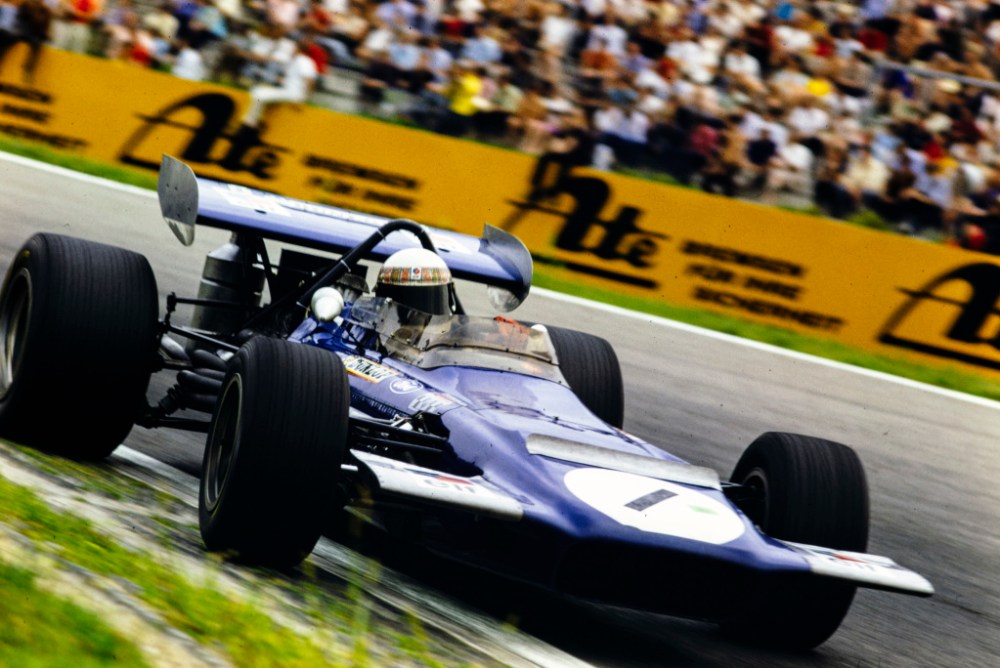
Jackie Stewart and Tyrrell made this customer March 701 a contender in 1970, but they are a rare example. Image by Rainer Schlegelmilch
On top of that, there is a natural ceiling to what you can achieve. When you are dependent on another team, it’s unrealistic to think you will be able to fight for titles. Only two teams in F1 history have ever threatened to do that -- Rob Walker Racing with Stirling Moss and Tyrrell when it ran customer March machinery in 1970 for Jackie Stewart -- and even then they fell short. So effectively, this model has to be seen as a way to, at best, get to the front of the midfield. Even with the hope the new rules will at least allow midfielders to nick the odd strong result, is that enough to justify the spend?
If you want to come in as a full-blown team, then you need vastly more staff and money. You will need to invest heavily in equipment to be able to design, develop, test and manufacture the cars. So as well as needing the annual budget of $145m -- realistically, the figure is higher as there’s all sorts of spending on top that is not included -- you’ll need to make significant capital investments to set up the team and equip it. And even then, you will be playing catch up for years against teams that have endless amounts of historical data, design work and expertise already built up.
Drawing interest from new teams was one of the objectives of the new rules. As F1 CEO Chase Carey said ahead of last season, “It is one of our strategic goals -- we want to make the sport more attractive to potential new entrants.” But as always things are not quite so straightforward. While a simplified, cost-capped F1 certainly makes it easier, that’s only a comparative term. Make the impossible slightly easier, and you are still only just within the realms of what’s possible.
But it’s worth asking how keen F1 really is on new teams. It definitely doesn’t want a return to the situation grand prix racing was in at the end of the 1980s and start of the '90s, when it was oversubscribed and some teams well short of the desired standard were attempting -- often very unsuccessfully -- to qualify for races. That’s a bad look and just creates problems, negative news stories and questionable associations for the brand.
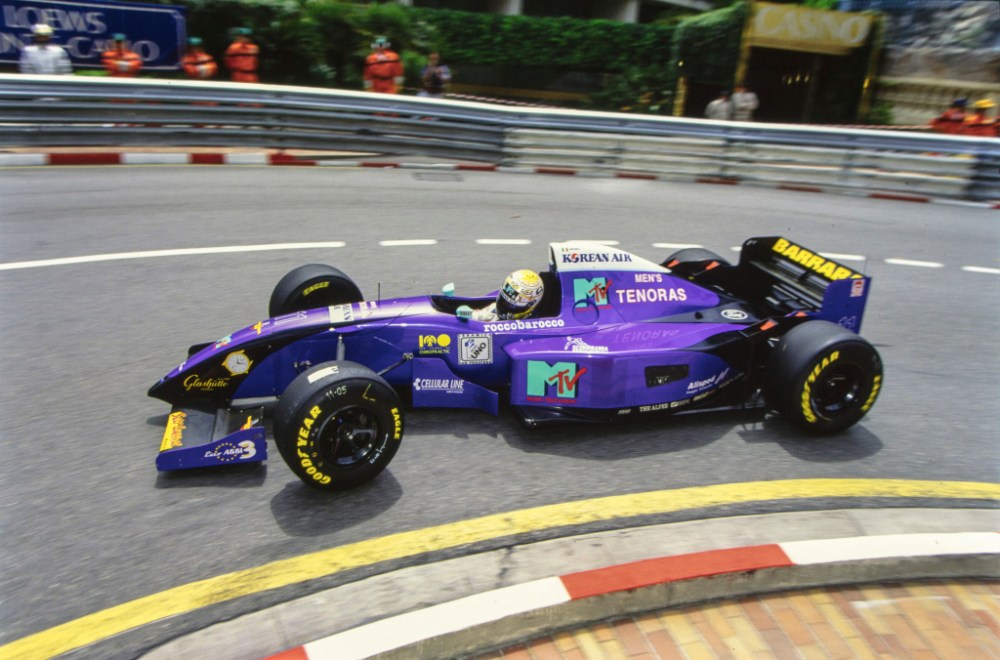
Insufficiently resourced efforts like Simtek, seen here in its final appearance at Monaco in 1995, offer a cautionary tale about what prospective entrants are up against. Image by Motorsport Images.
This doesn’t mean F1 can afford to cut itself off, though, and the risk is that this is effectively still the case. During discussions for the new commercial agreements that will govern F1 from 2021 onwards, the question of new teams was a thorny one. After all, the existing 10 teams are all part of the club and the majority of their income stems from the chunk of F1’s revenue that they share. If you try and share the same pie out between 13, you’re going to be getting a smaller cut than if you’re one of 10. F1 teams won’t see it as being in their short-term interest to let others into the club.
F1’s priority should be to ensure the ongoing participation and health of the 10 existing teams. They are the only 10 organizations capable of designing, building and running an F1 car in the world so form the core of F1. But they must also be protected from their own instincts for self-preservation, as there’s no question that a little fresh blood will one day be needed to ensure numbers remain high. And if a genuinely strong team emerged as a title contender, that could help to grow F1’s appeal. Increase the revenue and teams might be getting a slightly smaller share of a pie that’s worth significantly more.
That’s why F1 does need to do more to make it realistic for a new team to aspire to come onto the grid. There’s a marked difference between the look of a 20-car grid and one with 24-26 cars on television, it will allow more opportunity for drivers to break into grand prix racing, create more action, new stories and give new characters to help draw people into being interested in F1. As the Drive to Survive series on Netflix has proved, people are keen to engage with the personalities when presented in the right way.
There is a balance to be struck here. What perhaps will be more telling is what happens as the cost cap continues to glide below the $145m mark -- if, indeed, it does as there’s strenuous opposition in some quarters, including from Ferrari. And that’s not just what might be called typical Ferrari intransigence, as there are genuine concerns about F1 forcing job losses by regulation. That’s something that should be avoided given the impact it will have on real people trying to make a living.
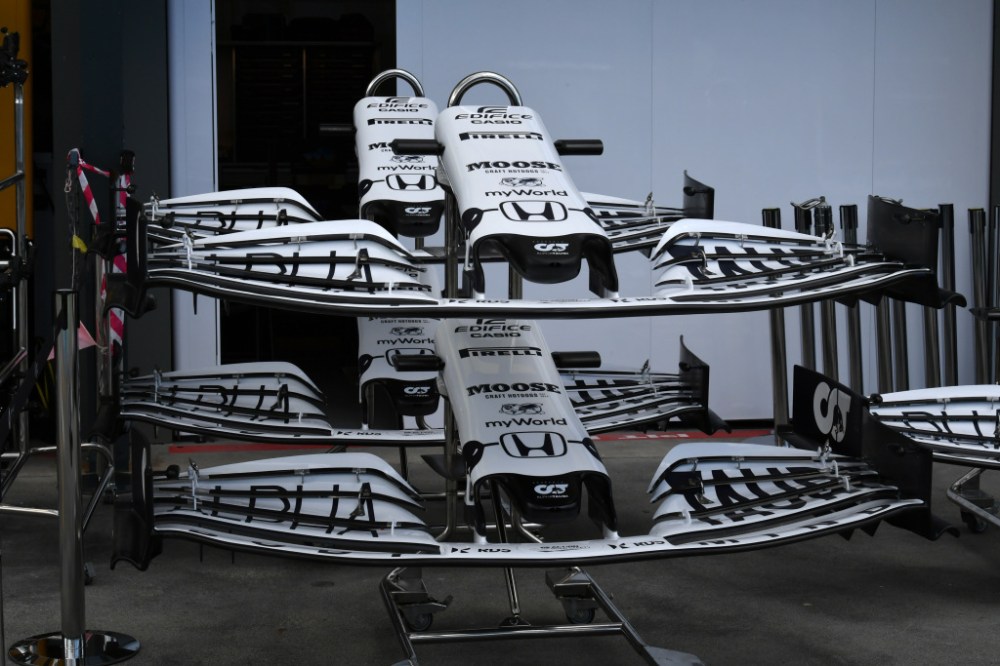
Surveys suggest that while fans want more competition, they also want innovation and car differentiation. Image by Mark Sutton/Motorsport Images
But lowering the cost cap should also ensure teams are more sustainable, and even raise the possibility of freeing up the regulations again to encourage more innovation and, potentially, variety. There will still be big teams and smaller teams, but given technical innovation always emerges as an important part of the appeal of F1 in surveys (and we can take that to mean innovation that can be clearly seen and, at its basic level, understood), this could also help F1 and the potential for new teams to come in and shake things up.
If the costs continue to come down, the on-track action becomes ever-more sellable (and we should remember that, despite the doom and gloom, F1 does remain hugely popular among fans who consume it across multiple platforms), then it will become that little bit more possible for new teams to come in.
This is what F1 should be aiming for. Retain the current selectiveness to ensure only worthy, credible, stable teams can get an entry but ensure that F1 is so successful that it has the pick of multiple serious applicants -- and for the same reasons also the engine suppliers to propel them. That can only be good for F1, which would be bigger and better than ever before -- for those watching and participating.
F1 should be in a position where successful team owners from other branches of motorsport can aspire to compete. Right now, the boss of a strong F2 or IndyCar team would justifiably laugh at the idea -- it would be a hugely risky and overly-ambitious objective. Unless, of course, they have infinite money burning a hole in their pockets.
A strong and stable 20-car F1 is a good thing. But 24-26 cars would be even better.
Presented by:


Edd Straw
Edd Straw is a Formula 1 journalist and broadcaster, and regular contributor to RACER magazine. He started his career in motorsport journalism at Autosport in 2002, reporting on a wide range of international motorsport before covering grand prix racing from 2008, as well as putting in stints as editor and editor-in-chief before moving on at the end of 2019. A familiar face both in the F1 paddock, and watching the cars trackside, his analytical approach has become his trademark, having had the privilege of watching all of the great grand prix drivers and teams of the 21st century in action - as well has having a keen interest in the history of motorsport. He was also once a keen amateur racing driver whose achievements are better measured in enjoyment than silverware.
Read Edd Straw's articles
Latest News


Comments
Comments are disabled until you accept Social Networking Cookies. Update cookie preferences
If the dialog doesn't appear, ad-blockers are often the cause; try disabling yours or see our Social Features Support.