Robin Miller's Mailbag for April 29, presented by Honda Racing / HPD
hpd.honda.com
and on social media at@HondaRacing_HPD
and https://www.facebook.com/HondaRacingHPD.Your questions for Robin should be sent to millersmailbag@racer.com. We cannot guarantee we’ll publish all your questions and answers, but Robin will reply to you.
Q: Recently saw that Eddie Gossage saying that as a promoter, you get no IndyCar TV money. Is this true? My God, how do they make any money, and what is the incentive for any promoter to run an IndyCar race? It’s no wonder the majority of races are promoted by Penske, and Green/Savoree. I mean, NASCAR promoters get 65 percent. Throw out the ISC tracks. How could any promoter sign a deal like this? What’s the business model, and how is it sustainable?
Liz Mitchell
RM: As I wrote on Monday, IndyCar promoters rely on paying customers, sponsors, suites, camping and a title sponsor to make it work, because there is no TV money (except for the Indy 500). If executed properly like at Long Beach, Road America, Gateway and Mid-Ohio, it can sustain its success. The FOX/NBC contracts keep NASCAR going, but we all imagine a big change coming when the next ones are negotiated. And R.P. promotes the Indianapolis Motor Speedway and the rest of the series, but Green/Savoree has four races.
Q: Well, this just seems typical. I moved to Richmond for work in late 2009, just in time to miss the last IndyCar race here. Now, after all this time, they come back, I scoop up some tickets, get a bunch of NASCAR-fan friends of mine pumped up to check out the better series, and the pandemic is threatening to extend that break by another year. (I really don't think racing is coming back in June, for what it's worth.)
I really was surprised to see the level of excitement from the NASCAR crowd, and these were generally guys under 30, so hopefully that keeps up whenever we do get back to it. Now, I did take that 2009 frustration and turned it into my first Indianapolis trip in 2011 to see Dan Wheldon win. I got hooked, and if we're racing in August, it will be No. 8 for me. I've read some mentions here about the radio network filling time with old broadcasts. I'm a Sirius XM subscriber, and I'm a little surprised that their IndyCar Racing channel basically goes unused except for actual live race weekends. As I listen to it now, it's just running its generic canned sports news that plays on all the team-specific channels when they're not playing. Do you know of any reason IMS is just leaving that channel lifeless?
Henry, Richmond, VA
RM: Not sure, but I sent your letter to IndyCar – lots of old Sid Collins tapes could be played throughout the week. As for Richmond, fingers crossed things have returned to semi-normal by late June so all your recruiting efforts don’t go in vain. Thanks for going above and beyond for IndyCar.
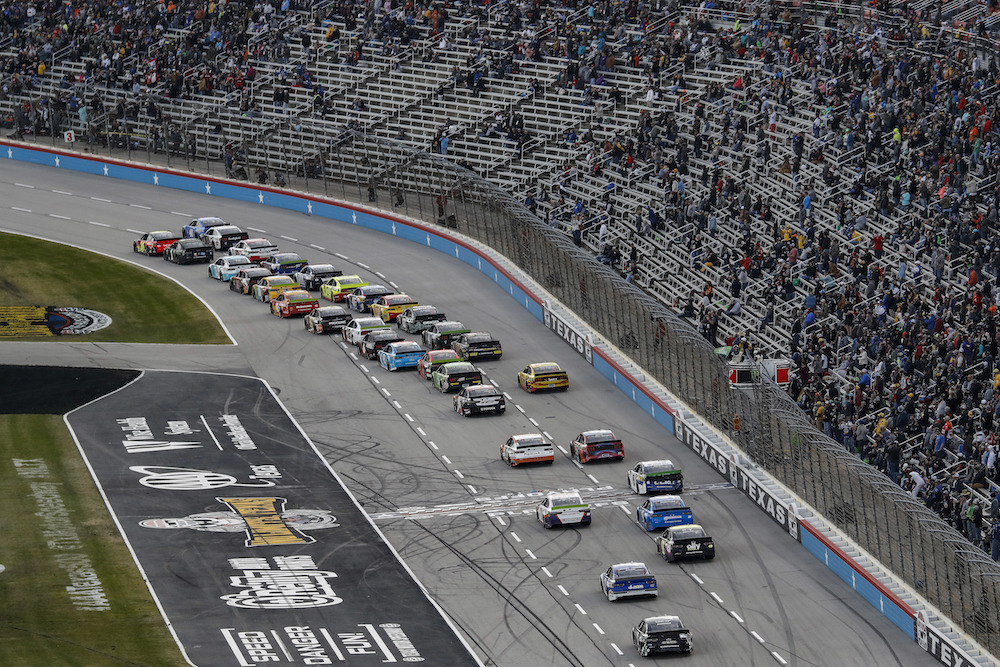
For tracks, revenue from NASCAR's TV deal means a chance to get back to racing whether crowds are allowed in or not. Image by Levitt/Motorsport Images
Q: Has Mr. Penske given any consideration to mid-week races during this fluid situation? For example, if a race like Texas, and others like it in the foreseeable future, is going to be run without fans, I don’t see the need to run the event on Saturday night or Sunday afternoon. Push it forward or back a few days, and do it Wednesday night in front a country thirsting for sports and entertainment. I’d be inclined to think ratings would be higher mid-week if run in the late afternoon or prime time, assuming auto racing is the only sport operating in the nation for some period of time.
Mark Schneider
RM: I think if you know anything about Mr. Penske you’ll realize he’s always thinking down the road and outside the box, so I would assume a televised, mid-week race is a distinct possibility if a promoter wants to take a chance. Obviously, NBC would play a large part in the decision as well.
Q: I have just heard that the French GP has been canceled and the UK will almost certainly impose a mandatory 14-day quarantine rule for anyone entering through at least the summer. This not only means no British GP, but almost certainly no F1 championship season this year. We have Penske working on deals to begin an IndyCar season sometime in July. Maybe an abbreviated 12 race-season, but still a season. It behooves the tracks, NBC and IndyCar (Penske) to work together to keep IndyCar in the public eye and giving sponsors and manufacturers maximum exposure. While this means creative thinking re: live crowds, I believe it is possible to fashion a 2020 season.
We should also realize that without significant competition in open-wheel racing on TV there is real potential here for IndyCar to fill a racing void on TV overseas. We will have Fred in for a few races and the 500, but how about Landon Norris coming over for some road courses as well? Difficult to arrange, but go for it. COVID-19 is creating quite some havoc and pain so it would be good to see some real racing ASAP.
Ian (Jardine), Charlotte, NC
RM: I think it’s obvious that R.P. will exhaust every avenue to get IndyCar as much exposure as possible, but he can only do so much. And The Captain wants to start the season in June if possible but, again, he’s at the mercy of the virus and the government’s edicts.
Q: I understand the governor of Texas is pushing for TMS to have a NASCAR race without spectators, I also understand Silverstone is wanting to hold two F1 events without spectators. Any chance we could get some IndyCar races on pay-per-view or whatever medium without spectators? This should be feasible on permanent road courses or ovals. Ask Roger to figure out break-even plus some profit and start selling refundable presales, or at least do a poll to gauge interest. If he hits his profit number, it’s a go.
If Indy, for example, sells 250k tickets plus concessions, parking and whatever other revenue, just add it all up and that’s the price pay-per-view. I would be shocked if we did not get well over a million willing viewers. I would pay an amount equal to an average race ticket for a live streaming broadcast, pay per view, whatever works! How much? I know it’s a crazy idea, but I am desperate for real IndyCar action. If they can do it for boxing, which can be over in five minutes or less, an IndyCar event is great value.
Sean, Vancouver, BC
RM: Any race IndyCar holds in 2020, with or without spectators, will be covered by NBC or NBCSN, and I realize that might limit Canadians that can’t buy or don’t want the proper cable package, but doubt there’s any kind of provision in place for any pay-for-view. I’ll be happy to ask IndyCar, though.
Q: The recent poor choice of speech by Kyle Larson reminds me of the multi-part article on Marshall Pruett's website about Willy T. Ribbs' sour introduction to Indy. Ribbs made it clear that chief mechanic Paul Leffler was not interested in helping him get up to speed, and says that Leffler was the biggest racist he'd ever met in racing. You are also quoted in the article, but did not mention racial tension.
Knowing nothing about Leffler beyond his role in this story and his USAC involvement, could it be that he was against Willy T because of his racing background (road racing instead of sprints & midgets) rather than his race, or was he truly a racist? In other words, perhaps he perceived racism through Leffler's open hostility to "another damn road racer" coming to Indy? Though William Theodore has a tendency to exaggerate for effect, I don't want to accuse him of lying. However, racism is a highly serious charge, and I wouldn't want to have this opinion of Leffler based upon only one man's perspective.
Steve in Redding, CA
RM: I’m friends with Greg Leffler (former USAC sprint champion), but only knew Paul from afar and he was an old-school mechanic who did things his way. Having said that, I was sitting on the pit wall when Willy went out, and with no windshield and a turbo for Milwaukee, it was probably about as uncomfortable a ride as anyone could have imagined. A couple people joked that Willy was so scared he “turned white”, and there were some racial undertones to that whole scene. Not saying Leffler was a racist, but also not saying he was unhappy when Ribbs walked away.
Q: Kyle Larson seemed to dominate last week’s Mailbag, which brings me to a memory of Conor Daly losing his sponsorships over his father saying that word before he was even born. I know we are talking nearly a couple decades away, but let's say Owen Larson pursues racing, could you forecast the possibility of him having trouble gaining sponsorship in a major racing series such as IndyCar or NASCAR just because of something his father did some time ago? With so many different drivers trying their hand at iRacing IndyCar, who would you love to see iRace an IndyCar next?
Kevin from North Carolina
RM: No I can’t imagine that, and the account of Derek Daly’s faux pas was widely inaccurate in terms of facts and who said what and to whom. Conor lost his sponsor that weekend, but kept his ride. We’re a pretty forgiving place, so I think Kyle will be back on track sooner than later because of his talent. And, please, no more iRacing.
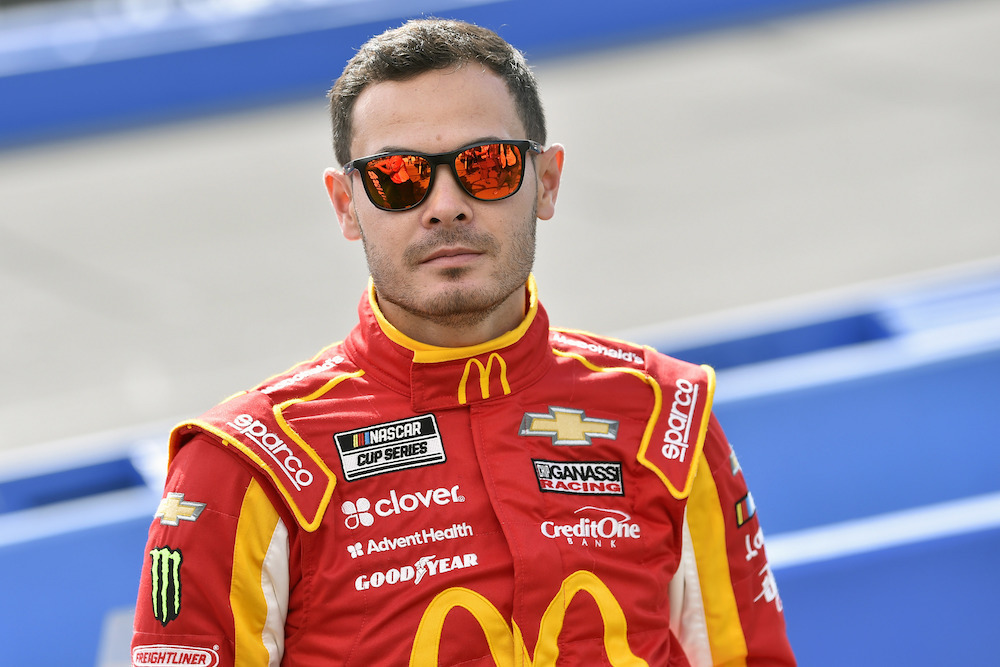
Regardless of where you stand on the Larson controversy, we can all agree that Chip doesn't get these sorts of headaches from Scott Dixon. Image by Kinrade/Motorsport Images
Q: I am an F1, IndyCar, IMSA, WEC, etc., fan. I watch a few NASCAR races a year, but am not a Kyle Larson or NASCAR fan. What little I know of Larson is that he appears to be as good a driver as anyone in NASCAR today. The word he used has become forbidden in today's hand-wringing, "so sensitive" society based on solely who says it. Skin color, context, political position, etc., of the speaker, are the sole determinants of the acceptability of the use of the word by any particular person. We all need to grow a pair and focus on what is really important in out lives. Namely God, family, and the liberty that allows a person to become anything he wants to be America if he is truly willing to work at it.
I guess I just miss the days when "men were men," when differences of opinion were tolerated, when A.J. Foyt could punch out Arie Luyendyk in the winner's circle, and when Michael Andretti could scream in his radio on TV, "these f****** Goodyears." Kyle Larson will race again in the big time. He's too good not to. This "sin" will blow over for the sole reason that ultimately, it means nothing. And when that time comes, I think I will probably watch him and become a Kyle Larson fan. Even if he drives NASCAR!
Bill
RM: The greatest endorsement Larson got came from Willy T. Ribbs after they talked on the phone. Obviously it was a poor choice of words in what turned out to be a public forum, but W.T. said it wasn’t used maliciously and he didn’t think Larson was a racist. And time will heal and Kyle will again be racing. Like Ribbs said: “he didn’t murder anyone.”
Q: My condolences to the Lazier family. Bob sounded like a great guy and real success story. I almost fell out of my chair when I read that he bought his first lot in Vail for $7,000! The fact that their family ran in recent years at Indy was so cool and really refreshing to see. It sounds like he could have had a good racing career if he would have stuck with it. What are your memories of him?
Tate in Kansas
RM: Just that he got a late start in Indy cars, but was always pleasant and thankful for the opportunity. Then he was so proud of Buddy and Jacques, and super-excited for Flinn’s future.
Q: Roger Penske’s purchase of IndyCar and the Speedway has me thinking back to the formation of CART and the formation of the IRL in response. As I recall, CART was formed to gain control of open-wheel racing with the goal of improving the economics of the sport. I remember a TV interview with Penske and Chris Economaki on ABC's Wide World of Sports where Penske said “I’ve got a $100,000 car racing for a $10,000 purse and that just doesn’t make sense” at a race in Trenton.
When Tony George formed the IRL, CART staged the U.S. 500 at Michigan in 1996 as an Indy 500 alternative. Why did CART stop the U.S. 500 after one year? It seems that CART’s ultimate objective should have been to run the IRL and the Indy 500 out of business; part of that strategy should have been to continue to have an alternate to the 500. Then, with the IRL gone, CART returns to the Speedway as the sanctioning body and achieves its objective. Instead, all CART talked about was “finding a way to get back to Indy” after that first U.S. 500.
Who was running the business strategy at CART? Did they really have a plan, or did they just expect USAC and the Speedway to fold? Obviously, CART had no Plan B. All of that is very un-Penske-like. Why didn’t CART aggressively try to run the Speedway out of business? Instead of the IRL buying Champ Car out of bankruptcy, it would have been the other way around.
Ultimately, Penske abandoned CART when the tobacco advertising rules prohibited him from running his Marlboro-branded cars both in races sanctioned by CART and the IRL sanctioned Indy 500. He had to pick one sanctioning body. Once Penske left, CART was finished. Had the tobacco advertising restrictions not been so tight, would Penske have continued with CART? During his press conference announcing the Speedway purchase, he made some oblique reference to breaking away with CART being a mistake. It seems to me that CART’s tactics were a mistake, not the objective, which ultimately, was achieved with Penske’s purchase of the Speedway.
We all acknowledge that The Split did irreparable damage to open-wheel racing from which it may never recover. Looking back, it looks like CART really didn’t have the stomach to do what was necessary to achieve their goals. As a result, everyone lost.
Bill Carsey, North Olmsted, OH
RM: Tony George thought CART’s sponsors would force their hand and come run Indianapolis in 1996. It didn’t happen. CART figured the IRL would die on the vine because of the lack of big-time teams and money. They were both wrong, and NASCAR ended up being the winner.
Q: I was listening to the King Hiro podcast the other day and they were comparing 1998 CART to present day. The gist was that the 1990s represented one of the greatest decades of IndyCar racing. They mentioned you were more fond of different eras (i.e. '60s and '70s). Do you think the '90s were comparable in terms of excitement, crowds, and general interest to earlier decades?
Bruce in Iowa
RM: CART in the 1990s had the largest crowds, best sponsors and more international notoriety than at any other time since the British Invasion in the 1960s. The racing and depths of teams were also better than in the 1960s, 1970s and 1980s, and right now it’s more competitive than ever. Old guys like me miss the innovation and 50 cars going for 33 spots, but in terms of exciting finishes at Indy, you cannot improve of the past few Mays.
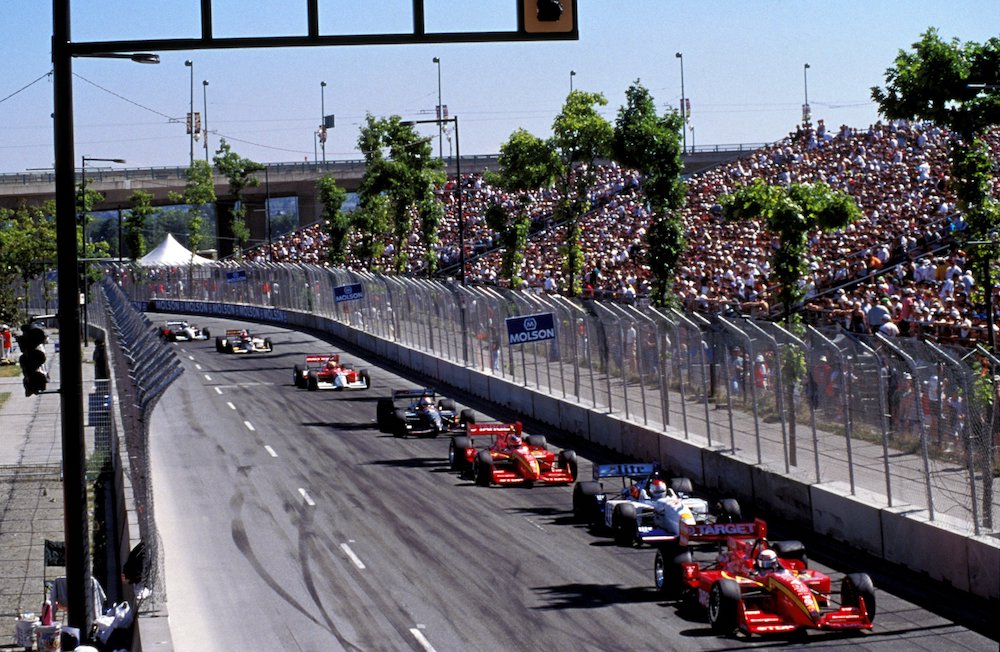
The '90s gave us the X-Files, Hootie and the Blowfish, eyebrow rings and some pretty phenomenal open-wheel racing. Image by Motorsport Images
Q: Why is it OK for Simon Pagenaud to weave back and forth like he did on the last lap of last year’s Indianapolis 500 and last week’s race? It seems to me like blocking. Your feeling?
Paul Fitzgerald
RM: Naw, that’s just the new groove at Indy, and there is ample room to pass at the end of the straightaways, as we saw.
Q: What happened to the last IndyCar iRace being a "non-IndyCar Dream Track"? It's now a virtual race at IMS? Sorry, but the original idea was so much better. The chance to see Indy cars at a place like Talladega, Bristol, Darlington, Mount Panorama, Spa, etc., was the only iRace I was actually looking forward to. I appreciate the effort put into these races, but seeing a virtual Indy 500 is just a depressing reminder we won't be there for real Memorial Day weekend.
Dennis C, Lake in the Hills, IL
RM: I’m told the fans voted online, so I have no idea why they wouldn’t want to see something different instead of IMS.
Q: I’m sure from what I see online you will get this a lot, but IndyCar has screwed us fans on the dream track they promised us. A vote to go anywhere in the world, and they pick Indy? I’m done with this series now, because as fans we were lied to.
Rick
RM: Not sure you can blame IndyCar for the selection – it was made by the majority of fans who went online to vote.
Q: I’m a new convert to iRacing. I, like you, am a ‘Get Off My Lawn’ guy.” But I tuned in a few weeks ago and now I’m hooked. Why? Racing is cool (let’s face it I’m home and bored) all across the board. But my biggest takeaway? All the different drivers (NASCAR, IndyCar, NHRA, etc) trying their hands at all different types of races. Gold! But my fave is the interactions and good-natured joking with other racers and commentators… it’s fantastic! Terrific for younger iRacing fans to get exposure for IndyCar. My two young boys look forward to iRacing every week. I believe that this will help give our series some great exposure, and I’m all in!
Jim Bishop
RM: Like I’ve been saying, I’m not a fan, but if iRacing creates new, younger fans then it’s working, and it seems to have been well-received.
Q: Hope you’re doing OK in this madness. Just wanted to say I follow Pippa Mann on Instagram, and she had a post the other answering fan questions about sim time. She said that she has trouble with some of the more primitive systems because she gets headaches from the graphics. She also said she can’t afford a full-motion setup, so that’s why she hasn’t done any races. I don’t know much about the sim world, but it seems plausible to me. Take care!
Jon Jones, Oologah, OK
RM: Thanks for that update, Jon. Just figured she’s pretty social media savvy and that would have seemed to be right down her alley, so this explains it.
Q: I’m a long-time reader and fan. I was planning to go to the 500 for the first time this year. Hopefully it will be open to spectators in August. As far as iRacing, I was hardly interested in it but after viewing it, I want my own sim!
As an idea, would it not be in IndyCar’s best interest to set up a league in the off-season to keep fan interest up? Why not have a series with the drivers and feature tracks like Silverstone, Spa, Turkey, Nurburgring, Suzuka and Bathurst? Indy could also promote a Drive to IndyCar event iRacing in October and November for amateurs. The top three-six in the points would get slots in the league with the regular drivers. It would be a great feature on the IndyCar app. Then in January to February, hold the series with the drivers and amateurs with a purse (or a prize of a trip to the 500) for highest amateur. Any good idea to promote the IndyCar series is needed. Hopefully the season gets going soon!
Jim Colflesh, Reading, PA
RM: I think there’s a distinct possibility something like this could happen because of the sudden interest, and when you don’t race for six months, anything to keep you on the radar has to help.
Q: I continue to watch old races from the CART/Champ Car days during this quarantine, specifically from the 2006 season when A.J. Allmendinger came to Forsythe and won the first three races he drove for them, and ended up winning five total that season. I can’t help but wonder why on earth he would go to NASCAR in 2007 after the kind of season he had in Champ Car? He was easily going to be one of the best drivers in open-wheel, there’s no doubt about it, and he completely threw his motorsports career away by leaving. Was it because of money? I mean, come on, you don’t just win five races in a season and call it quits.
Paul, Lake In The Hills, IL
RM: It was mind-numbing that he would leave Champ Car and Michael Cannon to go try NASCAR, because he had jumped in and started beating Sebastien Bourdais. I do think it had something to do with Gerry Forsythe not wanting to pay him accordingly, and there also might have been some pressure from Red Bull, but it was not a good career move – even though he probably made a lot more money in NASCAR.
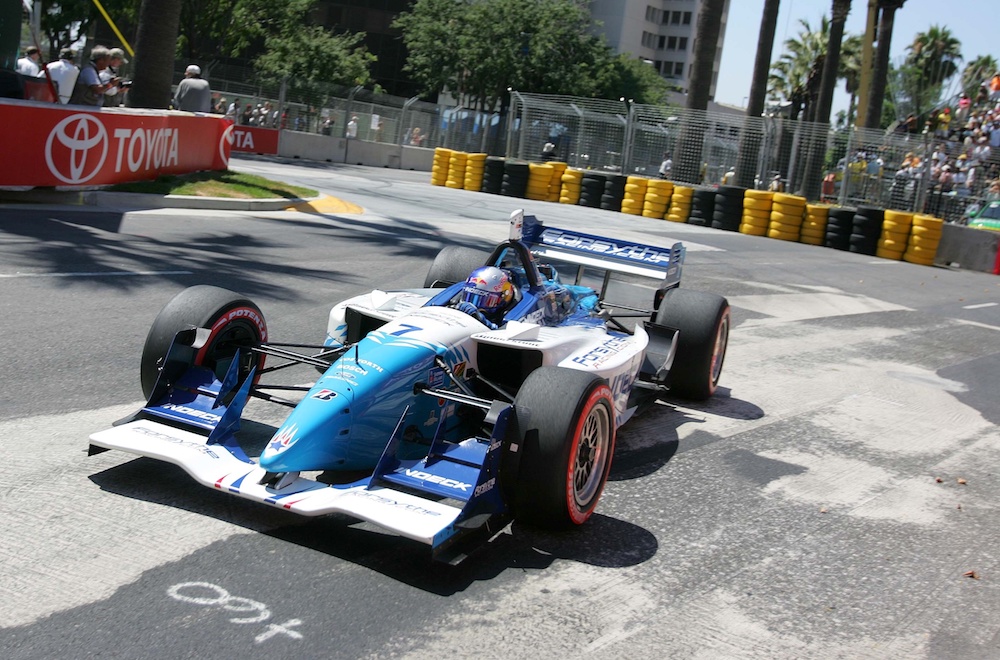
What might have happened if he'd stuck around in open-wheelers? Image by Motorsport Images
Q: As we all go a little stir crazy with no real racing action (although I have enjoyed the sim racing much more than expected), I was wondering where all the female racers have gone in IndyCar? There's no doubt that Sarah Fisher and Danica Patrick were some of the most popular racers when they competed, and it seems like IndyCar has lost something without the women competing. IndyCar is one of the few sports where men and women can compete on equal terms (at least theoretically), which certainly helps its fan appeal. Are there any women in the lower ranks or elsewhere that you think will move over to IndyCar in the near future?
Ed, Hickory Hills
RM: Katherine Legge is certainly capable but just needs a ride, while Holley Holland and Kaylee Bryson are coming up the USAC midget ranks for Keith Kunz. I think I saw somewhere Pippa Mann said this would be the first time in 20 years no women are entered at Indianapolis – quite a streak. But the hottest female on four wheels may be Hailie Deegan, who has Monster Energy behind her stock car career.
Q: My first race was 1970 at DuQuoin, Illinois where I watched Al Unser pass A.J. Foyt for the win and A.J. then rolled his car. I remember it like it was yesterday. I then became a lifelong fan. I was five when my Dad took me to that race. I have been watching the old 500s on YouTube and I now realize just how close A.J. Foyt was to that fifth Indy win.
In 1982, he was fast and smooth and the transmission breaking had nothing to do with the crash at the start. But when A.J. took the lead on the restart, not knowing the condition of handling on the car, was the greatest A.J. moment for me. Also, he was the car to beat for the first half of that race. Where there other 500s after 1977 where Foyt was closer to victory than we realize – or was 1982 really the last year he was competitive?
Larry Beattie
RM: That was impressive, leaning on that suspension not knowing how it’s going to respond, but alas, that was A.J.’s final time leading Indianapolis. In 1991 he qualified in the middle of Row 1, but was no match for Mears or Michael that day.
Q: Why doesn't IMS write into the entry form that IMS has physical control of the winning car for one year and then it's returned to the team? I know NASCAR has something similar written in, and they have the winning car placed in the Daytona museum. Let the winning team use it for their sponsor events. I'm thinking IndyCar should transport the 500 winner to every race and have it on display with the Borg-Warner Trophy (gotta keep Steve Shunck busy) and the Indy 500-winning driver doing an autograph session at each race. How about photo ops for fans and celebs with the car? Keep it in the IMS Museum when not needed on the road, and take it and the winning driver to the Goodwood Festival of Speed and drive the car up the hill. That would be a tradition that would make international news. We gotta think outside the box and make changes to bring IndyCar back to where it deserves to be – on top!
Dave Sutton
RM: Not real sure displaying the Indy winner is going to do that much for IndyCar’s profile, but it would always be nice to have it in the IMS Museum over the winter.
Q: Recently NBCSN has been replaying old races, and with nothing else on TV of course I'm watching. I re-watched 2015 Fontana and 2016 Texas, both of which were incredible races. The 2015 Fontana was pack racing the whole way, with tons of lead changes, and was really terrific because it's certainly something we don't see much anymore. As the race came to a close Will Power crashed, and Ryan Briscoe somehow avoided serious injuries after going airborne and upside down in a crash with Hunter-Reay.
After the race, Power and TK both complained about the dangers of pack racing and questioned why the series goes to tracks like Fontana. I understand their complaints entirely, especially after seeing the replay from Briscoe's car where avoiding a head injury was pure luck. With that being said, do you see the aerosceen allowing the series to consider more ovals and faster racing? Now that the drivers' heads are protected, it seems like the greatest safety concern for ovals has been addressed. Keep up the great work!
Ben, Crystal Lake, IL
RM: I think ovals are more about whether there is a viable place for them on the schedule than running faster or being safer. Pack racing is insanity and hard to watch sometimes, but obviously makes for some amazing action. Indy seems to have the right amount of separation, and it’s still a helluva show.
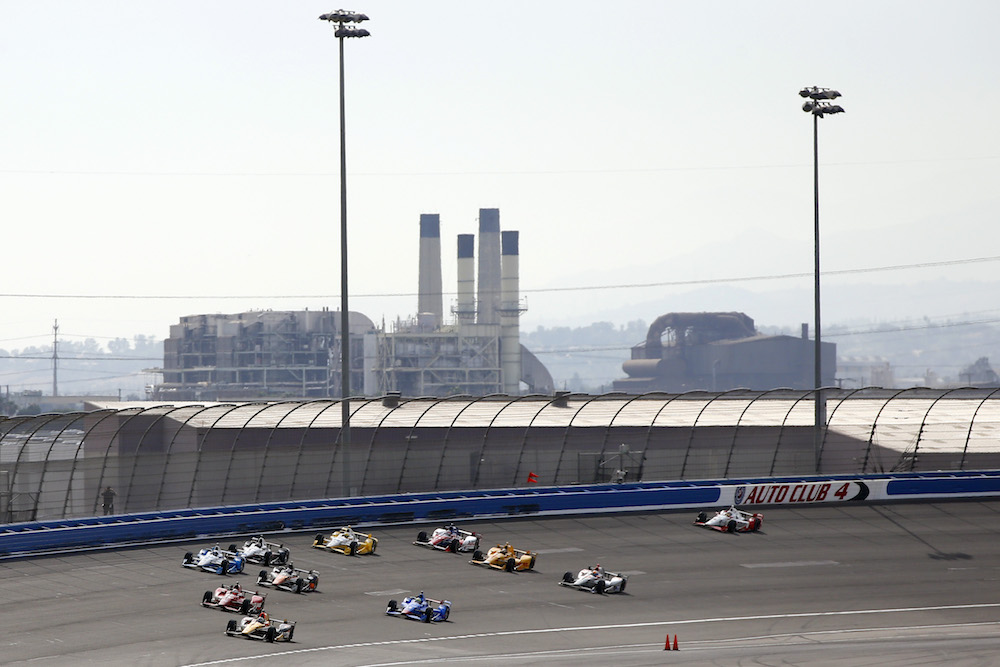
Fontana 2015 was pretty crazy. Image by Ellman/Motorsport Images
Q: A thousand thank-yous for all you do for the sport. As work from home is becoming the norm, I have started going back to old races in the background while I am working (YouTube is great for this).
I just finished the 1995 CART season, and it was a great trip down memory lane. It was great racing, great tracks. I firmly believe that current IndyCar also offers the same: great racing, great tracks. But that attendance in 1995... I am absolutely astounded by how many people they packed into the stands. It seemed like every single race was at capacity. I understand The Split had ramifications with regards to loyalty, but what were some of the other factors that lead to the decline in fan attendance/interest?
Alan G.
RM: Well, let’s take Milwaukee as an example. It was the bastion of Indy cars forever, and always followed the week after Indianapolis. But even though the crowds were still good for CART in 1996-1999, they began to fall off because those drivers and teams didn’t compete at Indy. Then the IRL started going, so we had two series with different dates and people got tired of the politics. But the attendance in 1993-94 with Nigel Mansell was unsurpassed.
Q: My work from home life has sent me spiraling down several YouTube rabbit holes. Yesterday I found myself watching a quick 10-minute piece on the one and only IndyCar race ever run at Daytona in 1959. Qualifying speeds were 30mph faster than the pole at Indy that year. I can’t imagine a modern-day IndyCar running the banks there, much less the tanks from back then. Talk about ballsy! Couple of questions. One, do you think we will ever see IndyCar at Daytona (I would assume on the road course), and two, if they ran the oval, what type of speeds do you think would be reached? I’d think Gil de Ferran’s California mark would be in jeopardy.
Desmond, Oak Lawn, IL
RM: IndyCar tested at Daytona’s road course a few years ago, but I don’t think anyone ever seriously considered staging a race. I think it would be very difficult to draw a crowd. As for speeds at Daytona, I imagine with the right tire they could be 15mph quicker than IMS, but there’s absolutely no need to try. It proves nothing.
Q: Could you share some experiences you had with these fine folks lost on 4/25/1978: Ray Marquette, Frank Del Roy, Shim Malone, Judy Phillips, Stan Worley, Ross Teeguarden, Don Peabody, Dr. Bruce White, and pilot, Don Mellendore.
Dave Parker, Cincinnati, Ohio
RM: Well, Ray was responsible for getting me a job at The Indianapolis Star in 1968, Peabody was going to be the best supervisor USAC ever had, Frankie was a fixture in technical officiating, Bruce an up-and-coming medical man, Stan was everyone’s pal and Shim had progressed from flagman to USAC midget supervisor. Didn’t know the rest of those folks, but Dr. White asked me prior to the race at Trenton if I wanted to ride home on that charter because there was an empty seat. Luckily I was taking my pal Bobby Grim into New York City that night, so they asked three other people before Judy accepted their offer.
Q: Since you have been covering auto racing for a very long time, did you ever race yourself? If so, what series did you drive in?
Chris Fiegler, Latham, NY
RM: Yep, lucky enough to run USAC midgets from 1975-82 -- starting in Merle Bettenhausen’s old Turner and winding up in Gary Stanton’s first midget. Had one great day at Terre Haute, lots of mediocre ones and a few mindless brain fades, but best times of my life.
Q: During these quarantined times, I'm keeping myself busy by compiling a list of all the racetracks that Johnny Parsons has raced on. I'm creating his list from online and old newspaper sources. Tedious work, but very rewarding! He's had a fascinating career. I'm up to 143 tracks and counting.
In February 1977, he promoted a race inside Louisville's Freedom Hall. I attached a review of the night that I found interesting. I found an old Mailbag in which you mentioned being there.
My question – do you recall if they trucked in dirt to race on, or was that race held on the concrete floor? That building has done it both ways in other years. Also, other articles before the event said that J.P. was scrambling to find a ride because his normal car owner had a heart attack. Curious if you remember him getting in another car or not? I reached out to J.P. on Facebook, but he didn't reply. Understandable if he doesn't want to be bothered.
Todd Shannon, Pleasant Prairie, WI
RM: No dirt, just the concrete, but I know I offered my car to him for the feature and I think he might have driven it. J.P. was a damn good racer.
Q: Whatever happened to Jim Gilmore (Foyt/Gilmore Racing)? What was his connection to A.J., and did you two ever come to blows like you and A.J. did?
Brandon S.
RM: He sponsored A.J. for many years and was a TV maven from Kalamazoo, Mich. Gilmore Broadcasting started out sponsoring Gordon Johncock and then Jim became a Foyt fan. A really nice man with a great family. Never heard him raise his voice.
Q: Some comments and questions to help pass the shut-in. In 1998, A.J.’s car for Billy Boat was sabotaged the night before the Indy 500. What is the full story? Who, why and what did they actually do to the car? A.J. said at the time he immediately knew someone had gotten into the garage – how did he know?
A couple of Mailbags back, a reader was asking about Johnny Carson driving the turbine car. I was there with my dad that day. It was great back then – the track would open Grandstand E for free. Carson was first tutored in a pace car by Parnelli, then got into the turbine surrounded by film cars. After a few laps Carson said he simply “goosed it” a bit on the back stretch and pulled around the lead film car for a couple of laps on his own.
As a native Hoosier, and more specifically, a native of Indianapolis, I have had fun noticing things unique to Hoosiers, like playing euchere. Diagonally across the street is “katy corner” to a Hoosier, not “kitty corner.” But more applicable to the Mailbag – a native from Indianapolis never calls IMS the Speedway, but simply the “Track.”
Mike in Texas
RM: I seem to recall something about Loctite being placed in an injector or something along those lines, and I remember writing something about the grassy knoll in Turn 2, but I have no other information.
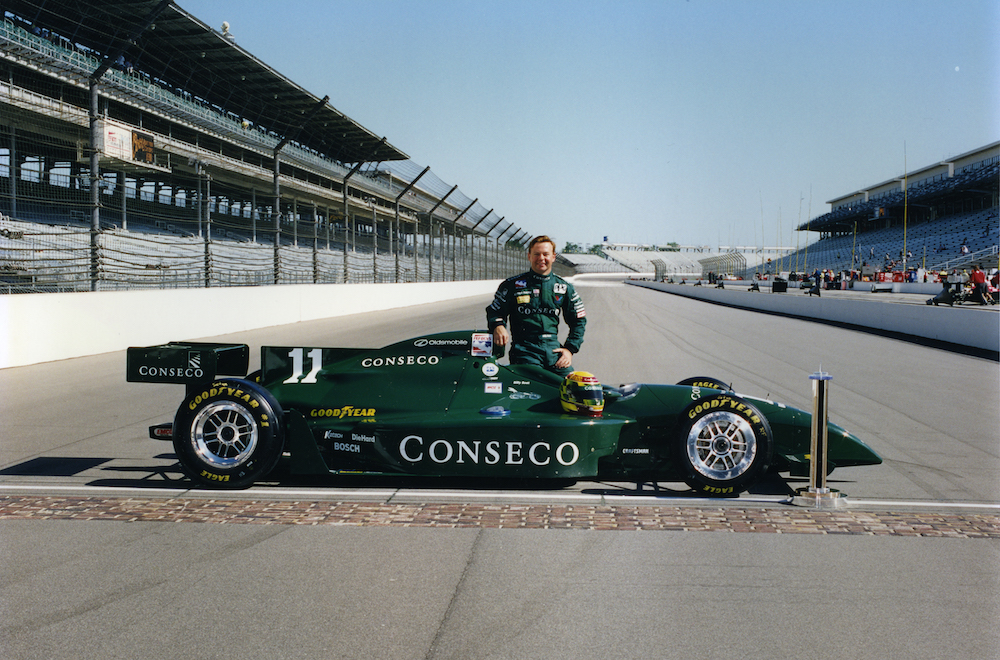
Saboteur not pictured. Image by IMS
Q: Wondering if you have any stories about the guys who would spend the entire month of May camped out in a corner with their telephoto lenses capturing all the action for the wire services, yearbooks, etc.? As a kid I thought it looked like pretty neat thing to do, and I eventually made a career out of motorsports photography and then got to shoot many IndyCar races just for fun, and had a few pics in Open Wheel. The names I recall from the '70s and '80s are Mahoney, Crucean, Gladback, Tom Dick, and the guy I really got a kick out of was Lloyd Masing sitting in the first turn on his swivel stool with his customized Nikon motordrive that was one or two frames faster than everyone else. And finally, since you were a newspaperman, did you ever make an attempt to shoot action shots for the Star?
Steve, Dubuque, Iowa
RM: Just remember Tom Dick always driving down to The Star on a Sunday night with action shots, or someone delivering Masing’s latest crash sequence. Crucean and Mahoney are national treasures, and Gladback was really good as well. Those guys and Jim Chini set the bar really high, and their passion was always evident. I never took a photo, I couldn’t load a camera.
Q: My best friend's dad grew up in Indianapolis, and every May we get talking about memories of past 500s and stories he has, but they're usually Carb Night and our memories may be a little distorted. Several of these were in the '70s, and he had a family friend connected to Mike Mosley's team. He remembers a crew member named Harold "Tilt" Millican, who seemed to be running the team. The nickname was from an injury that caused him to walk with a limp, and maybe even a real tilt from one leg being shorter than the other. Do you know who he's talking about, and have any stories you'd like to share about him or the team? My friend's dad would love to find out more about him. Thanks!
Kyle Jenkins, Edwardsville, IL
RM: Howard Millican grew into racing with Bobby Unser, and there was no funnier or more talented person than Tilt. Whether it was driving a tank into a bar, fixing the transmission on an Indy car, causing a scene at a truck stop or machining parts, Howard was a mainstay in auto racing for four decades. His son, Ronnie Dawes, is also quite astute, and was the engineer for Buddy Lazier’s 1996 Indy 500 win. I still have lunch with him once a week.
Q: I know that naming corners (other than the turn number) is a road course thing, and there are several corners of famous tracks that are notable, like Ste Devote, Eau Rouge, Maggots and Becketts. Oval racing typically just calls them Turns 1 through 4, but since Indy is Indy, how would the suggestion of naming the four turns after the four-time winners (even though we only have three so far) go over? We could have Foyt Corner, Unser Corner, Mears Corner, and the fourth turn to-be-determined (which could be a talking point whenever there's a three-time winner in the field). Or, wait until we have a fourth four-timer and do it then. Even if only ceremonial, it might add a unique distinction. What say you?
Brian in Indy
RM: Well it’s certainly worth considering, although like you said, it’s a road course thing. But I’ll forward your suggestion to IMS.
Robin Miller
Robin Miller flunked out of Ball State after two quarters, but got a job stooging for Jim Hurtubise at the 1968 Indianapolis 500 when Herk's was the last roadster to ever make the race. He got hired at The Indianapolis Star a month later and talked his way into the sports department, where he began covering USAC and IndyCar racing. He got fired at The Star for being anti-Tony George, but ESPN hired him to write and do RPM2Nite. Then he went to SPEED and worked on WIND TUNNEL and SPEED REPORT. He started at RACER when SPEED folded, and went on to write for RACER.com and RACER magazine while also working for NBCSN on IndyCar telecasts.
Read Robin Miller's articles
Latest News
Comments
Comments are disabled until you accept Social Networking Cookies. Update cookie preferences
If the dialog doesn't appear, ad-blockers are often the cause; try disabling yours or see our Social Features Support.