Image by Dunbar/Motorsport Images
The RACER.com Guest Mailbag with the Haas Formula 1 team
Welcome to the RACER.com Guest Mailbag, where this week we're pleased to welcome the Haas Formula 1 team up to Mailbag Towers.
The only U.S.-flagged team in Formula 1, Haas has established itself as a regular upper-midfield threat in its four years of racing; an achievement made possible in part by a budget-conscious approach built around a technical alliance with Ferrari that helped it to avoid many of the financial tripwires that have taken down other fledgling teams.
Team principal Guenther Steiner and drivers Romain Grosjean and Kevin Magnussen stepped up to the plate to take questions from RACER.com readers, and we'd like to extend them a huge thanks for being so accommodating.
If you missed the first Guest Mailbag with Mario Andretti, you can catch up with the GOAT here. Questions for all of our other upcoming guests are now closed, but look for more to be announced shortly.
And now, over to Haas F1.
ROMAIN GROSJEAN
Q: Have you ever watched an IndyCar or NASCAR race? Do you appreciate oval racing?
Jakub Dradrach
Wroclaw, Poland
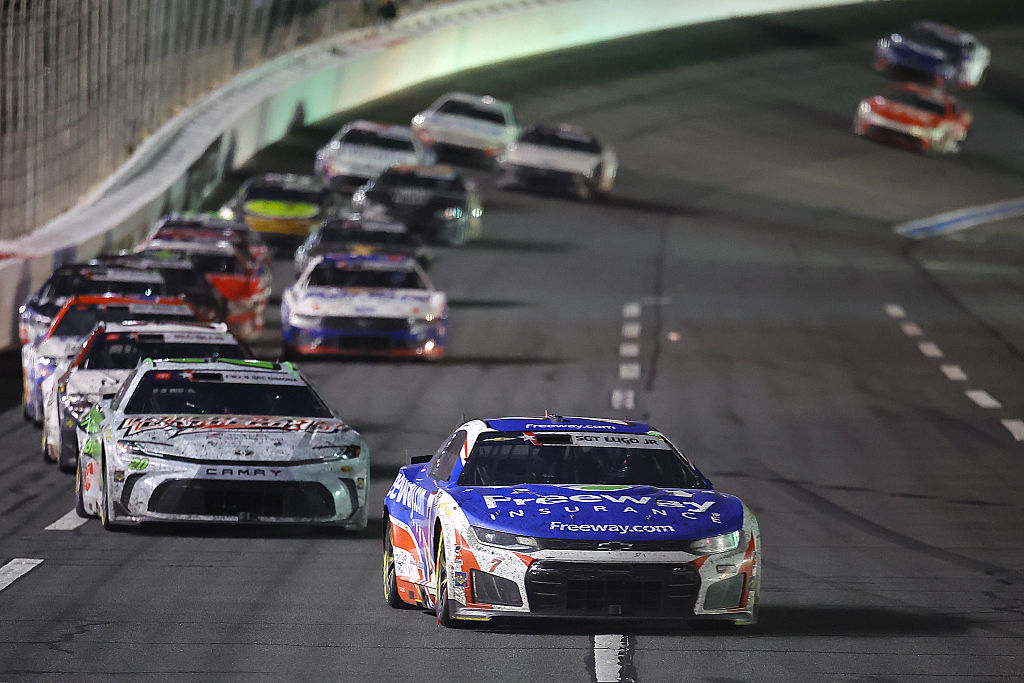
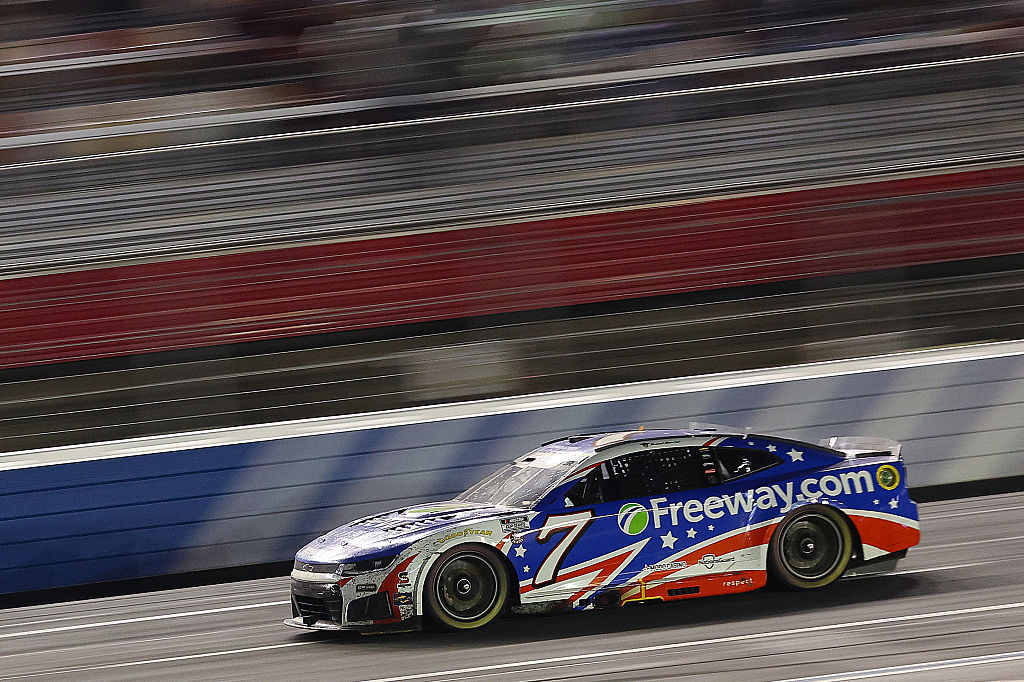
RG: I have watched NASCAR racing, and some IndyCar racing too – they’re both great. I don’t fancy oval racing that much… well, the last 10 laps are pretty good. Generally, it’s not something that interests me, at least in terms of wanting to drive one. It’s pretty good fun though, watching NASCAR and IndyCar races.
Q: Do you have good memories from the sportscar chapter of your career? Is that something you’d think about going back to one day in the future?
Peter Shields
RG: Yes, I do have good memories from sportscars. It was very nice to do the Le Mans 24 Hours, it’s probably one of the best races I’ve ever done in my life. [ED: Grosjean contested the 2010 LM24 in a Matech Competition Ford GT1]. I would like to go back there one day, but with a team to try and win the race [outright]. Sportscars are obviously very different from single-seaters, but I can see myself doing more in the future.
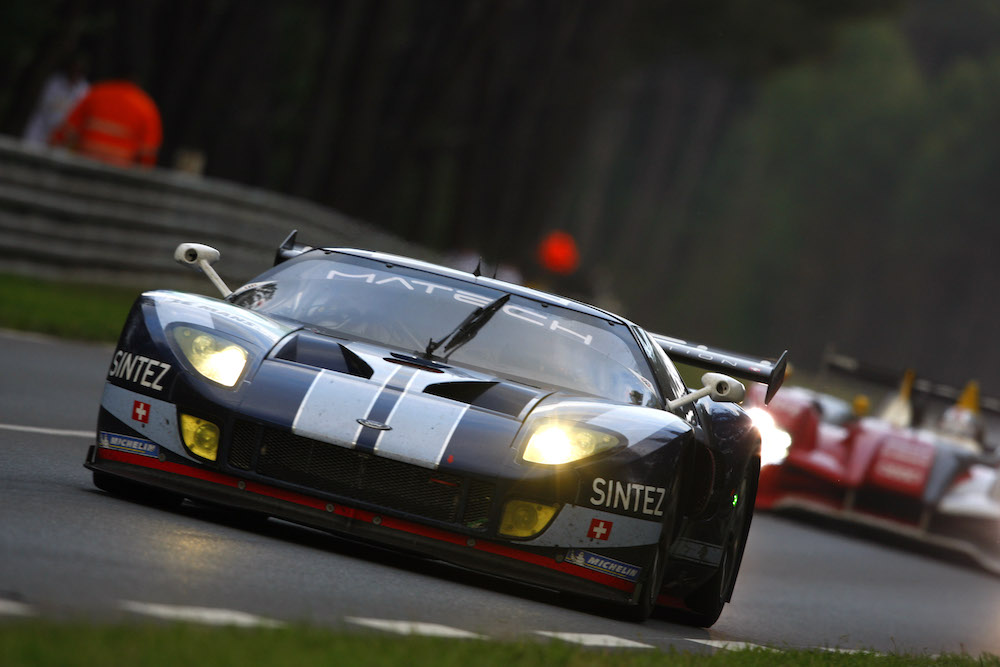
Having had a taste of Le Mans in 2010, Grosjean is keen to go back and fight for outright honors sometime in the future. Don't go looking for him at the Brickyard, though. Image by Staley/Motorsport Images
Q: How does a driver know when he is within 1.0s to be able to use DRS? How does he know he is 0.8 seconds behind versus 1.3 seconds? Is there something on the readout, or does the team engineer relay that info to the driver? Thanks.
David Steinbrink
RS: We have something on the dash. When we cross the DRS detection line we have one green light that comes on the steering wheel. When we are at the activation line, a second green light comes on the dash, then you can press the button. It’s automatically on the dash that we get a light to know if we’re within a second or not.
Q: Hi Romain, thanks for answering our letters. Your F1 debut came under unusual circumstances with everything going on at Renault at the time. [ED: Grosjean, then a Renault test driver competing in GP2, was called up mid-way through 2009 to replace Nelson Piquet Jr amid the fallout from the Singapore 2008 ‘Crashgate’ incident]. How much pressure did you feel? And while any driver will obviously take an F1 opportunity if it’s handed to them, in an ideal world would you have preferred to finish the GP2 season and have had more time to prepare?
J. Hopkins
RG: Obviously it was not an option to say no. I really enjoyed coming to Formula 1. There was pressure, of course, because it is Formula 1, but also, I was told it was seven races to prepare myself for the future. I had never driven that car before first practice, so the first time I jumped in the R29 was Valencia. It wasn’t too bad, it’s just that car was a tough one to drive. My performance wasn’t too far off Fernando Alonso, which was pretty good. I was leading the GP2 championship when I left, so yes would have been nice, but I got the chance to come back later in my career and win the championship.
Q: Once your F1 career has ended, would you consider crossing the pond to race IndyCar? If so, why? If not, why not?
Matt Payette
Westlake Village, CA
RG: I would probably not do IndyCar. I’m more interested in something like Formula E and the World Endurance Championship. I’ve also always loved the DTM. Those could be the options. IndyCar is a no because there are too many ovals, and I don’t really like those.
KEVIN MAGNUSSEN
Q: Any chance of you and your father racing at Le Mans together?
Jim Kupstas
KM: I don’t know if there’s any chance, but it is something we would love to do and have talked about for a long time. So far, the right opportunity hasn’t really arrived. If we get a good opportunity though, we’d jump at it.
Q: The start of your career looks very similar to your father’s career. Both very successful in lower single-seater series, and both starting your Formula 1 career with McLaren. Many considered Jan to be a future F1 world champion. How did you cope with the mental pressure of people comparing you to your father when you were younger?
Chris Gehoel
Belgium
KM: I wouldn’t really say it’s something I needed to cope with. Of course, there was some extra pressure, but then on the other hand, there were some benefits as well. The fact that I had a motor racing father who was in F1 and had some success, it meant that some important people and teams paid attention to me. When I was getting results, it got noticed. I would think the fact that I’ve had my dad be a racing driver has helped me more than it’s hurt me, for sure.
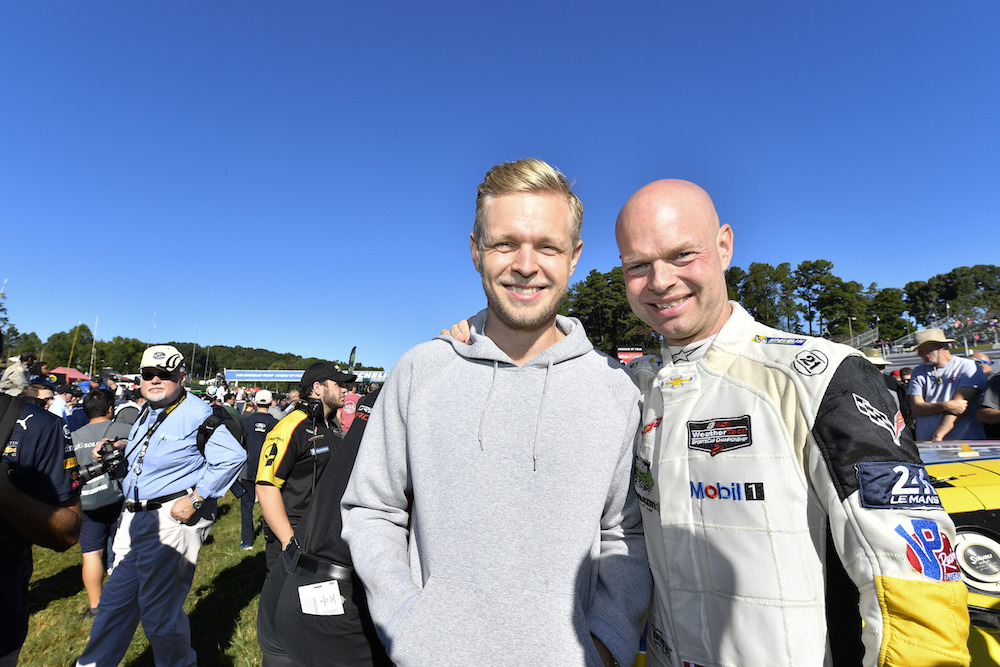
You want to believe that they spend every Christmas arguing over who's faster. Image by Dole/Motorsport Images
Q: Will you ever run IndyCar or GTLM?
Frank Aceves
KM: I’ve always had a passion for IndyCar. I’ve always had a passion for all racing series but certainly IndyCar has been something I’ve had an interest in since my dad raced in it. I think the series is very cool and I think the tracks they go to are incredible. I would certainly love to do it one day. Hopefully I’ll get a chance.
Q: Once your F1 career has ended would you consider crossing the pond to race IndyCar? If so, why? If not, why not?
Matt Payette
Westlake Village, CA
KM: See above! It’s a yes!
Q: What circuit has F1 never raced on that you most want them to go to? (Permanent or temporary).
FormulaFox
KM: The Nordchleife – the Green Hell. That would be amazing. I’d also love to race at Laguna Seca, Watkins Glen, Imola and many more.
GUENTHER STEINER
Q: What parts that Haas used to receive from Ferrari are you (or Dallara) now required to build yourselves? Has the support from Ferrari decreased in any way since Alfa Romeo rejoined F1?
Paul Wilcoxen
Broken Arrow, OK
GS: The support hasn’t decreased since Alfa Romeo joined; everything has stayed the same. At the moment, we receive the same parts as we did in the beginning. With the new regulations, the ones that will now come in for 2022, there are a few small items that we will have to produce ourselves, probably about five percent more than we do now.
Q: Where do you think you are relative to the rest of the field based on pre-season testing? Also, do you feel a lot of teams were sandbagging during the test? Is this common practice? Final question – do you feel that the new regulations (when they come in) will help make the field more equal?
Thanks,
Sean
Arvada, CO
GS: The midfield is very tight; it’s difficult to say. The difference between fifth and eighth could be hundredths of a second, but I think we’re somewhere there. For sure people are sandbagging in testing, that’s also why it’s difficult to say where you end up if the field is very tight like it is this year in the midfield. The new regulations should make the field more equal, because the biggest element is the budget cap. The big teams will not be able to out-spend us, they’ll have to work on a smaller budget, which brings them closer to us.
Q: I really enjoy having you lead an American team. From what I've seen on Netflix and in interviews, you truly have the no-nonsense frankness that represents Americans! What was the experience for you like going from F1 to NASCAR? What did you learn from the whole experience (good and bad), and what major aspects of your life changed that you never saw coming?
Thank you,
Andrew Bane
Andrews, TX
GS: I would say you always learn when you do something different – that is, if you want to learn. I think there is nothing good or bad that I learned from going to NASCAR, it’s just different, and it widens your horizons. Some things you adapt to, and that can work pretty well in F1. In F1, sometimes it’s the same and you don’t always take things from outside. I always want to learn wherever I am in life, whether it’s F1, NASCAR or whatever. I want to continue to get better at my job.
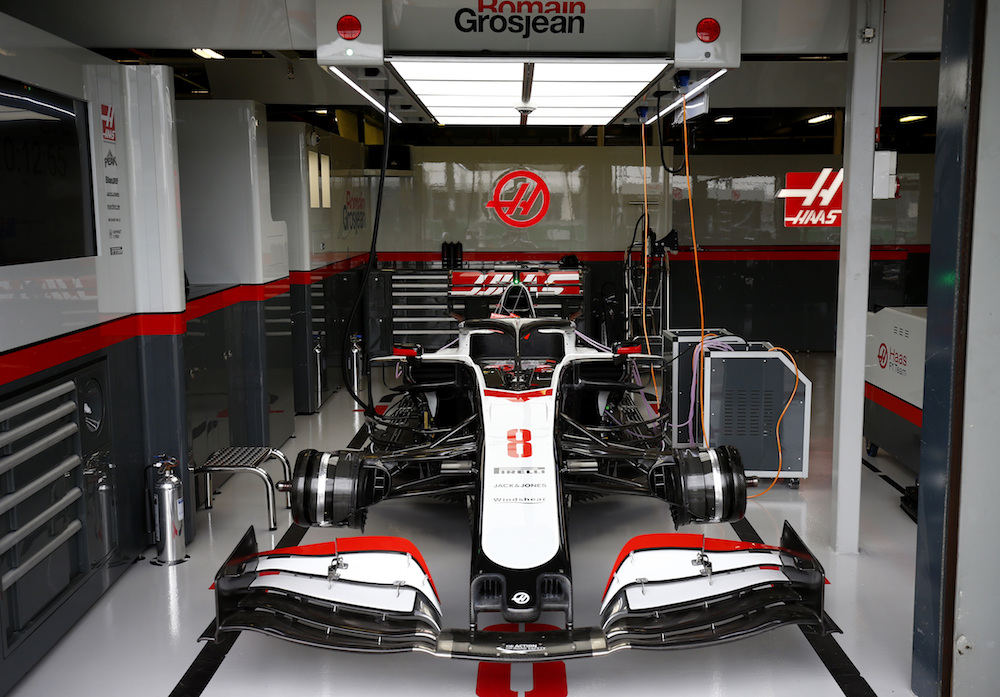
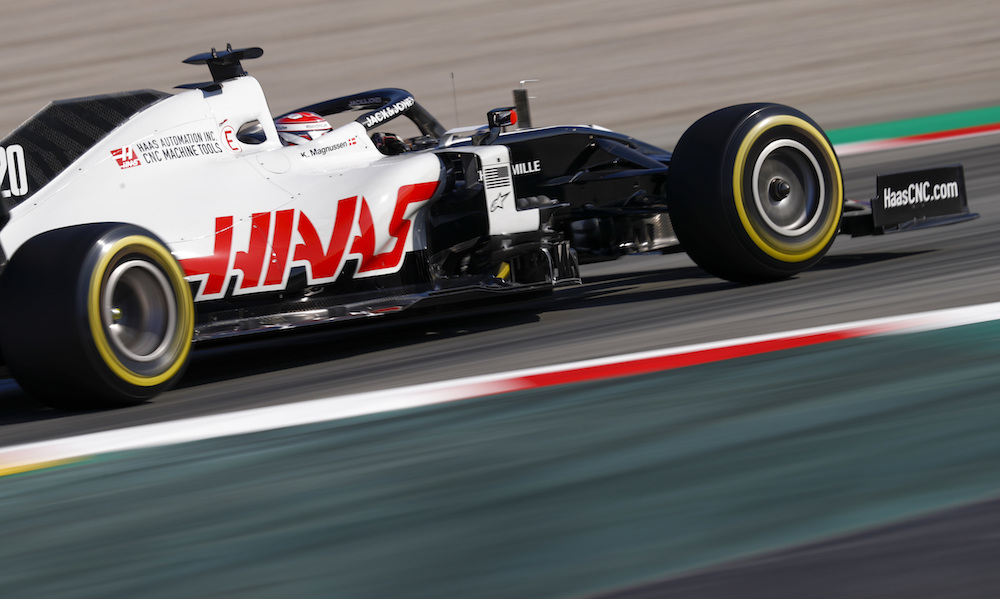
Steiner is confident that the VF-20 is strong enough to be right in the midfield mix again. Image by Hone/Motorsport Images
Q: Do you really think Josef Newgarden could not hang with your boys? I do love seeing the red, white, and blue on the grid.
Frank Aceves
Q: I was very excited when I heard about the formation of a new American Formula 1 team. Now, I have to admit it really rubbed me the wrong way when I heard Mr. Steiner dismiss the idea of Josef Newgarden having zero chance at success in F1. In my opinion Josef is the best American open-wheel driver out there. No offense to Haas’ current F1 drivers, but they have shown a tendency to make error after error. Why not give Josef a shot? I think I speak for a lot of American fans.
Thank you,
Mark
Niagara Falls, NY
Q: I would imagine I am not the only one who is going to ask this, but why have an “American” team when no American drivers are on it, nor in the pipeline? (Half credit for Fittipaldi)?
Al Gordon
GS: First I would like to clarify that I have never said an American isn’t good enough to drive in Formula 1, those were words put in my mouth, and were not true. I think it’s very difficult. I always look at someone like Josef; he’s very talented, but he has made a good career in IndyCar. We are still at the beginning of our journey in Formula 1, this is only our fifth season, and at the start it was difficult. Why should we risk running an American talent and them getting lost by driving for us when we are not ready? That was always one of the concerns.
We did have Santino (Ferrucci) driving for us in testing, and he did well. We supported him, and he’s now made a career out of what he learned with us and in the lower categories in Europe; he’s doing well in IndyCar. So, it’s not right to say we’ve never given it a shot, but in someone like Josef’s case, he’s so successfully in IndyCar, why would he take a risk to go to Formula 1 and run at the back of the field when he can win IndyCar championships? For me, that is the thing – we don’t want to be the people that do this. I would love to have an American driver coming along, but it’s very difficult. There were a few lost generations of American drivers wanting to go to Formula 1, because for a while there everyone wanted to get into NASCAR – you could make a very good career out of it, and that’s still true.
It’s a big commitment. If you want to get into Formula 1, you have to move to Europe for a certain period of time of your life. Living in the United States, I think for a young driver, is often more attractive than living in Europe on their own. Sometimes having your family and friends around you as a support is the preferred option for most people – which I fully respect and understand.
Q: Thanks for answering our questions – I have two, if that’s OK. First, before we had Haas F1, there was the US F1 team, which obviously never took flight. Do you think there was ever a realistic chance of that team being viable? And second, Haas F1 has four seasons under its belt now. If you could go back in time to when the team was being set up, what advice would you give yourself?
Michael Fletcher
GS: I don’t really know. It was a different time and feels like a long time ago. I don’t really want to go back and try and second-guess what happened to the US F1 Team, because obviously I don’t know all the details. Regarding the second question – there’s a lot, but not really one big piece of advice. You see a lot of little things now, but hindsight is beautiful. You can always do things better. That said, there’s nothing I would do completely differently. For what we did, it actually worked pretty well. I’m not saying we did a perfect job, as I said, you can always do better. It’s all just small things you can improve upon, but you only know to improve them after you know you did them wrong, we certainly didn’t do anything strategically wrong, for example.
Q: Any great memories you want to share from WRC days? Any from the Colin McRae and Carlos Sainz years? Were you just as angry with that pairing as you are now with Romain and Kevin?
Kevin, Long Beach, CA
GS: To work with champions like Colin and Carlos… it was a fantastic time. They were both, in their own way, the biggest talents of their time. One was driving strategically and managing everything, Carlos obviously, and the other, Colin… from a sheer driving talent perspective, there just hasn’t been anyone like him before or after, in my opinion. They were great times, and obviously I was a lot younger! At that time though, I was not in a position to be allowed to talk to them the way I can with my drivers now. I’m sure if I had spoken to Colin in that way, he would have hit me. If I had talked to Carlos like that I would have been sacked. So – I didn’t!
Q: What do you see as the opportunities and challenges for the upcoming (now 2022) rule package?
Thanks for taking our questions, and have a good day,
Mike Bridges
GS: If you make a new car, there are always challenges. You always question if you are on the right track or not. You have no idea, especially with a package change as big as this one, where other people are going. You’re always wondering what other people are doing and if you’re going the right way. To develop a car with a completely new rules package, you really have to open up every angle of it and see what you can do. Uncertainty is the biggest challenge in terms of where other people are going with it.
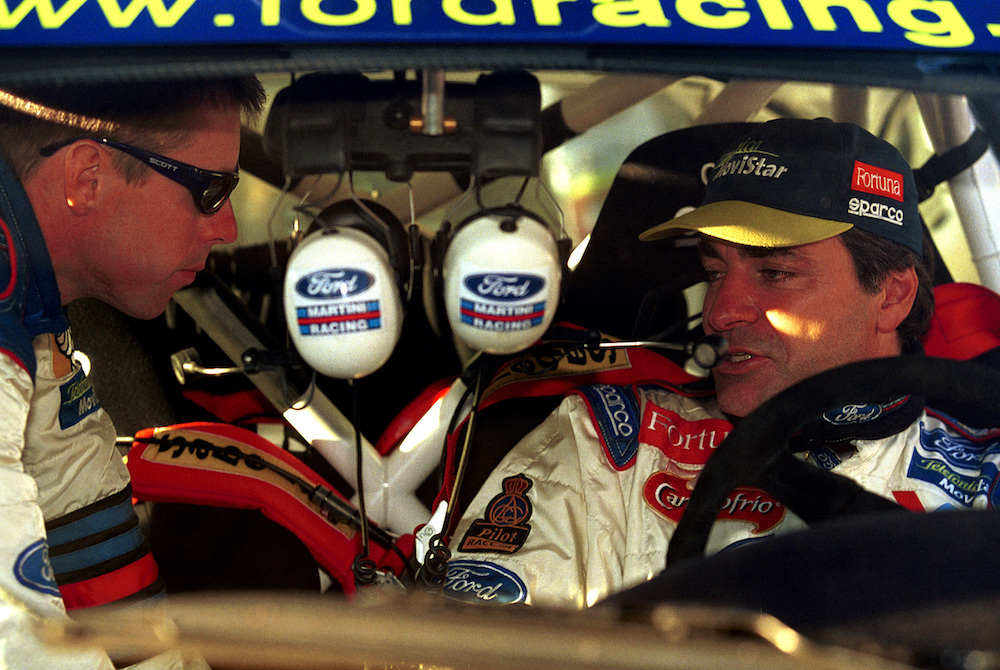
While working with McRae and Sainz at Ford World Rally team, Steiner faced a choice of being punched, sacked, or remaining diplomatic. He chose the latter. Image by McKlein/Motorsport Images
Q: How would you feel about Formula 1 returning to Indianapolis or Watkins Glen?
Rob Peterson
Rochester, NY
GS: I would be in favor of this, especially Watkins Glen, but unfortunately it cannot be approved because of its run-off areas – the safety is not there. I’m not an expert on race tracks, but I don’t believe with Watkins Glen you can make the run-off areas bigger because there isn’t the space, as far as I know. It’s an iconic race track and it would be fantastic to go there. For Indianapolis, I think we’d have to get over the dilemma from 2005, when there was the tire issue, but otherwise I would have no problem to go back there. If I could pick one of the two, I would prefer to go to Watkins Glen.
Q: It's well-known in F1 that budget highly contributes to success, and Haas F1 has traditionally not had the largest of budgets. The United States has by far one of the best economies and many of the largest companies in the world. Why then do you think Haas F1 struggles to get investments? Wouldn't many American-based companies jump at the opportunity to back the only American F1 team? Other than hiring me to help, what can be done to shore up this shortfall of American sponsors?
John Griffis
GS: Unfortunately, it’s not as easy as that. Finding any sponsorship in these times is difficult, we’re talking large sums, and a lot of companies invest in digital sponsorship. Also, Formula 1 in the United States, for a long time it wasn’t very popular, it’s still not a major sport in the market there. It is gaining momentum, but it will still take some time to make it a lot more popular. So, these are the two main elements – money being spent on other platforms, and Formula 1 coming up as a priority to big companies.
Q: How successful do you think F1 has been in trying to become more fan-friendly? Can it still do more? As a fan, even sitting here typing a question to a team principal feels like something I couldn’t have done five years ago.
T. Ferguson
GS: You can always do more. I think Liberty Media has done a good job in making the sport more fan-friendly. Also, the work they’ve done digitally on things like their social media channels, it’s been fantastic. We were really behind as a sport on that medium, that work should have started 15 years ago but didn’t. Now we’re playing catch-up, but they’re doing a good job in doing that. Improving fan access will be one of the goals for the future.
Q: F1 has declared a moratorium on 2021 rules car development for a season. How can they police that?
Lee Chard
GS: It hasn’t been completely signed off yet, at the moment we’re all in shutdown mode. We’re now deciding what is frozen and what isn’t – hopefully there’ll be a lot frozen. It’s pretty easy for the FIA to check that one, because we have to submit all our drawings to them, then they can measure and see everything. The FIA are quite sophisticated in terms of what we’re doing, they have all the data and everything. The risk to try and cheat on all that, it’s too high for a team. The penalties are so high. You wouldn’t risk it.
Presented by:
Mark Glendenning
Read Mark Glendenning's articles
Latest News
Comments
Comments are disabled until you accept Social Networking Cookies. Update cookie preferences
If the dialog doesn't appear, ad-blockers are often the cause; try disabling yours or see our Social Features Support.