Images by Steve Nickless
Revival is survival: Ivey Engines
The 50th anniversary of Formula Ford racing in the U.S. has been a major talking point in 2019, triggering discussion about the revival of FF that is music to Jay Ivey’s ears.
“Revival is survival,” says the Portland, Oregon-based proprietor of Ivey Engines, a family firm that hitched its star to the classic Kent Ford Crossflow engine nearly 40 years ago.
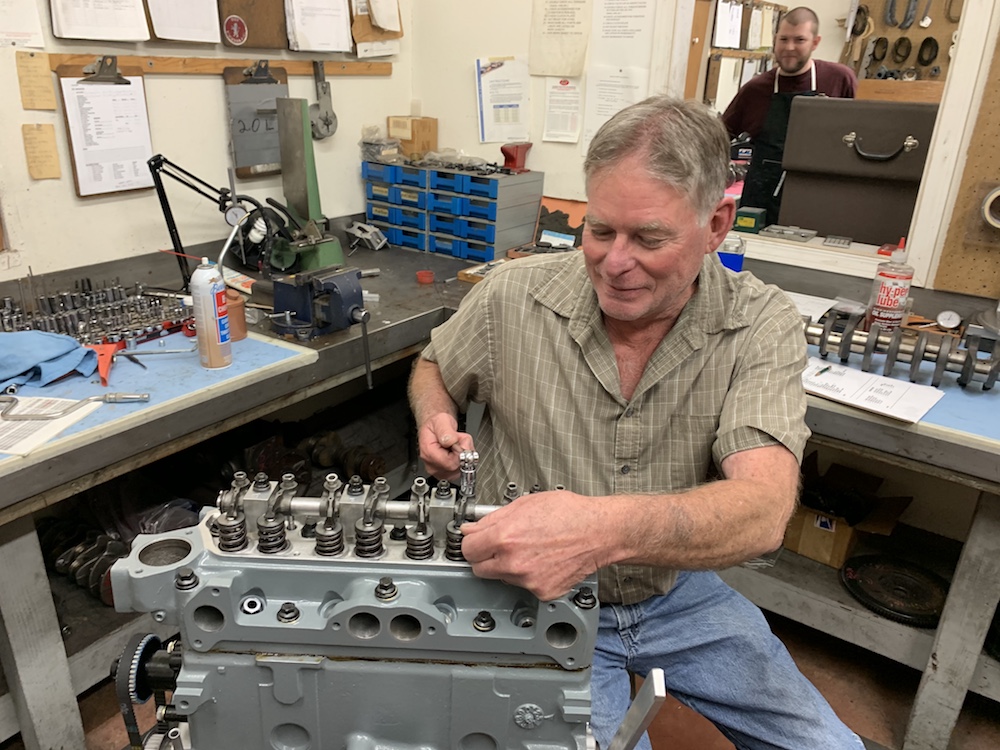
Jay adjusting valves, while son Colin looks on.
A tireless hard-worker who has been everywhere, and attended almost every major event in this FF50th spring and summer, Jay Ivey can tell you a thing or two about the Kent Formula Ford engine -- all of the clearances and gaps and ratios to the thousandth -- but he cannot tell you how many FF engines he’s built and rebuilt over the last three-and-a-half decades.
Nor can his sons, Cameron and Colin, who have stepped into the significant roles once occupied by dad Jay and mom Susan with incredible aplomb (although they have detailed records on every engine built and rebuilt, and will count them all up someday).
His dad, Sam -- a much-traveled field test engineer for Detroit Diesel -- had instilled in his son a love of engines and a peerless work ethic that has served Jay well.
His dad gave him a Corvair on his 16th birthday with the proviso that he get it running, and he took teenager Jay out on the road as much as possible -- to GM Research; to the Bonneville salt flats -- keeping him immersed in engines. It was a family thing: Jay’s uncle Bill ran the Ford Motor Company dyno for many years and once got his young nephew access to the underground storage area where the engine and gearbox from the ’66 Ford GT40 Le Mans winners were kept.
In 1976, another Bill (Snyder, of ThermoKing) got 21-year-old Jay a pass into Gasoline Alley at Indianapolis where he met his hero, A.J. Foyt, and engaged him in a discussion about tools, deciding there and then that he would find a way back to the Speedway someday.
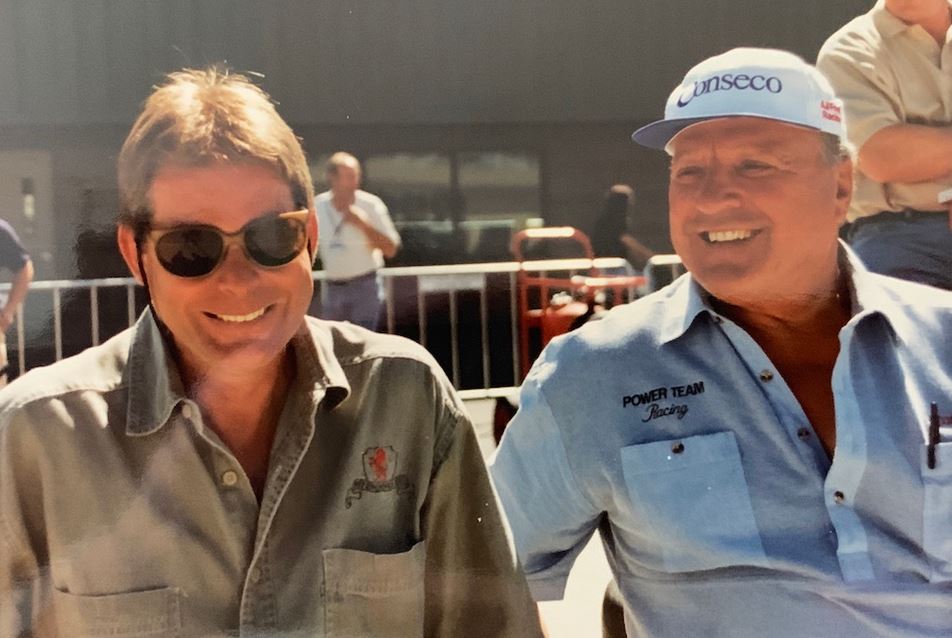
A most treasured photo on the Ivey Engines shop wall: Twenty years after briefly meeting his hero A.J. Foyt, Ivey returned to Gasoline Alley.
He remembers a friend, Jeff Kenney, introducing him to “Formula Ford” which he would hear more about several years later, working at another friend’s foreign car repair shop in Gresham, Ore., and sales-repping a gasket sealer product, Gasgacinch, which led him to FF dealer and distributor Pierre Phillips and son Tommy.
Via the Phillips’ enthusiasm, Ivey was soon hooked on FF racing, and when he discovered Loyning’s shop right across the parking lot, he began wheeling engines he had rebuilt over to show Arnie and needling him for a job.
Eventually, Arnie relented and Ivey spent a busy/happy 18 months working for one of America’s premier FF engine builders and uncovering a passion for the racing version of the four-cylinder Ford Crossflow engine.
He left in late spring 1983, though, first to work on BMW engines for Ira and Lori Young; later to open Ivey Engines across town from Loyning's with a push and backing from Wall Street trader (and former Formula Atlantic driver and team owner) Jim Morgan.
Ivey had been introduced to Morgan by the Phillips' who also connected him with Mike Gue and Phil Creighton, proprietors of Grand Prix Race Cars/Essex Racing, the Van Diemen importers on the East Coast, who needed a larger engine supply to keep up with demand for their hot-selling FFs.
The business relationship with Morgan ended quickly, but Jay had his dyno, his first employee, Chuck Yett, and customers. With wife Susan taking care of the books from home as she tended to infant son Javan, Ivey Engines was off and running.
Gue and Creighton purchased the first Ivey-branded Kent FF engine for their customer Ken Gordon, but much to their (and many of his early customers’) dismay, Ivey painted all of his Ford blocks Detroit Diesel green in honor of his father. They were at best unattractive, but no one thought to complain to Ivey until 1986 when Mexican FF racer John Franco Cane showed him how his had been repainted.
“I don’t do green on my car,” Cane said.
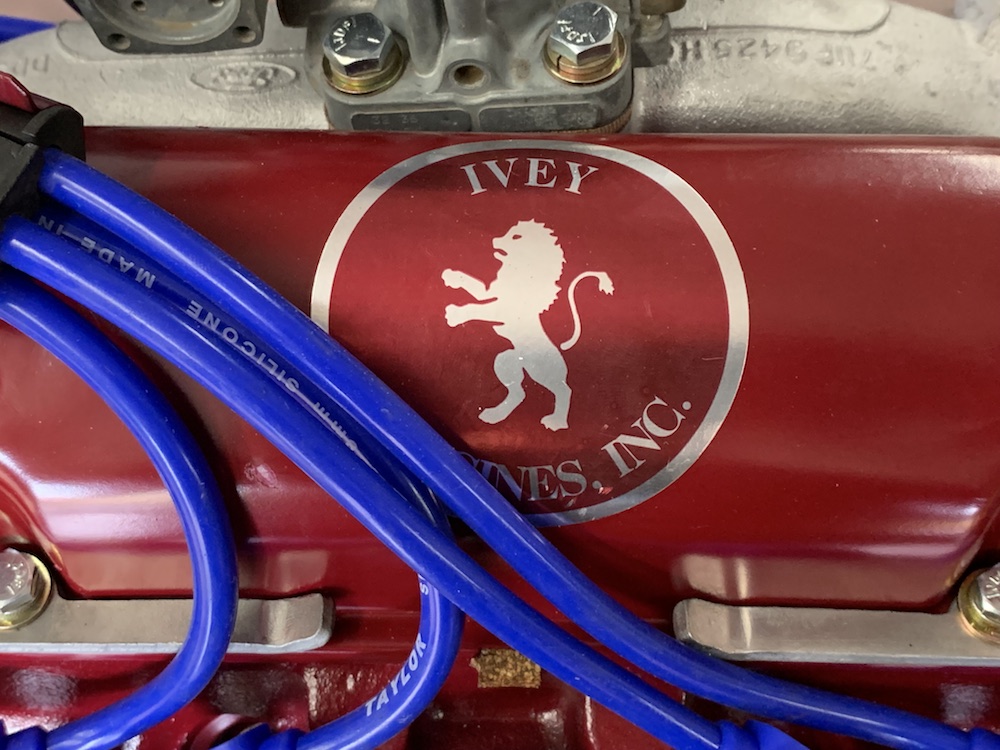
Ivey began to notice others doing the same, and his engines have been signature maroon ever since.
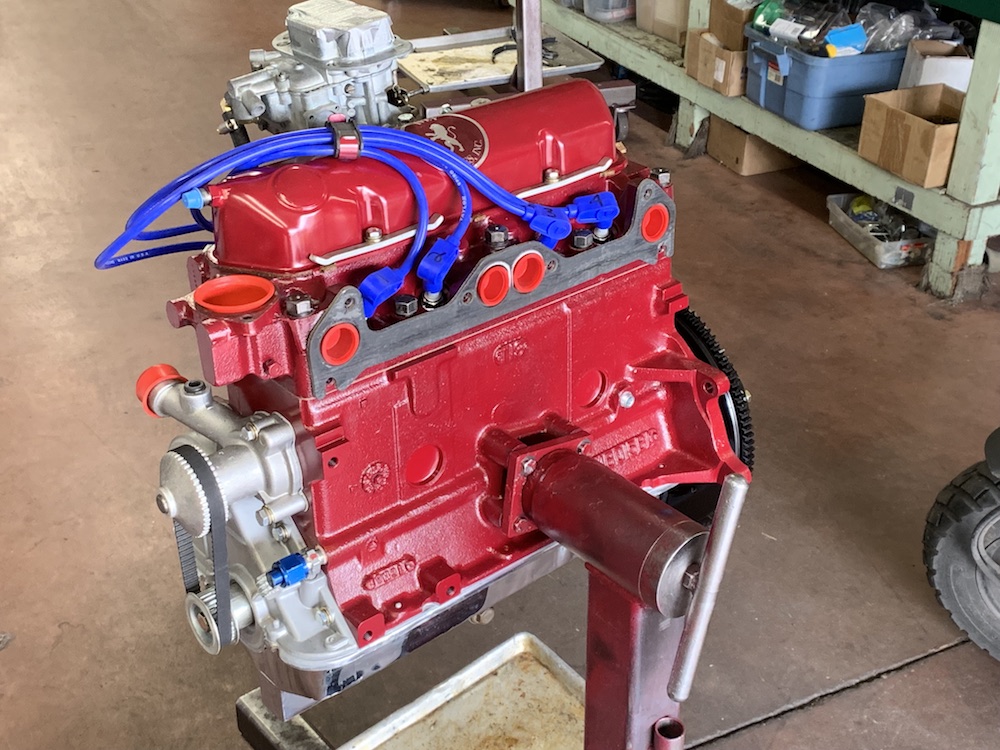
Ivey engines have been a readily recognizable red since 1986.
Loyning’s engines finished 1-2 (R.K. Smith-Bob Lobenberg) at the Runoffs in 1983, but, courtesy of Texan Kim Campbell’s third, an Ivey engine was on the podium. He would not win the Runoffs until 1990, powering Tony Kester’s much-modified Reynard; but in 1985, an Ivey engine won the British Formula Ford Festival courtesy of future F1 racer Johnny Herbert driving the unique Quest -- to date, the only Festival win by an American tuner.
As much as power and reliability, relationships have been not only the starting point but also the primary driver of Ivey Engines’ success. The engine supplied to the Quest team, for instance, was a direct result of a relationship with Californian FF racer Ron Giery, who had taken an Ivey cylinder head with him for a Festival run the year before and qualified well with it in his first taste of Brands Hatch.
While the top step at the Runoffs proved elusive, Ivey’s engines soon had a nationwide following, stepping into the breach of a serious issue plaguing all FF runners in the 1980s and '90s: the supply of key engine components drying up, with most of the parts long out of production and wrecking yards in England and America emptying out.
In the '90s, another Kent FF engine guru, the late Jake Lamont, successfully persuaded the SCCA to accept aftermarket engine components -- with the stipulation that there be no performance advantage. Ivey was front and center in those and subsequent discussions with the SCCA, beginning his own “quest” for quality aftermarket parts.
In no particular order, Ivey Engines direct involvement and constant communication with the SCCA staff and comp board has resulted in:
- Crankshafts, now manufactured by SCAT -- development funded by the SCCA in 2001 and now marketed exclusively through them;
- Pistons, now made by CP in Southern California, approved in 2005 -- Ivey funded development;
- Connecting rods, now made by SCAT -- Ivey funded development (and makes available the jig for the 50-60 thousandths machining needed to clear the cams);
- Lifters -- Ivey bought out the complete remaining inventory from the Stanodyne Lifter Co. when Federal Mogul quit making chilled iron lifters;
- Valve springs -- Ivey found a supplier and purchased in ridiculous minimum quantity (5,000!)
- Valves -- Ivey funded
- Aluminum cylinder heads, designed by Pearce Manifolds (the company acquired by Ivey in 2018 when Pearce decided to scale back), approved in 2001 (first appearing at the Runoffs in 2001) and now manufactured by PBS and Ivey.
- Blocks, upgraded and now manufactured again by Ford (more about this below).
- Over the last 30 years, Ivey has invited other engine builders to participate in and help fund development of these key parts, but to date he’s had no takers.
Back to the late 1980s: With 1600 parts hard to come by and FF fields in the U.S. slowly shrinking, Ivey Engines expanded into the 2-liter market. A strong engine for midwest FF2000 driver Thomas Knapp led to the opportunity to build an engine for Tom’s brother Steve’s successful factory Lola Sports 2000 team, which led in turn to Knapp’s entrant Carl Haas and, soon, a very profitable engine supply deal with Lola’s dominant U.S. importer.
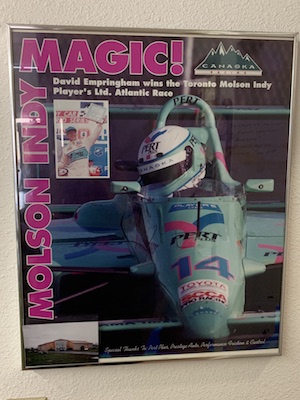
Empringham and Ivey Formula Atlantic Toyota engines was, for a time, a nearly unbeatable combination.
Ivey’s 2-liter engines were a huge hit, bringing him his first Runoffs win in 1989 courtesy of Jay Hill, while his engines had dominated the ’89 SISAPA Records S2 series, claiming every pole, fast lap, victory and the championship via John Fergus, the titlist in both ’88 and ’89.
As well, Ivey was pulled by another customer into the Formula Atlantic market, developing a skill with the Toyota 4AGE that earned his engines both acclaim and the ’93 Atlantic title courtesy the brilliant David Empringham.
Though Kent Ford sales were dwindling, he saw light at the end of the 1990s tunnel. With sales rocking and his company almost literally being forced out of the Gresham shop by noise complaints from the neighbors, Ivey took advice he’d received from East Coast FF engine tuner Joe Stimola to “no matter what, own your own building.” With guidance from friends like Howard Groff and Monte Shelton, Ivey Engines went in deep on land and a new building in Portland, close to home in Fairview as well as both Portland Airport and Raceway.
His timing could not have been worse, as it turned out.
An engine deal with Oldsmobile forever changed Pro Sports 2000, while the rules changed to allow fuel injection in Formula Atlantic and all the tuning business went to another engine builder -- disastrous double hits for Ivey even as his new building was being fitted out.
How bad was it? In 1989, Ivey turned out 257 engines; in 1990, just 60.
The new building was finished in May 1990 but, with rapidly declining sales, the bank would not give Ivey the capital needed to finishing outfitting it.
“I’m so f--ked with this building,” Jay remembers thinking. And how close a thing it was with 2-liter Ford and Toyota Atlantic sales drying up overnight and FF1600 beginning its own death march through the 1990s, the bright spots few and far between in that decade.
In 1989, though, at the 20th Anniversary Formula Ford celebration at Willow Springs, Ivey, journalist Jeremy Shaw and SportsCar publisher Paul Pfanner hatched a plan that would become Shaw’s Team USA Scholarship, which every year since 1990 has sent one or two Americans to England to do battle against the rest of the world -- most recently at the Formula Ford Festival at Brands Hatch and Walter Hayes Trophy at Silverstone.
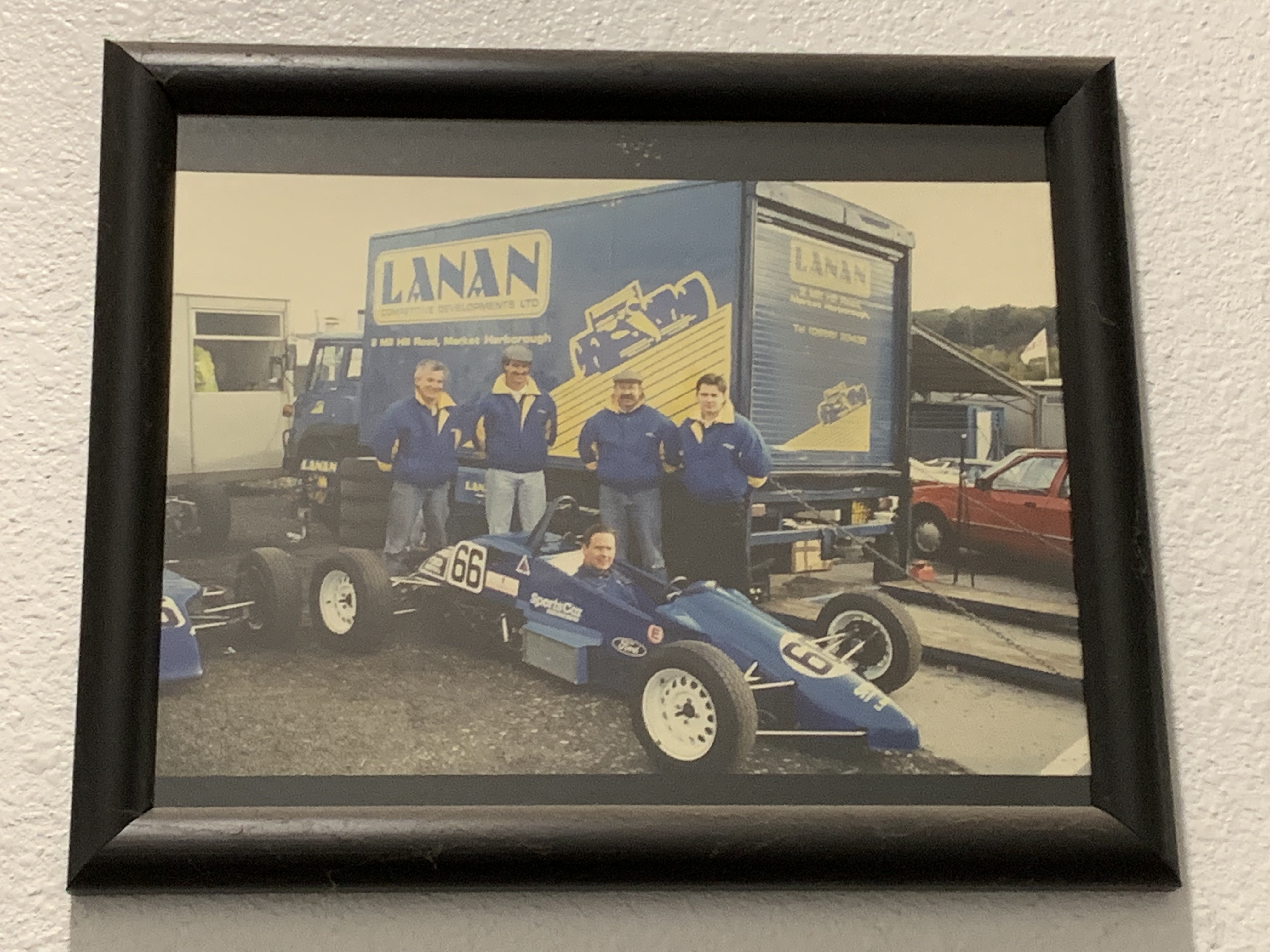
The first Team USA scholar, Jimmy Vasser, an ultra-successful Ivey FF2000 customer.
The first Team USA scholar was Jimmy Vasser, a talented young Californian who Ivey had helped in the Export A FF2000 series. There are no “special engines” coming from Jay’s shop, but over the years there have been “special drivers” Ivey has gone way above and beyond the call to assist.
Vasser was the first, but not the last; in the '90s, Ivey developed a special relationship with Greg Moore and his father, Ric. He was devastated by the young Canadian’s fatal accident in the IndyCar race at California Speedway in October 1999, closing out “one of the toughest 10 years I’ve ever had,” Ivey remembers.
With help from friends like the Knapps, Rick Galles and many others, the business survived to see Y2K. Though volume was down to a trickle, Ivey’s Kent FF engines continued to collect SCCA National wins and would claim two more SCCA National Championships in the '00s courtesy of Kyle Krisiloff (2001) and Scott Rarick (2004).
And then there was the FF 40th Anniversary event at Road America promoted by Steve Beeler and Mike Rand and hosted by the Milwaukee Region SCCA -- an eye-opener, as it turns out, for the Ford Motor Company. It was the largest FF field in the U.S. ever, but all at the July 2009 gathering were shocked by Honda crashing the event, as the SCCA introduced the 1500cc Fit engine into the re-titled “Formula F”.
The modern Fit engine, it was hoped, would stimulate interest in FF which had been slowly fading away. Once the largest SCCA class by far, field average size had dropped to the single digits.
Among those surprised by the Honda introduction were key executives from Ford. In August, Ivey got a phone call from Mose Nolan, one of the most storied "engine men" in Ford history, asking: "What do FF people need?"
"Right now, a block," said Ivey. By then out of production for more than 20 years, the wrecking-yard supply of Cortina, Pinto and Fiesta engine blocks had all but dried up. “I’d say 4-5 out of every 10 blocks were no good,” Jay explained. “High mileage, age deterioration.”
“A block? We can do that," Ivey remembers Nolan saying.
Nolan was the man responsible for the Ford four-cam engine that showed up at Indianapolis in 1963 and won in 1965; and for the V8 engines in Ford’s 1966 Le Mans-winning GT40s.
On Sept. 25, 2009, Nolan had the go-ahead internally and sent an e-mail to Ivey detailing an ambitious 40-week program which would culminate in delivery of the first machined and pressure-tested new production block by July 2010 -- and not just a copy, but a block improved in several key areas and made of a new alloy.
Interestingly, only after the decision to proceed was made did Nolan make the connection that the retired dyno operator he had worked with for many years at Ford, Bill Ivey, was Jay’s uncle.
The sweet 3D-printed sample block was shipped to Ivey in March 2010 -- right on schedule. Next came tooling, final casting sign-off and final machining by Roush in Dearborn.
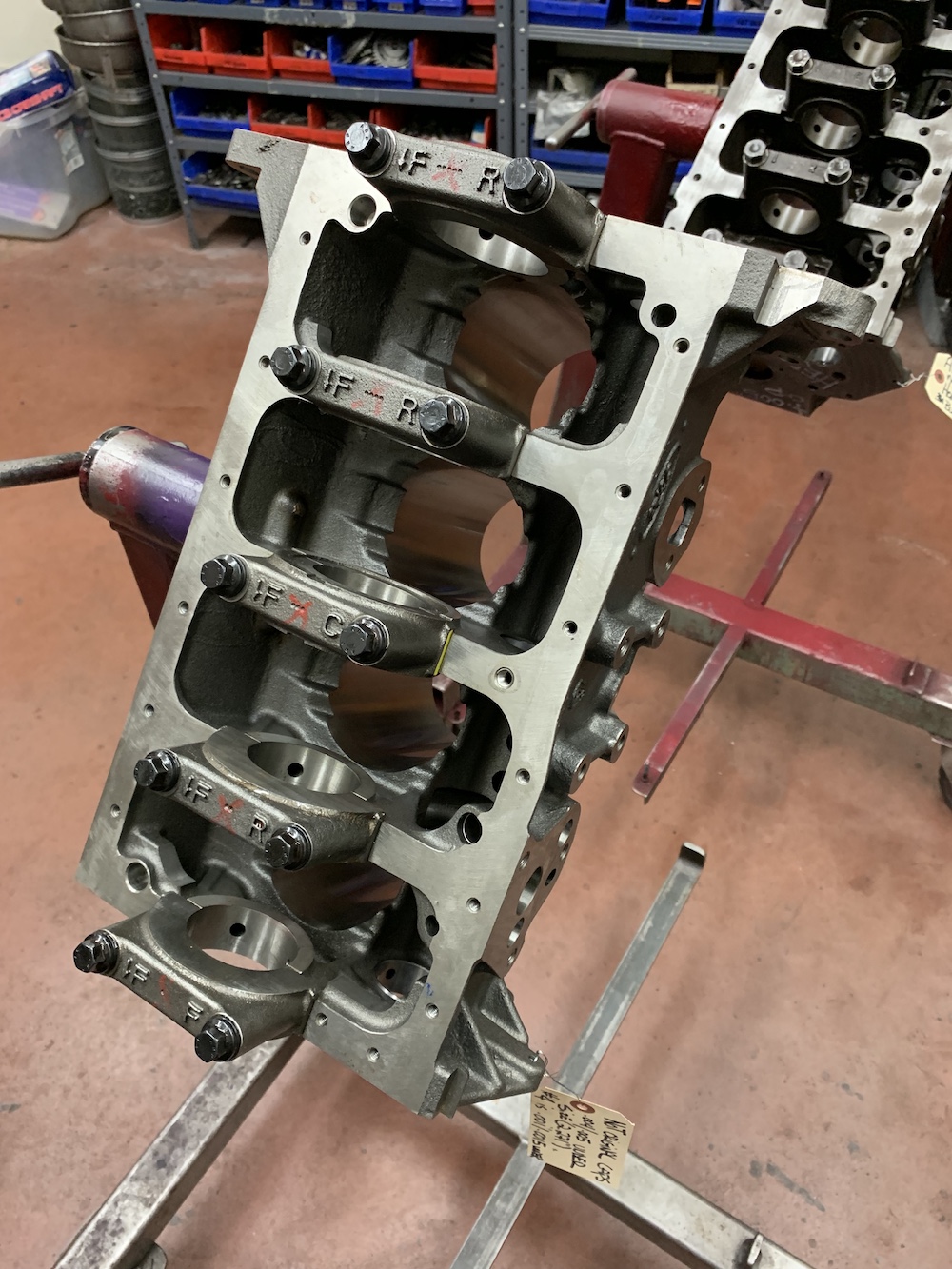
The new Ford Crossflow block is a work of art.
The first two new blocks were shipped to Ivey Engines in July 2010, one for the dyno, one for display at the Portland Historics -- the fastest turnaround from drawing to production of any block in Ford history, Ivey says.
Several factors combined to herald the renaissance of Formula Ford over the last decade, but no one thing stands out as more vital to this resurgence than the Kent engine block reappearing in the Ford Motorsports parts catalog. And it’s no straight-up return of the nearly six decade old original: The new Kent block (P/N M-6010-16K) has been modified and strengthened in several key areas, and is made of a new alloy -- not a weight or performance advantage (at 95 lbs, it's slightly heavier), but significantly more reliable.
To date, more than 700 have been sold, manufactured in Wisconsin (soon to be Illinois) and final machined at Roush in Michigan -- many for Lotus and FB/Atlantic applications, but Ivey alone has purchased 200 for Formula Ford. Ivey says the new Kent block is, over the last 10 years, in the top five of Ford Motorsports part sales.
Unfortunately, even as a supply of new blocks began fueling interest in Formula Ford as the class took on new life in vintage racing, the Iveys faced a new crisis: Over the winter of 2009-2010, wife Susan was diagnosed with cancer, and, by summer, she was forced to undergo major surgery to remove multiple tumors and faced a lengthy recovery period.
Jay knew he couldn’t keep the business going and care for his wife, and gave serious consideration to shutting it down. That was when their two youngest sons, Cameron and Colin, entered the business publicly: Middle son Cameron had been working alongside Susan in the front office for several years, even as he prepared for college with an interest in pediatrics; and he stepped in full time when his mom was unable to continue.
Youngest son Colin, meanwhile, had been shadowing Jay for a similarly long time and, in his early 20s, had already become an adept FF engine builder.
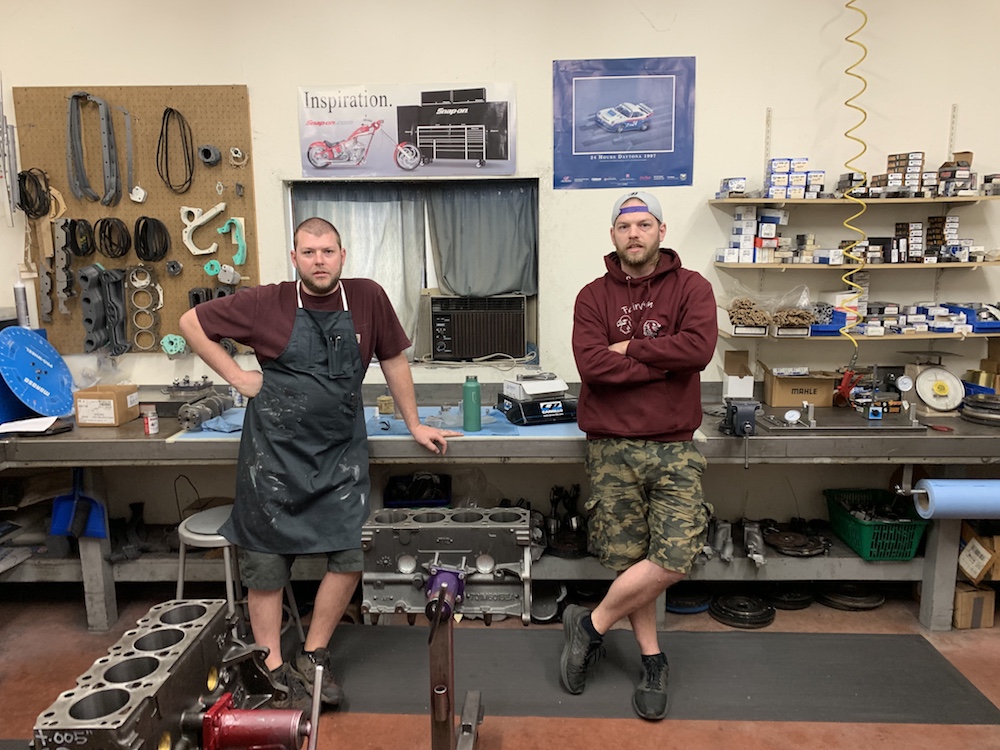
Ivey Engines next generation: Skilled engine builder Colin (left) and operations manager Cameron.
Like their dad, both boys share a ferocious work ethic and in 2010 they stepped up: As Jay left to care for Susan for several months, the boys stepped in with huge help from their dad's long-time friend and employee Mark Viskov. And, over a six-month period, the business missed nary a beat.
Happily, nearly 10 years later, Susan is doing well, although because of her illness, much in all of their lives has changed: Ivey Engines today is a thriving family business, with Cameron handling all the orders and customer service; Colin building and rebuilding most of the engines; and Jay settling into an overseer and at-track guru that his customers (and a surprising number with engines from other tuners) have come to depend on.
“What keeps me going is always the challenge,” says Jay. “Success to me means security for my family, but it’s more than a number; it’s building a business on honesty and integrity.”
Jay has time now, thanks to his son’s abilities, to dabble in other projects (like a rare Datsun motor that found its way to the shop) and ongoing Lotus Twin Cam rebuilds.
But his heart beats for the Kent Ford Crossflow, and, while Ivey Engines will continue to thrive no matter what, to Jay Ivey, the revival of interest in Formula Ford via its newfound popularity in vintage racing around the world truly means survival.

Steve Nickless
Read Steve Nickless's articles
Latest News
Comments
Comments are disabled until you accept Social Networking Cookies. Update cookie preferences
If the dialog doesn't appear, ad-blockers are often the cause; try disabling yours or see our Social Features Support.