Robin Miller's Mailbag for July 10, presented by Honda Racing/HPD
hpd.honda.com
and on social media at@HondaRacing_HPD
and https://www.facebook.com/HondaRacingHPD.Your questions for Robin should be sent to millersmailbag@racer.com. We cannot guarantee we’ll publish all your questions and answers, but Robin will reply to you. And if you have a question about the technology side of racing, Robin will pass these on to Marshall Pruett and he will also answer here.
Q: I just finished reading your article on the attendance conundrum and one of the races you mentioned that is hurting is Toronto. I saw one IndyCar race there in person about four years ago, and I wasn't too impressed. It's not that I don't like street racing. I go to St. Pete every year and I think it's great, but I'd much rather see IndyCar race up the road at Mosport. I watched the televised coverage of the IMSA race there this weekend and I thought it was a really good show. Has there ever been any consideration to moving the Toronto race there? It's not that far away, and it would be so much less disruptive and expensive to do the event there. It could even be a shared weekend with IMSA. We'll be at Iowa in two weeks (second time there) and Mid-Ohio the week after (third year in a row). They are always good races. We're trying to do our part fighting the attendance conundrum.
Alan Hummel, St. Petersburg, FL
RM: Good man, Alan. I was talking to Bobby Rahal about Mosport over the weekend, and we both think it would draw a great crowd. I was there in 1968 when Bobby Unser won his first IndyCar race and I realize the cars are a lot quicker now and there is concern about certain corners, but as Rahal is fond of saying: “Where is the runoff area at the Indianapolis Motor Speedway?” I know Ron Fellows has done a great job of modernizing the facility, so I hope IndyCar considers it some day.
Q: This was a very good piece to be sure, and the crowds are down across the board for all motorsport disciplines. The real answers are more complex and I suspect that the world of streaming and on-demand video across multiple platforms has a lot to do with it. I subscribe to NBC Sports Gold for IndyCar and the quality of the streaming is excellent. The entire NBC crew is outstanding, including you, Robin. So, the point of this is that product is so good that with a decent video platform we can watch anytime/anywhere. My wife and I did go to COTA and that experience was outstanding. They did a great job with varied programs between the IndyCar schedule. The MX-5 Cup races were amazing. I suspect we had 25,000 on race day and the place looks empty because it is massive.
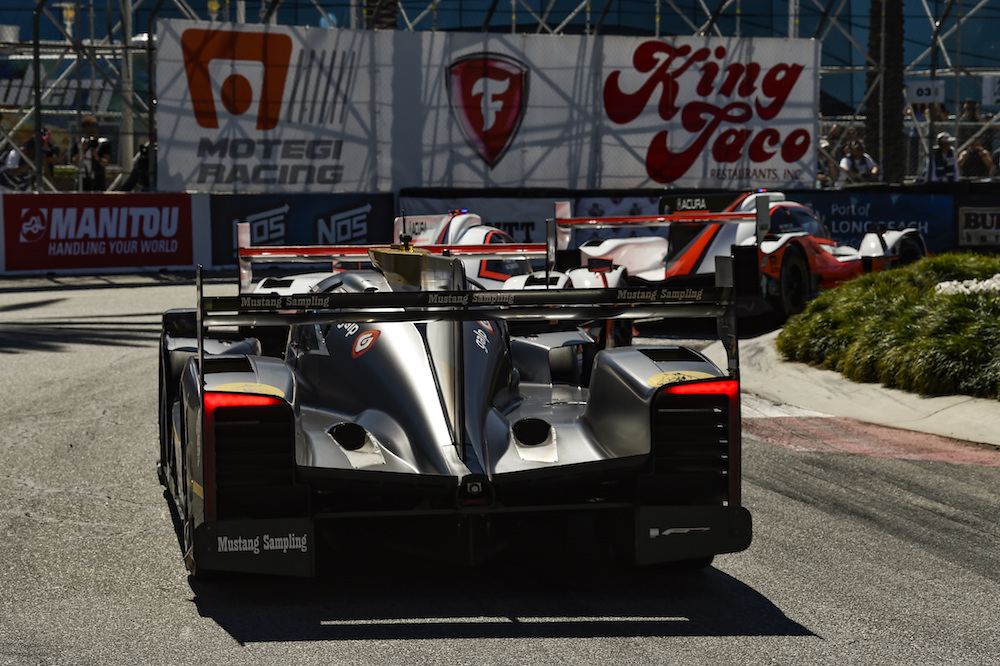
Are more Long Beach-style IndyCar/IMSA double-headers an option for boosting attendance? Image by LePage/LAT
My take: IMSA and IndyCar should have more joint events like Long Beach, as their target markets are very similar. I remember they did that at Road America and it was a great weekend draw. They need to let pride/ego get out of the way and work to build their live gate.
It appears that promotion efforts are highly variable, and in the case of COTA there was very little in terms of promotion in the Dallas/Fort Worth area. Given that we have about 7 million full-time residents, you would think that would make sense. But on the other side of this coin, the COTA people did a heck of a job to offer varied activities for everyone from the casual fan to those of us who are enthusiasts. In your view, is there a common thread that you think has led to this decline? (Other than NASCAR on the cookie-cutter 1.5-mile ovals is painfully boring).
Emmett, Dallas
RM: No I think it’s a combination of gas prices, hotel gouging, late starting times and just what you said earlier: too easy to sit home and watch. If I didn’t work for RACER and NBC, I’m not sure how many races I would ever attend. Maybe Road America, Iowa (if Bill Simpson flew me there in his plane), Long Beach and Indy (but I’d leave with 20 laps to go to beat the traffic). But double-headers are the key to try and create more interest and better attendance, and I think IMSA needs to embrace that fact.
Q: To draw more fans, I think oval tracks need to put roofs over the grandstands. Remember when we'd go to the fairgrounds speedways and they all had covered grandstands? Those are great on these scorching hot afternoons when they want to run races at paved ovals. Modern construction techniques can probably eliminate the need for poles that obscure our view, or at the least minimize them. It would also be great if it decides to rain. The Speedway should consider this for those sections that are still out in the open.
If building roofs over the stands is not an option, then more tracks need lights. Saturday nights are the best times for oval track racing. Pocono would be beautiful under the lights, as it's already a beautiful place during the day. Gateway looks phenomenal under the lights on television, same as Iowa and Richmond before it. Embrace the night. Agree?
Dave Long
RM: A good friend of mine brought that up the other day, and I do agree that it’s a big concern for older people to sit out in the blazing sun for three or four hours. But night racing is really the answer, because the cars look great, the weather is cooler and it’s just seems like more of an event.
Q: I enjoyed your recent article about IndyCar attendance. Two big contributors to the downturn are entertainment competition (new sports and video games) and the advent of ubiquitous high definition television, but you know this better than I. I’m hard pressed to go to Pocono when I can sit back in my living room and watch the race (and the NBC crew, + Gold) in HD. I just can’t seem to get there, especially when Pocono tacks on fees at checkout, as they have in the past.
And there’s one thing that IndyCar used to have that’s gone by the wayside: car and engine diversity. I wonder if the crowds would be bigger if the field of cars included Wildcat, Coyote, March, Penske, Porsche, Galmer, Dallara, Eagle, etc., and the engines included Offy, Chevrolet, Honda, Buick, Foyt, Ford, Cosworth and helicopter turbines (ha!). The racing is great, but the cars and engines added to the fun. (I know, costs, safety, but maybe there’s room to open up the design of the rear and front wings to the owners, with IndyCar safety certification?).
I’m 63, been following IndyCar since my dad took me to Trenton to watch Foyt and the IndyCars run when I was seven or so. [Foyt would bring his car in across the track with a pickup truck and a single car trailer!] That’s a long time to be in love with anything. And for the first time in a long time I was really excited about a driver – Robert Wickens. Soft-spoken and fast, and then that damn Pocono fence. Words just fail sometimes. I don’t know what the future holds, but I’m damn glad you’re still with us.
Jim Fling, Trenton (Speedway) NJ
RM: There is no doubt that a lot of the old-timers lost interest when the cars became spec and engine leases were mandatory. It’s made the racing great, like you said, but it did take away those added elements of technology, anticipation and curiosity. Wickens is an inspiration and continues to improve and amaze us every week, so don’t count him out. And I’m very happy to still be here, thanks.
Q: I email you (annually) instead of other electronic media. I like your one-on-one fan-friendly approach: you care, read, and respond to fans like me. My most recent example: I was glad to briefly see, converse, and bump hands with you in St Pete this March. Hopefully both of us 70-year-old Hoosiers will be able to see each other again in St Pete next time. My comments in regard to this week's piece on IndyCar attendance follows: I suggest the revenue and attendance for real diehard fans who attend Fridays/practice are also included in race weekend revenue and fan numbers. Yes, I am probably talking about the 1% level of attendance numbers and revenue at a race weekend, but having those relatively accessible/somewhat pricey close-ups for my two sons (and myself) on practice days (starting in 1972) and the close encounters/photos/sounds/burnt fuel aroma have had lifelong impacts on their continued avid IndyCar interest.
Tim Crum
P.S. I first met an IndyCar driver in 1961 – Red Amick.
RM: I don’t disagree with your suggestion and there are good Friday and Saturday turnouts at road courses and street circuits, but is it the same person all three days? Not sure how you gauge that in ratings. And the ovals draw nobody for practice or qualifying anymore, but they did when we were growing up and you were introducing your boys to Indy.
Q: IndyCar at Iowa Speedway has to be one of the great deals in racing. The hotels in Des Moines, 45 minutes from the track, don't seem to notice the event and are amazingly cheap. It's possible to drive in on Saturday morning from Kansas City, Omaha, or Minneapolis and watch the race. After spending Saturday night in Des Moines, you can be back home before noon. There's not a bad seat in the place, and you're watching some of the world's best drivers look like slot cars as they turn eighteen-second laps. If you can take that Friday off, you can add in a trip to Knoxville for some sprint cars on the dirt. All for less that it would cost a family of four to go to an NFL game in their own city. When we lived there, we took people who swore that they had no interest in racing and turned them into fans. Do you think attendance will improve with the return to Saturday night?
Robert Meegan
RM: I hope so, because the Iowa fans always got there early and stayed late for the night race, but Sundays seemed to keep people away and one reason was the drive home Sunday night. But it’s a great facility and usually a pretty damn good race. See you in a few days.
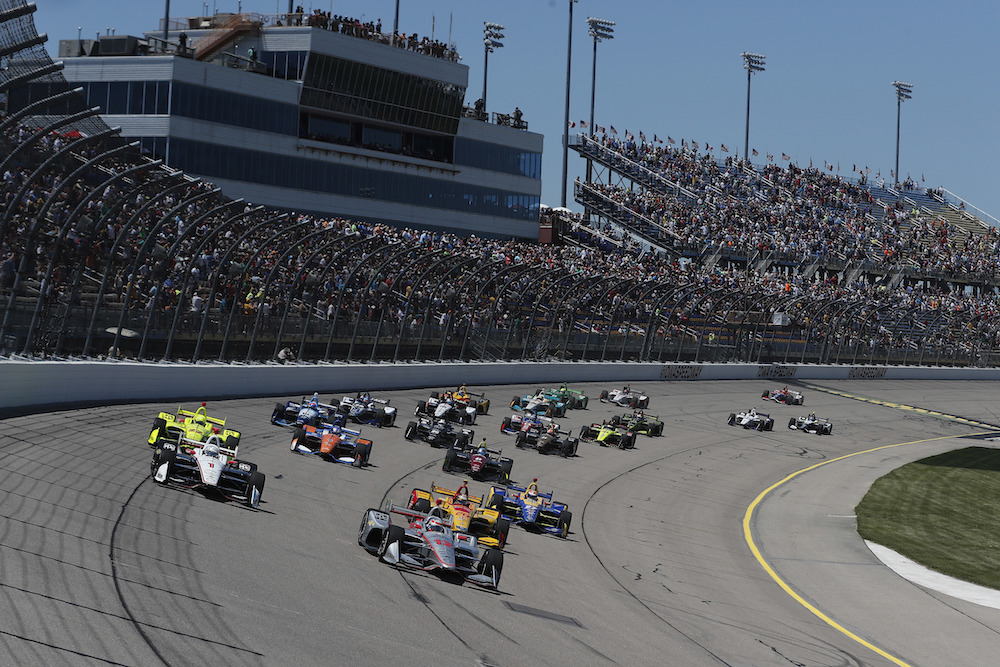
Spectacular racing, cheap hotels... what's not to like about IndyCar at Iowa? Image by Abbott/LAT
Q: Just read your piece on crowd size. There are certainly many reasons (as you pointed out) why attendance is down. Beyond the reasons you have discussed, IndyCar must take much of the blame. I have been going to IndyCar events since 1974 and consider myself a dedicated fan: My two sons and I have seen races in Cleveland, Mid-Ohio, Michigan, Nazareth, Texas, California, Pocono, and of course, Indianapolis. Over the years I have never felt the sport appreciated fans like my boys and I who have taken our hard-earned pay and got in the car and drove to our favorite races. Many summers these weekend trips were our family vacation. One by one our tracks disappeared from the schedule. Every time we lost a venue it was like a kick in the gut to us.
But what has really made it hard to keep supporting the sport is the idiotic start times IndyCar (driven by TV) has gone to. A few years ago we made our annual five-hour drive to Pocono (love the track). Three weekend grandstand tickets, paddock passes, two nights in a motel and a couple of days of meals for three. This was an easy $1000+ weekend. The powers that be had scheduled the start time for this 500-mile race at 3:30 p.m.! If everything went perfect the race could end in the dark.
On the Friday before the race every weather forecast said heavy thunderstorms would arrive in the early afternoon on race Sunday. When we headed to the track on Sunday morning, it was a beautiful summer day. We checked the weather and it looked like it would be perfect weather until about 2:30 or 3:00. I told my boys, don't worry, I'm sure the officials are seeing the same forecast we are and will start the race early. No way, the hell with the loyal, ticket buying fans. The race did not start early, and at 2:30 the skies opened up and the race was moved to Monday. We all had to be to work Monday morning, so I spent $1000 + to see practice and qualifying on Saturday. I have not been back to Pocono since, as they have continued with their stupid start times.
Recently we were making our plans for our trip to Mid-Ohio this August. I cannot count the number of trips we have made to Mid-Ohio. My youngest son now lives in New Jersey, and booked a flight into Columbus with the only flight out being early Sunday evening. A few weeks after making our plans we discovered the start time for the race is listed as 4:30 p.m.! This is probably the "start your engines time", so the green flag will more than likely be closer to 4:45. Who could possibly think starting a race on a Sunday in the eastern time zone at 4:45 makes any sense? Upon discovering this start time we immediately dropped our plans to attend the race. My son has a non-refundable ticket that he will now eat.
Certainly starting times are not the only reason for attendance decline, but for us it has been really disappointing to feel no love from the series that we have cherished our entire lives. We love the sport in spite of the fan un-friendly decisions that seem to be coming more often. The series is doing its best to drive paying fans away. Am I alone in this feeling?
Spike Mancuso, Sharpsville, PA
RM: No, you are one of many fans who I’ve heard from in the past 48 hours after my column, and you are spot-on in your logic and frustration. That’s why I have so much admiration for George Bruggenthies. He told IndyCar the only way it would ever come back to Road Atlanta was if the race started before 1 p.m., and he stuck to his guns and it’s been a hit the past four years. I realize my employer (NBC) is responsible for some of the late starting times, and we’ve got to have live TV (although I’d be all for tape delaying it and starting every race at 1 p.m., but that doesn’t fly anymore). Mid-Ohio’s starting time is actually 3:45, but that’s still way too late for your son and for people who have a four or five-hour drive. The paying customers get the short end of the stick way too often, and after a while they simply quit coming. Thanks for your honest letter and passion for IndyCar.
Q: I just read your piece on attendance figures, and your analysis seems sensible to me. My only question is your attendance number for Petit Le Mans at Road Atlanta. I go almost every year (I confess to missing last year), but the last several years it has been as crowded as I have experienced, and I had read attendance figures of around 100,000 (give or take). I’ve been at the track for races when there were 10-20,000 in attendance and 40,000 seems low for the past few years. Where did you get those numbers?
Paul Lewis, Macon, GA
P.S. I am one of those who would love to see IndyCar come to Road Atlanta. Any idea how much it would cost for safety upgrades? Hopefully I’ll make it to Barber one of these years for the race there. My only live IndyCar race was Mid-Ohio in 1994 – an amazing experience. And Road America is on my bucket list. If they’d just schedule races better around my work calendar (or I could schedule my work calendar around the races…)
RM: I talked to Marshall Pruett and a couple of sports car guys, and they all thought 40,000 a fair number for race day. Like I wrote, a road race crowd is the toughest to judge so we’re all guessing, but no way it’s anything close to 100,000. Not sure what would need to be upgraded since I haven’t been there in 20 years, but it’s a beautiful track and I’d love to see an IndyCar race there.
Q: I brought two rookies with me to my fifth Indy 500 in May, and it was my daughter’s third. Her boyfriend and his friend were all in their 20s. My eight-hour drive from Toronto was basically spent educating them on why IndyCar is the best racing on the planet. They loved the 500 and can't wait for next year. They are hooked, but not interested in any other race on the calendar. How can IndyCar get more of the younger generation interested? The Toronto race is this weekend; they have no interest. Do you think IndyCar can do a better job marketing to the under 30s? I will look around this weekend at the average age of the spectator and get back to you next week.
Ron Z.
RM: It’s tough to top Indy for atmosphere, speed and drama, so that was a good place to indoctrinate them, but I do think IndyCar has a new marketing plan that includes a younger demographic. If you can get kids to the track (as you saw) you can usually hook them, but it’s not easy because this new generation doesn’t seem motivated by cars or speed. But thanks for introducing them to Indy.
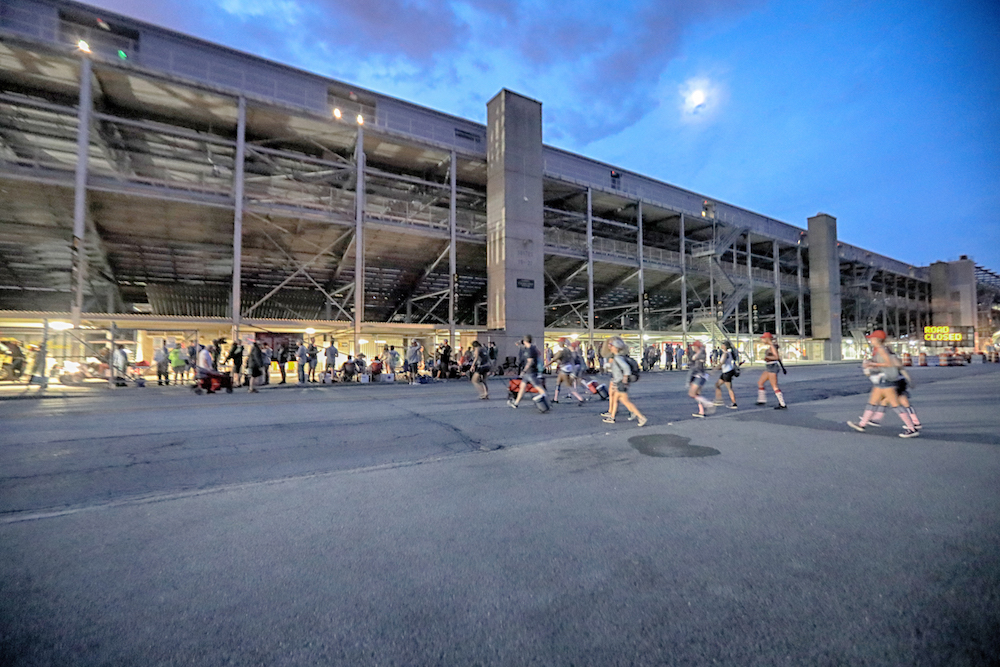
Getting young fans through the gate for the 500 is one thing. But what about the other races? Image by IndyCar
Q: Saturday morning in the RA paddock the Honda motor home had all its blinds drawn, and a sign on the door that said, "keep out, private meeting.” Sitting by the door was only Alexander Rossi’s scooter. No doubt Honda wants to keep him. Now on to my theory.
If NAPA were willing to pay Penske 75% of the cost of a full season for Rossi, I have no doubt that The Captain could easily find the remaining 25%. And since Team Penske ran four cars for many seasons, I don’t see him being afraid to do it again, for one or two seasons. And how could Rossi say no? The Chevy engine that he chased at Indy. Penske’s legendary strategy calls. And considering Rossi’s age, perhaps staying there for the next decade? I don’t want it to happen from a competition standpoint, but it doesn’t look impossible.
Mike Talarico, Charlotte, NC
RM: Oh it’s definitely not impossible, and I don’t think R.P. needs NAPA money to offer Rossi a full-time ride. But let’s think about this. He obviously has something special with his engineer, Jeremy Milless, who wouldn’t be following him to Team Penske because he got fired from there once for insubordination. Michael Andretti and Bryan Herta gave Rossi a job when nobody else knew who he was over here, and then Honda instantly embraced him. I’ve said all along that I’m not sure Alex is motivated by money as much as he is performance, security and loyalty. No doubt The Captain could probably pay him more than anyone else, but Andretti is now his team, whereas he’d be one of the four spokes at Penske. He’d also have a chance to win Indy six years in a row, so there’s that. Stay tuned maybe we’ll find out some things this weekend in Toronto.
Q: Glad to see that Dixon has given an initial thumbs-up to testing for the aeroscreen. (BTW, contrary to some statements, the latest iteration actually is a Halo, it’s just also wrapped in composite plastic). It’s time has come and is long overdue, and with the Red Bull collaboration I am betting we see it in F1 soon after. I’m convinced in 10 years people will look back at open-wheel racing and say “what were they thinking before then?” Seriously, what person of sound mind today would even consider for a microsecond running a sprint car or midget without a roll cage? My technical question is, what is the solution for rain races? Wipers? Hydrophobic repellent (i.e. RainEx)? Has this scenario been tested?
Scott B., Gainesville, FL
RM: IndyCar is testing a big tear-off for oil, and dealing with rain is also an on-going priority that the drivers will weigh in on as they get closer to the first on-track test in September. IndyCar has been very deliberate in developing the Aeroscreen/Halo, and it understands all the hurdles that go with it.
Q: I just saw the test that was conducted using the new Halo (don't call it an Aeroscreen). I know there's a call out there to mitigate as much of the risk as possible, but if you eliminate all of the risk, then no one will watch. There are still others who want to enclose the cockpits and wheels and eliminate ovals. OK, so you want a sports car. But, we all know no one has ever been seriously injured or killed in a sports car, right? If this is truly the future of IndyCar, then sadly, after 50+ years, you can officially count me out. I'll still go to the Indy 500 for the race day spectacle only, but no more silver badges, Carb Day or road trips to other races (which we do about four-five times a year).
Scott C., Bargersville, IN
RM: Nobody wants to hear it, but danger has always been racing’s greatest hook. That’s why our heroes of the ’60s are still revered today, and cheating death in those lethal times were part of their legacies. IndyCar was aware of this and was careful to make sure the car didn’t lose its open-wheel identity with whatever safety measures were taken. I was pleasantly surprised by how the car looked, and obviously you don’t want to make it so tame that anyone can drive an IndyCar. But I don’t think it’s going to take away from the luster of running wheel-to-wheel at 200 mph and/or good, hard racing that thrills the paying customers. And sports cars killed Bruce McLaren, Michele Alboreto and Jerry Titus, to name just a few.
Q: I think you are starting to drink the Kool-Aid. In last week’s Mailbag someone asked if blocking rules have changed, bringing up Marco's holding the line versus Simon's weaving in Indy 500s. You said Simon was not blocking, just trying to break the draft. Why does someone try and break the draft? To prevent someone from passing them. Pretty much the definition of blocking.
I know it's all about the aerodynamics, blah blah blah. Erratic driving to prevent someone from passing is blocking. I suppose Verstappen didn't do anything wrong when he drove Leclerc off the road in Austria. Couldn't make the pass stick the lap before when he left room, so next time around, just push the competitor into the weeds. That isn't racing, that's pushing a competitor into the weeds. Both go down as winners so I guess that's all that matters, right?
Mark, San Diego
RM: I gotta disagree, Mark. You are allowed to make one move and then not counter if your opponent makes a move in response, and Pagenaud did the same thing every lap – come out high and dive to the inside, but he didn’t swerve or go up and block Rossi (and that’s why they were able to trade the lead in the closing laps). That’s just become part of how to defend yourself at IMS, and I don’t consider it blocking like an F1 car cutting across the field at the start or just about anytime someone tries to pass. I hate blocking because that’s not racing and takes no talent, but it’s become a way of life in NASCAR. Thankfully, it hasn’t in IndyCar.
Q: First, it is nice to finally read a Mailbag with less bitching. All the negativity had gotten me to the point of skipping the Mailbag for the most part. Second, do you think that the introduction of the IndyCar Aeroscreen in 2020 will help encourage the return to mile-and-a-half ovals? I for one really miss the great racing at Chicagoland Speedway and the other superspeedways. Third, for me the current aero kits for the superspeedways are too simple. They have not only lost the "cool factor" of an F1 set of wings, but the simplicity seems to have negatively affected the racing at Indy by not dirtying up the air enough. Any thoughts on a new aero package for speedways that could improve the racing and add more variety?
Ed, Hickory Hills, IL
RM: Returning to Chicago, Kentucky or Kansas would be more about them wanting an IndyCar race than the current aero package, because the racing was plenty good enough at Texas. It wasn’t a photo finish or an IRL pack race, but there was plenty of passing and a competitive race. Indy had a fantastic finish and people bitched about the first 100 laps because nobody tried to pass, and that’s because everyone is saving fuel so I don’t think any aero tweak is going to change that strategy. It’s never going to be 200 laps of non-stop drafting and sling-shotting and it never has, but Pagenaud and Rossi certainly made it worthwhile in my book.
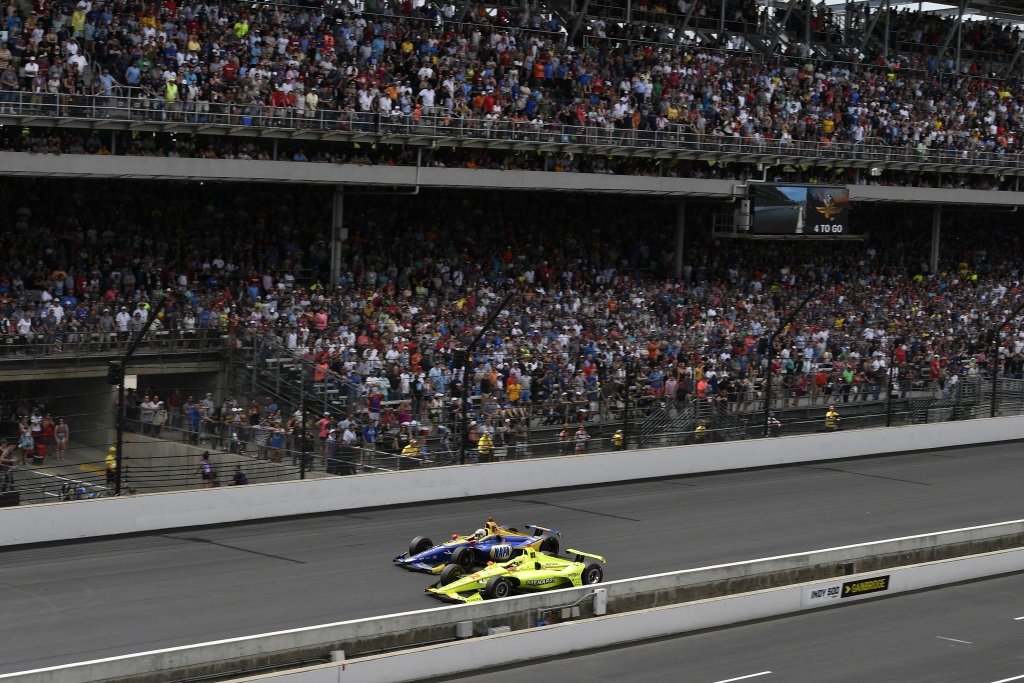
The blocking/draft-breaking debate continues to rage. Image by IndyCar
Q: Why you think IndyCar is such a hard sell to engine manufacturers? IndyCar seems to be the only motorsport that is on an upswing, but manufacturers still turn their noses up at them. These companies are in all forms of motorsport but avoid IndyCar like it’s poison. Is there anything that Frye and company are doing/can do to make the series more desirable to the manufacturers?
D., Medford, OR
RM: Not sure why, but the V6 engine is relevant and turbocharged engines are IndyCar’s calling card, so all I can say is that Jay Frye is constantly talking to potential manufacturers (he got a surprise call from one last week) but it’s a major investment and so far nobody has pulled the trigger.
Q: IndyCar has said they are increasing engine displacement from 2.2 liters to 2.4 liters in 2021. This is increasing HP from 700 to 900, and I know you’re a fan of more HP. My question, is this change for better racing, or to add other manufacturers to the mix? Also, what ever happened to Cosworth returning?
Bill Brant
RM: Rick Mears has advocated more power and less downforce for a long time, and we’ve had that combo this season and the racing has been good, so I don’t see why it would negatively affect the racing. I think Indy cars should always have the most power and if that attracts a new manufacturer, great, I don’t believe that’s the impetus. Cosworth is still in the wings in case a new manufacturer comes in and is looking for a badge, but Cosworth isn’t going to compete on its own.
Q: It seems to me the consensus is that Road America is, if not the best road course in North America, certainly on the short list, correct? With that being said, over the years has there ever been any consideration given to Road America hosting the F1 U.S. Grand Prix? If not, why not? Keep up the great work.
Rod, Houston
RM: Not to my knowledge. You’ve got to remember that Bernie Ecclestone stayed in Chicago during the USGP at Indianapolis because he couldn’t find a room or restaurant to suit his tastes. So despite its wonderful track, Elkhart Lake never got a look. Where would Bernard have stayed? Or dined? Seibkens? Not sure if Liberty Media has that same attitude, but judging by their wish list of Miami or L.A., it appears they’re looking for a cosmopolitan city to host another F1 race.
Q: So, watching the World Cup, and in particular the "I Believe" commercials, and it occurs to me that auto racing and IndyCar needs to be proactive in bringing young girls into the sport to not only help the sport grow, but to bring a whole new audience into the sport now and for the future. So, my question is two-fold: does IndyCar agree with my view toward growth, and is there a proactive attempt at any level of auto racing to recruit women into the sport? If not, should there be?
I don't mean to slight Pippa Mann with these questions -- she does an extraordinary job with limited resources and she is much to be admired for her efforts. Nor do I mean to dismiss the accomplishments of Danica Patrick or Sarah Fisher or Lynn St. James or Janet Guthrie or any of the other females racers who achieved in IndyCar racing. But female racers are under-represented in the sport and you'd think by now they'd have a bigger impact. Also (which is, I suppose, a third question), are there female drivers in the lower ranks we should be keeping an eye on as they climb the ladder to the top series? If so, who?
Jake, Pasadena, CA
RM: IndyCar didn’t think it was important to find Sarah Fisher a ride when she was the IRL’s most popular driver, and nobody lifted a finger to keep Danica in open-wheel when she bolted for NASCAR. So my short answer is no, there’s never been any kind of recruiting plan, and IndyCar didn’t even try and keep the two fastest female racers that Indy’s ever had. There are some young ladies currently making some headlines in stock cars (Hailie Deegan and Natalie Decker) and midgets/sprints (Holly Hollan, Maria Cofer and McKenna Hasse) but here’s how young ladies can get involved in motorsports. It’s a program started by Katie Hargitt, a former Ford Focus midget racer and NBC pit reporter who now works for IMS Productions:
“Happy to pitch in here, but our “Fuel the Female” initiative is more focused on the STEM (science, technology, engineering and math) side of the sport (ie: engineers and mechanics). IndyCar is forward-thinking in this way with many successful women on the grid. Firestone boasts a female lead engineer with Cara Adams, Chip Ganassi Racing leans on Kate Gundlach to engineer the IceMan’s fuel strategy, and Andretti Autosport employees the only full-time female mechanic in the paddock. There are many more women up and down the grid that I didn’t mention. In all, eight women work full-time on the competition side (directly affecting the performance of a car) of IndyCar. It’s an improvement from just a few years ago, but more improvements can always be made.” – Katie Hargitt
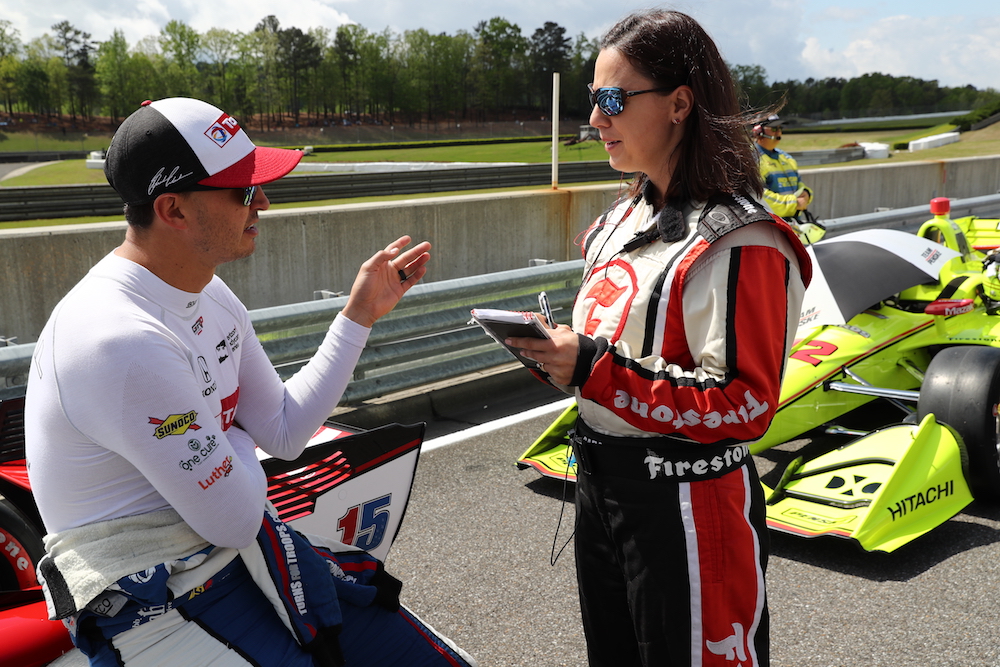
Firestone's Cara Adams is one of several females holding prominent competition roles in the IndyCar paddock. Image by IndyCar
Q: Looking to go to Iowa for the first time this year and noticed all the seats available. You keep mentioning Pocono leaving schedule for 2020; how is Iowa going to remain without Iowa Corn providing sponsorship? Is this last year of Iowa's contract with IndyCar?
James, Campbellsville, KY
RM: Iowa has a new title sponsor, and even though it’s the final year of its contract I think both parties want to continue. And Pocono is probably 50-50 to return.
Q: Geez Miller, take it easy. What if I were a first-timer or some kid with that email? While we all appreciate the time you put in to answer our questions (and I get that you must get tired of the same questions), damn man. It wasn't like I was asking about Michigan. Now, back to the topic. 1.) Rossi spent most of his life working towards F1. If a chance for a competitive ride (Merc, Ferrari or Red Bull) comes up, why wouldn't he be interested? Same goes for Max. Even with the win in Austria, would Max not consider jumping ship if a seat opened up at Merc or Ferrari?
2.) You've said yourself how keen Honda is to keep Rossi. Honda has four seats in F1. If AA can't come up with the money, might Honda dangle that carrot? I can't imagine him being interested in driving for Toro Rosso, but the senior team might have two vacancies at the end of the season. 3.) Would Rossi take a spot at Penske if he has the chance to win in F1? 4.) Sorry, I don't have the FIA on speed dial to ask them if he still has his Super License. Which is why I asked you.
Look, my preference is pretty much the same as everyone else's – that he stay at AA and maintain the balance. Losing a driver of that caliber to any other series would suck. Especially to F1, which is so predictable I quit watching. You seemed pretty offended at my suggestion. My apologies, but still, damn.
Mike in SD
RM: I wasn’t offended or mad, and I’m sorry you took it that way. I just simply found it highly improbably that Rossi would want to leave IndyCar since he’s become one of the drivers to beat every week and he’s loving life. Nor do I think F1 is in a pursuit mode to bring him back, but I imagine it’s possible, just not for the two teams he could win races for. And sure Verstappen might jump to Mercedes or Ferrari if offered, but he’s the face of F1 for the next 20 years. Right now Rossi is the new face of IndyCar. I can’t answer No. 3. I will ask Alex about his Super License this week at Toronto. Thanks for writing and being a passionate IndyCar fan.
Q: I can't recall ever reading why Chip Ganassi appears to not want an American driver. Why? With all else equal – driving ability and sponsorship dollars – would Ganassi always hire a foreign driver versus an American driver? Why?
Patty, Omaha, NE
RM: Chip was spoiled by Zanardi and Montoya, even though Jimmy Vasser earned that first CART crown for him, and with Target he could always hire whomever he wanted. He had Michael Andretti for a year (and got his initial CART win) and then went to Bryan Herta and Vasser before the foreign invasion began. Graham Rahal and Charlie Kimball had to bring sponsorship but were never part of the A-team. It’s just Chip’s preference to go with a foreign driver instead of an American unless it’s some kind of special circumstance.
Q: The early history of IndyCar racing found drivers from various short tracks located around country. Mario raced a midget at my home track in Danbury, Connecticut (sadly shut down in 1981) before achieving his fame in IndyCar and F1. Nowadays, the good short track sprint and midget drivers find their way to NASCAR – Gordon, Stewart, Larson and so on. Financially, of course, it would be impossible for a short tracker to find his way into a top IndyCar seat, but wouldn't it be a wonderful boost for the sport in general? Do you think a Christopher Bell or Kody Swanson would put more rear ends in the grandstands at an oval track race?
Eddie F., Norwalk, CT
RM: Good question. When Bryan Clauson got his chance at Indy I hoped it might spark interest in the ratings and attendance during May, but I don’t think it did. I called Bell last March and asked if he was interested in running the Indy 500, and of course he was, but I don’t think Joe Gibbs would allow it. Swanson is magic on pavement in USAC Silver Crown, but obviously needs financial backing, and I’d heard he could be in line for an F2000 or Lights ride next year but that’s kinda died down. If Rico Abreu got an Indy ride he’d become the most popular driver overnight, but I’m not sure that it holds any interest for him – and he would also need a backer. If Bell, Swanson or Abreu got an IndyCar ride at Iowa it might make a difference since Knoxville is so close, and you would think it could also help Pocono with all the sprint car fans in Pennsylvania, but I’m just not sure enough people care to go buy a ticket.
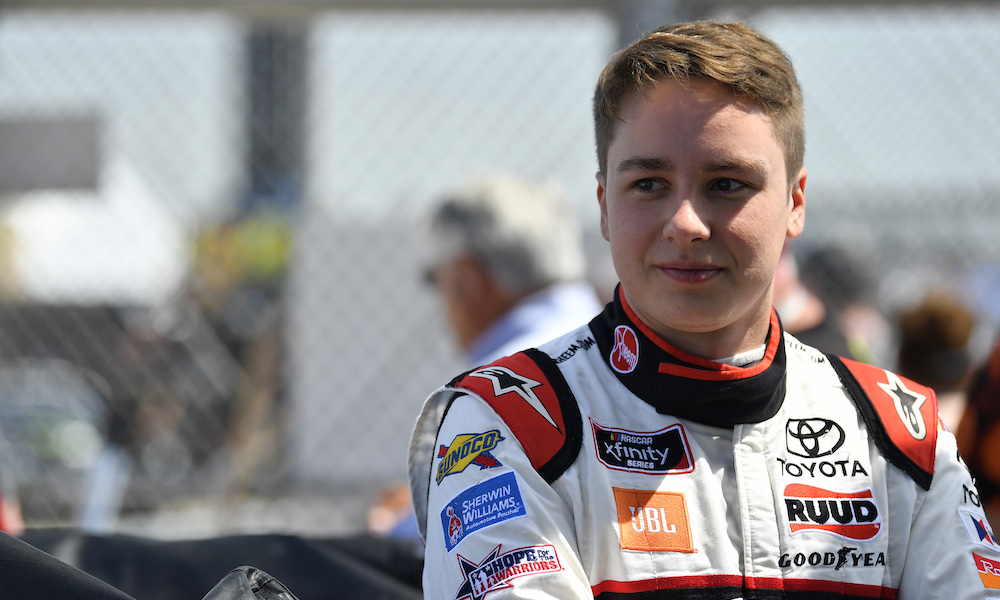
Would the sight of Bell in an IndyCar be enough to get some short track fans out of the woodwork? Image by Baker/LAT
Q: Since you're not discouraging my hopes of a return to Richmond, and added that Jay Frye is open to ideas, here's my suggestion. Run the Richmond Twin 200, one 200 (mile or lap) heat in the late afternoon while the sun is shining on the track, and one after dark under the lights. I think the short race distances would eliminate the conservative strategies that are making some of the oval races yawners. Drivers qualify for the first heat, and random draw for the second. Put a Silver Crown race in between (my nephew enjoyed that even more than the main event when IndyCar was here previously), and you've got three races in one day with different environmental and tire combinations for the teams to take into account. Looking forward to seeing IndyCar again regardless, but I think that format would pack 'em in.
Napalm Nick, Locust Grove, VA
RM: I like that idea, maybe twin 150s with a USAC show at intermission, and I think Jay is open to any suggestion and would consider it if it had the potential to make a difference and draw new interest (which I think it would). Hell, I’d run it on a Wednesday night and be the first on the block to try that, and I bet the TV ratings would be boffo but the box office might hurt.
Q: With much respect to Roger Penske, why is it that he can have the Detroit race after Indy when everybody wants Milwaukee? He is not the head of IndyCar. Mark Miles and Jay Frye are the leaders of IndyCar, and they need to listen to us fans, and we as fans have a right to be heard. I truly believe that with Milwaukee right after Indy, the attendance would increase big time! IndyCar should have a fan meeting at the Speedway and hear our thoughts on how things could get better. Another issue that I disagree with is not having the last oval race late September or the first weekend of October at Fontana. We need to end the last race of the year at Fontana on a Saturday night! It would be great way to end the series!
Terry Gobble/ Urbana, IL
RM: From 2004-2006, Champ Car ran Milwaukee in June and the IRL in July until it went to the week after Indy in 2007, and stayed there in 2008 and 2009. Michael Andretti tried to resurrect it in 2011 in mid-June and kept it through 2015, alternating between June, July and August, but not getting much of a turnout. I do think it could work again if it was the week after Indy, but finding a promoter won’t be easy unless Bob Sargent (who staged an ARCA race there last month) would be willing to try. Maybe IndyCar cuts him a great sanction deal like Randy Bernard gave Andretti, but he would still need a stout title sponsor (maybe ABC?) to make it work. After we go to Elkhart Lake it always make me think Milwaukee could make a comeback, and maybe there could be some kind of a 2-for-1 ticket (I believe George Bruggenthies wanted to try it once), but the longer IndyCar is away, the tougher sell it would be. But with respect to The Captain, he got a home race for Chevrolet, and that’s why he gets his way – plus he’s Roger Penske. But I think we all agree we’d like to see Texas the week after Indy and then Detroit, but that’s not going to happen in the immediate future.
Q: I know that there is no return to MIS in the works, but I’m curious if you could explain how the seeming rift between IndyCar and MIS came to be. It was a terrific venue for open-wheel, side by side racing. The visibility from all the seats is just great. If there were to be an interest between IndyCar and MIS, what would the objection be from the Penske camp? And might MIS be in the mix for an IndyCar/NASCAR double-header? While I’m at it, I took your advice about NBC Gold pass and it is terrific. I’m sure they’ll work out the bugs…
Randy Fritz
RM: I don’t recall any rift. I think it was a mutual divorce after 2007 because attendance wasn’t very good for the IRL after replacing CART in 2002. But yes, it was always good racing, and I think it hit a high water mark in 1995 with about 70,000. But Belle Isle and MIS co-existed from 1989-2001, so I don’t imagine there would be any problem if there was proper spacing between dates.
link
to share.Scott Stiller, Pittsburgh, PA
RM: Much appreciated Scott, very interesting perspective from PNC and one of many ways that B-to-B works. Thanks.
Q: Was wondering what ever happened to IndyCar racing at Pikes Peak International Raceway? I ask because I am a huge IndyCar fan, haven’t missed the 500 since 1995, and I just moved out here to Colorado two months ago and it would be incredible to have that race again. Your thoughts?
Brian Turchi
RM: It’s still in operation, hosting concerts, performance schools and things like driving trucks, and the IndyCar race died a slow death like so many ovals and was gone after 2005. Everyone said the track was built on the wrong side of Colorado Springs, which discouraged Denver residents from attending.
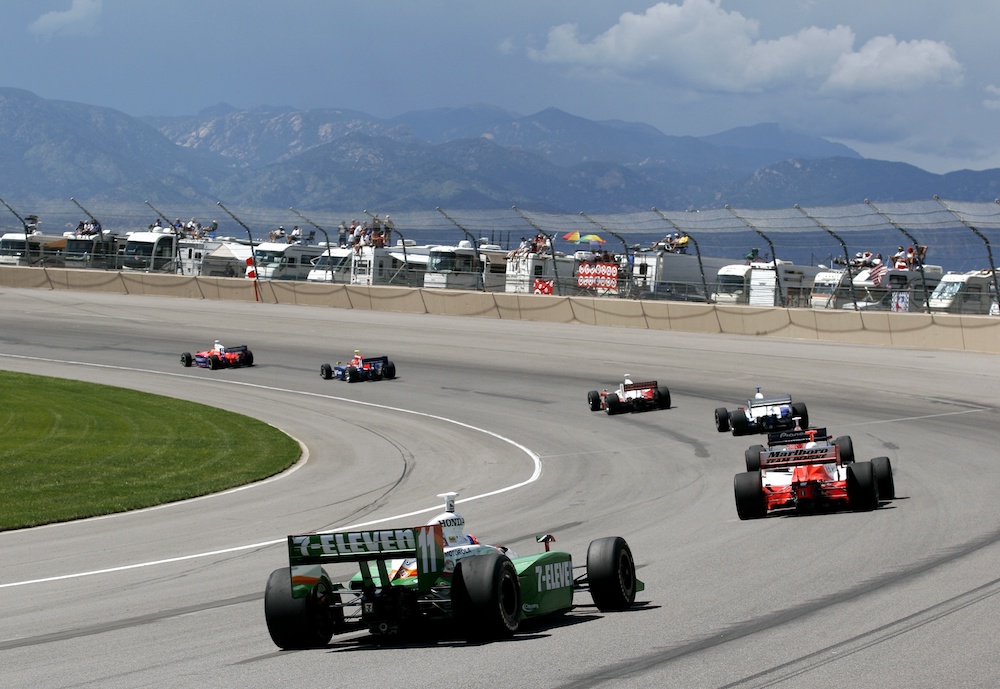
Pikes Peak Raceway in 2005. Pros: It's scenic. Cons: Too far from Denver. Image by Abbott/LAT
Q: Besides the Indy 500, which is your favorite track? One that forces drivers to use all their skills? Or the one where speed is king?
Mike C, Sacramento
RM: I always liked Phoenix and Milwaukee for Indy cars because it made for such good racing in traffic, and Trenton was tricky and challenging. Kokomo and Little Springfield were my favorite midget tracks when I raced, and I always loved Eldora, Ascot and Manzanita for sprinters. DuQuoin was the best for dirt cars, and IRP hosted lots of good USAC racing.
Q: I am reading the book "The Perfect Car: The Biography of John Barnard." In the book, he states that you "wrote that JR (Johnny Rutherford) drove the John Barnard-designed Chaparral constructed in England by BS Fabrications" and that Jim Hall confronted you about this, his claim being that Chaparral made the car under his direction. Is Jim the great innovator as we have been told, or is he just taking credit from others because his team ran the cars with the name Chaparral on them? Per the book, it sounds like the latter.
Ted, Mid-Michigan
RM: I was walking through Gasoline Alley the morning after the 1980 Indy 500 and Hall came out and kinda threw The Indianapolis Star at me and yelled: “Where do you get your information? Who is this Barnard and B.S. Fabrication?” I kinda smiled and said something like, come on Jim, and he replied that the Chaparral was designed and built by Chaparral Racing. We didn’t speak again for about five years. Al Unser, who had quit the best ride in IndyCar after 1979 because he was so mortified and mad that Bernard wasn’t given credit or even mentioned by Hall, actually thanked me for writing that story.
Q: What do you think Greg Moore’s future would have been had we not lost him at age 24? He would have joined Team Penske the following season.
Mark McKinley, Floyds Knobs, IN
RM: Well, Helio got that ride and became very good at Indianapolis and is a three-time winner, but Greg was a better oval racer and he might have won Indy four or five times for The Captain.
Q: I know that I'm rehashing the IndyCar at Watkins Glen storyline, but here I go anyway. I have a lake house on Keuka Lake and am about 18 miles from the track. The problem that The Glen had with attendance for the IndyCar race on Labor Day weekend had as much to do with the fact that on the weekend after Labor Day you have the Grand Prix Festival in the village and the SVRA's Vintage Grand Prix and Trans Am races at the track. I know a bunch of people will discount this, but the Corning N.Y. paper has said in the past that these events draw almost 40,000 fans.
This has been going on for the past 20 years, and for a lot of us it is a tradition to attend. A lot of us will buy their tickets in November for the following year. I know personally that dedicating two weekends in a row at the track is tough. Too bad they couldn't move the Texas race between Long Beach and the Indy GP, and slot the Glen in the end of June. I think that having the drivers race on an oval before the Indy 500 would make that race better, give The Glen a better shot with attendance, and there would be five or six weeks between COTA and Texas. When you talk about IndyCar doubling with IMSA, the question becomes what IMSA classes do you not run? Right now at The Glen IMSA runs four classes with a four-hour race on Saturday and the 6 Hour on Sunday.
Rich, Wayne, NY
RM: I don’t doubt that annual GP Festival the week after Labor Day affected the IndyCar crowd, and I had heard that a few times before your letter. Labor Day worked OK at Portland, and long before that, at Ontario, but back-to-back events would be a tough sell – especially going against one with a long history. And I’m not sure the last couple got much in the way of promotion either, because IndyCar basically rented the track. A double-header with IMSA could work, just qualify the IndyCars on Friday, do the four-hour race Saturday at 10 a.m. and run IndyCar after that – with the 6 Hour race going Sunday. My contention is that if NBC wants it to happen, then IMSA and IndyCar need to figure it out.
Q: Just read your thoughts on IndyCar returning to The Glen. What about joint IndyCar/ IMSA weekends (WGI July 1 and RA August 1). Sahlen’s Six Hours on Saturday with IndyCar with a decent start time on Sunday? That is two possible long haul weekends for a lot of us here in the Northeast and Midwest, but it’s also two great series under the same weekends at two of the world’s best road courses.
Brian Bristo, London, Ontario
RM: It would definitely benefit IMSA, IndyCar and The Glen to do it, and even though Road America is one of IndyCar’s biggest weekends of the season, there’s always room for more people. For sure they need to double up at Laguna Seca because neither are going to draw much of a crowd, but together they might have a shot.
Q: If this Glen double-header ever does happen, I will definitely drive there and tent camp for the weekend. Oh, by the way, from my driveway to The Glen is 1,404.8 miles each way. This would be a bucket list two-fer that I just couldn't pass up. Please cajole, bribe, etc., the powers that be into making this happen!
David Lind, Alexandria, LA
RM: I like your spirit, and I’ll buy you an IndyCar hat and a tank of gas.
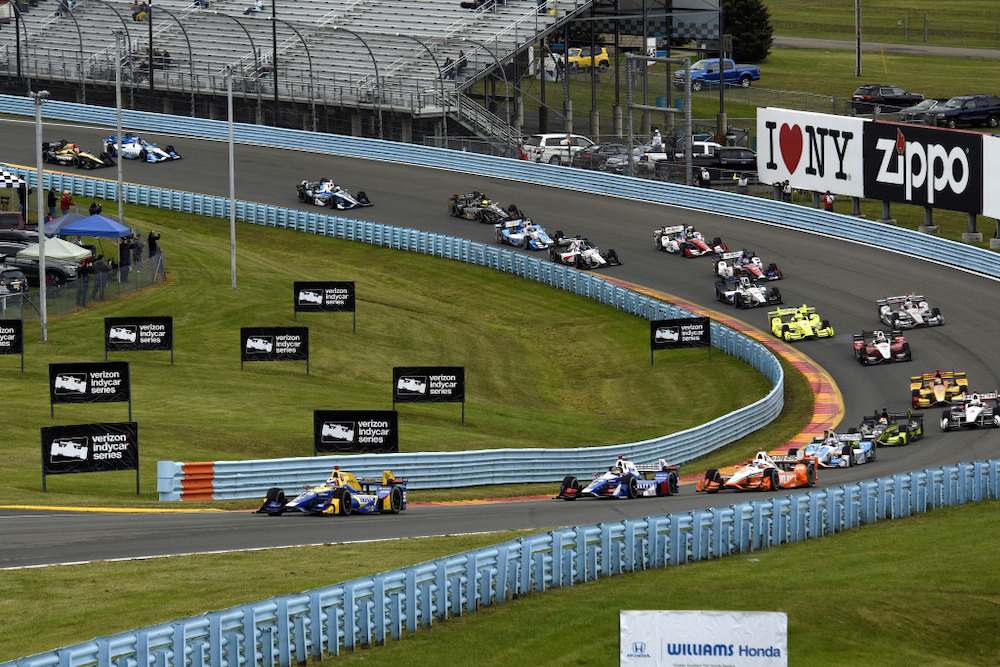
The desire to see IndyCar back at The Glen might be the one thing that every Mailbag reader can agree on. Image by Feistman/LAT
Q: I've followed IndyCar for six decades, so I'm an old guy I guess. I ponder the idea that in order to make Indy racing more driver-centric and less car-centric, maybe the tires should be changed, since there is only one supplier and everyone gets the same. My thought is that instead of tires with great grip and fast degradation to supposedly increase strategy and driver skill requirements (and consequently throw debris all over the tracks, thereby limiting the racing line), IndyCar could dictate harder compounds with less grip and minimal tire debris. Might this increase the value of a driver as driving difficulty increases, and open up more of the track since it won't be covered with marbles?
Doug Viall
RM: Between the blacks and reds tires we have plenty of good strategy and racing on road and street courses, and oval track tires vary, but Firestone doesn't mind if the degradation comes early and forces drivers to take care of their tires. But here’s how Firestone’s chief design engineer, Cara Adams, explains it: “Firestone engineers and compounders work to develop the best tires for IndyCar racing. Primarily, we develop a fast, durable tire and work very closely with the series to provide tires that makes for good racing. Tire management, especially on the alternate red sidewall tires, can separate the drivers and teams that are better at taking care of their tires from the rest of the field.”
Q: I've been an auto racing fan since the mid '60s, weaned on the race reports in my father's Road & Track subscription (which he only read for the street car road tests) and later other publications. Since most were Eurocentric, I was first educated about motorsport through F1, and other road racing series, later expanding to the American scene and oval racing by following those North Americans who made names for themselves "over there" such as my then-and-now all-time fave, Dan Gurney. As a result, I have the old-timers' perspective on that amorphous quality, "driver respect."
Most of the websites I currently haunt since my move from the printed page to the internet are more Eurocentric again (especially since I follow F1 most closely, followed by IndyCar) and, amid all the complaints about the flaws of the current formula of Grand Prix, have gone into high dudgeon over the officiating of this year's Canadian and Austrian Grand Prix. In your trips around the IndyCar paddock, have you had the opportunity to talk to drivers current and past and others in the community about those events in their cousin-series, and can you reveal their perspectives on 1) the driving, 2) the regulations and 3) how those regulations have been applied in F1? I'm sure I'm not the only one of your dedicated readers who'd love to know!
Earl Carter, Danbury, CT
RM: I haven’t really sat down and talked to today’s IndyCar drivers about respect or etiquette unless they’ve been involved in some kind of altercation. But obviously a lot has changed in the past 50-60 years. I do think they try and take care of each other at a place like Texas, but it’s more hand-to-hand combat at a street race, and the Dallara has allowed more contact without dire consequences plus damn good racing just about everywhere. I go to a midget or sprint race and watch these hellacious slide jobs in every corner, but it appears to be the way kids drive today and it’s accepted. (Plus the cars are much safer than when A.J. and Rufus drove them).
NASCAR has developed an ugly habit of blocking almost like F1, and I noticed Brad Keselowski spoke out about it last week. There was an interview with Jackie Stewart and Ayrton Senna after Senna deliberately took Alain Prost out in the first corner to win the championship. Stewart was appalled, and Senna was mad the three-time world champ called him out. I guess that’s the biggest difference between how you and I look at racing, and how it’s viewed today.
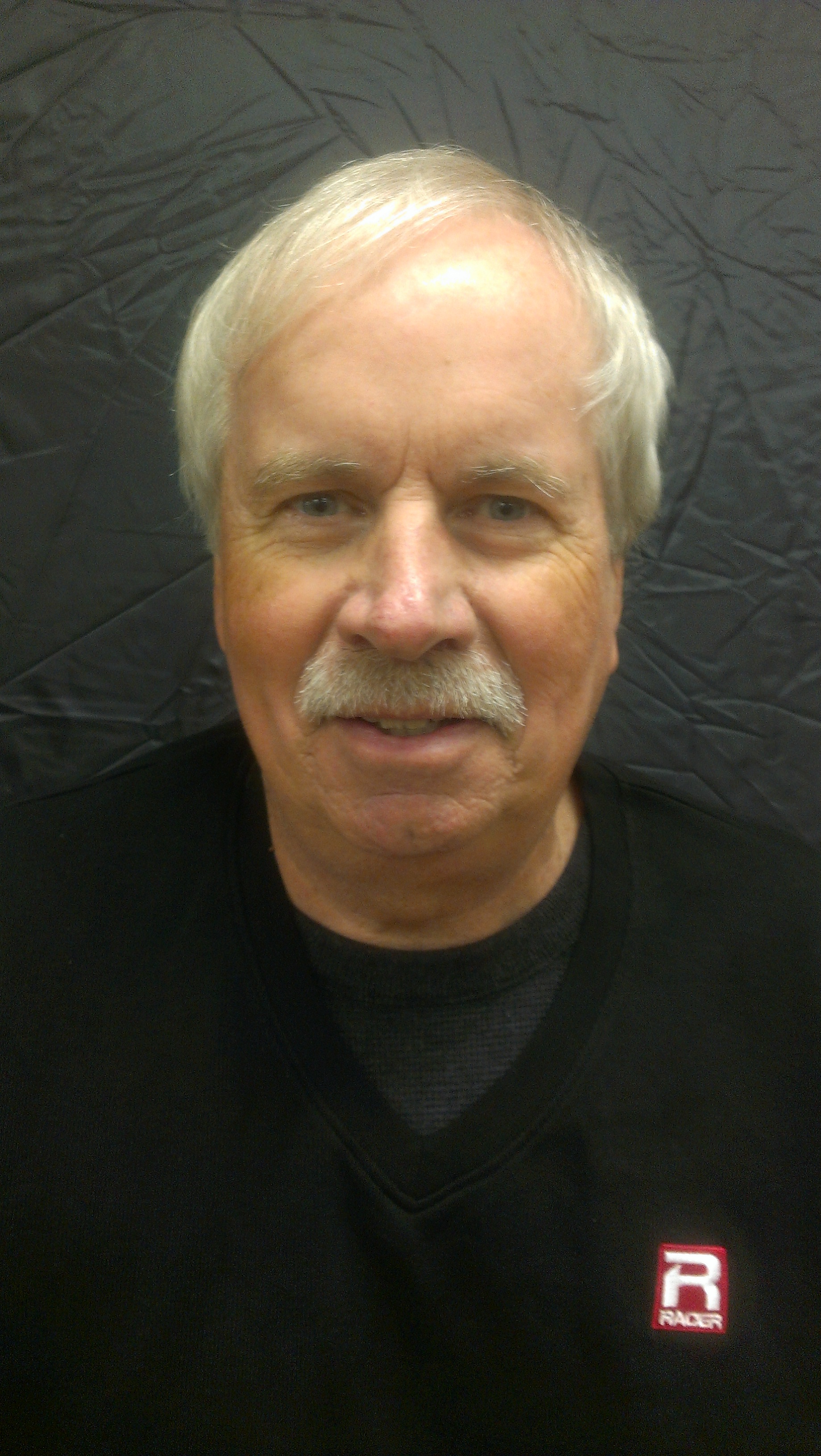
Robin Miller
Robin Miller flunked out of Ball State after two quarters, but got a job stooging for Jim Hurtubise at the 1968 Indianapolis 500 when Herk's was the last roadster to ever make the race. He got hired at The Indianapolis Star a month later and talked his way into the sports department, where he began covering USAC and IndyCar racing. He got fired at The Star for being anti-Tony George, but ESPN hired him to write and do RPM2Nite. Then he went to SPEED and worked on WIND TUNNEL and SPEED REPORT. He started at RACER when SPEED folded, and went on to write for RACER.com and RACER magazine while also working for NBCSN on IndyCar telecasts.
Read Robin Miller's articles
Latest News
Comments
Comments are disabled until you accept Social Networking Cookies. Update cookie preferences
If the dialog doesn't appear, ad-blockers are often the cause; try disabling yours or see our Social Features Support.