Image by Michael Levitt/LAT
PRUETT: 2019 IndyCar talking points
The start to every NTT IndyCar Series season is loaded with new developments and potential themes to follow that will likely influence the outcome of the championship. Here’s an array of observations that might shape the seventh-month sprint from St. Petersburg to Monterey, along with a few random items of interest.
A Seb-Peat in St. Pete?
As the owner of two consecutive wins to open the season, Dale Coyne Racing’s Sebastien Bourdais is looking to make it a three-peat on Sunday. And this time, the local Tampa resident wants no part of receiving a gift like the one that was given late in last year’s race when Alexander Rossi knocked Robert Wickens from the lead. Citing a general deficiency in street course setups, Bourdais’ DCR team spent time during pre-season testing on Sebring’s short course, laying out their own pylons to tighten corner entries and exits at the slower turns to mimic what they’ll encounter at St. Pete and other street circuits.
The smart move, which allowed race engineer Craig Hampson to tune on the Frenchman’s No. 18 Honda as if it were carving through narrow concrete-lined walls, should help Bourdais at his home race, Long Beach, Detroit, and Toronto, where DCR struggled at times. Considering how Bourdais placed seventh in the 2018 championship, an uptick in street race results could move the team closer to the top five.
Rookies: Ridiculous Crop
I made a foolish statement last year where I suggested the crop of rookie for the 2018 season was the best we’d see this decade. Enter Patricio O’Ward, Colton Herta, Felix Rosenqvist, Marcus Ericsson, Santino Ferrucci, Ben Hanley, and possibly RC Enerson, if we’re lucky, to confirm my ignorance.
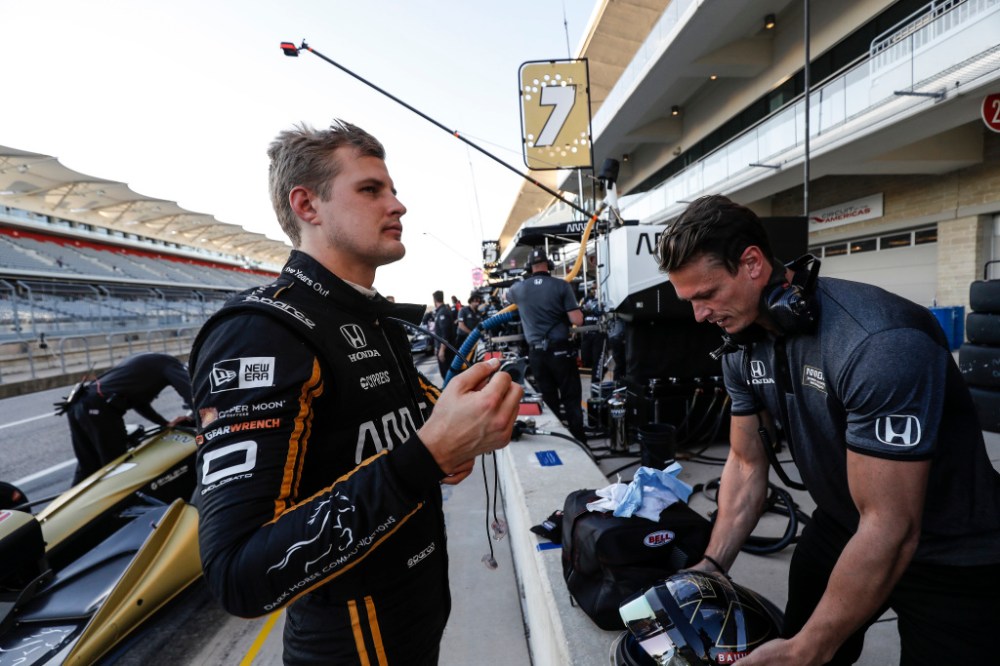
Marcus Ericsson, Schmidt Peterson Motorsports. Image by Michael Levitt/LAT.
Ericsson, a five-year Formula 1 veteran, is the only outlier in the group in terms of top-tier open-wheel experience, but he’s also new to ovals while most of his Rookie of the Year challengers are up to speed in that department. It’s a stacked group where at least one win from the bunch would not be a complete shock, and if it’s two or three wins, it still wouldn’t be outside the realm of possibilities.
The best question is whether one of 2019’s rookies will emerge as a new Robert Wickens-style force from the outset.
Bowtie Blitz
After running the table with six straight manufacturers’ championships since the turbo V6 engine formula arrived in 2012, Honda finally broke Chevy’s incredible streak last year. As upsets go, this was big. It’s also the kind of thing that should concern the Honda Performance Development camp. I’ve worked as a mechanic, engineer, and team manager across many paddocks since the 1980s, and even today, as a reporter, I’m struggling to recall more than two or three manufacturers who’ve matched the ferocity that drives Chevy’s current IndyCar program.
The Bowtie’s stone-cold approach to winning has been relentless, which makes its first manufacturers’ loss a fascinating reckoning for the brand. We know the long-in-the-tooth turbo V6 formula has left Chevy and Honda with almost nothing left to find in terms of major horsepower and torque gains, so responding with a big leap in either department is unlikely. But we can expect something—maybe on the engine calibration side—to help Chevy vie for a seventh title. Will it be enough? And will it matter? Read on…
Depth Charge
Chevy won six of 17 races in 2018. While that number will need to increase in order to reclaim the manufacturers’ championship, the greater issue is answering where the additional wins will be produced. Two drivers—Penske’s Will Power and Josef Newgarden—accounted for all six victories, and in that statistic, the ongoing imbalance between front-running Chevy and Honda teams is reconfirmed.
Honda’s depth at Andretti Autosport, Arrow Schmidt Peterson Motorsports, Dale Coyne Racing, Chip Ganassi Racing, and Rahal Letterman Lanigan Racing is well ahead of anything Chevy can boast.
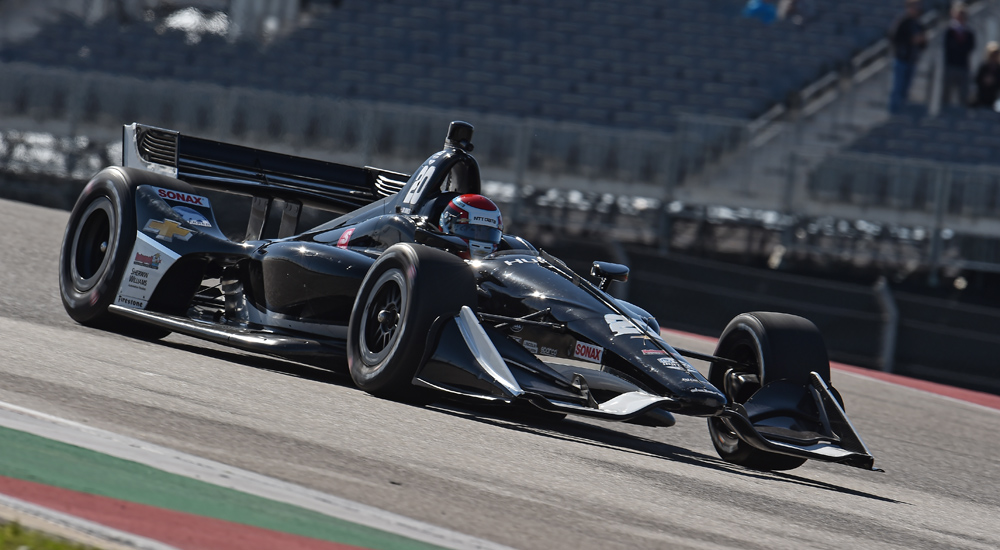
Ed Jones and Ed Carpenter Racing are one arrow in Chevy's quiver. Image by John Cote/IndyCar.
After Penske, it’s hard to say if the other Bowtie representatives will venture into the win column. We can assume Simon Pagenaud will get back to his winning ways, giving Chevy and Chevy three shots at victory for most rounds. And after Penske? We’d love to see A.J. Foyt Racing, Carlin Racing, Ed Carpenter Racing, and other members of Team Chevy contribute to the brand’s win tally, but for now, the manufacturers’ battle is looking like another Honda vs Penske affair.
The Dixie and Felix Show
As far as potential goes, Chip Ganassi Racing could have a hellacious duo on its hands with five-time champion Scott Dixon and rookie Felix Rosenqvist. There’s been a feeling within the team since the Swede first tested for the reigning champions a few years ago that he was something special -- an extraordinary and uncomplicated talent.
Nearly matching Dixon for speed in those tests, Rosenqvist sent the team home thinking it had a younger version of Dixon to embrace. And while it took some time to free the 27-year-old from his Formula E contract, the team believes the three-time Indy Lights race winner is capable of restoring the 1-2 punch it’s been lacking.
Having won at St. Pete and Toronto, and raced on the Phoenix and Indianapolis Motor Speedway ovals in an abbreviated 2016 Lights season, “Frosenqvist” feels like the obvious pick for Rookie of the Year. And if he can find a groove alongside Dixon before the season reaches the halfway point, the kid could be a factor in how the championship is decided. Lofty goals, indeed.
Hunter-Reay: Primed for a Title Run?
I’m confident in saying Ryan Hunter-Reay has depleted a lifetime supply of cartoon anvils falling from the sky and landing on his beleaguered Andretti Autosport entry. Things were downright ugly in 2016 when he finished 12th in the championship, and while ninth in 2017 was an improvement, he was stuck in a winless streak. If there was something silly that could ruin a driver’s race, those cartoon anvils were never far away from Hunter-Reay.
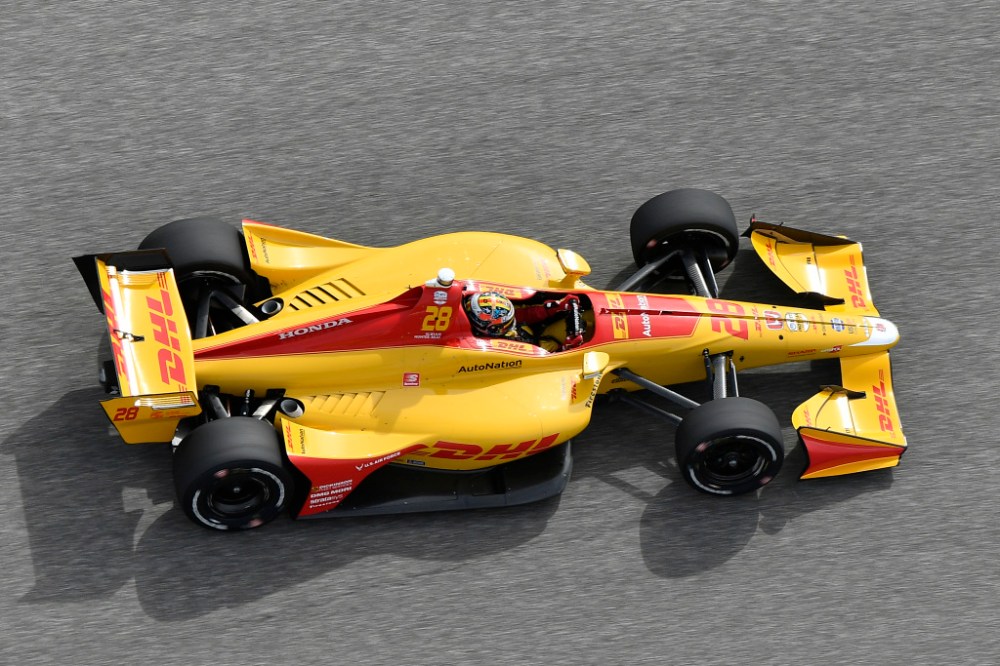
Ryan Hunter-Reay, Andretti Autosport Honda. Image by Scott LePage/LAT.
A few carryover anvils were dropped in 2018, but on average, the former series champion got back to his normal routine; 10 finishes inside the top five, including a win at Detroit 2, plus the pole another win to close the season in Sonoma. A sneaky fourth in the final standings thanks to a late rally, the 38-year-old might be the sleeper pick for the championship.
Following a breakout season for his teammate Alexander Rossi, most of the title talk has gone the way of the 2016 Indy 500 winner who placed second behind Dixon. If both Andretti drivers can avoid issues through the early rounds, we might have a serious story to follow. Rossi is blindingly fast and nearly faultless; Hunter-Reay is one of IndyCar best in-race performers. Watching the two turn up the internecine heat and fight over the championship would be an amazing gift.
Most Improved
I’ll go ahead and hand out non-existent hardware to start the season. Carlin Racing will win IndyCar’s ‘Most Improved Team’ award, even though we aren’t completely sure who will be in its second car from start to finish.
The kings of European junior open-wheel racing applied its proven formula to using the spec Dallara DW12 chassis for its IndyCar debut in 2018. In F3, GP3, GP2, and all manner of spec single-seater championships, Carlin’s practice of investing in aerodynamic R&D to find an advantage over its rivals had provided an edge in the training categories. Not so in IndyCar. Its DW12 aero expenditures delivered minimal gains; spending the money on damper development like the other IndyCar teams was the obvious remedy for 2019, and so far, Chilton and RC Enerson, who tested at Monterey and Circuit of The Americas, have plenty of pace.
Chilton thrives when he’s challenged by a rapid teammate, which makes the prospect, now confirmed, of seeing reigning Indy Lights champion Pato O’Ward in the second Carlin Chevy a tantalizing proposition. With an O’Ward, or Enerson, lighting a fire beneath Chilton on road and street courses, and Charlie Kimball applying similar pressure on ovals, Carlin could take a large step forward in its second season.
Perking Up Pagenaud
Welcome to the great mystery from the 2018 season. Why didn’t the 2016 series champion win a race? At least when he’s been asked, the dynamic Frenchman hasn’t offered any real insights as to how his Penske teammates took three wins apiece while his car was a few spots behind on many occasions.
Knowing how the new UAK18 bodywork that seemed to befuddle Pagenaud 12 months ago is untouched, why would we have cause to think his fortunes will change? That’s where the surprise awaits. He’s one of the best; that’s been proven over many years. There’s zero reason for Pagenaud to run behind his teammates, and when he’s able to connect with the primal side of his brain, he’s impossible to catch. And when he’s stuck in his thoughts, processing data and thinking his way through each corner, the animal vibe is lost. It’s not the bodywork acting as a barrier; it’s much deeper.
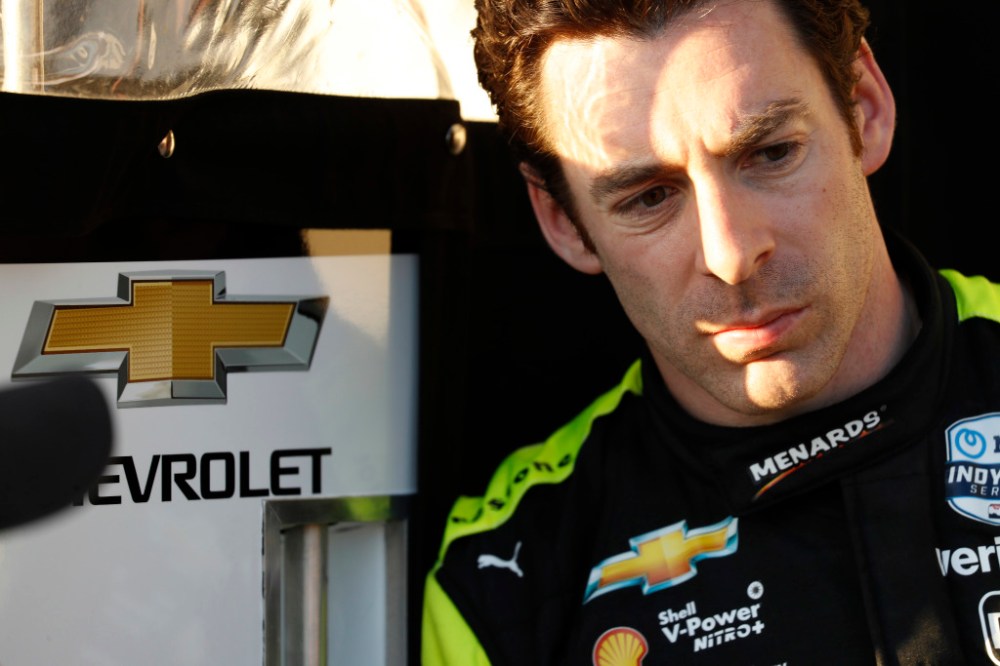
Simon Pagenaud. Image by Michael Levitt/LAT.
Interestingly, it’s a trait he shares with fellow Penske veteran Will Power. When the Australian lets the world slip away, he’s an unstoppable force. When he overthinks his driving, he’s an easier puzzle to solve. Power picked up on this trend a while ago and has worked hard to find and hold onto that Zen-like mindset behind the wheel.
Pagenaud’s also aware of this inner struggle, and if we’re going to see the all-conquering version of the man, it won’t have much to do with UAK18s. It’s the personal war between his ears where the battle awaits.
Fingers Crossed
Colton Herta has the look of a future IndyCar star. All the signs point to the teenager from California possessing the talent necessary to forge a long career, and after the recent funding debacle between his team and former teammate Pato O’Ward, we can only hope Herta’s rookie campaign with Harding Steinbrenner Racing is an uncomplicated experience. Considering the undelivered promises with O’Ward, count me among those who can’t wait to see Colton’s car covered with sponsors. As long as there’s more bare real estate than sponsor signage, I’ll be uneasy.
NBC: The New Home
How will IndyCar’s new, all-NBC relationship influence its efforts to gain wider popularity through television and live streaming? More importantly for IndyCar’s teams, current sponsors, both auto manufacturers involved with the series, and countless companies on the outside looking in, will the deal deliver a vital lift in Nielsen ratings? NBC taking the reins sits atop the feel-good stories. Dialing up the viewership numbers, however, and in turn, increasing the value of sponsorships, it’s the only metric that matters.
Graham Rahal: Time Attack
Qualifying. Improvement. Those two words are key to Graham Rahal’s 13th season of Indy car competition. As good as the 30-year-old Ohioan happens to be at moving forward in any given race, he’s historically bad when it comes to getting the most out of a car in qualifying. It’s a well-known problem, and one that’s limited his ascension in the drivers' championship to date. It’s also Rahal’s number one priority to overcome in 2019 and beyond.
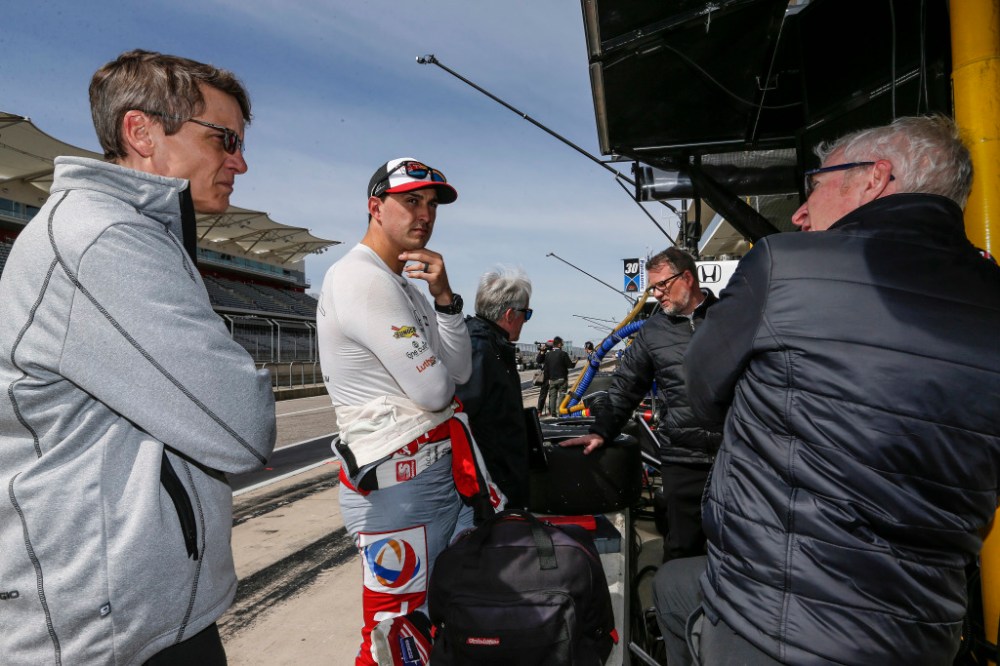
Graham Rahal. Image by Phillip Abbott/LAT.
If Rahal gives himself less work to do on Sundays, there’s every reason to believe he’ll be in the championship conversation. He and new race engineer Allen McDonald are a perfect fit to make it happen. IndyCar could have worse things to promote than a second-generation champion in the offseason…
The Harner Effect
The hiring of longtime Chip Ganassi Racing team manager Scott Harner won’t have an immediate impact on A.J. Foyt Racing, but it will certainly affect its future. A supreme team builder, Harner’s experience in bringing people together and helping them to perform is going to help the Foyt program get more from itself. And with his deep ties to the IndyCar community, more quality people will want to work alongside him in the years to come. It’s the right guy, joining a team at the right time.
Mark and Marco
We’re accustomed to talking up the rookie IndyCar drivers at the onset of each new season, so now it’s time to add a new IndyCar race engineer to the bunch. Mark Bryant, who engineered Pato O’Ward to a year of Indy Lights dominance, will look after Marco Andretti as the New Zealander learns the IndyCar ropes with the Pennsylvanian.
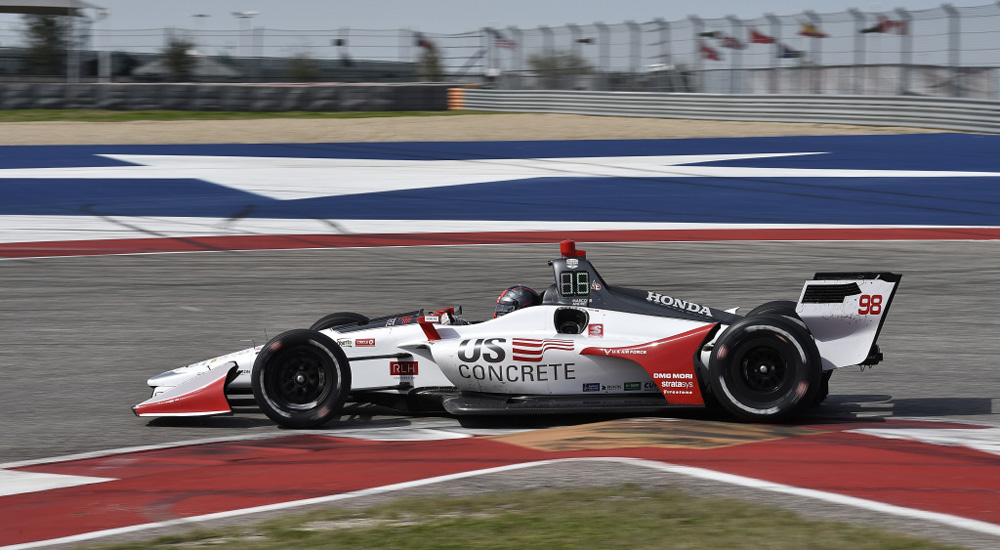
Marco Andretti, Andretti Herta Autosport with Curb-Agajanian. Image by Scott LePage/LAT.
Remember O’Ward’s mercurial debut at Sonoma? That also served as Bryant’s debut as an IndyCar engineer, and if we’re highlighting future stars, the young Kiwi could be one to watch. If he and Marco can develop half the chemistry that propelled O’Ward to the front, Andretti’s in for a win or two this season.
eSports
One of the more interesting press releases to appear last week came with the SCCA announcing it has partnered with iRacing to create an eSports solution for its passionate club. The American amateur racing organization, which boasts more than 50,000 members, has created a 12-race virtual championship in affiliation with the Skip Barber Racing School. I mention this to illustrate how far the links between racing organizations and the eSports world extend -- even the SCCA has a solution in place. After years of taking meetings and exploring ideas, IndyCar now lags behind a domestic club racing organization in the eSports space. It isn’t a good look.
Team Growth
The St. Pete story a few years ago involved mega teams comprising most of the grid. Andretti, Ganassi, and Penske were responsible for half the field, and thankfully, the ownership base had widened by a considerable margin.
Carlin Racing and Meyer Shank Racing are here, DragonSpeed is new to the paddock, and with a few of the existing entries, new co-owners have been added. Harding Racing has morphed into Harding Steinbrenner. Ed Carpenter Racing has welcomed Scuderia Corsa to one of its entries. Marco Andretti has bought into the entry he drives, giving the series its first five-way effort in Andretti Herta Autosport with Marco Andretti and Curb-Agajanian! Jimmy Vasser and James ‘Sulli’ Sullivan signed a new multi-year deal to continue their co-entry on Sebastien Bourdais’ Dale Coyne Racing car. And coming in May, Clauson-Marshall Racing, and the legendary McLaren Racing will run their own programs.
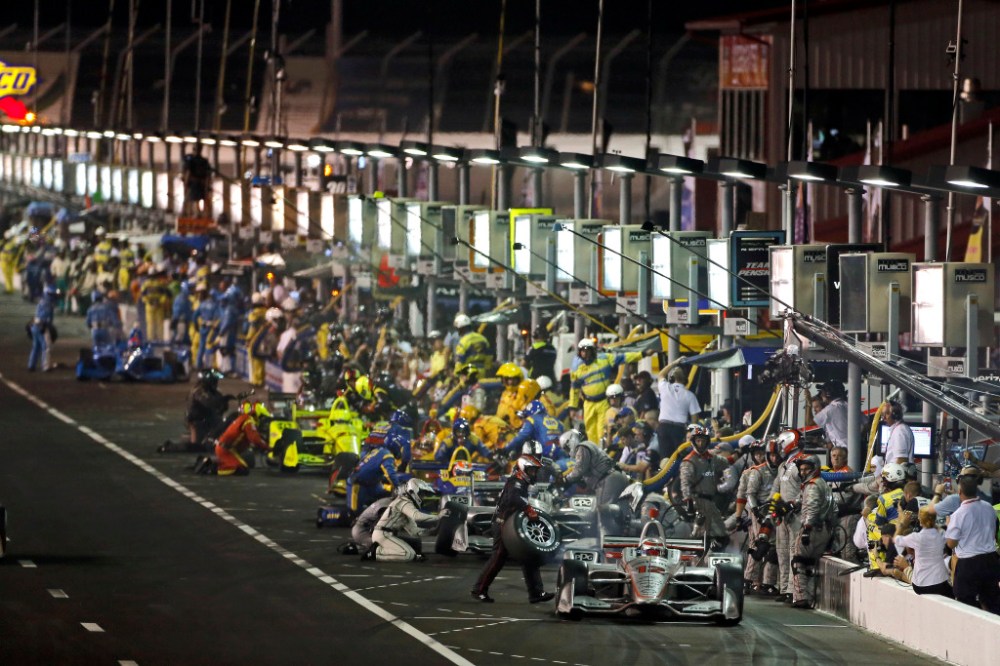
IndyCar's mega teams have more company now. Image by Phillip Abbott/LAT.
The perfect scenario would have fewer co-entry situations and more standalone team owners, and that isn’t out of the question in the near future. At least for where we are today, there’s less concern over losing a multi-car team and having the series crumble from instability.
And this is a subject for a different day, so I’ll only touch on this for a moment: If IndyCar wants to add more owners to the series, it needs to craft a plan for its next-generation engines (coming in 2021) and chassis solution (due in 2022) to meet its need while knocking at least $1 million off the current costs of fielding an entry for the season. If it can make it closer to $2 million in savings, its entry list will explode.
Work Left to Do
Most of the examples cited above are positive, but some of IndyCar’s smaller teams are still struggling to fill vacancies. Juncos Racing, which debuted in 2017, will be competing in the Indy Lights portion of the St. Pete weekend, but has no sponsors and no drivers lined up to pay for its Chevy Indy car to turn a wheel. Of the 17 races to sell, it has one taker so far -- Kyle Kaiser -- for Round 2 at COTA. And Juncos spent the money to convert its second chassis to the new UAK18 bodywork, giving it two potential entries every weekend.
The team has not been a significant threat so far, which could be part of its problem, but the same was true last year when Kaiser, Rene Binder, and Alfonso Celis paid for a Juncos car to be in the field at 12 races. Carlin Racing, a two-car, full-time rookie team last year, is back with one full-timer in Max Chilton and five of 17 races filled by Charlie Kimball in the second entry. The team has known about Kimball’s budget reduction for quite some time, and yet, like Juncos, has been unable to find funded drivers to sign on.
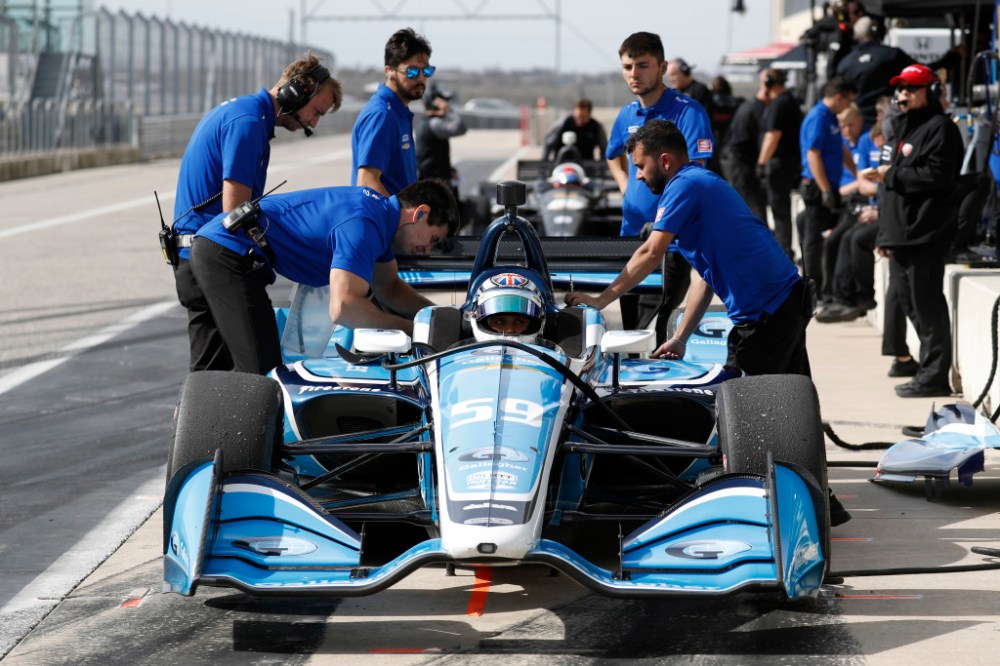
Max Chilton, Carlin Racing. Image by Michael Levitt/LAT.
It speaks less to what Carlin and Juncos have to offer, and more to the smaller pool of sponsor-wielding drivers ready to pay to drive an Indy car. The O’Ward fallout at HSR could benefit one of these two teams since the Mexican has at least $1 million to offer, but that’s luck meeting availability. Drawing back to the future-minded note on cost reduction, it’s great to see more wealthy businessmen and women invest in starting or co-owning IndyCar teams, but those are rare birds.
For the rest, the small businessmen and small businesswomen who rely on selling their services to stay afloat -- and that’s been a solid portion of IndyCar’s entrants for longer than I’ve been alive -- 2019 isn’t filled with the same optimism being espoused by healthier teams.
Santino Ferrucci: Quick and Quiet
Having made an ass out of himself last year during the Silverstone Formula 2 event, Dale Coyne Racing’s Santino Ferrucci has been behaving like a model citizen since being confirmed at Sebastien Bourdais’ full-time teammate.
It’s as if someone told him to shut up and let his driving do the talking, because that’s exactly what he’s done during pre-season testing. Fast on a regular basis, the 20-year-old from Connecticut could be a quiet revelation among the other IndyCar rookies.
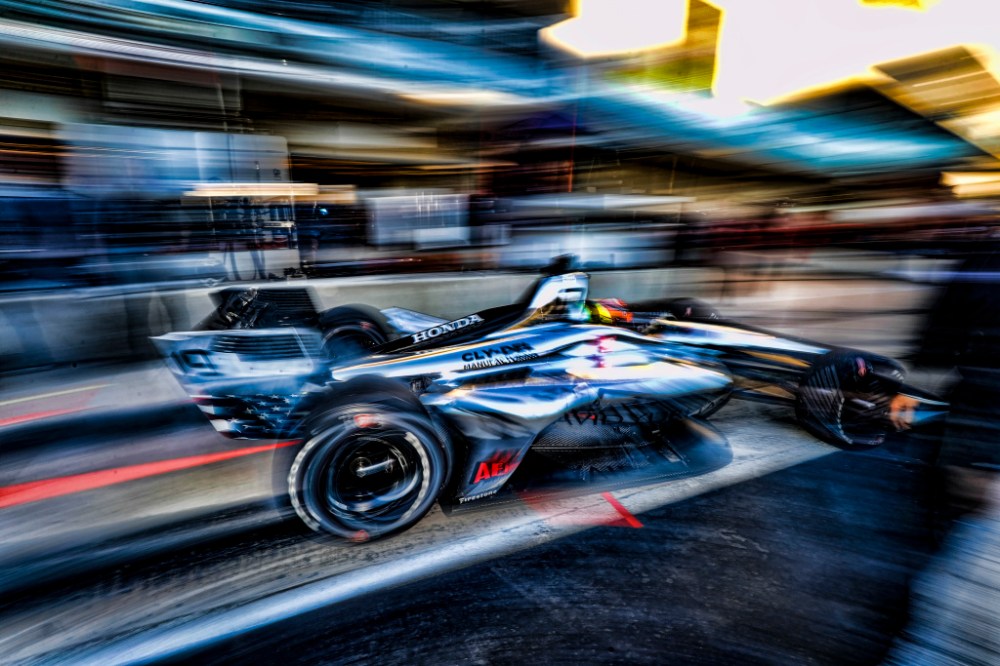
Santino Ferrucci, Dale Coyne Racing. Image by Michael Levitt/LAT.
Provided he keeps his head down and follows Bourdais’ example of using focused intensity in all aspects of the job, Ferrucci’s driving might be the only subject that comes to mind a few years down the road.
Deals Run Late
A friend sent over a note that sums up the feeling for IndyCar’s inexplicably late international TV contract announcements: “Did they just realized the season starts now?” The volley of questions from fans in Canada, England, Australia, and (insert country here) have been non-stop for more than a month. Most questions were answered in a press release from the series on Tuesday, but some significant voids remain. Latin America? Not on the list. Canada? An expensive cable add-on, presented three days before opening practice at St. Pete.
An interesting number: Of the 24 drivers on St. Pete’s entry list, 58 percent were born outside the United States.
Here’s a general thought: Live streaming was initially viewed as the perfect mechanism to connect fans with their favorite domestic and international sports. Somehow, streaming video been allowed to devolve into a cash grab for some networks, and in IndyCar’s case, live streaming will, in many cases, achieve the exact opposite of connecting its global fans to the sport they love.
New for Newgarden
Juan Pablo Montoya won the 2015 Indy 500 with Brian Campe on his timing stand as race engineer, and Campe also steered Josef Newgarden to his 2017 IndyCar championship with Team Penske. He’s taken a new, shop-based role for Penske, and in his absence ex-Red Bull Formula 1 race engineer Gavin Ward will embark on his first IndyCar title pursuit with the Tennessean. Watch this space.
Marshall Pruett
The 2026 season marks Marshall Pruett's 40th year working in the sport. In his role today for RACER, Pruett covers open-wheel and sports car racing as a writer, reporter, photographer, and filmmaker. In his previous career, he served as a mechanic, engineer, and team manager in a variety of series, including IndyCar, IMSA, and World Challenge.
Read Marshall Pruett's articles
Latest News
Comments
Comments are disabled until you accept Social Networking Cookies. Update cookie preferences
If the dialog doesn't appear, ad-blockers are often the cause; try disabling yours or see our Social Features Support.