Image by Levitt/LAT
PRUETT: Roar reflections
What did we learn at IMSA’s WeatherTech SportsCar Championship Roar Before The 24 test?
Speed is back. The paddock loves its new Michelin tires. Mazda mastered the art of chess-boxing, and there’s so much more to cover -- let’s start with the first two items, which are linked.
The 2019 edition of the event will be remembered as the ‘We Love Our Michelins’ test.
Using a basic comparison of fastest Roar ‘qualifying’ lap times from 2018 on the spec Continental tires and what teams just produced on Michelin’s products, the extra grip available through the corners has brought plenty of smiles to the paddock.
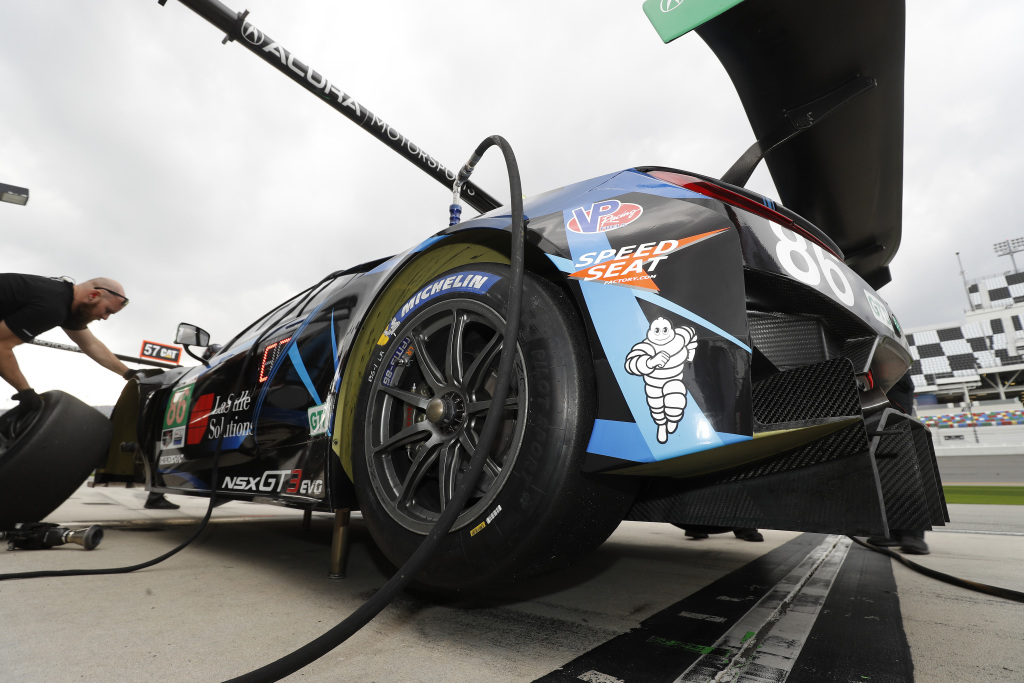
Image by Levitt/LAT
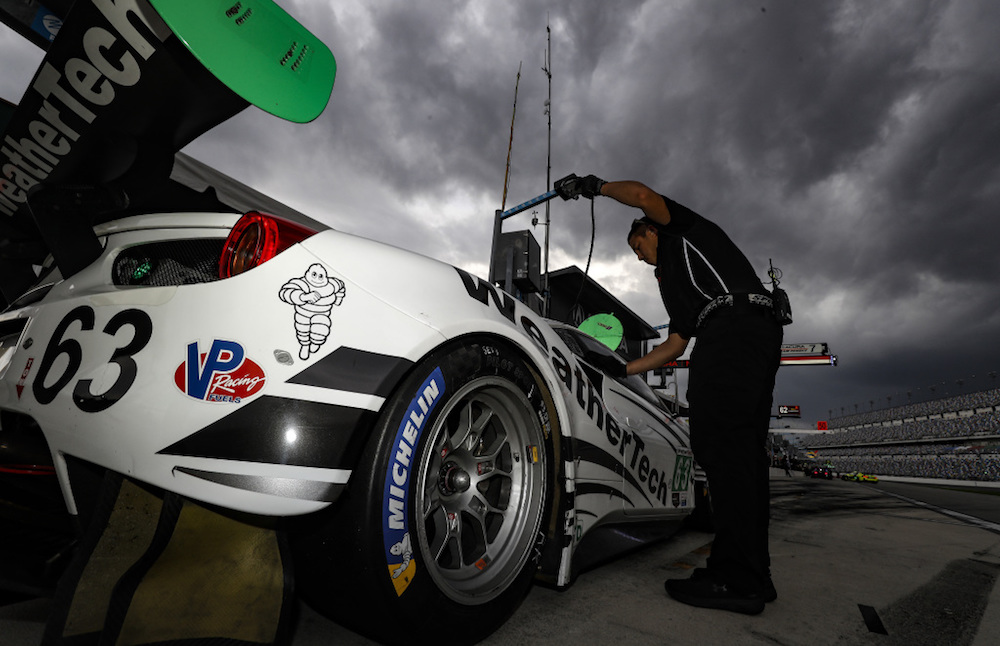
Time navigating the infield was down, and at Daytona, where drivers spend the majority of each lap at full throttle on long and winding straights, the improved traction offered by the Michelins also meant their machines left the corners harder, which translated into shorter elapsed times on those straights.
In DPi, Mazda Team Joest’s Oliver Jarvis managed something few would have expected from an LMP2-based car by eclipsing the 26-year-old Daytona lap record set by All American Racers and its greatest-of-all-time GTP model, the Toyota-powered Mk III.
The Briton’s lap of 1m33.398s, nearly a half-second below P.J. Jones’ pole of 1m33.875s from the 24-hour race in 1993, was not a new official standard due to being generated at a test, but it demonstrated the year-to-year leap made by IMSA’s DPis. The best from last year’s Roar time trials was a 1m35.806s -- or 2.408s slower -- delivered by an Action Express Racing Cadillac DPi-V.R.
IMSA has given the DPi class a slight bump in BoP to create proper separation to the prototypes in its new LMP2 class, but overall, the big leap in speed is directly related to the big increase in tire performance.
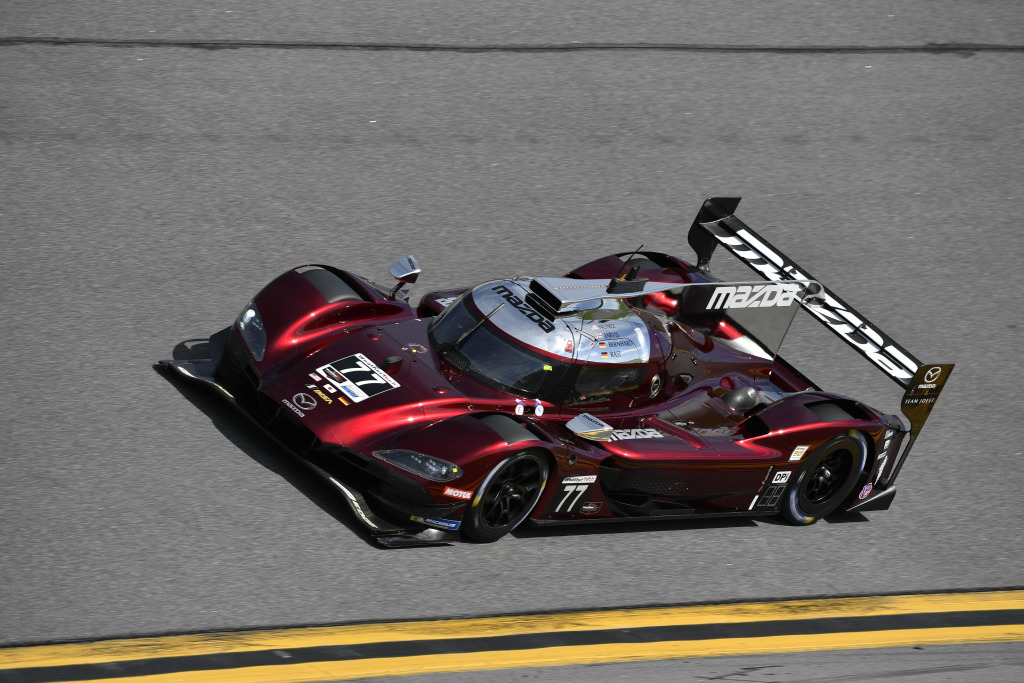
Image by Dole/LAT
“The BoP freedom has definitely had an effect, especially at a track like Daytona where straight line speed and power has such a big influence, however, the majority of the lap time improvement definitely comes from the Michelin tires,” Jarvis told RACER. “They have been a big step in overall grip from the Continentals. I would say it's at least two seconds, purely from the tires.”
A similar improvement was found in LMP2 where, despite IMSA taking power and optimal gearing away from the spec prototypes to create the aforementioned gap to DPis, the No. 52 PR1/Mathiasen ORECA 07-Gibson team went 1.344s faster than the top P2 lap of 2018.
GT Le Mans, the only class to use Michelins prior to 2019, also found pace with a different tire solution brought by the French manufacturer as Corvette Racing’s C7.R managed to gain 0.959s from the best Ford Chip Ganassi Racing’s GT recorded 12 months ago.
To fully appreciate the speed at which the GTLM cars are traveling at Daytona, Corvette’s Jan Magnussen crossed the start/finish line with a 1m42.651s lap to top all competitors in the class. Wind the clock back to 2015 with the actual pole for the Rolex 24 achieved by Michael Shank Racing’s Ligier JS P2-Honda LMP2 entry of 1m39.194s on Continentals, and the rate of progress is stunning.
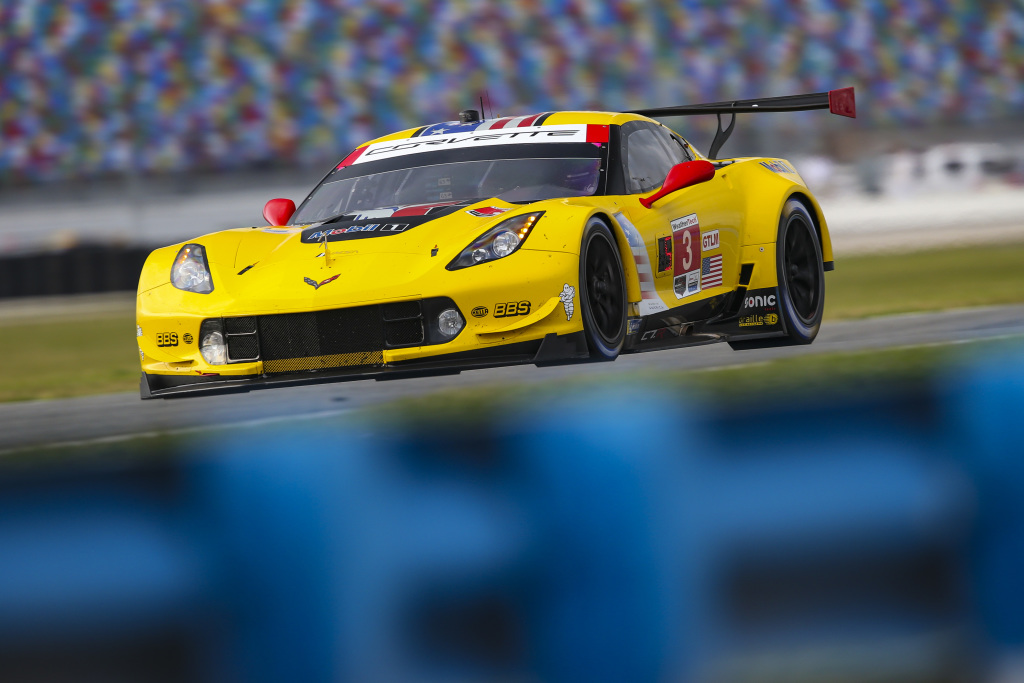
Image by Galstad/LAT
In round numbers, that’s a 3.5-second separation from 2015’s fastest prototype to today’s top GT car. Leaving the Roar, the number is up to 9.25 seconds between Jarvis’ Mazda and Magnussen’s Corvette. Coming back to the central theme, the Michelins account for the huge change, along with the overall gains in performance and technology contained within IMSA’s DPi platform.
And in GT Daytona, the leap was 1.837s as 2018’s best of 1m47.374s by the GRT Grasser Racing Team Lamborghini Huracan GT3 was upgraded to a 1m45.537s from Meyer Shank Racing’s Acura NSX GT3.
“It’s wise to look at the only change we’ve had year-to-year,” Jeff Westphal said of the Michelins on the Ferrari 488 GT3 he drives for Scuderia Corsa. “All the GTD cars have been refined during the offseason, but I’d put 1.5 seconds of it down to the tires. When I give throttle input and we’re rolling through the center of the corners, the Michelins give more of what we ask.”
Averaged across the four classes, IMSA’s fastest cars from the Roar bettered 2018’s top laps by 1.637s. We can’t attribute all of it to a change in tire partners, but it’s also fair to say that without the move to Michelin, lap-record speeds wouldn’t be the big headline to follow when proper qualifying gets under way at the Rolex 24.
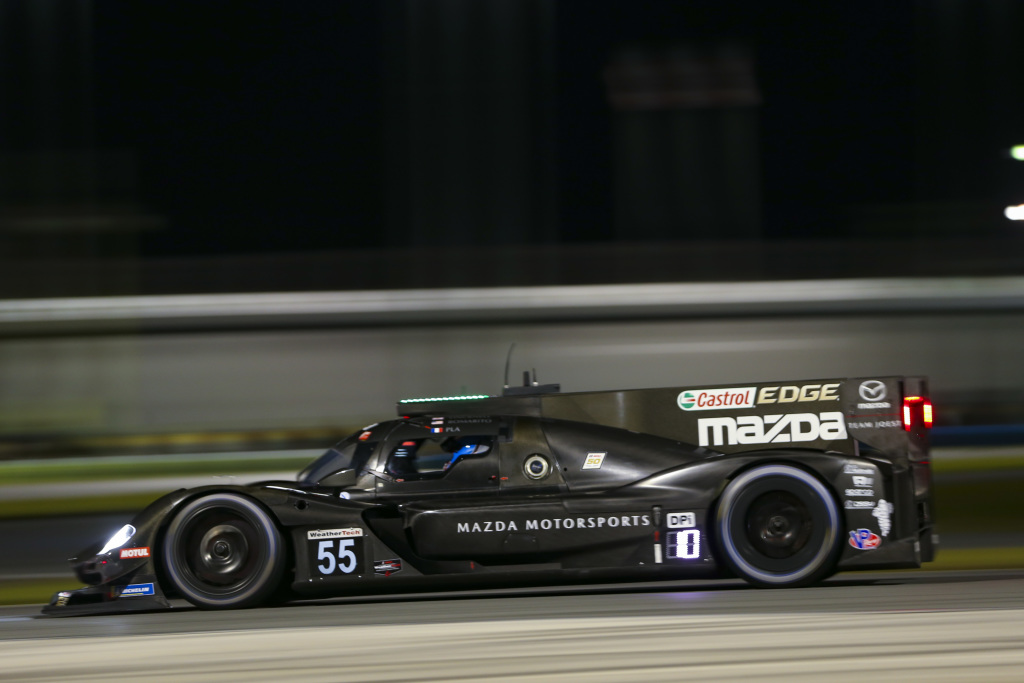
Image by Galstad/LAT
The other significant talking point went to Mazda and its undeniable pace.
Fastest in five of the eight sessions, including a trio of 1-2s by the pair of RT24-Ps, the Mazda Team Joest outfit had all the markings of a program that played its cards wrong at the Roar. The regular routine for most teams, regardless of the class, is to stay off the series’ radar by running slightly below their maximum potential.
With IMSA using the Roar to gather data that will be used to dial cars up or down on lap times through its Balance of Performance rules, posting flashy times -- and breaking, albeit unofficially, the outright lap record -- had many asking if Mazda armed the series with all it needed to hammer the RT24-Ps through BoP penalties when we return for the race.
As it turns out, Mazda went into the Roar with a plan it presented to IMSA that laid out exactly what unfolded in those eight sessions.
Some manufacturers, and this isn’t exclusive to DPi, deploy the sandbags for significant portions of the Roar, while Mazda Motorsports director John Doonan and the MTJ team went hard to run at race pace, and went hard once more in qualifying trim.
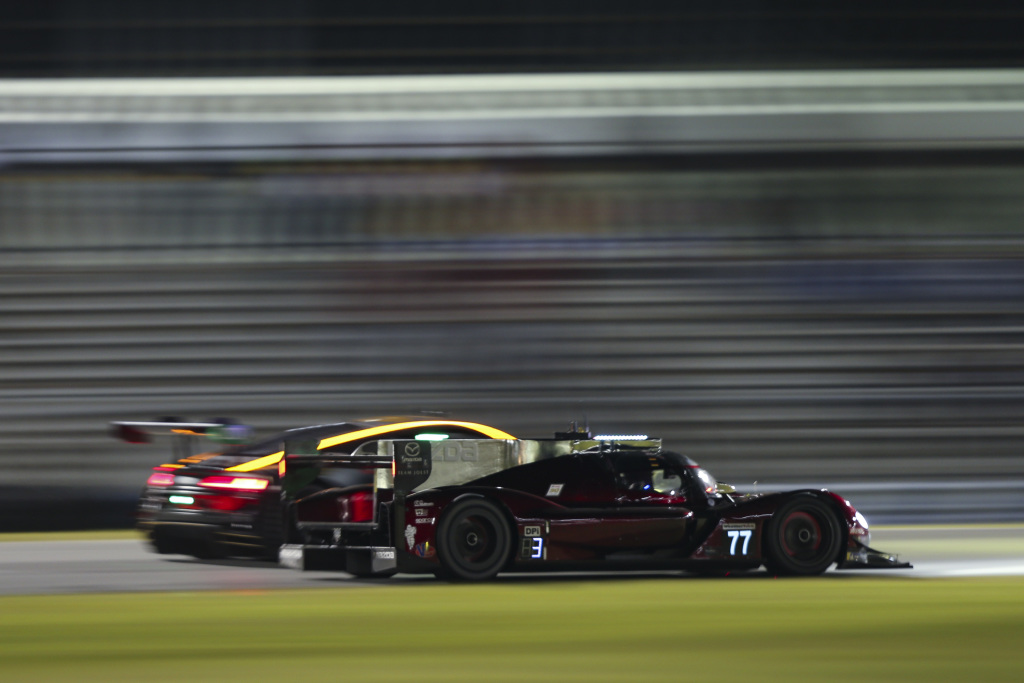
Image by Galstad/LAT
With IMSA’s technical department observing, Doonan said there was no fear or gross misjudgment by Mazda on how to play the Roar.
“IMSA asked us to show what we could do, and we committed ourselves to do that,” he explained after Jarvis turned the 1m33.398s lap. “I commend IMSA for what they’ve done in terms of investing in the tools and analysis to make this a level playing field. I trust the system, and what everyone has done to assure all the manufacturers that come here.
“This is not about who can spend the most money, it’s a level playing field for all of us to showcase our brands. I’m not worried [about being slowed for the race], I’m confident in the system.”
In kind, IMSA competition VP Simon Hodgson spoke warmly of the Japanese manufacturer’s commitment to the BoP process.
“I commend John for that approach,” he said. “I'm sure that some of his peers would say this is John going on the offensive … he's lobbying through his BoP, but the reality is, when he came to talk to us, we said, ‘Don't focus on other people. Focus on your program. You've got some great drivers in that package,’ and he's further expanded his investment in people and he's doing the best he can to make sure his program is correct.”
Hodgson touched on the last point of interest with Mazda’s front-running performances. Take the Michelins, sprinkle in a bit more power for the DPi class as a whole, and then factor in the sweeping upgrades in engineering talent supplied by MTJ partner Multimatic, and this is the version of team that was meant to hit the ground last year.
If the Roar gave Mazda fans a taste of something new, it was a reason to expect the Nos. 55 and 77 entries to give Acura, Cadillac, and Nissan a fair number of headaches. Wins aren’t guaranteed for the MTJ outfit, but with the army of talent contained within this 2019 squad, it won’t be long before seeing the Mazdas up front is no longer a surprise.
GT Le Mans was the only class that looked and felt routine during the Roar. Four of the five manufacturers topped the time sheets, with only BMW lacking a P1 during the seven standard sessions and one qualifying run. Porsche was up front for half of the outings which, considering the somewhat unrewarding 2018 season it endured, could be a cause for optimism.

Image by Dole/LAT
GTLM’s paddock was the most frequent source of sandbagging complaints, which has become an accepted part of the Roar. Without GTLM teams and drivers pointing fingers at the other brands, the class would not indeed look or feel routine…
By the numbers, five of the GTLM sessions had relatively small gaps from first to second. A scant 0.007s to 0.131s covered those sessions, and in the other three, it widened considerably -- at least for a highly controlled category like GTLM. Porsche went 1-2 in the first session (+0.287s to third), 1-2 again in the fifth session (+0.316s to third), and Ford went the farthest by leading Corvette (+0.423s) in the sixth session.
BMW is the one clear outlier for IMSA to review. Never better than fourth, the M8 GTEs floated between fifth and seventh -- in a class with nine entries -- for the majority of the event.
The Pro-Am GT Daytona class also revealed a brand or three that would benefit from a BoP review. Acura, Ferrari, and Mercedes-AMG featured during the abbreviated two-day test for GTD models, and Audi, defending class champion Lamborghini, and Porsche struggled -- barring one session where a 911 GT3 R led -- to encroach upon the three leading manufacturers.
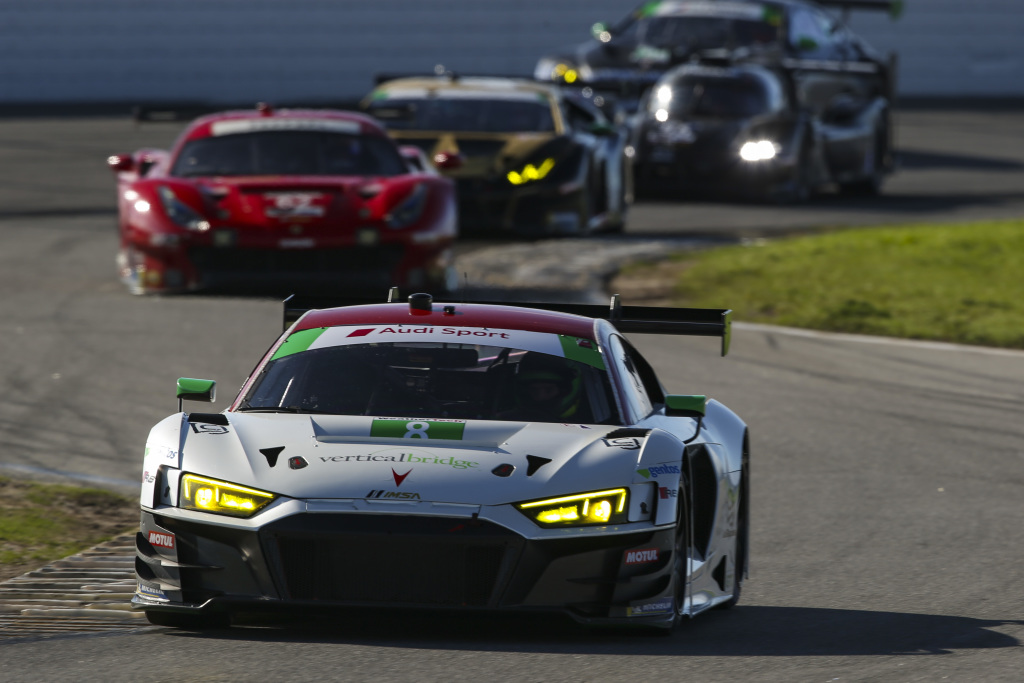
Image by Galstad/LAT
Playing the role of performance sleuth is infinitely easier in the Pro-Pro classes like DPi and GTLM; if a brand is out to lunch, the detective work needed to find the root causes -- real or contrived -- is usually within reach. Less so, in Pro-Am, where the blend of drivers and competencies can muddy the BoP waters.
The stage is set for IMSA. Its investigators are pouring over terabytes of data to verify or debunk the performance information taken off its cars. Weather permitting, new class records and possibly an outright lap record could fall when the WeatherTech Championship teams reconvene from January 24-27. IMSA’s 50th anniversary is finally here.
Marshall Pruett
The 2026 season marks Marshall Pruett's 40th year working in the sport. In his role today for RACER, Pruett covers open-wheel and sports car racing as a writer, reporter, photographer, and filmmaker. In his previous career, he served as a mechanic, engineer, and team manager in a variety of series, including IndyCar, IMSA, and World Challenge.
Read Marshall Pruett's articles
Latest News
Comments
Comments are disabled until you accept Social Networking Cookies. Update cookie preferences
If the dialog doesn't appear, ad-blockers are often the cause; try disabling yours or see our Social Features Support.