Images by BMW Group
Insight: Zanardi redefines endurance en route to Daytona
Alex Zanardi grew accustomed to pain while racing with prosthetic legs. Applying heavy pressure on the brake pedal hundreds, maybe thousands of times during an endurance event meant the Italian’s leg and its contact points in the prosthesis were being battered.
Like a boxer whose hands are numb and raw after a prize fight, Zanardi’s sacrifice with his lower limbs -- made in the name of performance -- had become an accepted part of driving after returning to the sport following his stomach-turning IndyCar crash in 2001.
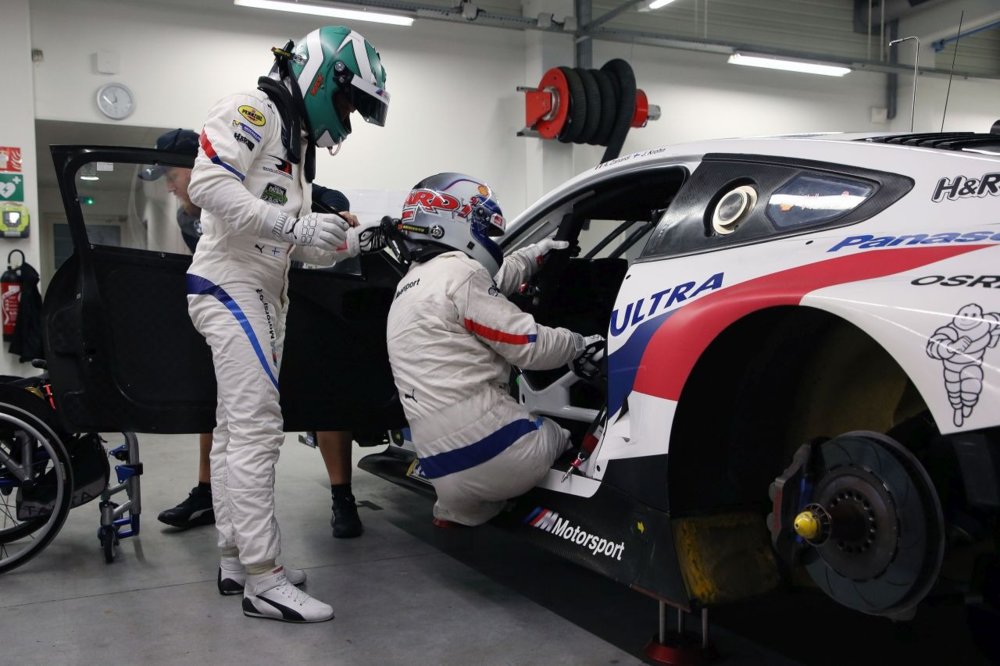
Through his ongoing relationship with BMW, the German manufacturer’s Motorsport division sought to solve the problem by moving the braking function to a tall vertical lever within easy reach of his right hand. Further improvements were also made to the custom steering wheel that uses an acceleration ring in lieu of a throttle pedal.
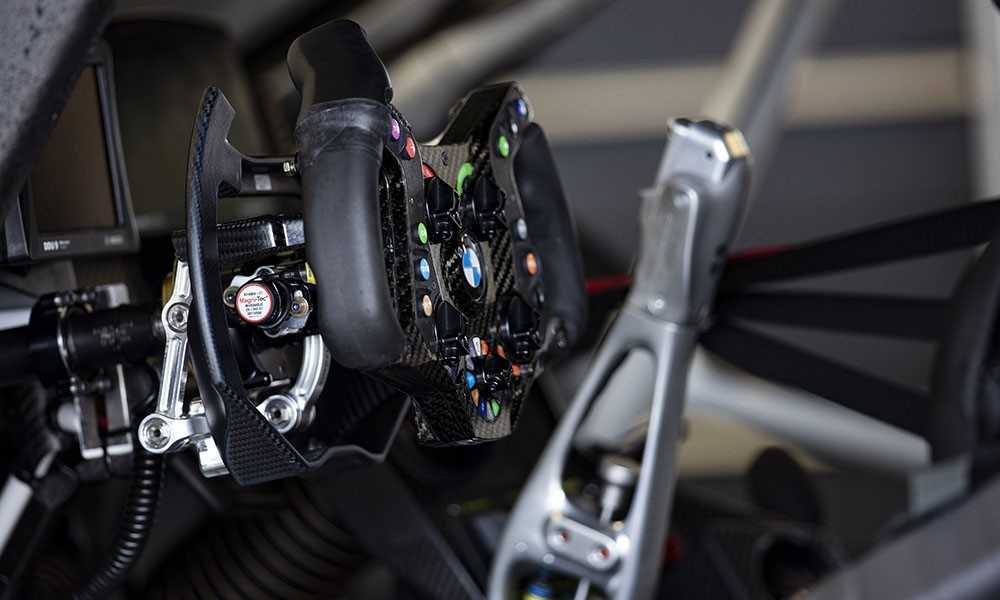
With turning, shifting, and control of the twin-turbo V8 engine covered by his left hand, plus braking and the ability to shift as well from an electronic trigger atop the lever, Zanardi’s legs have been freed in the BMW Team RLL M8 GTE he’ll share this month at Daytona with John Edwards, Jesse Krohn and Chaz Mostert.
“Those controls were really thought and realized for endurance racing, because in 2015 I took part to the 24 Hours of Spa, with Bruno Spengler and Timo Glock in the BMW Z4,” Zanardi said. “That was a magnificent experience for me. I think I was fast through the course of the race. I was not the weak, let's say, link in the chain in my team, but I have to admit I was not in the position to put up the same quantity of driving in comparison to my teammates because of some physical issues.
“At the end of that race, I had an opportunity to take a trip to Munich, sat down with the engineers, and the question was, ‘Alex, how can we make you a better endurance driver? Because if there is something we can do, we want to develop it, and maybe when we have another opportunity we can be better prepared.’
“My answer was immediately, ‘Well, guys, we should really study a set of controls which would allow me to keep my prosthetic legs in the motor home, and jump into the car without them.’”
Rather than rely on Zanardi for the initial tests, BMW went in a different route.
“They developed this set of controls, which was first tested by able-bodied drivers early last year. The reason was that if anything could go wrong, they would still have the control of using the normal pedals ... where that of course would have not been an option for me,” he continued. “Of course, the feedback they received from the driver was, 'I don't know whether I'm going to be able to drive the entire distance of a race, because it's pretty hard physically to work this lever with your arm.' But all the drivers who had the opportunity to test the car, they basically said, ‘Yeah, it's better than we thought it would be.’
“When I finally had a go in it, I was very, very pleased from the very beginning. The job was very well executed. Prior to that point, I only had the possibility to have a feel of it in a sort of a mock-up in the shop, in order to give the engineers the last input -- feedback to do the fine tuning, let's say, as far as positioning the levers at the controls on the wheel and so on.”
BMW was presented with a unique requirement to consider while preparing its M8 GTE for Zanardi and his teammates at this weekend’s Roar Before The 24, and later this month for the big Rolex 24 At Daytona. With his previous pedal-based setup, Zanardi could take part in endurance races while using the same controls as his co-drivers, barring the acceleration ring mounted behind the bespoke steering wheel.
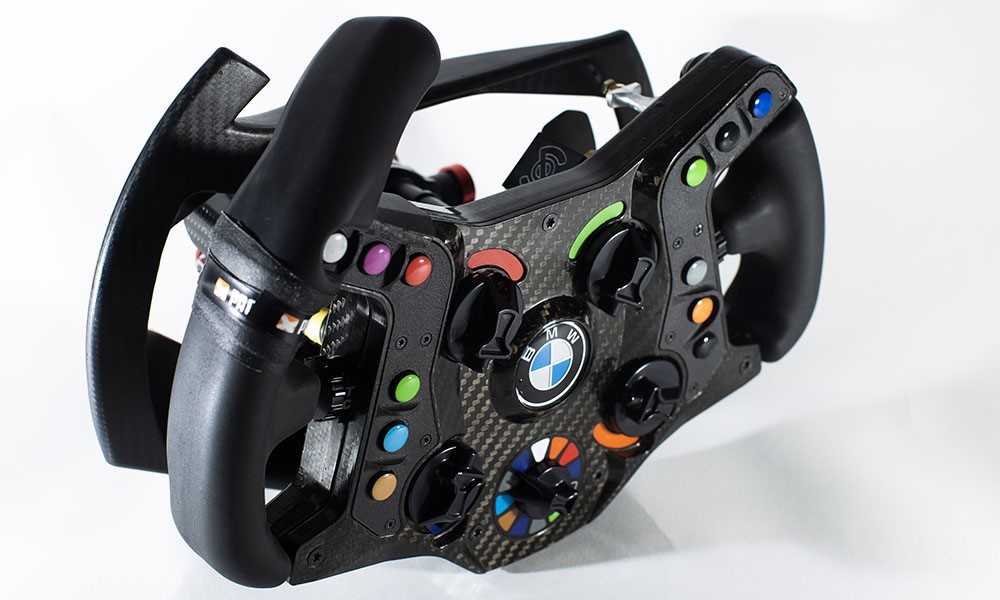
But with the shift to the new brake lever, his tools for making speed, slowing the car, and balancing it through the corners with nothing more than his hands left the engineers at BMW Motorsport and BMW Team RLL with two distinct sets of needs to appease their drivers. Adding an additional step to the process, Edwards, Krohn, and Mostert will drive the car using a standard steering wheel and all of the pedals; when Zanardi is strapped in, he’ll have his custom steering wheel installed.
As three of the drivers work on throttle response characteristics and tuning of the BMW’s braking performance through the use of their feet, the BMW factory effort has Zanardi’s steering wheel and brake lever to tune and suit his needs in the cockpit.
It’s two chassis engineering streams to manage, all with the goal of giving the quartet the ability to turn lap times that are identical, despite the different controls in action.
“It was cool, for sure, because to test those instruments in a car where the job is to squeeze every ounce of performance out of the car, you want to be competitive in that field,” Zanardi says of refining the systems that would go into the M8 GTE.
Establishing a comfort zone with the hand controls in moments of panic is another area where Zanardi has a distinct challenge.
“It's not (just) like endurance racing, where it's more the rhythm which will pay the dividend, but you're also competing among a very competitive group of drivers, (and) with many cars that are driven by gentlemen who are... I wouldn't call them amateurs, because it sounds pretty not nice ... but it is what it is.”
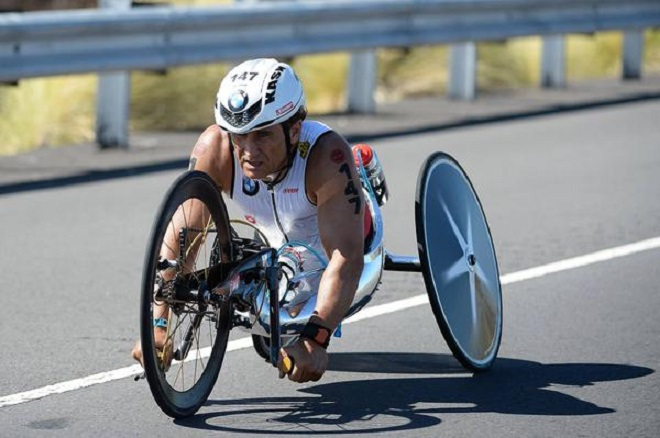
Zanardi’s become a physical specimen after years of training for -- and winning -- events at the Paralympics. Having achieved exceptional strength and muscle endurance, the shift from using at least one leg while racing to doing everything with both hands has led to more rigorous training of his upper body. Strapped into the seat, he’s become a conductor of sorts, with arms and hands twisting, pushing, pulling, and directing his one-man orchestra.
“Well, I can't say it's been terribly easy, but it's not that difficult either,” he said. “I was warned by all the personnel at BMW when I was offered to drive the car, that they had probably to think of a different training procedure towards that commitment -- to the point where they got me a little concerned in fact…
“Then I had the opportunity to drive the car in Vallelunga in Italy, which is a very tough circuit from a physical point of view, with some medium- to high-speed turns where you really develop some Gs, as far as lateral forces and longitudinal forces, because the circuit has a lot of lateral grip. Basically, I was able to put together like 140 laps the first day, and 160-plus on the second one. Basically, I wore the car out.
“They thought they would wear me out, but I wore the engine out!”
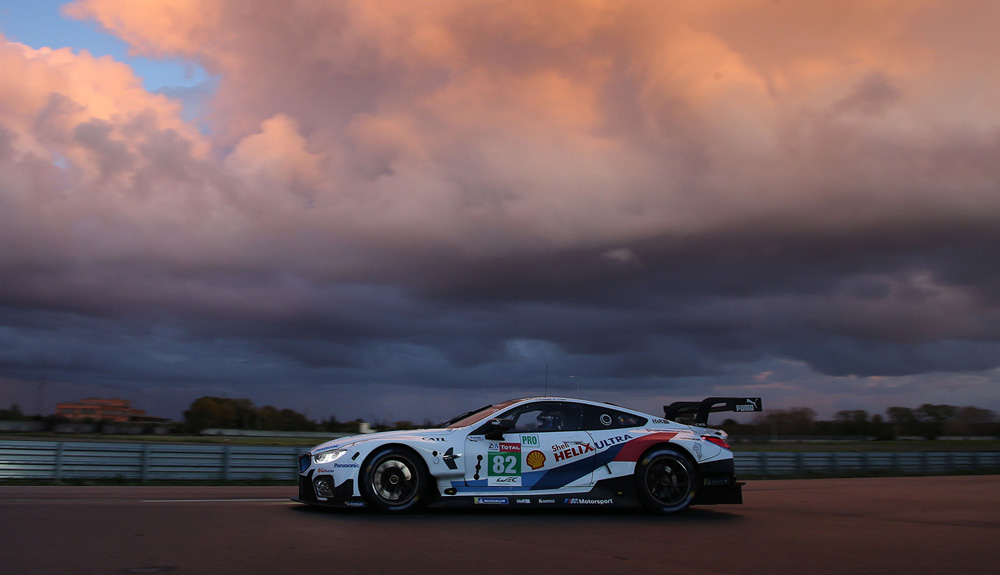
Consider all of the fascinating technical aspects associated with Zanardi’s control systems in his BMW racing machine, and then contemplate how the man who will pilot the car for hours on end at IMSA’s season opener might be the most incredible piece of technology inside the vehicle.
“These days, as far as my upper body, as far as my arms, it's not that I'm stronger -- I am probably stronger than I've ever been, but the reality these days is that I am built now in a different way,” he said. “All the muscles of our upper body are basically white fiber. It means, that you have very little blood reaching those muscles, because this isn't the way Mother Nature designed us. We need a lot of blood in our legs because we use the legs to do everything, to move around.
“That's why, not only we need strength in our legs, but we need the resistance in our legs. It's like blood is what feeds our engines, with oxygen and glycogen. If you do not have enough blood reaching the muscles, the engine will stop. Not because it's not sufficiently powerful, not because it doesn't have the capability to stay on and to keep delivering that amount of power, but because the oxygen and glycogen that is reaching that muscle is completely insufficient to keep the muscle working, and so you stop. This is the problem normally for people.
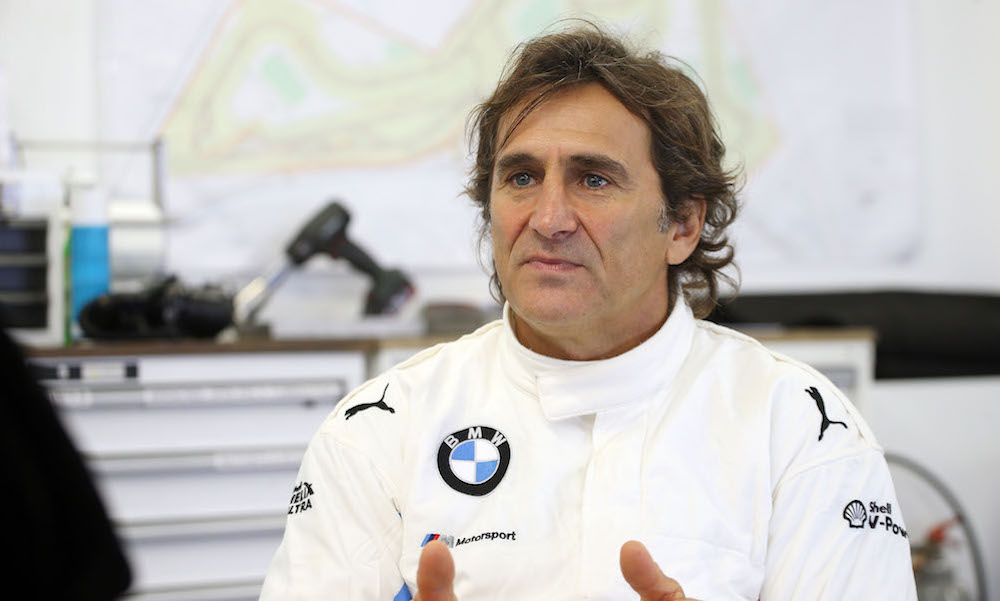
“Everything I do through the course of my life, every day I do it with my arms, and it means that by using this muscle so much I have changed gradually the state of my muscle, turning my muscle into red fibers. Because I probably have developed a vascular system that is completely different and is now similar to what every human being has in his legs. This is why, these days I'm capable of enduring a movement that anybody could do, but for a short amount of time, where I can do it for like hours.
“Which is the reason why these days I can survive when I do an Iron Man [marathon], for instance. I stay engaged into things like eight, nine hours, and all I have is my arms. Yeah, this is the reason why -- not because I am superman, not because I am incredibly strong, because you don't need to be incredibly strong, but you need to be incredibly resistant, and this is what I am today. In comparison to an able-bodied person, it's incredible, the amount of extra resistance I have, in comparison to an able body. It's what I have to do -- I have to do it with my arms.”
Marshall Pruett
The 2026 season marks Marshall Pruett's 40th year working in the sport. In his role today for RACER, Pruett covers open-wheel and sports car racing as a writer, reporter, photographer, and filmmaker. In his previous career, he served as a mechanic, engineer, and team manager in a variety of series, including IndyCar, IMSA, and World Challenge.
Read Marshall Pruett's articles

Latest News
Comments
Comments are disabled until you accept Social Networking Cookies. Update cookie preferences
If the dialog doesn't appear, ad-blockers are often the cause; try disabling yours or see our Social Features Support.