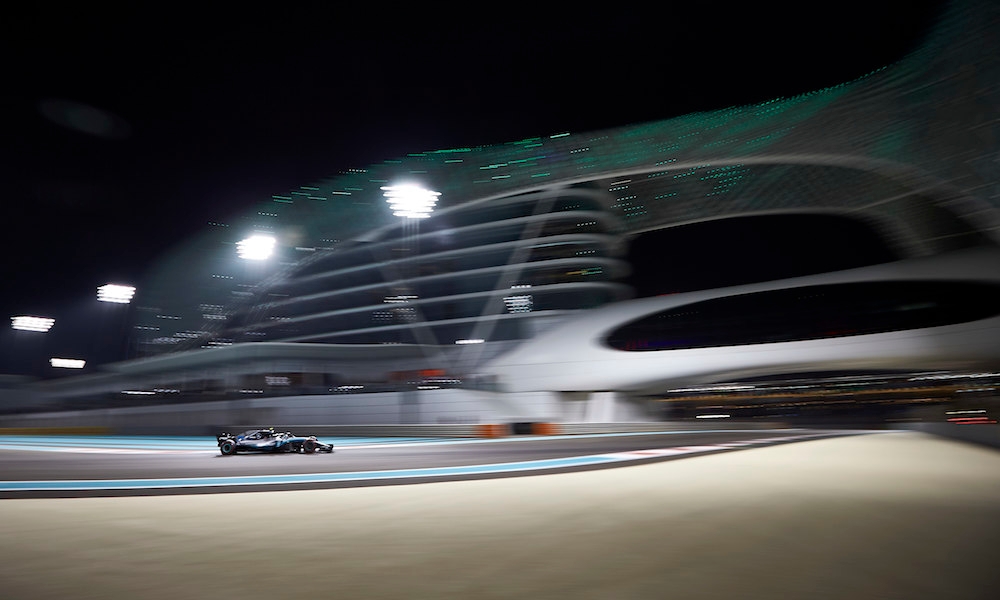
Image by Etherington/LAT
F1 to use AI to investigate track design, race format changes
Formula 1 will use machine learning to investigate ways track changes and different race formats could impact on the quality of racing.
In a presentation at F1 partner Amazon Web Services’ re:Invent 2018 conference in Las Vegas, managing director or motorsports Ross Brawn revealed the AWS partnership will be utilized to create models that will allow the sport to analyze potential changes thanks to machine learning.
“Further down the road, what’s really exciting is we are going to investigate the influence of the tracks and the racing formats on the quality of the racing,” Brawn said. “Can we create tracks that achieve better racing and better overtaking? Can we build models that allow us to do that?
“Can we change the format of racing to make it more exciting and less predictable? For instance, what happens if we change the format of the starting grid, so instead of being spread out it’s bunched up? We believe that using machine learning, AWS is enabling us to do these things.”
Brawn also revealed more immediate changes that will come into effect in 2019, with fans getting access to more on-screen information as the sport uses numerous data points and the AWS Sagemaker machine learning platform to formulate live predictions during a race.
“We are training machine learning models using this huge amount of data that we have in Formula 1, and we’re using those models to make predictions of what’s going to happen in the race
“We are digging deeper to show you where the performance is coming from. When is a car faster? Why is it faster?
“For next season we are expanding 'F1 Insights' for our viewers. By further integrating the telemetry data such as the car position, the tire condition, even the weather, we can use Sagemaker to predict car performance, pit stops and race strategy.
Brawn revealed this will result in “some exciting new AI integrations into next year's F1 TV broadcast”, including an overtaking probability based on car position and condition or a pit stop call.
"We know that somebody is in trouble: his rear tires are overheating. We can look at the history of the tires and how they have worked and where he is in the race, and machine learning can help us apply a proper analysis of a situation.
"We can bring that information to the fans and help them understand if the guy is in trouble or if he can manage the situation. These are insights the teams always had but we are going to bring them out to the fans and show them what’s happening.”
As well as individual car condition, Brawn says that can be compared to a chasing car’s performance to create an overtaking probability percentage to be displayed during broadcasts.
"Wheel-to-wheel racing is the essence and critical aspect of the sport. And now with machine learning and using live data and historical data, we can make predictions about what is going to happen.
“(We can show) what we expect is going to happen in an event. What is great about this, is that the teams don't have all this data. We as F1 know the data from both cars and we can make this comparison and this has never been done before.”
And a similar graphic will be applied during pit stops to show the likelihood of a car being able to make gains as a result of the timing of its stop.
“The pit stop is the major strategic element of the race … Stopping at the right time and fitting the right tyre can win or lose a race.We are going to take all the data and give the fans an insight into why they stopped and when they stopped – did the team and driver make the right call?”
Presented by:


Chris Medland
While studying Sports Journalism at the University of Central Lancashire, Chris managed to talk his way into working at the British Grand Prix in 2008 and was retained for three years before joining ESPN F1 as Assistant Editor. After three further years at ESPN, a spell as F1 Editor at Crash Media Group was followed by the major task of launching F1i.com’s English-language website and running it as Editor. Present at every race since the start of 2014, he has continued building his freelance portfolio, working with international titles. As well as writing for RACER, his broadcast work includes television appearances on F1 TV and as a presenter and reporter on North America's live radio coverage on SiriusXM.
Read Chris Medland's articles
Latest News
Comments
Comments are disabled until you accept Social Networking Cookies. Update cookie preferences
If the dialog doesn't appear, ad-blockers are often the cause; try disabling yours or see our Social Features Support.