Image by Michael Levitt/LAT
Remembering Morris Nunn, 1938-2018
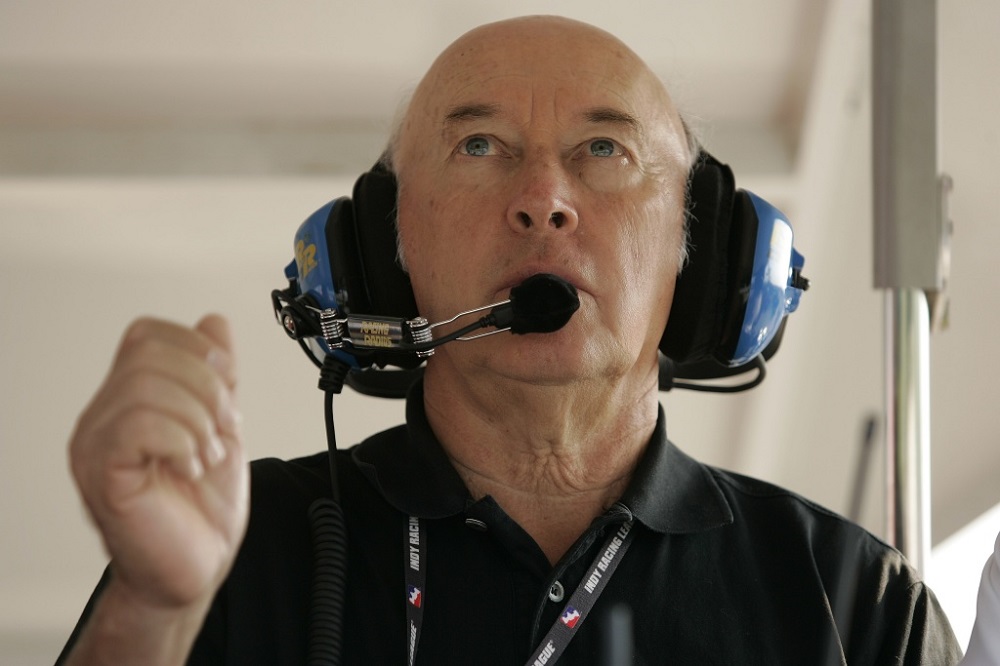
He was a driver, a designer, a doer and a dreamer but most of all Morris Nunn was one of those delightful characters who went down his own path and left a legacy in auto racing the likes of which that may never be seen again.
Nunn, who died Wednesday morning in his home in Tucson at age 79 from Parkinson’s Disease, became a mainstay in Formula 1 as a privateer and then headed to America to engineer Indy 500 winners and CART champions before starting his own IndyCar team.
“Morris was a quiet genius with no formal training except what he learned behind the wheel as a racing driver,” said Derek Daly, who drove for Nunn’s F1 team in 1978-79 before coming to America himself in 1982. “And I doubt anybody ever went as far as he did with no formal training and gained so much respect from so many people. He was one of a kind.”
Nunn was one of the most pragmatic and think-on-your-feet racers of any generation and he yet never even thought about race cars until his was 24 years old.
“I saw a Cooper Climax in the window one day,” recalled Nunn in a feature interview we did in RACER in 2000. “I had never been to a race and had never thought about racing until I saw that car and I bought it for 850 pounds and joined the British Racing and Sports Car Club.
“I got lapped three times in my first race at Mallory Park but you could rent Silverstone for $17 a day back then, so I practiced and practiced and started getting the hang of it.
“I won some Formula Libre races and then I bought a Formula 3 car – winning the prestigious Daily Express race in front of the F1 crowd. Colin Chapman signed me to drive his Lotus F3 car in 1969 and I figured I was on my way.”
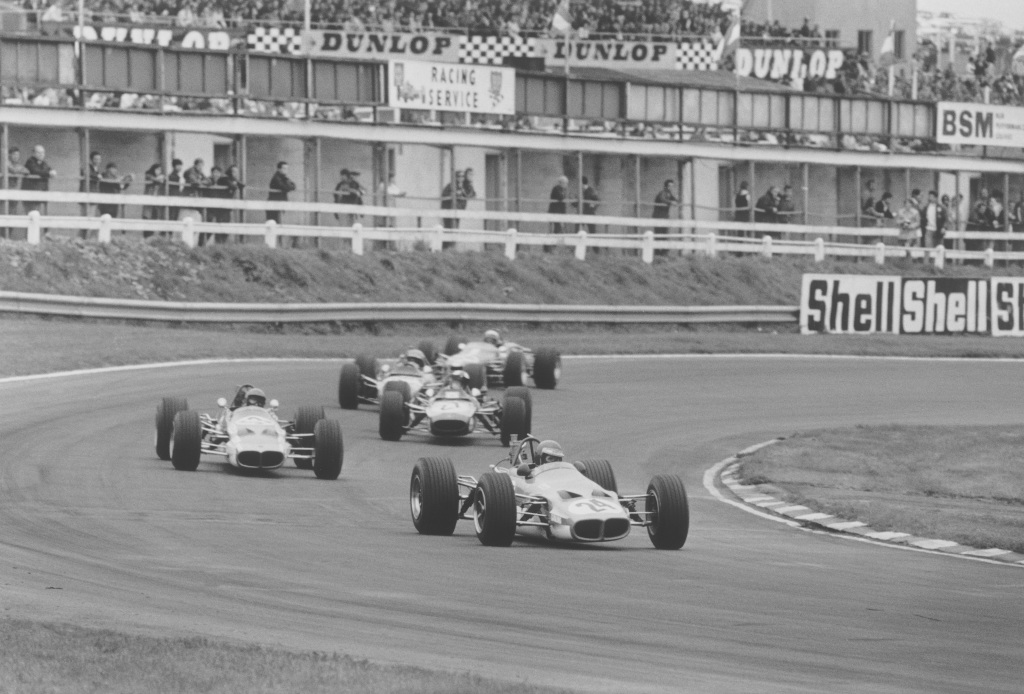
Ronnie Peterson leads Morris Nunn (both in Lotus 59s) at the Guards International Trophy Formula 3 race at Brands Hatch in 1969. (Image by LAT archive)
Even though the native of Walsall, England (130 miles north of London) captured the final race of 1969 for Chapman and beat James Hunt, Francois Cevert and Piers Courage in the process, there was no F1 seat for him.
“I was 32 and Colin had this 22-year-old Brazilian named (Emerson) Fittipaldi lined up for 1970,” he said. “I set track records everywhere I went but I was too far down the road so I decided maybe I should start building cars.”
They were no computers, aerodynamicists, wind tunnels or 7-post shaker rigs back then and Nunn drew out his first Formula 3 car with a piece of chalk on the floor of his garage. He named it “Ensign” for the British naval flag and it broke the track record in its Brands Hatch debut before winning going away in its second outing.
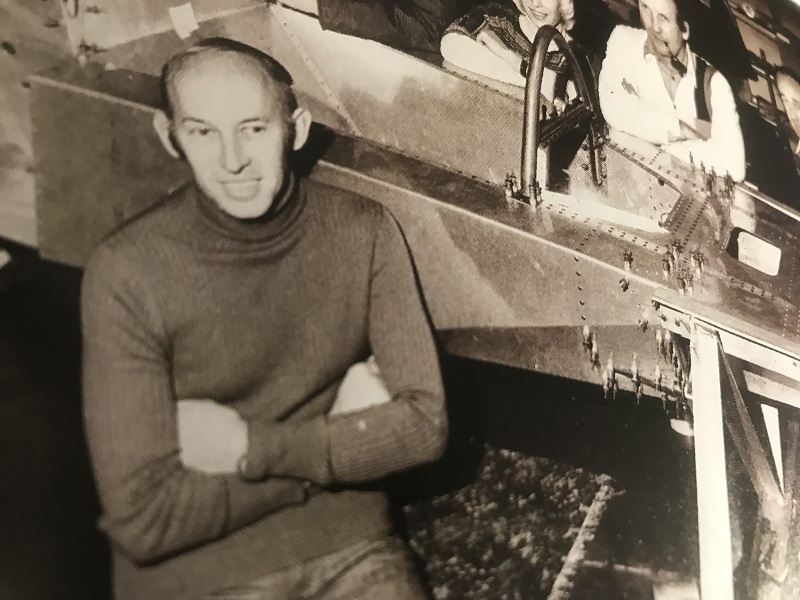
Nunn and the first Ensign in 1971. (Archival image)
“My phone started ringing off the hook and we built 33 cars in 1971 with only four people,” continued Nunn. “Then I got hooked up with Ricky Von Opel and we decided to go F1 racing in 1973.”
During the next eight years he had Daly, Chris Amon, Clay Regazzoni and Roberto Guerrero driving his homemade Ensigns and gave future F1 champ Nelson Piquet his first ride but his shoestring operation was constantly in financial peril.
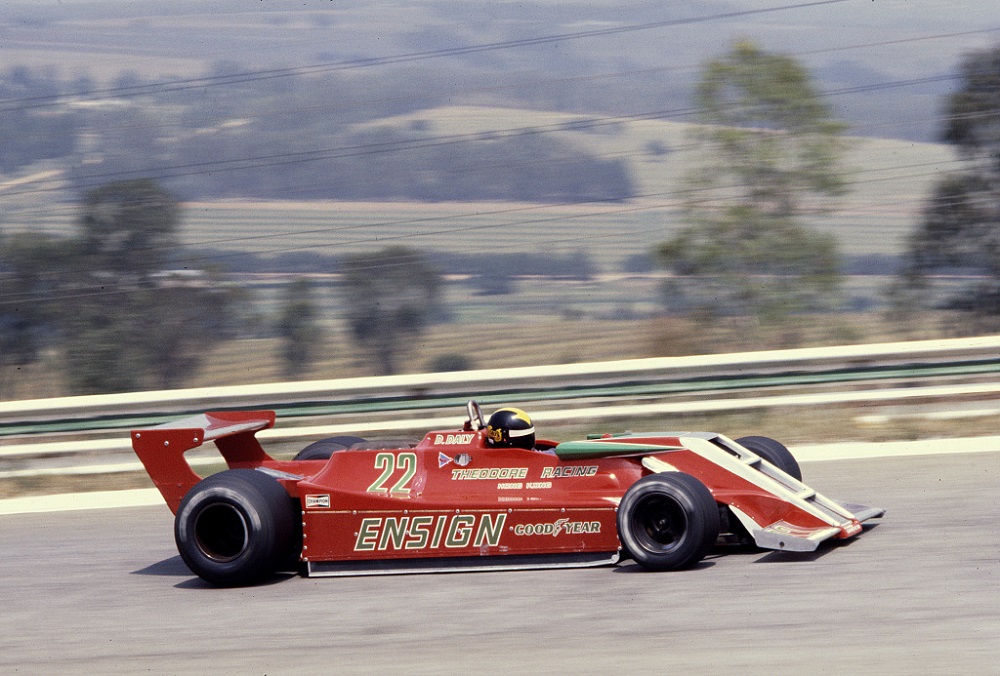
Derek Daly (Ensign N179-Ford) at the 1979 South African GP (Image by LAT archive)
“He was called 'No Munn' because he never had any money and instead of paying me a salary he just gave me the grand prix car I’d raced that year,” recalls Daly with a chuckle. “I left it in his shop and when I went back to get it the next year, he’d sold it so he could afford to go to Monaco.
“I couldn’t get mad -- he was a racer and he gave me my chance in F1. And the best thing I ever did for him was finish sixth in the Canadian Grand Prix in 1978. That point made him eligible for all the traveling money the next year and kept him going. We had a helluva party that night.”After Regazzoni was paralyzed in a crash at Long Beach in 1980 after the brake pedal snapped on his Ensign, Nunn was broke and disillusioned with F1, so he headed for the United States and took a job with George Bignotti.
“We fought like cats and dogs but I learned a lot from George, he was a very street smart," was Morris’ recollection of Indy’s master mechanic.
Nunn went to work for Vince Granatelli with Guerrero in 1987 and won races before linking up with Pat Patrick. Reunited with the man who took his F1 ride, Nunn and Fittipaldi teamed up to win the 1989 Indianapolis 500 in a Penske chassis (“That was great, beating them with their own car!” he exclaimed).
By 1992, Chip Ganassi had started a CART team and Nunn came on board to work with Eddie Cheever, Arie Luyendyk, Michael Andretti, Bryan Herta and some Italian named Zanardi.
“He was the most argumentative driver I ever met but he was also the best at passing cars I’ve ever seen,” was how Nunn described 'The Pineapple.'
“Morris was the best thing that ever happened to my career,” said Zanardi, who went from F1 castoff to two-time CART champion in 1997-98 on Nunn’s watch. “We spoke the same language and I loved driving for him and being around him.
“For three years he was my engineer and my best friend.”
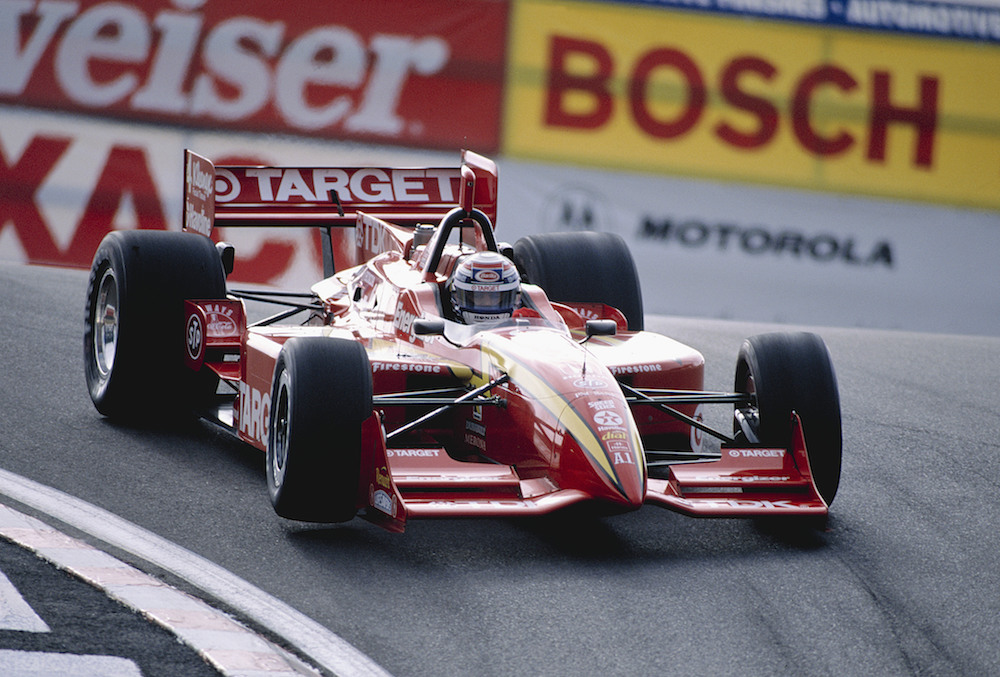
Alex Zanardi (Chip Ganassi Racing/Reynard 97I-Honda) at Laguna Seca in 1997. (Image by LAT archive)
While Nunn and Zanardi would spend hours over dinner discussing chassis setups, the next Ganassi driver could have cared less. Juan Pablo Montoya was young, brash and fantastic on four wheels. He made Nunn crazy when he’d leave right after qualifying with the caveat: “It’s close enough Morris, it will be fine tomorrow.”
Montoya won in his third start at Long Beach and captured the 1999 title on the strength of five victories before winning Indy in 2000 for Ganassi after he crossed the picket line in the IRL/CART war.
“I was good on ovals and a lot of it was Morris, because he always kept me on a leash,” said Montoya, laughing at that memory on Wednesday. “He would say, ‘Just be patient, it will come,’ and it always did. He really knew was gong on and he was a really cool head who stayed calm and that made a big difference.
“A cool thing was that when you were in trouble he could come up with setups and go a different way and try something we’d never run. I was nowhere at Mid-Ohio once and he did that and we went out and won the race. I never really needed to worry, I would just tell him to get it close and he did the rest.”
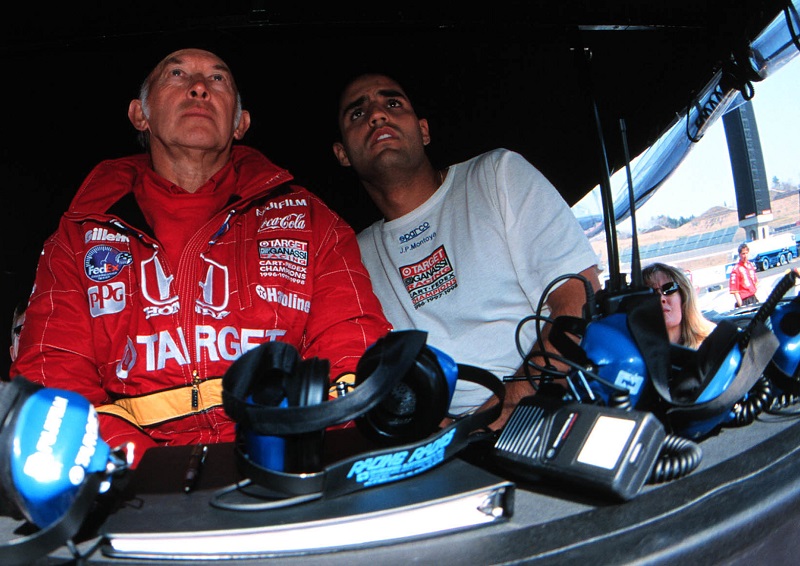
Nunn and Montoya in 1999 (Image by Michael Levitt/LAT)
Ganassi knew what a gem he had so he even got a private plane to keep his engineer happy in 2000.
“Morris was the best at getting the most out of our drivers,” said Ganassi on Wednesday morning. “They threw away that mold. He worked tirelessly in ways I don’t see today. His fingerprints are still all over our team and he left an indelible mark in our sport.”
After Montoya’s departure Nunn decided to start his own CART team and suffered a devastating emotional blow when Zanardi (who had returned from F1) lost both legs in a hideous crash in Germany. Mo Nunn Racing joined the IRL full-time in 2002 – winning his only race in 2004 with Alex Barron.
From then on it was time to relax with his lovely wife Kathryn and concentrate on golf. He became obsessed with the game and probably owned 50 drivers because he was always looking for the newest way to add 10 yards.
He contracted Parkinson’s in 2009 and it steadily eroded that brilliant mind and his body. He came to Phoenix in 2015 and got to visit with Montoya and that made him smile for the rest of the day.
Nunn asked an innocent question back in the early '80s about whether all ovals had left-handed turns. A couple CART guys started laughing at him but were quickly quieted by longtime F1/IndyCar mechanic Bevan Weston.
“That guy has forgotten more about race cars than you clowns will ever know,” said Weston. “He’s one the smartest and hardest-working people you will ever meet and just give him a couple years to figure out ovals and he’ll start kicking your ass.”
Did he ever. With that quiet sensibility, pragmatic approach, racer’s brain and cheeky smile, he put Guerrero in Victory Lane and Dick Simon’s car on the front row at Indy, scored a few wins with Mario at Newman/Haas and then lifted Ganassi to CART’s catbird seat for four straight years.
Mo didn’t flaunt his success but he was proud of going from his tiny garage floor to the pinnacle of American motorsports and it was a joy to follow his amazing ascension. And it was even better to call this delightful British import our friend.
Presented by:
Robin Miller
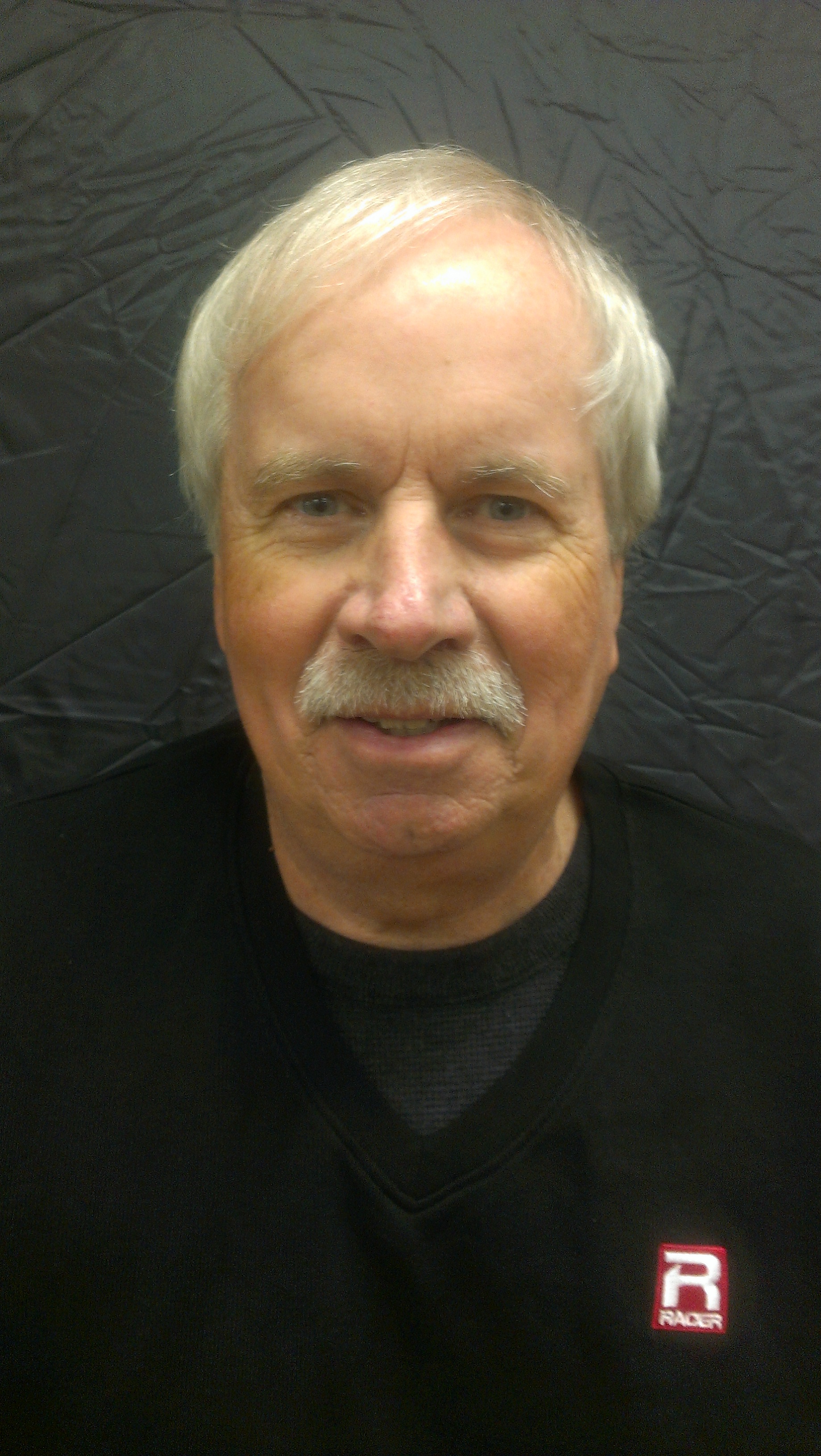
Robin Miller flunked out of Ball State after two quarters, but got a job stooging for Jim Hurtubise at the 1968 Indianapolis 500 when Herk's was the last roadster to ever make the race. He got hired at The Indianapolis Star a month later and talked his way into the sports department, where he began covering USAC and IndyCar racing. He got fired at The Star for being anti-Tony George, but ESPN hired him to write and do RPM2Nite. Then he went to SPEED and worked on WIND TUNNEL and SPEED REPORT. He started at RACER when SPEED folded, and went on to write for RACER.com and RACER magazine while also working for NBCSN on IndyCar telecasts.
Read Robin Miller's articles
Latest News
Comments
Comments are disabled until you accept Social Networking Cookies. Update cookie preferences
If the dialog doesn't appear, ad-blockers are often the cause; try disabling yours or see our Social Features Support.