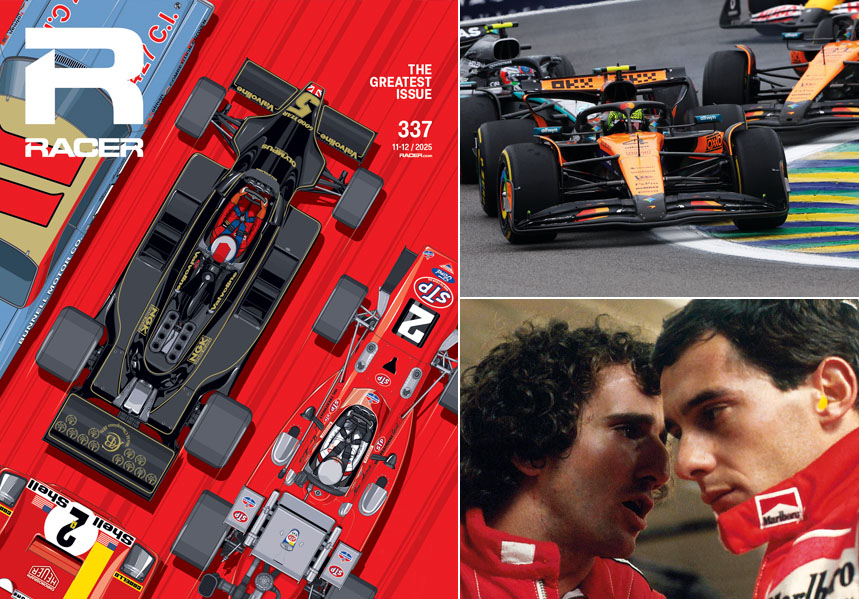
In RACER Magazine: Thrill Ride
New aero rules and wider tires mean this year's Formula 1 cars are putting up record-breaking lap times. And as three-time world champion Lewis Hamilton explains, the guys behind the wheel are loving it.
It's the ultimate rush. For people to really even start to understand it, I guess it's like the most badass rollercoaster ride ever, but you get to decide where it goes..."
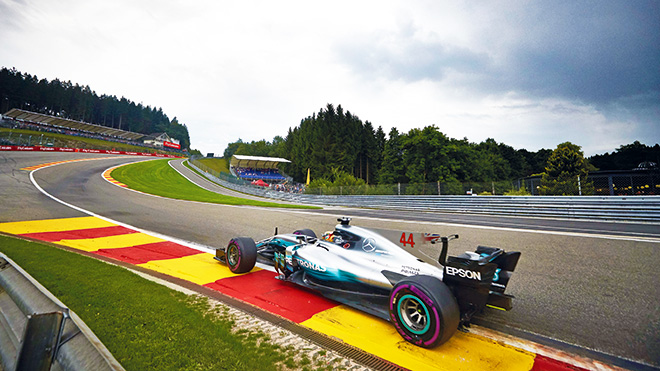
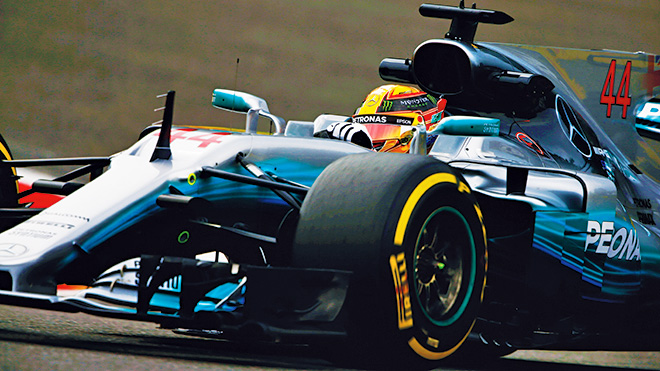
There's a grin spreading across Mercedes Formula 1 ace Lewis Hamilton's face that betrays just how cool he knows his job is. The three-time world champion is locked in a title battle with Ferrari's Sebastian Vettel, but there's no hiding his excitement when he talks about the visceral joys of driving a 2017-spec car.
F1 claims to be the pinnacle of motorsports, and with good reason. But in recent years it's also found itself in an ongoing, mostly reactive battle against ever-increasing speeds, introducing rule change after rule change in order to slow the cars down. Still, the 2017 season is different. The latest round of regulation changes was conceived to make them faster – through the turns at least – as well as visually more aggressive.
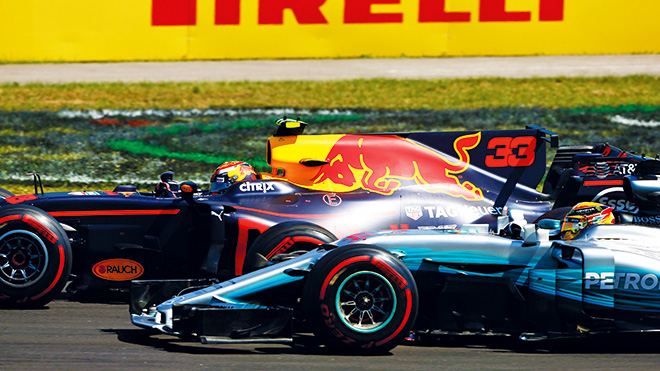
"You have the exhilaration and excitement of one of those crazy-fast roller coasters – the sort that goes upside down and everywhere – but this one's loose and it's trying to get away from you, too," Hamilton says. "It's off the rails. So you've got to somehow react to it and control it to keep it within the white lines. It's incredible; it's like an F-22 fighter jet, but on the road. The performance is just outstanding.
"The forces on your body are working you over big time, and from all directions. You're feeling them as you brake and accelerate, and laterally through the corners. But they're acting on you vertically, too – pushing on you from your head through your butt. When you brake, if you've got sweat on your nose, the sweat goes directly forward under braking at 5G or 6G. It's weird! It's as if you're hanging upside down and the water's dripping off you, and it ends up on your visor. Or if you're going round a corner, the sweat will literally fly off to the side. It's really crazy."
Like a boxer or a long-distance runner, an F1 driver can prep for the physical challenge to a certain extent, but only real rounds fought, or marathons run, or race laps driven can ultimately take them to the place they need to be.
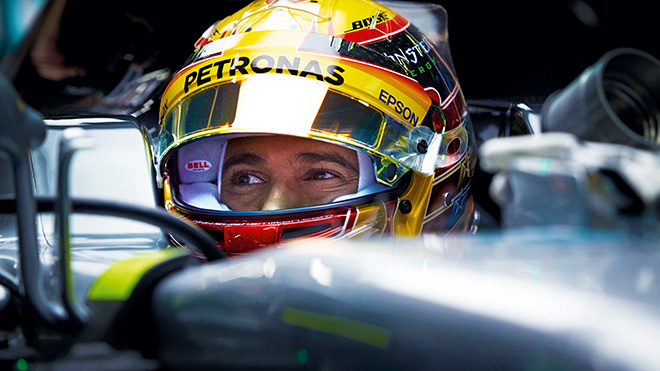
"Once you are more used to it, that's when you start to lean on it more in the car – you're not just a passenger."
Hamilton is clearly not a passenger on a qualifying lap. This year he caught and passed the legendary Michael Schumacher's record of 68 all-time F1 pole positions. (Fittingly, Hamilton's 69th pole came at super-fast Monza.) Fitness is something the 32-year-old Brit focuses on specifically, because it's fundamental to him finding the ragged edge.
"I use my core to lean on different parts of the seat to feel the car in different positions," he explains. "If you just sit there and it throws you around, you have no feel. If you tense up and adjust your car to how you're going to balance, it's more like a go-kart that way."
Finding the limit in an F1 car is about finding your own limit, too. Sure, there are physical performance limits for the car itself, but there are also physical – and mental limits – for its driver. The higher a driver's own limits, and the better his or her ability to reach them – then stay there, on the fine line – the more effectively they'll be able to find and exploit the limits of the car.
click here
, or to buy The Formula 1 Issue online, click here.RACER is also available digitally for Apple and Kindle Fire devices. RACER Digital has the complete content of the magazine's print edition formatted for mobile viewing. With RACER Digital, you'll have access to your RACER content all the time, wherever you are.
The RACER app can be found by searching for "RACER Magazine" in the Apple or Amazon App stores. The app is free and includes issue previews and the RACER.com newsfeed. Individual issues can be purchased for $1.99 and an 8-issue annual subscription is $9.99. Back issues are also available.

Latest News

Comments
Comments are disabled until you accept Social Networking Cookies. Update cookie preferences
If the dialog doesn't appear, ad-blockers are often the cause; try disabling yours or see our Social Features Support.