In RACER Magazine: Nissan's Electric Arc
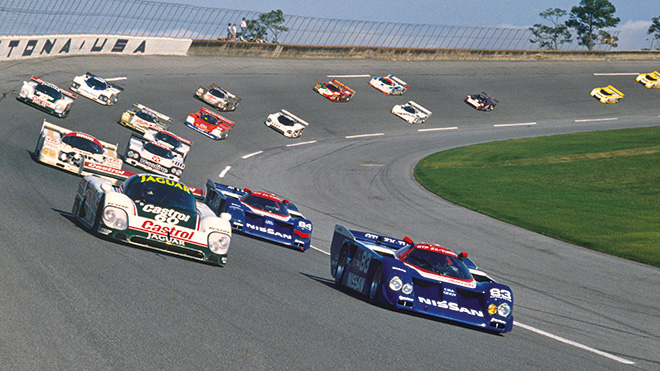
Electramotive Engineering's IMSA GTP program was an epic failure when it appeared in 1985. Faced with immediate disappointment, its paymasters at Nissan USA wanted to kill the project, with haste.
A stay of execution was arranged by Nissan's new motorsports manager, R. W. "Kas" Kastner, upon his arrival in 1986, but more GTP embarrassment followed. Two seasons in, the mothership – as in, Nissan Japan – came calling and wanted to scuttle the little Californian team for good.
Kastner could see the quandary at play. Nissan was looking to save face after volcanic powertrain failures, massive crashes and lowly finishes became its GTP norm. What the brand couldn't see through the oil and smoke was the potential offered by the tight-knit El Segundo-based outfit.
Founded in 1974 by Don Devendorf and John Knepp, Electramotive was bursting with talent, but needed organization. It also needed something different than the disastrous made-to-order Lola T810 Nissan GTP ZX-Turbo. Kastner convinced his bosses not to pull the plug just yet and started working the problems as Electramotive's defacto leader.
"Nissan thought I was a little high handed when I told them, 'The car's junk,'" Kastner recalls of Lola's Jello-like chassis. "This went over like a lead balloon. Other than Frank Honsowetz, nobody at Nissan knew anything about racing. The team was grossly underfunded. I couldn't believe Electramotive signed a contract to do what they were asked to do."
Devendorf had raced for Kastner on the amateur circuit in the 1970s and was the primary driver for the GTP ZX-Turbo. Their bond of friendship made Nissan's first big mandate easier to accept.
"Don was a really bright guy; he was still working at Hughes Aerospace as a scientist and worked himself down to the nub," Kastner says. "His health was at risk, so the first thing I said was, ‘You’re no longer in the car anymore.’"
Freed from driving, Devendorf, a pioneer in electronic fuel injection, took charge of Electramotive’s computer controls for the GTP program, which helped make Knepp’s production-based 3-liter, turbocharged V6 the envy of the paddock. Overcoming Electramotive’s poor reputation as a prototype racing team was the next order of business.
Committed to turning Electramotive's fortunes around, the unloved T810 would become Kastner's rallying point.
Aero wizard Yoshi Suzuka came up with all-new bodywork shaped in Electramotive's wind tunnel. Kastner and Moss arranged for beefier Hewland gearboxes to replace the trail of broken Weismanns. Valuable pounds were carved from the hefty Lola by ditching the heavy, stock engine block for a new, lighter aluminum piece; it also improved reliability. Only the original Lola chassis and rock-hard Bridgestone bias-ply tires remained by 1987.
A one-off gift at the early-season Grand Prix of Miami – access to buttery Bridgestone radials reserved exclusively for Porsche's 962 – allowed Electramotive's development prowess to show as Geoff Brabham and Elliott Forbes-Robinson took Nissan's first victory. However, an immediate return to bias-ply rubber hastened the last two changes as '88 approached.
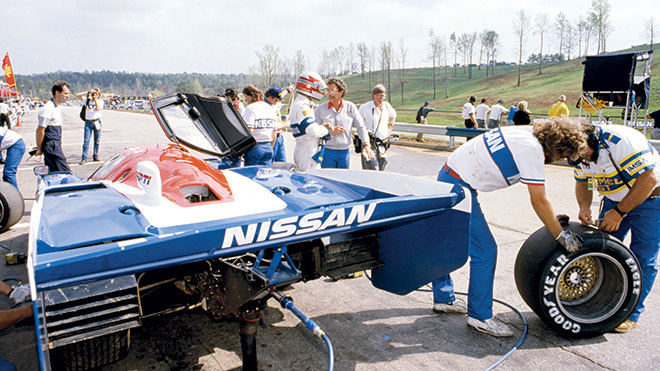
"Just driving out of the pit lane I knew it was 100-percent better," Brabham recalls. A new tire vendor completed Electramotive's vehicular purge.
"We get Goodyears, go to Riverside, use the same setup, and instantly go two seconds faster," Kastner recalls. "We said, 'Man, the world's in trouble now...'"
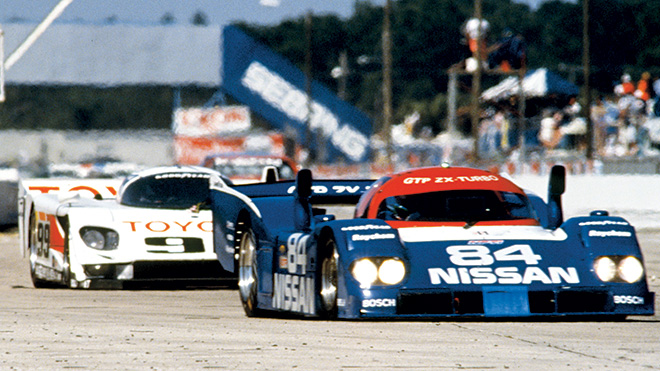
The GTP series was trampled underfoot by Brabham and Electramotive in 1988. Nine wins, including an unimaginable streak of eight straight with a Harris-designed chassis nicknamed "Elvis," turned the lean, mean Nissan team into racing rock stars and earned Brabham the GTP drivers' title.
"I came home after the sixth win and there was a big banner across the street at Nissan's corporate headquarters that read 'We won six in a row,'" Kastner says. "In two years, we'd gone from a team they wanted to cancel, to everybody standing in line to get on the motorsports bandwagon."
click here
, or to buy the 2017 Great Teams Issue online, click here.Take a video tour of the issue...
RACER is also available digitally for Apple and Kindle Fire devices. RACER Digital has the complete content of the magazine's print edition formatted for mobile viewing. With RACER Digital, you'll have access to your RACER content all the time, wherever you are.
The RACER app can be found by searching for "RACER Magazine" in the Apple or Amazon App stores. The app is free and includes issue previews and the RACER.com newsfeed. Individual issues can be purchased for $1.99 and an 8-issue annual subscription is $9.99. Back issues are also available.

Latest News
Comments
Comments are disabled until you accept Social Networking Cookies. Update cookie preferences
If the dialog doesn't appear, ad-blockers are often the cause; try disabling yours or see our Social Features Support.