Alec Udell: Diversifying the portfolio
Every young racer has been told it's a good idea to have a fallback plan. Alec Udell knows that, and the degree in mechanical engineering (with a minor in economics) he's currently pursuing at Clemson University might just come in handy in a career in motorsports if the driving thing doesn't work out. Rest assured, though, the 21-year-old senior from The Woodlands, Texas, really has no intent on using it as a fallback; rather, it's part of his grand plan.
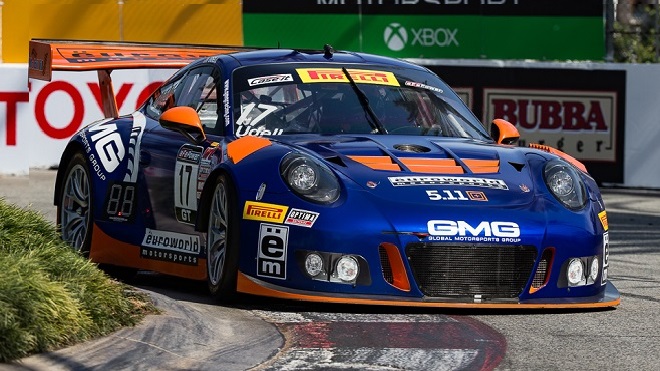
Udell drives the No. 17 Euroworld Motorsports/GMG Racing Porsche 911 GT3R in Pirelli World Challenge Sprint competition (it switches to Calvert Dynamics livery for SprintX where he co-drives with Preston Calvert in the Pro/Am category) and plans to make racing his career, preferably as a factory driver. The engineering and economics serve to bolster his talents as a racer, talents that have been proven with the 2016 GT Cup championship. After being moved from GTA to GT following the opening rounds at Saint Petersburg, he sits seventh in the Sprint standings – appropriate since he's finished seventh in the last three of five Sprint races.
Moving from the Porsche 911 GT3 Cup car last year to the GT3 R in 2017 has helped him adapt to the higher level of competition quickly.
"It took me probably three-quarters through 2015 to really get accustomed to the GT3 Cup car," Udell says. "[The GT3 R] isn't as big a step, but the competition level is way more intense than anything else I've been in in since I race karts nationally and internationally. The Cup car is very tricky to drive. You don't have any driver assists, so that makes it more difficult; it's easy to lock up the brakes. The ABS is really nice in the GT3R. I think that's how Porsche wants it to be – not too much of a step above the Cup car, but it's enough that it takes that little bit more commitment everywhere, because you've got that much more tire and that much more downforce."
He does note that, even though he shared the track with the GT drivers while competing in GT Cup and was able to observe their driving styles, the level of aggression is a touch higher than he expected. "The racing is hard. It's tough, it's close and there's a lot of bumping and banging. I think I expected some of that moving up to this level, but I think it's definitely a bit more aggressive than in years past," he says.
As a driver who brings his own funding to the table, that bumping and banging is a big consideration. So making the transition to paid driver is important.
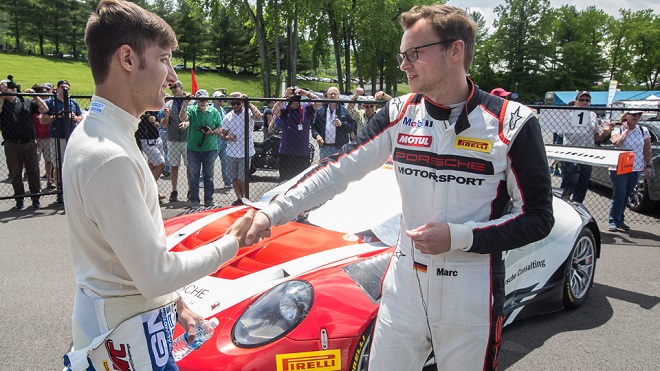
Udell hopes that engineering degree will give him the technical edge to better compete both on the track and for jobs. The economics minor – he spent his summer interning for an equity firm in Irvine, Calif. – will help him with the business side.
"When I was looking at what I would major in in college ... I could do business, which would make sense as far as looking for sponsorship deals, having to network and put deals together. But I had the technical background – I was good in math, good in science, good in physics – so that I could do engineering. I thought that would be way more valuable technical background for me to have.
"Once you get in the car, you can't really think about it too much, but once I get out and I'm talking with out engineer Stefan [Pfeiffer] or I'm talking with my crew chief Neville [Agass], it's good to have the background of understanding what's going on with the car and understand the changes they're making. I did a lot of work when I was younger working on karts. We own a shop in Houston working on racecars, building motors and kart engines, rebuilding cars ... so I've always had good hands-on experience. Now I have the technical background to really understand what's going on underneath.
"I'd love to be a part of a manufacturer that allows me to drive racecars and help develop either the racecars or the street cars to bring both sides of my knowledge together."
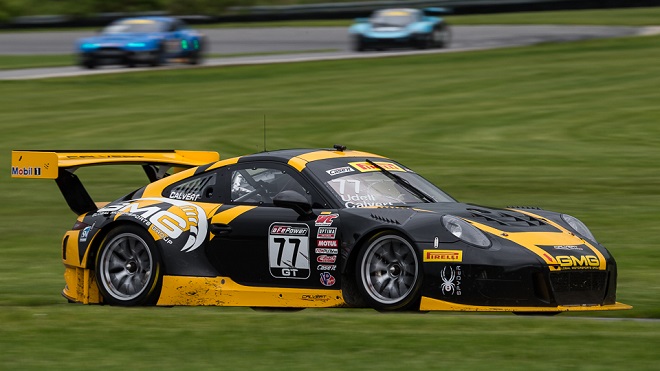
"I want to go to Le Mans," he states emphatically. "That's been my dream since I was 10 years old. I want to race there, in the World Endurance Championship, to travel the world racing cars. I love GT cars, but I'd love to get into prototypes. It takes a lot of dedication, a lot of hard work and there's a lot of sacrifice that goes into it.
"I'm now almost 17 years into making it in this sport. There's no overnight success, is the mantra. You put in your time, you take the opportunities you can get and you make the most of them. That's all I do every year: Just do bigger and better things."

Latest News
Comments
Comments are disabled until you accept Social Networking Cookies. Update cookie preferences
If the dialog doesn't appear, ad-blockers are often the cause; try disabling yours or see our Social Features Support.