In RACER Magazine: Haas F1's second lap
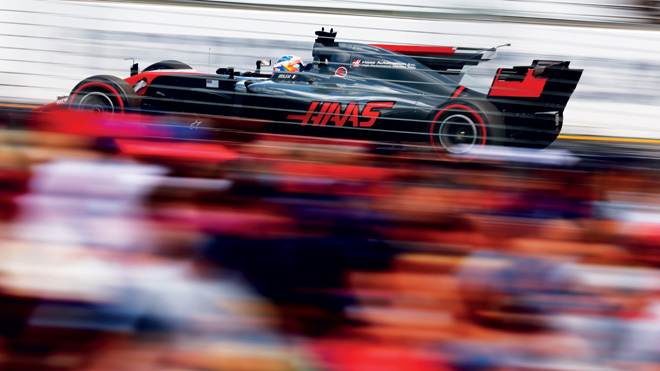
After an impressively solid debut season in 2016, year two for Haas F1 is about carefully-managed forward progress. And the early signs are looking good...
Look up the term "second-season syndrome" and you'll find countless examples of how difficult it is to back up an impressive debut, whatever the sport. Increased expectations and a near-inevitable regression to the mean combine to make a repeat performance exponentially more challenging.
From a Formula 1 team standpoint, second-season syndrome is somewhat rarer, but that's broadly due to the lack of success most new teams experience when first entering the category. Massive car manufacturers and tiny independents alike have largely found their debuts to be testing, so the achievements of Haas F1 when it joined the grid a little over 12 months ago were all the more remarkable.
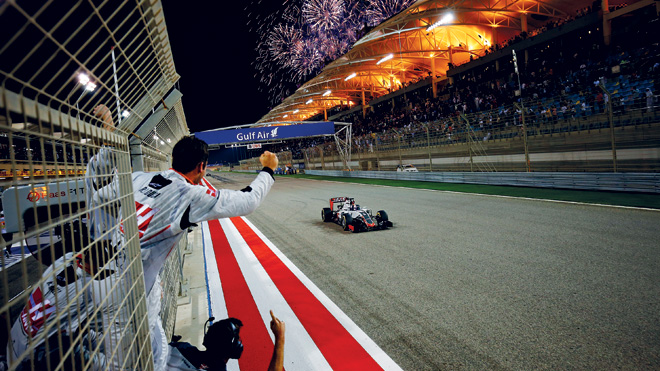
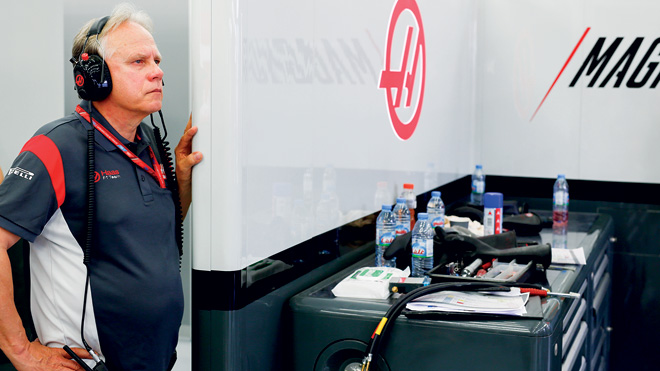
Following that in season two was always going to be tough, but Gene Haas knows racing from his Stewart-Haas partnership in NASCAR and is taking a patient approach. When Haas F1 first morphed from dream to reality, the experienced Guenther Steiner was made team principal and the F1-savvy Austrian is keen to keep targets flexible while it's still such early days in the journey.
"There's always a plan when you want to develop something, but in F1 it's very difficult to do anything longer than three years because things are changing so quickly," Steiner says. "You need to have a base plan: you want to grow a team, you know how many people you want, you want your business model to work. But to make a plan such as, 'In year four I want to be second,' that doesn't really work.
"I think we've got a plan for five years that we want to grow as a team, not in quantity, but in quality – that we do things better. For sure, quantity also comes with it, but there's not a defined plan that says if we're not at a certain stage at a certain time, then we've failed and we stop."
The early signs from 2017 are of a more consistently competitive Haas F1 that will challenge for points on a regular basis. Having delayed its entry by a year to be fully prepared for 2016, its performance so far in '17 is perhaps the greater achievement. Why? Because it confirms the team's ability to develop a car in tandem with racing – the essential F1 juggling act.
"We said in year one we want to score points, be respected, not make too many mistakes and not be an embarrassment, because there were enough of them..." Steiner admits. "I think we achieved that. Year two we want to get better – or at least, not get worse. But I think after the first few races we can say it's happening.
"There is still a long way to go and we can still do a lot of things wrong, but it's not in our plan to do them wrong! We want to keep on growing and just see where it takes us. Then we can make some plans after the first four races on where we want to be next year, and what we need to improve to make the next step to get better.
"It's the same as we did last year. After the first four races we decided where we would put our focus, and we will do the same for the year after, too. We know this year where our focus is and what we're doing, but the year after we see what we want to do better to have a better result."
"I think in the beginning of the year we exceeded our expectations," he says. "In the middle of the year we had a little bit of a slump, and the reality came to be in the last part of the season where it was really very difficult to get any points at all.
"I actually think developing this car [the VF-17] went pretty well. A lot of engineering now has to be compressed into a short period of time, so inevitably you don't do things as well as if you had more time. We're already looking at changes we want to make in the next upgrade cycle."
On the technical front, part of last year's performance path was the result of a lack of updates being introduced in order to build knowledge with a stable platform. This year there will be a full upgrade plan in place now that the team has that initial experience under its belt.
From a team ownership point of view, the main goal for Haas was to increase the global awareness and reputation of his machine tool company. While that has been successful so far, the difficulty with elite sport is maintaining a high-end image.
****
click here
, or to buy The Le Mans Issue online, click here.Take a video tour of the issue...
RACER is also available digitally for Apple and Kindle Fire devices. RACER Digital has the complete content of the magazine's print edition formatted for mobile viewing. With RACER Digital, you'll have access to your RACER content all the time, wherever you are.
The RACER app can be found by searching for "RACER Magazine" in the Apple or Amazon App stores. The app is free and includes issue previews and the RACER.com newsfeed. Individual issues can be purchased for $1.99 and an 8-issue annual subscription is $9.99. Back issues are also available.

Latest News
Comments
Comments are disabled until you accept Social Networking Cookies. Update cookie preferences
If the dialog doesn't appear, ad-blockers are often the cause; try disabling yours or see our Social Features Support.