PRUETT: Aero strategy duel at Road America
Take one look at the trap speeds entering Turn 1 during Sunday's Kohler Grand Prix Verizon IndyCar Series race, and a fight among top fuel dragsters and pro stocks jumps from the page.
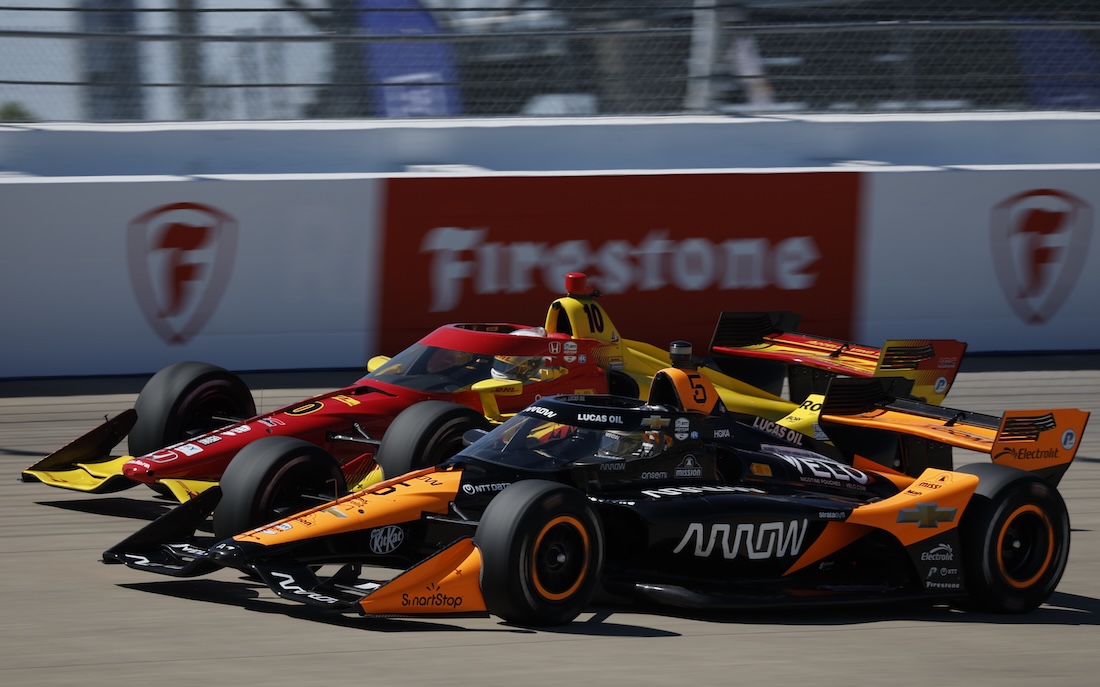
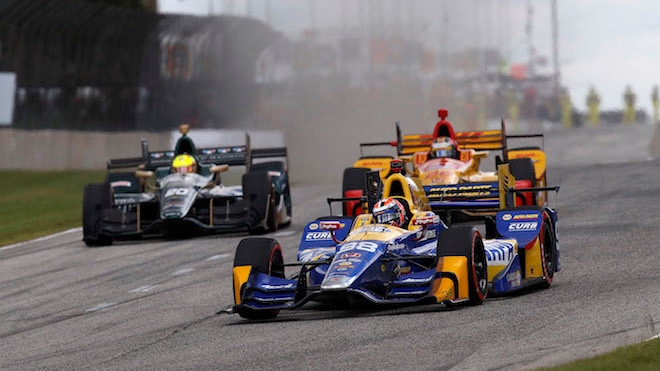
The dueling aerodynamic setup philosophies at play – a battle between cars using super-low drag and medium-low drag – meant some drivers were rockets on the long Road America straights, but suffered a bit in high-speed corners, and others weren't as fast on the straights, but made up time on their low-drag rivals in the sweeping corners.
Fuel mileage was the other factor to consider while choosing the top fuel or pro stock route. For those on the super-low plan, improved fuel mileage followed due to pulling less downforce and drag through the air; for those on the medium-low option, going fast while saving fuel posed an added challenge.
Altogether, the winning aero strategy last weekend went to those who avoided the top fuel dragster approach and piled some extra downforce on their cars to cope with the mix of straights and daunting corners around the 4.0-mile road course.
Dale Coyne Racing won the top speed wars during the race with Honda-powered Esteban Gutierrez reaching 189.441mph entering Turn 1 and teammate Ed Jones close behind in second with a 189.287mph blast through the timing loop. Ed Carpenter Racing's Spencer Pigot was third at 188.372, and first among the Chevy drivers. We can assume drafting was involved in every driver's best top speed figure, and probably push-to-pass as well.
Race winner Scott Dixon was 18th on the speed chart into Turn 1 at 183.872mph in his Chip Ganassi Racing Honda; Team Penske's Josef Newgarden, who finished second in the race, was sixth fastest in this sector at 188.052mph.
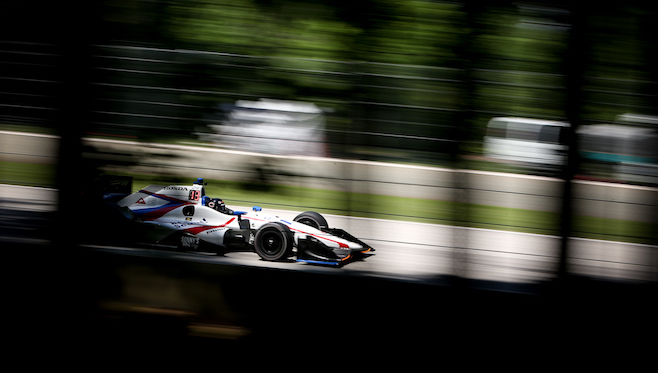
The long run down to Turn 5 was another display of Coyne slipperiness as Gutierrez led the field with a peak of 191.701mph capture just prior to the braking zone. ECR's Pigot was second at 191.522mph, Jones (pictured) was fifth at 191.253mph, and Dixon was seventh at 190.319mph. Again, assume drafting and possible push-to-pass was involved for all.
"During the weekend, we were having a difficult time getting our cars around the corners, and when we trimmed, we actually went a little bit faster," he told RACER.
"There's also the fuel mileage benefit from trimming out, and on starts and restarts, it makes a driver's life easier getting into Turn 1. Given what we did as a group, we'd probably go back and race at a higher level."
Lacking a bit of mechanical grip, the tradeoff of gaining time on the straights outweighed losing more time in the corners.
"Going into the Road America race, you knew the lap time everyone would be aiming for, but you didn't know how people would be making that lap time," Cannon added. "If it ended up being a conga line on the straights, being the guy with less drag who could pass would be a benefit. We didn't have a car that was particularly sparkly in Turn 1, the Carousel, or Turn 14, and I don't think it was a downforce thing; it was more mechanical balance we were lacking, and putting downforce on the car wasn't going to solve that problem."
Once the race got under way, Cannon and the rest of the Honda runners on super-low drag aero setups saw which team and driver had made the right choice.
"And then Scott Dixon showed you could do it with a little bit more downforce and more discipline on the right foot," he said.
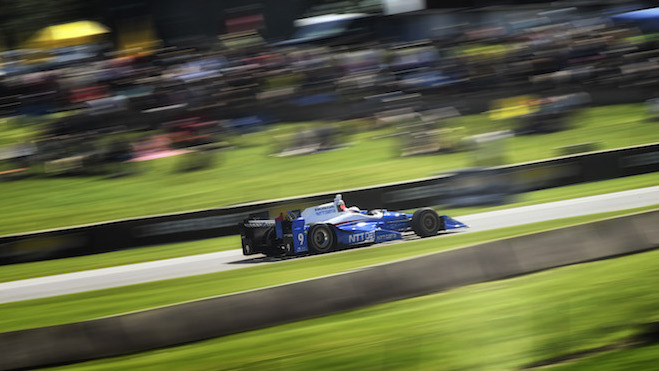
"During the weekend, we tried trimming out on a number of occasions, and Road America isn't as simple as say the Indy road course where the straight's long and you need top end speed," Simmons said. "If you're slow through the Carousel, you're slow all the way down the back straight, so you can't afford to give that up just to be fast on the straights.
"We trimmed as much as we dared to maintain tire life to get the 14 laps needed out of the tires, and traded a little bit of the grip we would have wanted by trimming somewhat so we could stay close to the Penskes."
Trap speeds through the Carousel's timing loop show how those on the medium plan were on a different planet than those trimmed for maximum speed on the straights.
Newgarden was fastest from the start of the loop at the bridge entering the Carousel to the end of the loop at the end of the corner with an average of 141.521mph. Pigot was second at 140.536mph and Dixon was third at 140.300mph. DCR's top fuelers were mired down in 18th with Jones at 136.477mph and Gutierrez was 20th at 135.896mph.
In most sectors where cornering was the setup priority, Dixon and Newgarden were among the fastest, which speaks to using similar downforce configurations.
"Once you get past Turn 5 through the Kink, there's a lot of corners that reward downforce," Simmons added. "Trimmed out looks great on the straights, but a little bit more drag and downforce was the way to go."
Pigot was the standout performer in the race with big top speeds and big cornering speeds. Mechanical problems prevented the 2015 Indy Lights champion from earning a quality finishing position, but it was clear the young American was driving hard and making the most of a great ECR chassis setup.
"Road America is a tricky place and the straights are important, but it doesn't matter if you're fast there but can't stay behind someone in the corners," Pigot said. "I'd say we were in the middle on downforce. We were really good in Turn 1, and I was able to make a few passes in Turn 3, we were also good in the Carousel."
Strategic use of push-to-pass helped Pigot to hang with the super-low aero crowd.
"On the straights, I'd be full push-to-pass and barely able to get up to the guys in front, so if we did it again, we'd maybe go a little bit lower on aero, but not a bunch," he said. "Our strategy was to not lose out in the corners, and the way it played out, our car was amazing in the corners, so maybe we can relate some of what we learned when we go to Watkins Glen."
Simmons is also planning to apply what they learned at Road America to the upcoming road courses that call for aero compromises.
"We have a few more similar tracks like that at Mid-Ohio and Watkins Glen, and those are two tracks Scott certainly likes..." he said.
Considering Dixon's currently leads the IndyCar championship, won last year's race at Watkins Glen and has turned Mid-Ohio into his personal win factory, the Kiwi's opposition will need to strike the perfect balance with downforce and straight-line speed to keep him in check.

Latest News

Comments
Comments are disabled until you accept Social Networking Cookies. Update cookie preferences
If the dialog doesn't appear, ad-blockers are often the cause; try disabling yours or see our Social Features Support.