Rear View: Haywood's first LM24 win, 40 years on
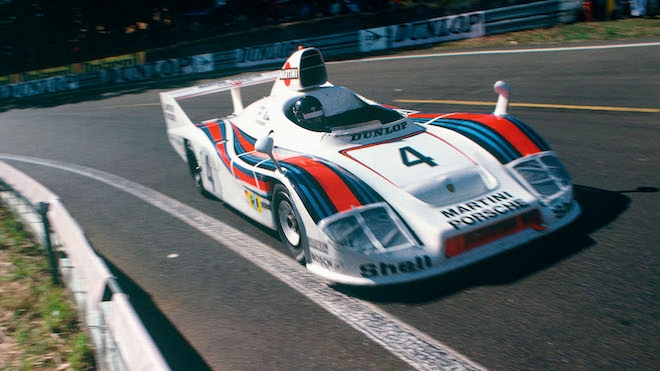
Hurley Haywood's relationship with the 24 Hours of Le Mans opened and closed with amazing results. A rookie in 1977 as part of the factory Porsche 936 effort, Haywood scored an overall win on his debut, added a second with Porsche in 1983 and said goodbye in style, signing off with a third overall win in a works-affiliated Porsche in 1994.
Forty years have passed since Haywood's first Le Mans victory, and with the milestone waiting to be celebrated, the American racing legend took RACER back in time to a golden era of sports car competition.
Related Stories
"When I first saw that car, you kind of stop in your tracks and you look at it and go, 'oh God, that thing is gorgeous looking.' And when I'm asked today what my favorite Porsche racecar is, I always say the 936," he said.
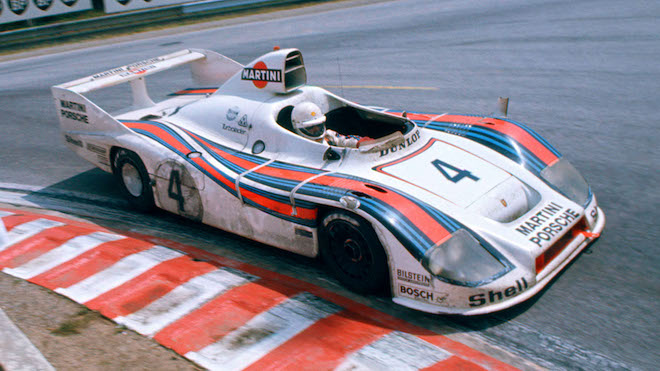
"And I was privileged to drive that car in its three [sponsorship] versions. So, we started with a Martini car in '77, then in '80, we drove the version that was under Essex, and then the last was '81 when we drove it with the Jules. Jules was when we had the engine [turned] up and that was phenomenal, that was the best of all the 936s."
Haywood would fall in love with Le Mans the moment he arrived, or, more accurately, when he finally arrived.
"That was my first trip to Le Mans and even if you're a racing fan and you just read about Le Mans and where it is and you watch movies, you really don't have an idea of the physical presence of that racetrack and where it's located; it's in the middle of an industrial city, which is a huge city. And I always kind of assumed that Le Mans was kind of this quaint little French town that happened to have this racetrack, but when I got there I was like, 'oh shucks,'" he said.
"I'm sure you've heard that story a million times about driving around endlessly trying to find where the Porsche was encamped and finally, in the middle of the night, I see this guy walking down the street with a Porsche jacket on and I stopped and rolled down the window and he looked in and it was Klaus Bischof who turned out to be my crew chief. So, it all went uphill from that point on."
Porsche's gorgeous 936 represented an in-between period for prototypes at Le Mans. Porsche's 917s and other closed-top cars had faded into history, new open-top cars had become the norm, and the modern high-downforce prototype era led by Porsche's 962 was still five years away. The venerable turbocharged flat-6 Porsche engine gave life to the 936, just as it would to so many of the brand's racecars in the decades that followed, but everything else about the 936 was different, and delightfully so.
"It was a really cool car to drive," Haywood said. "It's hard to describe what it was like to drive; it had terrific road holding, it didn't have ground effects, but it had good grip, and it had a very responsive, controllable engine. You drove that car, basically, from the seat of your pants and you felt every movement and you corrected those inputs by the steering or by the throttle.
"And that's cool, as I said, it was kind of like driving a 911 really, I mean, a 911 would have had terrific road holding and great power, but the same kind of feel that you got, you kind of toss around the corner and not having to worry about doing something unpleasant. It was really fun to drive, I loved driving that car, it was good in the wet, visibility was good out of the car."
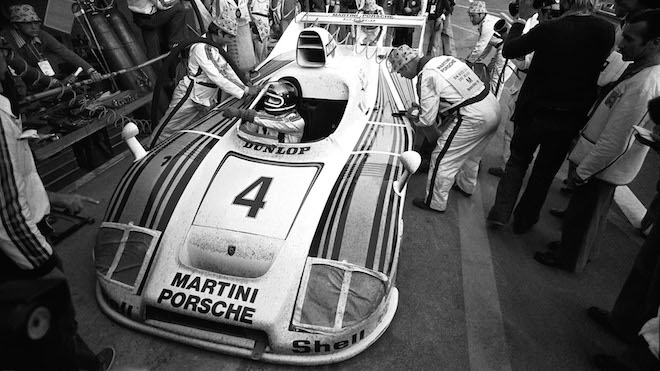
"And you know, when I got there, I didn't have really a tutor that sort of, this is what you need to do, this is what you need to look out for you, I was like thrown into the deep end of the pool and they said, 'okay, go fast and don't crash,'" he said. "But it all kind of worked out, it was a really cool experience and that was when they didn't have the chicanes on the straightaway and it was kind of old school, super-fast. But the car was just so nice to drive that you really didn't think about the speed that you were traveling. I think back then, I think the average speed was 105mph."
Having raced the fastest Porsche Can-Am and GT cars in America with great success, Haywood arrived at Le Mans with a string of big wins to his credit. Despite being the junior member of the 936 program, his talent was rewarded as the start of the race approached.
"In practice, I was doing a good job and they were pleased with my time and everything was good, so they decided to give me the honor of starting the race," he said. "Yeah, no pressure. I remember I didn't sleep a wink the night prior to the race. Tossing and turning, thinking of all the things that could go wrong."
Haywood's worst fears were realized moments after the start.
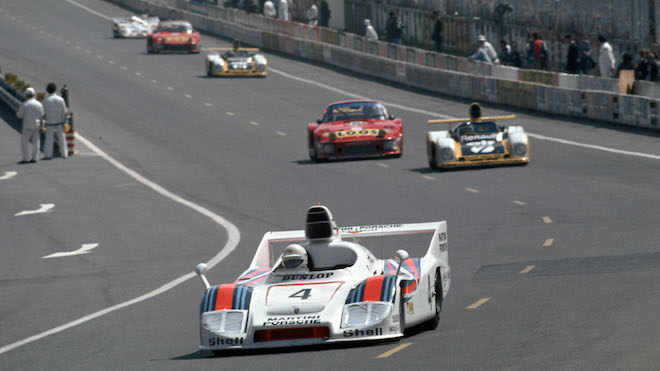
"So, I hit the kill switch, I'm trying to get over to the side to get over into the grass to slow it down and I hit it and by the time I get everything managed I was going too slow to bump the car back into gear because I was going to go into a high gear to try to get it back, so things stalled. So, I'm there and I say, s***, what I'm going to do now, throttle's stuck wide open and I can't restart the car, what am I going to do? So, I had to get out, I had to take the rear bonnet off, which is a big thing off. Find out what the problem was, I saw exactly what it was, I'm radioing into the pits, and back then you didn't have a radio like you do now, you had basically a microphone that you stuck up underneath your helmet and you talk, so it was like a one-way conversation.
For all the work he put in from the opening lap, Porsche wanted to bestow another honor on Haywood. Maybe he should have taken note of what happened the first time...
"In the end, we had done such a great job that they were going to give me the privilege of taking a car across the finish line," he said. "So, again, no pressure. So, everything is doing great, I'm right on the lap time I'm supposed to be doing and suddenly in the seat of my pants, I kind of feel, oh something's going wrong, I look in the rearview mirror and there is just smoke bellowing out of side exhaust pipes, I said, 'oh s***.'
"So, I slow down, I radio the pits, I'm coming slowly back to the pits, there is smoke coming out of the rear of the car like a fogging machine. I get back, they disconnect the spark plug, take the spark off the plug, they take the spark plug out, and then they decide that Barth was much more mechanically inclined than I was, so they decided to put him in the car for the last lap. So, he's got a very strict time element, I mean, we're right on the 24-hour mark now, so like one lap. So, he's goes too fast on that one lap, so they had to send him around another time.
"And so, we're all in the pits and literally when he came across the finish line, the car blew up. And then, in the jubilation of finishing and winning and I mean it was just wild, I jump over the pit wall, which is a considerable height and jump down onto the side panel of the car and Ickx is out there and Jürgen is a pretty big guy, and my hand somehow got behind the seat, which there was plenty of room, but he was banging back and forth, he was so excited, that the seat came off the railing and absolutely I thought my hand was broken. You know, the emotion of the moment far outweighed the physical pain."
The lack of sleep the night before the race, minimal sleep during the 24-hour contest, and the surge of adrenaline with the win left Haywood in a sorry state after the podium celebration was finished.
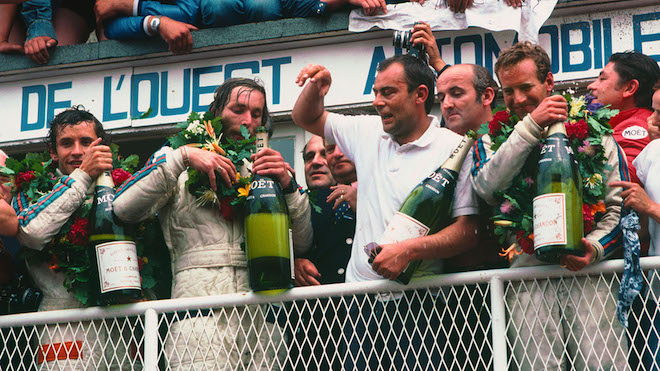
"In the tradition of Porsche, you had to go to all press conferences," he said. "Martini was the sponsor, so you had to go have a drink with them and then the Moet et Chandon champagne [people], and then you had to go to dinner with the entire crew. So, you had Professor Porsche there, you had all these high-ranking members of the Porsche family, Wolfgang [Porsche], everybody in this little restaurant that they had found that was able to take a dinner for 50. And it was like, you were falling asleep in your soup, but it was a big deal."
Listen to Haywood's full account of the 1977 race, thoughts on his 1994 swan song, and which of the most recent Porsche prototypes he'd like to drive.
Lone Star Le Mans
, a six-hour sprint deep in the heart of Texas:September 15-16 at COTA
.
Latest News
Comments
Comments are disabled until you accept Social Networking Cookies. Update cookie preferences
If the dialog doesn't appear, ad-blockers are often the cause; try disabling yours or see our Social Features Support.