Robin Miller's Mailbag for June 14, presented by Honda Racing / HPD
hpd.honda.com
and on social media at@HondaRacing_HPD
and https://www.facebook.com/HondaRacingHPD.Your questions for Robin should continue to be sent to millersmailbag@racer.com We cannot guarantee we’ll publish all your questions and answers, but Robin will reply to you. And if you have a question about the technology side of racing, Robin will pass these on to Marshall Pruett and he will also answer here.
Q: I've been thinkin' on Texas for 24 hours, and as an Indianapolis native and true fan who could hear Parnelli qualify and win from my front yard in 1963, here is what I think! It was riveting television (could not stop watching even to get more salsa), but riveting television is never worth a human life. I dare anyone to make the case otherwise. Racing is inherently dangerous, like this pack racing was unreasonable on that length and banking, and at those speeds, by any adult standard. We must be careful never to forget Vegas!
Will Power has tub-thumped for years to remove downforce and get some tires that fall off over a cliff to race at Texas. Sounds a lot safer, and potentially as – if not more – entertaining. It is certainly worth a try before someone gets seriously injured. Hell, take the wings off and boost the engines, and you still have made for TV like this year's Indy 500. I hope fans never confuse the terms "exciting" and "dangerous." How did you see it?
Shorty Gauss, Frog Level, North Carolina
RM: That's always been the hook with Texas, you're either afraid to look or look away because it is riveting. And IndyCar racing has always been dangerous, it's part of the attraction whether people want to admit it or not. Of course there is a fine line between daring and dopey, but the kind of racing Texas breeds calls for close contact and taking chances – again and again. But it's only fair to say there were periods of the old IRL pack racing, and there were also times when it was two or three cars dueling in the lead pack.
Q: Well, here we are again with another IndyCar Series Catch 22. The series has a history of racing on ovals, but racing at Texas leads to last year's exciting racing or last night's crash-filled mess. Obviously the new pavement, new tire, and track changes threw the teams and drivers a major curveball. But to have only 10 cars running at the finish is a big negative for the series, especially after another outstanding Indy 500.
In addition, I have never liked seeing IndyCars racing 220mph on the high-banked ovals. The speeds are too high and the penalties too great when any driver makes a mistake. I think its time IndyCar should just accept that the oval days are gone and focus on road racing. Mid-Ohio always has a great crowd, while last year's return to Road America was a huge success. If I were IndyCar, I would make getting the Cleveland Grand Prix back on the schedule the highest priority, then move forward from there.
Rick Schneider, Charlotte
RM: To be fair, it's been a long time (2011) since there was carnage like we saw last Saturday night, and last year's race featured some of the hairiest but most respectful driving you're likely to see between Hinch, Rahal, T.K. and Pagenaud. NASCAR expects the "big one" four times a year, but IndyCar usually avoids it. And IndyCar's identity is versatility, its heritage is ovals, and they need to stay on the schedule – provided promoters can draw enough people to keep having races.
Q: I know you hated the Texas race. So, what should have been done, knowing that the resurfacing and reprofiling of the track just happened? Not hypotheticals (ie get rid of the packs – duh). Knowing how this IndyCar administration operates, what would you have done differently? Less downforce (knowing the HP won't increase)? Same tires from Indy?
Also, why doesn't IndyCar or Firestone enlist a separate test driver to run on these tracks to gather more data for tires? I understand the desire to not have the teams spend so much on testing, so why not an independent car? Firestone didn't remedy the blistering issues by playing with the stagger. Speaking of tires, why no different compound types for ovals? I am heading to Gateway and am so bummed about how high the downforce will be. I can't wait for the new car. I'm tired of the Kardashians being used for bumper car racing; too much punting and driving into another car because you forgot you had some extra junk hanging out in back. That's what's been wrong with this stronger chassis: everybody is more brave about bumping each other.
Jordan P., St. Louis, Metro East
RM: I didn't hate Texas, I hated all the damage that was done to the teams. Judging from all the letters I've received this week, most people were entertained and didn't see a problem, other than maybe finishing under caution. As I wrote on RACER.com, Firestone seldom misses, and it worked hard for two months trying to get the compound right. But it's rare to see a tire go down or blister, and Firestone was probably a little surprised by the faster speeds. And it gets plenty of data from a tire test, it just had a 20-degree change in temperature from testing to racing, so let's cut them some slack. And having two types of tires for ovals has been discussed but not acted upon.
Q: I thought the race was great! I hated the old "strung out" Texas. Last year was shootout, and this year was exciting. I've read lots of comments saying it was pack racing. I don't completely agree or disagree. It was kind of a mix. The whole field was never really tight for a long run. Was there a lot of side-by-side, three wide? Yes. But I felt they were able to check up if needed. They didn't need to stay flat. If anything, I think it was drivers just being to aggressive at inopportune times, and for some, a lack of experience in that type of race.
Keith Schmitz
RM: It was a mix, and all the yellows kept things pretty packed up because nobody had to make a green-flag pit stop. And when half the field is missing, it's easy to stay packed up. A lot of the drivers called it pack racing and they're the ones running next to each other at 223 mph so I defer to them. But Texas usually breeds aggressive driving, with or without packs.
Q: I don't really have a question, but I do have a rant . First off, get that stupid cookie-cutter 1.5 mile TMS track off the schedule, now! That track is only good for double digit-numbered taxi cabs. You have a beautiful circuit in Austin sitting there idle while the IndyCar drivers have to risk their lives with every lap running circles in missiles on wheels. Maybe I'm getting too old, but this type of racing is no longer entertaining for me; however it is blood-boiling. I lost interest when I witnessed Ryan Briscoe's car go flying into the catch fence in a ball of flames at Chicagoland.
I have no doubt that all of these drivers have balls made of brass, but this is ridiculous! I had to turn the TV off and go watch a baseball game so that I could get my blood pressure back down to 120 over 80. In my opinion, the only ovals on the schedule should be the one at 16th and Georgetown, the Milwaukee Mile and maybe Loudon, NH. Put a little more HP in the cars and let it be about the drivers and not these stupid aero kits. Run on the ovals that are flat so the driver can use his brakes if he has to. What's wrong with using brakes? IndyCar has dodged bullets long enough at this track; and the odds are against them because sooner or later something really bad is going to happen. I know racing is dangerous, but why play roulette? I won't be watching this race next year, but I will go to church on that day and pray a thousand Hail Marys so that nobody gets hurt or killed.
Steve Sporer, Chicago
RM: I think a lot of drivers would favor using the brakes or getting out of the throttle at Texas, so that could be the plan going forward – or maybe the new aero kits will simply make it easier to draft past somebody instead of being stuck next to them. It's always been the scariest race to watch, but the people in the grandstands loved it.
Q: I know everybody is panicking about the pack racing, but I see it differently. It was exciting, and that's what we need at ovals. The problem was driver error, not the track or cars. If you take out Kanaan coming up the track and crowding Hinch, Newgarden's rare brain fart and Sato's move through the grass, then its not a wreck-fest. You could also argue that Hinch screwing the pooch on pit road contributed to Castroneves's wreck by possibly damaging his car.
Oval racing is scary. I get it. I fully understand these drivers are risking a hell of a lot. But the reason we watch is to see men push the limits of themselves and their machines. I want to see them do something I can't do. I don't think there is any interest in a two-hour, 22-car parade. If the drivers drive smarter than they did tonight, then more than half the field will finish. Every one of these cars has brakes and a steering wheel. It was a great show, even if you didn't get to see it because you were on hospital duty in the infield. But I would not change a thing.
Mark Arick
RM: Mark, you just accurately described why oval-track racing has always set IndyCar apart from everything else on four wheels.
Q: So, just finished watching the Texas 600 last night and I have all kinds of feelings. First of all, why do they race there with that pathetic crowd? Let's try somewhere else. I don't know why they bow down to Gossage. COTA sounds good to me. Second, what kind of B.S. penalty did Hinch get? What the hell are those clowns up in race control thinking? Hinch got squirrely, overcooked when he tried to save it and caused an incident. This wasn't blocking, this wasn't avoidable contact, this was strictly a pit lane incident that was unavoidable as he wasn't doing anything to put his fellow racers at risk. He just lost it.
Finally, and most important, IndyCar has to put more in the hands of the drivers! This "restrictor plate" racing is for NASCAR, not IndyCar! I am tired of this follow the leader B.S., competition yellows, huge accidents and 10 cars left. I guess I am more of a purist (hell, I wish we went back to the gear shift being on the side of the tub as opposed to being on the steering wheel). I want the driver to have more influence. If their tires are blistering, they need to try and manage them better, and if they need to stop early, well, then they need to stop early. I don't get excited waiting and hoping for the "big one" to happen, if I did I would be watching NASCAR.
Josh R., Salem, OR
RM: It was a better crowd than the past few years, I know that, and as many as Iowa gets and more than Phoenix (obviously), so we have to temper what a "good crowd" is at an oval anymore. Hinch's deal looked like a combination of having to go up in the fast lane to avoid Helio, then he spun his tires and looped it. And some thought the dirt from the stadium trucks might have made things slicker, although Hinch never used that as an excuse. Obviously, it was a non-malicious mistake, so it did seem like a penalty was overboard. And it was follow-the-leader at Phoenix, but certainly not at Texas. Sure, Power stayed in the low line and led 180 laps, but all the slicing and dicing behind him was anything but boring. And the last huge accident was years ago.
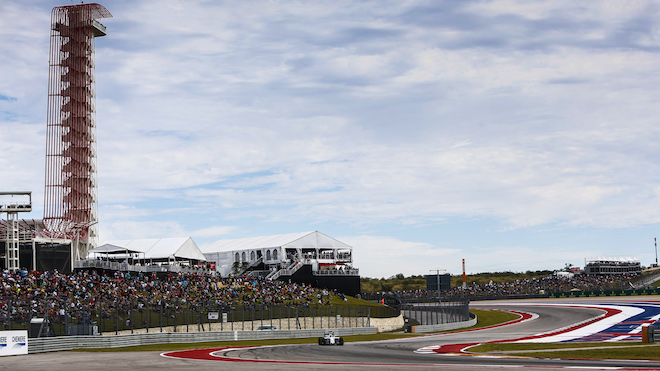
Q: I did like the race at Texas (even though it took out basically every single driver I was rooting for), but you made a good point in your video that it might not be worth it to have races like these with half the field having to check into the hospital and pay almost two million dollars in damages. Is there any realistic chance that IndyCar would drop Texas and replace it with Circuit of The Americas (ABOVE)? Would Liberty Media and F1 allow them to? And the F1 cars are doing 1m40s around COTA, couldn't that make the IndyCar lap times over two minutes?
Joey
RM: My understanding is that whenever COTA is brought up by IndyCar, Eddie Gossage throws a wobbly and says TMS will be gone, and Mark Miles values TMS' loyalty so I don't see it happening. But an IMSA/IndyCar doubleheader in September might be food for thought some day. I don't think Liberty has any say in which series runs at Austin.
Q: Not a question, but an observation after watching the Texas race and your post-race video (keep those coming). I have been a fan since '95 and remember the IRL pack racing days. Watching a pack race is like when you go to eat a couple of Oreo cookies, but you eat the entire bag. You know you shouldn't, you know it is unhealthy, you feel guilty and ashamed afterwards, but yet you did it and will probably do it again.
Jamie A. Carr
RM: That's a good way to describe it, because it's deliciously dangerous but under control enough that you can't take your eyes off it.
Q: What year is it? I had a few beers and dreamt I watched a 2003 IRL pack race at Texas on Saturday night. What a shame. That race was awful contrived crap. I thought we all agreed IRL pack racing was a bad idea. I'm sure Gossage and Miles will be ecstatic. If that Talladega crap is what IndyCar wants to put on at Texas, then I can find something else to watch. Like Mears says, these cars badly need half the downforce and double the horsepower. That was the dumbest race I've ever seen.
Kevin, Waukesha, Wisconsin
RM: I think the true definition of a pack race was an early IRL show where four or five rows were side-by-side for 40 laps and nobody passed anybody. That's not what we saw last Saturday night. It was two-by-two for four cars for a while, but somebody always tried the outside. And a lot of guys made the outside work. We all agree with Rick but, sadly, he's not allowed to make the rules. But what was dumb about the race was what's dumb about Indy and all the other IndyCar races – big risks for pathetic purses.
Q: First off thanks you for the great Mailbag every week, and thank you and the crew at NBCSN for the great coverage. The race this weekend at Texas was great to watch – it was full of close racing, and showed that IndyCar drivers are some true men. That race would get a lot of new fans to IndyCar racing, but I understand the risk both to the driver's safety and the cost to the teams that pack racing can create. I have three questions: will we ever see more close racing like we saw at Texas, or how would we get thrilling racing on ovals without it being called pack racing? I would love to see another five races on the schedule at venues like Texas – will we ever see more and get drivers experience at tracks like Texas? Lastly, do any drivers enjoy this racing? (Ed Jones said he was bored).
Brenen T.
RM: I think one of the major goals of the new aero kits for 2018 is to make the oval-track racing better at Phoenix and Iowa, and keep Texas exciting but with less pack racing. Indy isn't pack racing, and it's exciting because drivers can slingshot past each other with big tows on the straightaways. Iowa has had some good shows that aren't pack races, and Pocono has been decent despite only having 22 cars for 500 miles. And we know Phoenix featured some of the best racing for years, so it can be resurrected. I doubt if IndyCar will go back to Chicago or Kansas or Fontana. Not sure "enjoy" is a word that's ever used at Texas, but Jones said on our NBCSN interview he liked it best of all the ovals he's driven.
Q: I just don't get it. I grew up going to short track/oval races, but I seriously think it's time to drop Texas from the schedule. What could possibly be the attraction for the car owners? Many hundreds of thousands of dollars in wrecked equipment, and if the attendance at the track was what it looked like and the TV numbers are what is likely, what's the point of going there? If the stands were full and there were millions watching, I could see why IndyCar would continue. But if they're not attracting new sponsors and playing to a big television audience, it seems like economic suicide. And I haven't even gotten to the danger posed to the drivers at these insane 1.5-mile banked tracks. The owners should back Miles and Frye into a room and tell them "no more, brother, unless you're paying the repair and hospital costs." That was nothing short of insane. COTA if they want to stay in Texas.
Steve C., Ithaca, NY
RM: We can't use attendance as a yardstick or we wouldn't have any ovals except Indy, but unless IndyCar can pay some kind of purse representative of all the potential carnage, it is economic suicide. One veteran engineer said Saturday night that maybe it's time to step away from Texas until the purses and sponsorships can catch up with the expenses, but in that case, IndyCar wouldn't have any races. Evel Knievel risked his life constantly but was willing to because of the payoff, and I know some IndyCar drivers get good retainers – but more than half of them don't, and they all drive to the limit at Texas for almost zero purse money, so that's both impressive and somewhat insane.
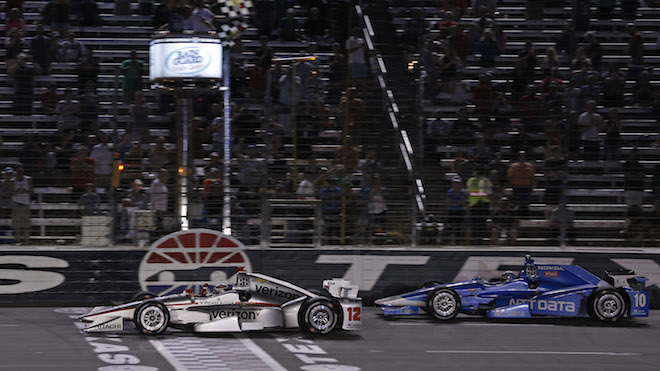
Q: A demolition derby in a banked speed bowl before conspicuous acres of empty grandstands. Then an anti-climax finish, slowly, behind a road car, ending just before midnight. That is how the casual viewer would see the Texas race, if they saw it at all. Which they didn't, of course, in droves. What is wrong with this picture, and how do those in IndyCar management and promotion get to keep their jobs?
Anthony Jenkins
RM: Admittedly I watched most of the race looking through a window inside the infield hospital waiting to interview drivers who had crashed out of the race, so I can't speak for the whole show, but it sounded like the fans in attendance loved it, and I've had more positive (about two-to-one) than negative letters here. But empty seats and ovals have gone hand-in-hand for a long time. And if people didn't like last year's Texas finish or this year's Indy 500, not sure how to get anyone to show up or watch.
Q: The Texas race was thrilling... until Will Power took the lead, then the whole complexion of the race changed. I would argue that it was Power who caused all those wrecks. Why? Hugging the inside line and protecting his lead, thus making it difficult to pass, and drivers getting frustrated and taking chances they were better off not taking. Was Power wrong? Of course not, he's protecting his lead. Did this basically ruin what was, up until that time, a great race? Sure did. It was thrilling, and I am hoping to work the Texas race into my schedule for next year, and hope that a Penske car doesn't take the lead.
Mid, Little Neck, NY
RM: Will did what 90 percent of the winners at Texas have done through the years, and that's run the low line and, yes, he may have brought the race to his pace, but he mentioned Dixon was worrying him on the high side before his accident. But I don't blame him for other drivers' impatience or mistakes – that's racing – and I didn't feel like he ruined the race because we didn't get to see the ending. He led 180 laps and Hinch led 188 laps in 2016, so it's never a given.
Q: How many more years does IndyCar have with the Texas Motor Speedway? What would the new aero kits do for running in Speedway trim? Is a lower level of boost on the table to drop the speeds? From all the comments about how this track is too expensive because of the damage bill that every owner wonders how they could pay so they can get to the track next week, why not move Texas to the season finale?
TMS would have about one month to set up IndyCar in September and then go into NASCAR in November. For us, we'd get to see some fantastic racing at a time where "go big, go home" will literally happen. If there's several more years at Texas, why not use the roval to keep people from bunching up too close? Personally, I think it works great for the doubleheaders. Either spilt over a day or doubleheader like in baseball: roval in AM, oval in PM. If we can't get Fontana back for the finale, TMS seems to be the perfect place to finish the year.
Dan H., KCMO
RM: IndyCar's contract at Texas runs through 2018. I asked Eddie Gossage about being the season finale and he said no way he's going up against college or pro football in Texas, but he'd be happy to host the race after Indianapolis. It's tough to get people to the oval, let alone the infield road course, and I can guarantee you TMS isn't interested in that scenario. Have no idea about the new aero kits and their performance, and a lot of drivers want more power and less downforce – not lowering the boost.
Q: Took the family to Texas and had a great time. I was worried about the new track, but it turned out to be a damn good race. The crowd looked up over last year. What is your attendance estimate? Also, the last competition caution in particular really seemed unnecessary. What was your take?
P.S. Picked up a RACER subscription on the anniversary deal, and the magazine is awesome.
Tate, Kansas
RM: I thought it was the best crowd in the past few years but with 120,000 seats and the way people spread out, it's really tough to gauge. I do know the infield camping was pretty good so I don't know, maybe 25,000 total? The competition caution was simply a precaution for the blistering tires. Thanks for subscribing.
Q: As I see it, Texas is a race that nobody cares to watch – in person or on television – and that no one wants to drive. I've seen your driver interviews, and noted your evening spent in the track hospital. It's a race that no owner wants to enter - look at the cost of the damaged cars. Nobody wants to promote it - check the number of new oval races. So, just who does this race serve? I truly do not understand the thinking behind this. It seems to me that the most probable reason for this mess must be inertia by the decision makers, which is fast way to irrelevance.
Mark Hamilton
RM: It's certainly a fair question: why does IndyCar race at any oval besides Indianapolis? Tradition and maintaining its claim as the most diverse series in the world are two big reasons, and yes it's tough to draw crowds, so you wonder how long promoters can hang on. But it's Wednesday and we're still talking about Texas because it had lots of crazy passing, some scary moments and way too much carnage. We forgot about Detroit in five minutes, but Texas held your attention so let's just say ovals ain't what they used to be in terms of attendance, and Indy and Texas were memorable for different reasons, but it's still the kind of racing that can put a lump in your throat.
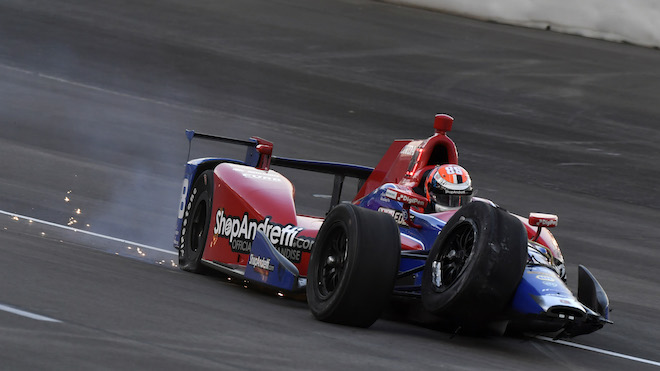
Q: The wreck last night was proof that the rear tire guards are necessary. I am worried about next season when they go away. Sure they are ugly, sure they are not a traditional open-wheel car, but that wreck was a mirror image of Las Vegas, minus the launching off the rear tires. This is the safest the car has ever been, and it feels like IndyCar is taking a step backwards.
Desmond, Oak Lawn, IL
RM: Not sure the tire guards did that much, because I've watched the replays of Rossi (ABOVE) and the Ganassi boys and the big crash, and it looked like more tire-to-tire contact.
Q: I'm sure everyone is going to be writing to you about the thriller of a race we had in Texas, and rightly so, because the only race I can think of in recent memory that was anything like that was Fontana 2015, which was then promptly dropped from the schedule like a hot potato (though I'm pretty sure that's because only around 5,000 people showed up to watch). Obviously Texas doesn't seem to be in the same kind of danger, but that pack race got me thinking. I've only been hooked on IndyCars for a few years, and though the racing the past two years has been close at Texas, it was not quite at the same level as this.
During the race broadcast on NBCSN, the commentators repeatedly brought up that this was all because of the new pavement that was laid down, but failed completely to explain why the new pavement would allow for that kind of racing. Sure, the new asphalt will always cover up the old lines and give more grip, but I didn't think it would create so much grip that they can run the outside groove like they did. So what about this new surface allowed them to run at the very least two-wide, and sometimes three-wide, the entire way around?
And speaking of three-wide racing, why did drivers keep believing that they could make it work? Obviously they're the professionals, but every time they went three-wide (bar once, where Sato somehow made it work near the end), there was a crash (Rossi, the big one, Newgarden). So why were they continuing to drive? Was it just the heat of the moment and ambition, or was there a legitimate belief that you could run a third groove even higher up the track? And finally, now that the groove allowing for that kind of racing is rubbered in for the future, do you think this is the kind of racing we can expect at Texas every year?
Max Camposano, Los Altos, CA
RM: I think Townsend and P.T. made it clear the more rubber that was laid down, the faster the outside line would come in, and that's what happened. I think Rossi and Vautier were the first to make it work, and then Newgarden joined the party, going from 17th to second. But racers are always going to look for a place to pass, and Texas is tempting because you carry so much speed into the corners that it looks like the high line is golden, except for the fact the low line is still the shortest way around. And if a driver gets a run on two guys running side-by-side, of course he's going to try for a third groove. That's racing. I have no idea what to expect at Texas next year with new aero kits and different tires, but NBCSN had its largest Texas audience (561,000) last Saturday night, so people must have found it entertaining.
Q: Texas is a can't-miss race now, and I watched it all. But it ended under yellow when it didn't have to – they could have thrown a red to set up one last dash. I know that's artificial, but IndyCar has fed that beast before, and now a five-lap yellow to a finish seems avoidable. If there hadn't been all that carnage before, I bet a red may have been tossed. What say you?
John D, Indianapolis
RM: I say you are right. If there hadn't been a 30-minute red flag earlier IndyCar would have likely gone red, but the TV window was closing fast. That's not a good excuse for the folks in the seats, but I think it's the truth.
Q: Perhaps you can shed some light on IndyCar's decision to implement "competition cautions" into the Texas race. It seems to me that it's manufactured drama, and that is something IndyCar doesn't need. The racing is already fantastic. I hope this doesn't become a regular part of IndyCar on ovals, if so they've lost a fan because me and my family attend many of races – 18 since 2015. If IndyCar claims that this is safety-related, then put them on a track where they can race without engineered drama.
Mike Siford, La Porte, IN.
RM: I can assure you that it was 100 percent because of the concern of blistered tires – a very rare occurrence with Firestone, but obviously a problem on Saturday night. And trying to match the tires with a new surface in a one-day tire test a couple months ago in different temperatures has to be challenging, even for Firestone. So maybe the lesson learned is more testing.
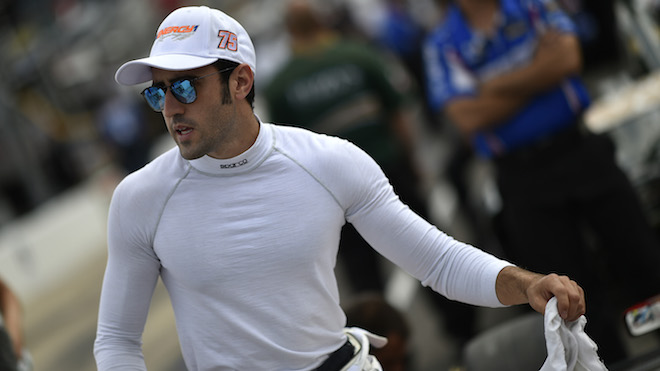
Q: Hate it for Dale Coyne to see both his cars caught up in a wreck, that has to be hard on the budget. Tristan Vautier (ABOVE) did really well. Do you know if Coyne is going to keep him in the seat for the rest of the year, and what Vautier's plans for 2018 are? I hope he can get a full time ride in IndyCar.
Mario D Lemont, Ill.
RM: I asked Tristan about continuing and he said Dale already had a driver, so that's Esteban Gutierrez, and Vautier also has a full-time sportscar ride. But he did a splendid job, and I imagine if Esteban doesn't like ovals, Vautier could get the call for Pocono or Gateway.
Q: Can you even imagine Goodyear and Cheever trying to call Texas? They would have never been able to keep up. NBCSN does a great job, from the pits to the booth!
Steve F, Raytown, Mo
RM: It's crazy listening to everything going on my headset, and I thought Kevin, P.T. and T. Bell did a good job of handling all the traffic and madness last Saturday night.
Q: Great piece of work in less than 48 hours on your crash damage report. Is this the beginning of the end of TMS?
Concerned Lew
RM: Thanks, and now three days later I think my estimate of $1.8 million was too low. It was maybe as much as $2.2 million. I don't think it's the end of Texas. At least one owner was lobbying to quit racing there after Saturday night because of all the damage, but it was more a product of the package and tires. And it's not usually like that, and Texas has given IndyCar some of its greatest finishes through the years.
Q: Just finished watching the Texas race and I was wondering: is the Texas race the last remnant of the IRL? I only got interested in open-wheel racing in 2009 and did not follow the IRL or CART/Champ Car during the '90s or early 2000s, but from the races I have seen on YouTube this looked like an IRL race: 12 cars left on track, pack racing, etc. Should IndyCar give up 1.5- mile tracks? The racing was very interesting, but it stinks as a fan of the series to see teams like Coyne and Schmidt with wrecked cars after that carnage during "the big one" – pardon my NASCRAP terminology. IndyCars belong on tracks with less banking. Would you agree? Thanks for all that you and the RACER.com crew do for the series!
Matt from Philadelphia
RM: I'm glad there's only one 1.5-mile NASCAR track left on IndyCar's schedule, but last Saturday night wasn't an old IRL pack race as much as it was a couple of packs trying to pass each other using two or three grooves. In other words, cars weren't stuck behind each other, row-after-row, and there was a boatload of passing and diving and darting (I got to watch the replay). If the new aero kit can make Phoenix racy like the old days and keep things lively at Iowa and Pocono, then IndyCar has the right mix of ovals to go with Indianapolis.
Q: So Miller, I'm convinced, like you and so many others that have made the same observation for the past several years, that the Indy 500 purse is paltry and getting worse as the years go by. What's the story? There are golf tournaments that pay more. Few can argue with its history. So why not pay out more and add even more prestige? Maybe they wouldn't have to struggle to find 33 starters every year. Pay more, more will come. It's embarrassing for our sport. A $200K minimum to start is a joke.
Jim, Indy
RM: I've said for more than decade that Indy's purse has to wow people to ever get 40-45 cars going for 33 spots, and paying $200,000 for a one-off effort isn't the answer. The pole should pay $1 million and the race winner should get $5 million, minimum. And what do you imagine IMS took in last month? Let's say there were 225,000 people on Race Day at $100 per ticket – that's only $22.5 million. Let's add the 60,000 folks at Carb Day times $30, and that's another $1.8 million (not counting beer sales). And throw in the hospitality at $30,000 a space (not to mention the $10,000 catering buyout if you chose not to use IMS food) and that's roughly $500,000. Not sure what the IMS cut is on $10 tenderloins, but concessions, programs and merchandise in another pretty penny, plus parking. And then there's the TV money from ABC, which is a few million more. Oh, and all that suite revenue. A conservative guess is that IMS takes in somewhere between $40-45 million and the purse "paid" $13 million. Of course it's a joke.
Q: Could you explain the Leader's Circle to me and the purpose behind it? I assume IndyCar has decided guaranteed payments to teams are better than larger race purses. Related question: What percentage of the Indy 500 winnings would a driver that just shows up and runs Indy on one of the less well-funded teams (like JR the last few years, for example) get?
Kevin, Greenville, NC
RM: It's basically a security blanket for the owners and IndyCar. You commit to running a car the full season and received $1.1 or $1.2 million per car in three or four payments during the year. A small percentage of that goes into each purse (sans Indy) that pays $30,000-$20,000-$15,000 for the podium, and another percentage is funneled into a year-end payout for the Top 12 (which the track promoters also contribute to). And there is a kitty for non-LC teams like Harding Racing. The LC effectively screws the mechanics and drivers, since they use to get a percentage of the purse, and most drivers would receive 40-50 percent of the purse, based on finishes. Obviously, a few drivers get nice seven-figure retainers and a few six figures, but some either drive for a percentage of the sponsorship money they bring or virtually nothing but expenses or a tiny percentage of the year-end take. I don't think Conor Daly got paid in 2016, but he was happy to have a ride.
Q: A nice fifth place finish for Gabby Chaves and the new Larry Curry-led Harding Racing. Since they are part-time, what is their prize money for Texas?
Ralph, Indianapolis
RM: They earned money for being the highest-finishing non-Leader's Circle team, but Gabby drove a helluva race and it's been a great start for Harding Racing on the track.
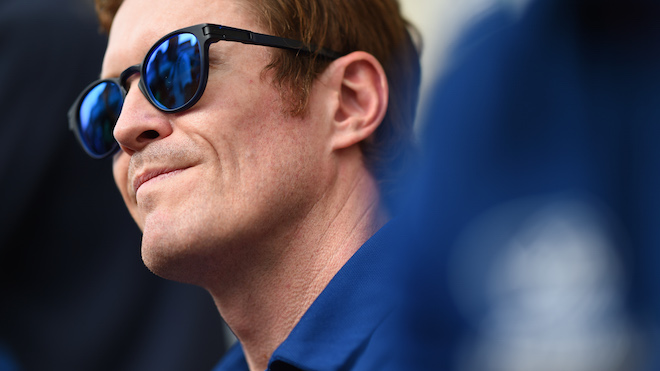
Q: For several years you have observed that someone like Scott Dixon (ABOVE) could walk down the street and no one would know who he was. In that regard, I have noted that in virtually all on TV interviews, regardless of the series, the drivers have their caps and sunglasses in place. In most instances, when the cap and sunglasses are removed, you see a different person. I also have noted that, almost without exception, when Penske's drivers are interviewed they are not wearing a cap or sunglasses and, as necessary, I have seen them remove them as the interview begins. If the drivers want to stay hidden behind the cap and glasses, fine. But if they want some recognition, lose the cap and glasses – or at least the glasses. Yeah, I know, they probably have a sponsorship from the sunglass manufacturer, but given the size of some of the glasses they might as well be wearing a Lone Ranger mask.
Chuck Genrich, Clever, MO
RM: I think Dixie likes being the best, unknown IndyCar badass ever, and Team Penske is well-versed in showing its drivers' faces.
Q: What is IndyCar's propensity to throw so many cautions, so prematurely, and run them for so long? Ed's spin didn't require a caution, all the cars saw him and were making it around. Why allow all the cars to pit before resuming? It's akin to a free stop for those in the back instead of being subject to the natural flow of a race.
If you throw a caution, bunch everyone up to ensure that the spinner is out of danger, and bring the pace car in the next lap. Anyone wants to pit and they'll have to wait or do it under green. Is it so difficult? What am I missing?
Cody from Hillsboro, OR
RM: It's just the way the yellow light has evolved (or deteriorated) through the years in IndyCar and NASCAR. They always feel the need to give people a chance to pit, whereas in the old days it would be right back to racing in a couple laps (instead of five for a spin).
Q: I'm really excited about next year's universal bodywork kit. The car looks great, and it should improve the racing, which has been close but stagnant at times because of the aero limitations of the current kits. More importantly, I hope the universal kit will help IndyCar find the Goldilocks formula for oval racing. Parade racing is boring, but pack racing is too dangerous. I know there's a balance to be found that will be compelling to watch, while not asking the drivers to risk more than necessary, or draining the already tight budgets of the owners.
David Chao, Pittsburgh, PA
RM: Moving the downforce from top to bottom is supposed to help the cars get close to each other, which should immediately improve short-oval races.
Q: I find it fascinating that Fernando Alonso is able to negotiate to keep every car he drives into his contract. I had a couple of quick questions regarding his No.29 from Indy this year. Was this a new car direct from Dallara, or was it one that Andretti already owned, since they were going to run six cars with or without Alonso? If it was one of Andretti's, does it go back into service for the rest of the year before Alonso takes ownership after the season, or has it already been taken out of service for Alonso? Last question is regarding the engine – was he able to negotiate an engine into the deal, or is it for the car only? Thanks for your time and all you do for the sport!
Ross Hetrick
RM: It was one Andretti had in the shop, and Marco drove it last weekend at Texas. Have no idea if Fred gets to keep the engines, but he makes $40 million a year so he can probably afford to buy one.
Q: A group of friends and I (all 20-somethings) are planning on taking a camping trip to Road America again this year for IndyCar. However, Road America's ticketing system for this is a bit frustrating. You first have to buy camping spots for $40 a piece. Then separately, you have to buy camping wristbands for each person that go for $65 each. Then, in addition to the camping spot and wristband, you have to buy a full weekend ticket that sells for $140. So in total, to camp at the circuit, you have to pay $40 per camping spot and then $205 for each individual person. I understand that camping should cost extra and the track has to make money, and maybe I'm cheap, but I find it perhaps a bit convoluted that you have to make three separate purchases that add up to a pretty substantial sum. Comparing it to the month of May, I paid $35 for the GP of Indy, $20 for Pole day, and $90 for a race ticket in the North Vista for a total of $145. For $205, I can start looking at Penthouse tickets for the Indy 500.
I love Road America and had a blast last year, but for a bunch of recent college graduates driving in from Cincinnati, it's getting hard to afford. My brother and I are third-generation lifelong fans, and try to make as many races as possible. As much as we are advocates for the series, it's hard to convince friends and casual fans to pay over $200. What are your thoughts on the pricing for this and other IndyCar events?
Emerson, Cincinnati
RM: I guess the best way to look at it is that it's about $65 a day if you go all three days and that's not bad compared to NFL and NBA games, or even a one-day ticket at most ovals. Tell your friends to make the trip, look me up and I'll buy a round of beer for them or give you the money to do it.
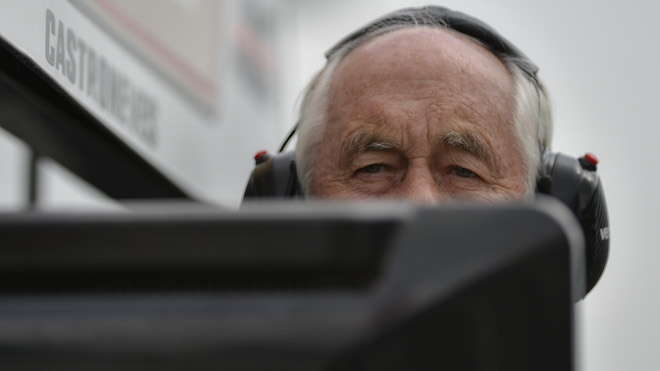
Q: How many times over the past few years has the "brain trust" on the pit boxes at Penske screwed their drivers with strategy? I know Roger Penske (ABOVE) has won 16 Indy 500s yada yada yada, but he has sure cost Helio wins opportunities for wins in the past few years. He royally screwed his driver at Detroit by calling him in and putting him on three stops. He may not have won, but he would have been on the podium had they done two. We've seen Cindric get schooled by Mike Hull numerous times over the years, resulting in lost championships to Ganassi. We've seen Power twice this year put on a strategy that put him dead-last. It just seems that over the last several years, the difference between winning and losing, especially championships, falls with those on the box making the wrong decisions far too often. Sure, they get it right too, but not at crunch time. If Penske loses to Ganassi and Dixon in a close one again this year, look to the pit boxes.
Mark in Cincinnati
RM: I couldn't believe R.P. called Castroneves in at Detroit just a couple laps shy of having their two-stop strategy fall into place, because Graham and him were pulling away and looking good. And the year before The Captain cost Castroneves a win by not pitting him at the perfect time. Cindric and Hull have both made a lot more good calls than bad ones, we just tend to remember the ones that don't work out.
Q: The Indy 500 purse was the second smallest total payout since 2008. So the costs to continue to field teams and compete keep going up, and the purse for the biggest race in the sport isn't? How does IndyCar and IMS justify this? And where does all that money that IMS has squeezed out of the fans (in the huge increases we've seen in ticket prices, practice/qual/Carb Day admission and charging for parking in some areas) actually go? It's obviously not going to the teams or the drivers.
And now that we have multiple years of evidence to show that the Grand Prix of Indy is not drawing on TV in May, is not bringing any more fans to the Indy 500 and is not helping ABC get a bigger national TV number (with the last two years going way down), can we please now get that sacrilegious race out of May? It basically gets lost and ignored by the local press/fans, and has no air to breathe on its own.
Move that road course race at IMS to the season finale in early October (where it always should have been in the first place) and you might be able to draw people from outside of central Indiana – people who aren't going to make two long trips in May to watch two races, but might if the road race was in a different time of year. You crown your IndyCar champion in the home of American open-wheel racing and have all the ladder series crown their champions there too. I know... makes too much sense, right?
Drew, Gale IN
RM: The answer above explains the IMS purse breakdown but it doesn't appear anyone cares, does it? As for the IMS road course race, it still outdraws anything close to what Pole Day brought in after The Split, so it's not going anywhere. And I think IndyCar wisely wants to end the season at an oval, where the racing can be dramatic.
Q: Fernando Alonso was named rookie of the year for the 101st Indy 500, finishing 24th, after experiencing engine failure, Ed Jones finishes the race, on the podium, in third place. I am a huge Alonso fan and I get all the hype surrounding Alonso's spectacular Month of May, but how is Ed Jones not at least co-ROY with Alonso after his race performance?
Bruce Beckman, Madison, Alabama
RM: I talked to a lot of people who voted and they swear they went with Ed, so I'd like to see a recount. But if there was ever a May for co-rookies it was 2017, because Alonso never put a wheel wrong and was brilliant in race day traffic and had a shot at winning, while Ed came from last to third with a damaged car.
Q: Sounds like Zak Brown and McLaren have reached the breaking point with Honda in F1. Rumor is that McLaren could be headed to Mercedes. If this comes to fruition, what is the possibility, if any, that McLaren convinces Mercedes to join IndyCar as a third OEM with McLaren as its flagship team at some point?
Justin, Fort Wayne
RM: I'd say if that happens then Zak will be pushing to come to Indianapolis, but let's wait a few months.
Q: I have read the multitude buzz that Fred created in his McLaren Honda for the weeks leading up to and including the 2017 Indy 500. I have read that the television ratings for the 2017 Indy 500 were the lowest possibly in over ten years. I have read that there was lower attendance at the 2017 Indy 500. However, on the other side of the coin, I have not read or heard from any source: how much lower would the TV ratings for the 2017 Indy 500 have been if Fred was not on stage? It would have been necessary for IMS to issue sunglasses to all 2017 Indy 500 attendees and all team pit crews to reduce the glare from unsold aluminum seats.
Bruce Waine, Sheffield, Massachusetts
RM: I can't predict very well, because I said Alonso would bump up the ABC ratings by at least one full point but maybe it would have been worse than a 3.4 without him in the lineup. I do know more people in Spain and England watched Indy over Monaco, but no official numbers anywhere else.
Q: Do the cars utilize the push-to-pass feature at Indy for the 500? I know they use higher boost for qualifying only. You were right about empty north grandstand seat at the 500, I was there in that area. Surprising, after all the Alonso buzz and media. Nevertheless, it was a great race and I look forward to next year's aero package. Will testing be open to the public at those venues on those days?
Kudos to RACER for the great coverage of all forms of racing, and especially spotlighting the SVRA and vintage racing and their upcoming events. If you hear of a Novi running at the Indy event or any of the others, I would love to know when I could see one run. Hear one run! Also do you have a recommended list of historic books for RACER fans? I got Black Sunday and a few others, and you seem well-read but don't mention books often enough in your columns. They take us back to the glory years at the Speedway. You guys keep up the great stories and your team's good work!
Craig Bailey, Palm Bay, FL
RM: No Push-to-Pass is not used at Indy and I'm glad. The race is just fine without it because of all the drafting. Hopefully it won't ever be needed on ovals after the new aero kits get tuned up. Go buy BEAST, it's a great read for an IndyCar fan, along with Gordon Kirby's books about the Bettenhausens, the guys who finished second at Indy, and Jim McGee. Hard Luck Lloyd is also a good one about 'ol Rube, and Why Yes I am Parnelli Jones by Bones Bourcier and Bob Gates' books on Bill Vukovich and Troy Ruttman. And thanks for reading RACER.
Q: Why not a Formula E event at IMS the first weekend of May? That circus seems to have an opening in its schedule as action moves from Mexico City to Monaco. Offers them a unique format: an oval! Okay, they can run the road course. Either way, may bring some new fans to IMS for the modern technology, if not the roar of the engines.
Brian Boettcher
RM: With all due respect brother Brian, I'd rather watch the Brickyard 400 on a continuous loop than see a race with no sound at IMS.
Q: I'm a fan of all types of racing who is fortunate enough to attend a number of GPs every year, and I have also been to Indy and the Detroit races for the last three years, I wanted to make a few observations about where I believe F1 is actually more fan-friendly than IndyCar. At most Grands Prix I can tune into the commentary using a FM radio, which I find adds a lot because you can never hear the tannoy system. As far as I could tell, there was no such option at Indy or Detroit, which just seems such a wasted opportunity as it would cost very little. One other thing that really bugged me was the start time at Detroit. Why say 3.30pm when we have to watch endless and meaningless videos for 15 minutes until the race actually starts at 3.45pm? At least in F1 when it says 2pm it means 2pm. Unlike most people, I thought the Detroit races were good. I really liked seeing a good hard green flag motor race... until they ruined it with a ridiculous red flag three laps from the end. As F1 is finally learning, fans, new and old, actually don't like contrived gimmicks. Also, why did it take nearly 30 minutes to restart, and why sweep the main straight?
Mike Bishop
RM: The television coverage starts at the top and bottom of the hour, so that's why it's usually listed like that, because there's always a pre-race show. Last weekend, I think the Canadian GP started as soon as NBC came on the air at 2 pm, but that's rare.
Q: Is there any chance the Michigan 500 could be brought back? It seemed to make for some very interesting races and it would be pretty neat to revive the possibility of a Triple Crown winner – Indy 500, Michigan 500 and Pocono 500.
Pedro Hernandez, Miami, FL
RM: Probably not as long as Belle Isle is on the schedule, and it would only mean something if a big sponsor was found to make the Triple Crown monetarily viable and promotable.
Q: I agree that the element of danger is one of the things that separates open-wheel racing from all others. However, we've put cages on sprints and midgets. Don't you think its time to do the same with IndyCars? I hate to see another driver die from cockpit impact when it could have been prevented. Dixon was lucky at Indy.
Joe Weiss, Spooner
RM: No, I like the fact you can still see the drivers. It's nothing like the old days, but it's open-wheel and open cockpit. I know I'm stuck in the '60s, but that's how I feel.
Q: Do you think there is any correlation between declining TV ratings and the ABC announcing team? Could the lackluster analysis and unpleasantness of the booth-dwellers effect fans and casual viewers' willingness to watch? The time is now to make a change in networks, I know, easier said than done, but how much more eroding of the current and potential fan base can IndyCar sustain? Cheever has gotten downright chippy, combative, and uncomfortable to listen to. This series needs the best exposure, coverage and production. A network that embraces the challenge, not a network that says" Let's just make it through May."
Mike, Avon, Ind.
RM: While I don't think ABC's crew brings in many new fans, I also don't think it keeps people away. And you can always listen to the IMS Radio broadcast and turn down the sound on ABC.
Q: I recently read a question from a reader asking why, aside from Detroit, IndyCar has abandoned double-header weekends, especially in Toronto. I have a theory about that. I think it has a lot to do with the 2014 race in Toronto. While it was not raining in all the turns, standing water on the Saturday in Turn 3 made the pace car spin, and Beaux Barfield pulled the plug and two races had to happen on the Sunday.
Barfield and race control – not the promoters – took the longest time to reach a decision and announce it to the fans, who didn't get the information all at once, and were standing around in Turn 3. I think despite Toronto and other tracks wanting them, this and the fact two races had to be run within a few hours of each other for first time since 1981 might have figured in. It was hard on drivers, mechanics and crews. The other thing I can't understand is getting rid of standing starts on street circuits. The fans love it, and Champ Car used to have success with it. Why can't IndyCar and drivers adapt to it"
Geoff Roberts, Unionville, Canada
RM: The Toronto and Houston promoters both said they liked doubleheaders, but for whatever reason they only stayed at Detroit. I'd love to see standing starts at street courses, but evidently that's not a priority with IndyCar, Chevy or Honda.
Q: Is Circuit Gilles Villeneuve a potential future venue for the series? Champ Car raced there back when it was winding down, but I'd like to see a unified IndyCar series race there. Is there no interest from either the series and/or a promoter, or did Ecclestone put something in Canada's contract that forbid rival series from racing there? I mainly ask this because of all the recent rumors about a China race for 2019, but why China and why does it have to be in February for another international race? Canada is already an IndyCar market with Toronto, and Montreal could be raced anytime during the season with its close proximity to the US.
Mike, Alabama
RM: I don't think Bernie raised any concerns went Champ Car went there, and it's a great circuit with fabulous fans so probably all IndyCar needs is a promoter willing to give it a try. But I've not heard of any interest. The international races would be to make money for the teams – period.
Q: I am writing in response to the letter on June 8 from David M-K from Ottawa, Canada and everyone who is riding the "racing is dying" train to nowhere.
Respectfully, our sport is not dying. I've worked for SCCA, AMA and NASA sanctioning bodies, and the struggle is to keep up with the rapidly-changing sport. The younger enthusiasts of today want to participate, not sit and watch. And why should they, when for a few hundred dollars or as little as $30 they can do everything from track days at Road America to autocross, drifting, rallycross, cars and coffee, car club meets that run the Tail of the Dragon, hill climbs, open road races, drag races and so much more?
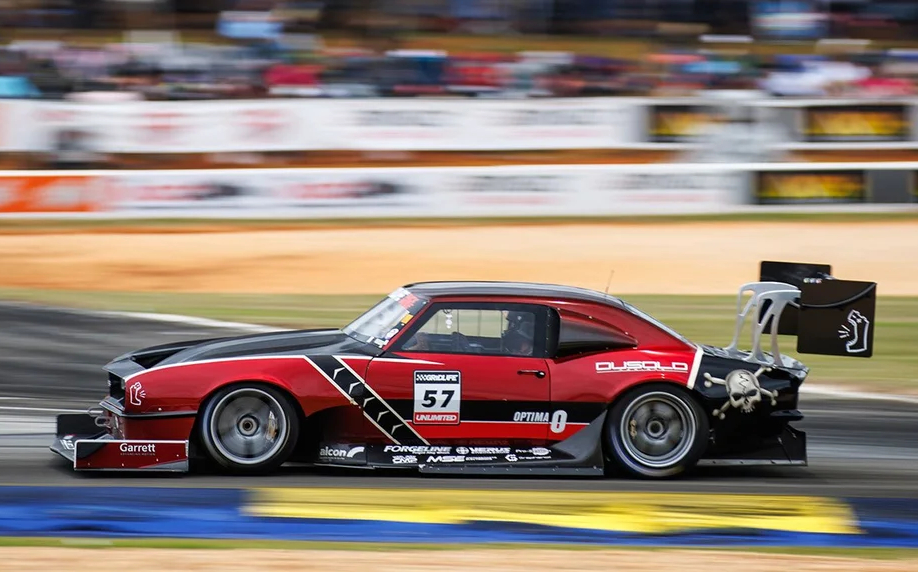
I hear complaints constantly on this subject from my friends who race with SCCA and NASA. The new drivers are there they just aren't choosing the traditional routes, but instead go to events like Global GT Time Attack or GridLife or so many others it will spin your head. The challenge to the established organizations, and that includes everyone from NASCAR, IndyCar, F1 on down to SCCA, NASA, the local groups like Midwest Council and others is to adapt, grow and change fast enough to keep up with what the new enthusiast wants. I don't have all the answers, but at least some of us have figured out what questions to ask. That's half the battle.
If I were Minister of Motorsports I'd implement things like shorter races, one-day shows, fan interaction like grid walks, and also things like cheap or free camping, carnival rides for the kids, DJs instead of lame bands from the 70s, and I could go on and on. Some of that is already being done, but none of it all together. I guarantee if you book Skrillex for Indy 500 on Saturday before the race, you'll pack the joint with the 18-35 crowd for the race. That alone will bring Red Bull to the table, as they are all over the DJ party scene. I could go on for days – as you might guess as I've put many hours of thought and time into trying to figure out what drives our own drivers so that we can best appeal to them. After 17 years I've tried a lot of stuff, but as things evolve, what we did last event doesn't even necessarily transfer to the next one 30 days later. That is how fast the trends and demands of new enthusiasts are changing. But dying? Hardly. The enthusiasts are there, the pros just aren't paying attention to what appeals to them. Thanks for your hard work and efforts over the years to keep IndyCar in the news, and the fans up to speed. I've thoroughly enjoyed the weekly podcasts with Marshall Pruett, your AJ Foyt tour of the museum, and your writing on RACER.com.
Bryan Cohn, Technical Director of Competition, NASA Pro Racing, Lawrence, KS.
RM: The weekend warriors could be the last man standing Bryan, and I'm always amazed at all the cars at an SCCA regional or national, and the fields at IMSA and the Pirelli World Challenge. Or even the sprint shows at Paragon, Bloomington, Kokomo, Gas City, Putnamville and Lawrenceburg. I'm afraid big-time racing is in serious decline, but the little guys seem to somehow be maintaining. Thanks for your letter.
Presented by:

Latest News
Comments
Comments are disabled until you accept Social Networking Cookies. Update cookie preferences
If the dialog doesn't appear, ad-blockers are often the cause; try disabling yours or see our Social Features Support.