PRUETT: The IRL's coming of age in Texas, 1997
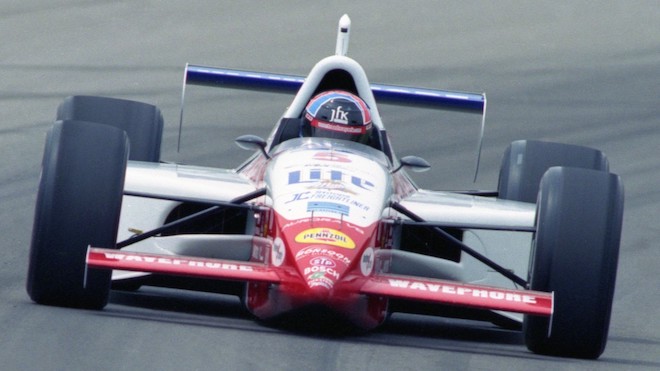
The tussle between Arie Luyendyk (pictured below) and A.J. Foyt in is the first thing most people remember. From beginning to end, the Indy Racing League's inaugural visit to Texas Motor Speedway in 1997 was a sideshow.
As the impromptu air jack man for our little Thomas Knapp Motorsports/Genoa Racing team, the sight of our driver, the oft-maligned Greg Ray, ripping around the 1.5-mile oval for two laps, followed by a harsh dive onto pit lane and a 120mph approach on the speed limiter was as comical as it sounds.
Our crew swapped Ray's Firestones in record time, he rocketed away from a standstill, crossed the timing stripe, and with the two-laps-plus-a-pit-stop added together, we earned a sixth-place start. Provisionally, at least.
United States Auto Club, the original sanctioning body and timing and scoring provider for the upstart IRL, initially disallowed our time after claiming Ray exceeded the 120 mph pit lane speed limit. Menard Racing's Robbie Buhl was also penalized for the same speeding infraction.
Relying solely on a handheld radar gun to form its decisions, USAC boss Keith Ward and other officials were immediately shown information gleaned from more modern tools – computerized pit lane timing loops and on-board data systems – to counter the claims of speeding. Suitably swayed by the evidence, USAC reversed its calls and returned Buhl to second on the grid and Ray to sixth. It wasn't the first time USAC's timing and scoring info was called into question, and certainly wouldn't be the last.
Once USAC restored order to qualifying, Brad Calkins, father of future IRL co-champion Buzz Calkins, proceeded to scream "CHEATERS" for a good 15 seconds as we wheeled our car down pit lane before his version of normal behavior replaced the tirade.
In the race, we fared well and finished eighth, four laps down to Foyt's winning driver, Billy Boat. With our pit stall located directly across from Victory Lane, the walk back to the garage involved passing the gated area, and by chance, I wandered by in the background just as Foyt was using Treadway Racing's Arie Luyendyk as his personal mop.
As the TV cameras captured, the outraged Dutchman – scored one lap down to Boat by USAC, was convinced he'd won the race and took the complaint directly to old Fisticuffs Foyt. As sanity was eventually embraced, and once Luyendyk picked himself up off the ground, the heart of the issue was hard to ignore. Boat hadn't won, and yet another timing and scoring issue was to blame.
Despite its painful administration by USAC, the Texan Indy car race-turned-goat rope would serve as an important milestone in the IRL's history. USAC had choked for the umpteenth time in its first season, and thanks to the Foyt vs Luyendyk scrap, the IRL hit rock bottom on June 7, 1997.
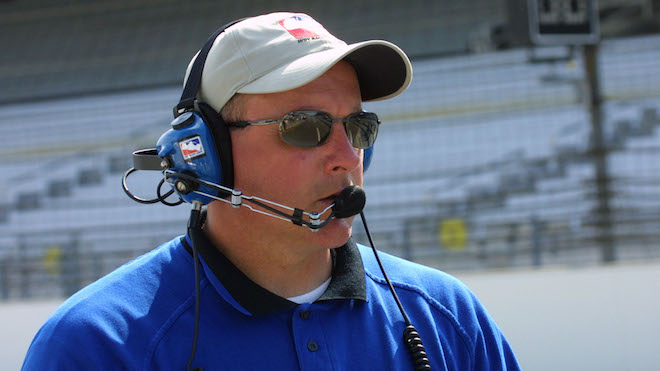
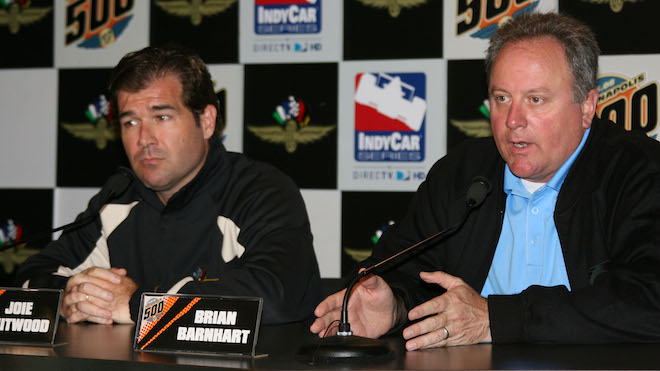
"Indy was right before Texas, and it was looking bad there, too," Barnhart, who served at the IRL's director of racing operations at the time, told RACER. "We were finishing that race and I think the mirror came off somebody's car late in the race, so they had to throw the caution. They're getting ready to do a restart with Luyendyk up front and Scott Goodyear was running second. And it's Lap 199. They restarted the race and everybody was so excited about the fact that they didn't finish under yellow. They're going to have a wild shootout for it and they do the restart.
"Well, they ran about two-thirds of the lap and the track caution lights were still yellow. They forgot to throw the switch and turn the track lights green. Of course, nobody out front lifted but, it was just another one of those mix-ups."
USAC's abrupt move to run the final lap under green was also kept a secret until the green flag waved. Failing to inform its teams and drivers that racing would resume also left the winner wholly unimpressed.
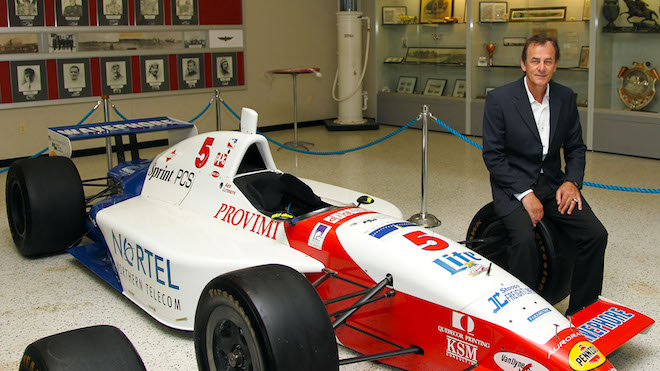
said in a recent interview
. "We all thought we were going to finish on the yellow. And I'm in the wrong gear and I'm thinking, 'Oh boy, everybody is going to come around me.' But nobody came. I'm like, 'Great, everybody got caught out.'"Although he was riding a relative high just days after winning the Indy 500, Luyendyk had a reason to be upset at Texas after being on the receiving end of USAC's second consecutive screw-up.
"The following week in Texas they go through that debacle and Luyendyk gets knocked on his ass by Foyt out there and I went to see Luyendyk afterwards and said, 'What were you doing?'" Barnhart added. "And he says, 'Well, he didn't win that race.' I said, 'What makes you say that? So, who's your beef with?' He says, 'What do you mean?' I said, 'Well, why go to Foyt?'"
After dusting himself off, Barnhart says Luyendyk realized his grievance had been aired with the wrong person.
"All he did was go to Victory Lane because he was told he won the race," he continued. "I said, 'What would you have done last week if somebody had come to Victory Lane in Indianapolis and said you didn't win the race?' He said, 'I'd have knocked them on their ass.' I said, 'Duh!' He said, 'Yeah, I see your point.' I said, 'Foyt didn't say he won the race. USAC said he won the race so he went to Victory Lane like he was told to do. Your bitch wasn't with him. You should have gone to the USAC trailer.'"
Barnhart, who works with Luyendyk today in race control, remembers hearing the rumblings about USAC's T&S error from former IRL official Joie Chitwood as the 1997 race was taking place.
"I was up in the back side of race control, just kind of observing, and Joie called me on the radio and he said, 'Brian, I'm down in the Treadway pit and they don't think they're down a lap,'" he said. "So, I walked over to the USAC guys and Art Graham was doing timing and scoring and said, 'Art, just letting you know, Joie just called me and he said the Luyendyk team doesn't think they're down a lap.'
"He said, 'OK, I'll look at it. Hang on. I'm pretty certain. I'm certain we're in good shape there.' So, he starts talking and of course they had their manual scorers and all these auditors and all of this stuff and about 10 minutes later I go back over to him and he says, 'Yep. Got him right here. He lost his lap on lap 32.' I said, 'OK, well, I'm just letting you know they don't think they are, but if you say they are, you're in good shape.'"
The Treadway team wasn't ready to accept USAC's answer and kept hammering Chitwood.
"Joie calls me a couple more times towards the end of the race and says, 'They're still pretty hot. They still don't think they're down a lap. In fact, they think they're running second or whatever,'" he said. "So, I take two more trips to see Art. And, he's like, 'I've got it. I've got all the information, the details, I can show you right here where they lost the lap, why they're down a lap.' I said, 'OK, because they're pretty adamant that they're not.'
"And, of course, someone's engine blew up late in the thing and Boat takes the lead, but Luyendyk is right behind him and, because of the information USAC had, they just waved him by [under yellow] thinking he's down a lap."
Unbeknownst to USAC, Luyendyk had been given the lead and a massive advantage over Boat, but in the moment, Foyt's driver was considered the leader of the race.
"So, they waved him by and that's fine, 'cause again, that's the information the sanctioning body was providing to the competitor," Barnhart said. "Little do they know that was actually for the win and, you know, the thing ends up where Luyendyk goes in there and gets in a fight. And I'll be damned if I didn't eventually get a phone call."
Fans, Foyt (pictured) and Boat went to bed that Saturday night with no doubt about who'd won the True Value 500. The IRL's senior leadership, including executive director Leo Mehl, and its partners at USAC weren't as fortunate.
"We spent the night there, at about 4:30 or 5:00 in the morning Leo calls me and I'm telling you, he was hot," he said. "Oh my God, was he livid. He'd just gotten off the phone with them, Keith Ward and Art Graham, and said, 'They found their mistake. Luyendyk's the actual winner of the race.' I said, 'Oh my God. What a disaster.' Right?
"He said, 'They're going to hold a press conference at 9 in the morning.' And I said, 'You want any of us there?' He says, 'Nope. We're all getting on our airplanes home, they can handle this one. We're getting out of here. This is on them and not us.'"
USAC revealed its error, Boat's win was rightfully handed to Luyendyk, and the series dealt with its biggest black eye in its first season of competition. Given time, USAC's Ward traced the scoring error to Luyendyk's transponder. Like the snafu at Texas, there was a lot of confusion to untangle in this piece of the story as well.
"Then we find out more details afterwards that Keith was driving the transponders around in his motor home from race to race back then," Barnhart said. "If you remember, Indy didn't run until Tuesday in '97 because of all the rain we had, and we're on track Thursday in Texas. So, he just loaded his motor home up, put the timing transponders in them, drove them down there, they weren't on charge, and he actually had a motor home failure, it broke down, so he didn't get down in there until late Thursday afternoon.
"So, none of the transponders got charged and they had already done the entire Indy 500 race... So, the whole thing just boiled down to this transponder on Arie's car didn't have enough signal strength to it and didn't read on one lap that he actually ran. And then they didn't find it until they went through the manual scoring sheets. Yep, he actually won."
Unplugging an old, respected organization like USAC from the fledgling IRL operation wasn't going to be simple or fast. Any doubts or second thoughts that might have been floating around the IRL office were soon put to rest by USAC's nonchalant reaction to the nightmare it created in Texas.
"I remember Leo telling me that when he talked to USAC about it, their reaction was like, 'Oh well, mistakes happen,'" he said. "Leo was just incredulous. He's like, 'Are you kidding me?' He said they were like, 'It'll be OK, it's no big deal.' We said, 'Well, good luck trying to get the trophy back from Foyt and explaining this one to him...'"
It was painful to experience as a crew member in the series back in 1997, and from Barnhart's position as an IRL official who had to rely on a vendor to run its race, dealing with USAC was also less than pleasant. The call by IRL founder Tony George and Leo Mehl to part ways with its original sanctioning partner was, on the eve of its the 20th anniversary, where the series forged its modern identity.
"I've never looked at it from that perspective, but it's spot on," Barnhart said. "It is a matter of ownership and pride and responsibility and you couldn't just have it stay the way it was. You talk about legitimacy and credibility and what that does for fans and media and sponsors and television, the professionalism. It had to come under one house after Texas."
Presented by:

Latest News
Comments
Comments are disabled until you accept Social Networking Cookies. Update cookie preferences
If the dialog doesn't appear, ad-blockers are often the cause; try disabling yours or see our Social Features Support.