In RACER Magazine: Less is More
Will a reduction in downforce play into Toyota’s hands as it seeks to get on LMP1 parity with Porsche?
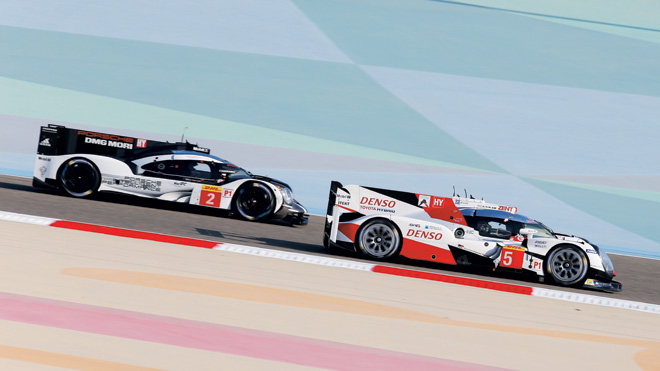
Toyota took the FIA World Endurance Championship LMP1 class fight down to the wire last year, but in reality it wasn’t a serious contender for the title. That’s not a contradiction, because the Japanese marque’s TS050 HYBRID wasn’t really a competitive proposition on all tracks.
But the good news is that there are multiple reasons why it could and should close the gap on reigning champions Porsche over a 2017 WEC season in which just two factory teams will battle it out in LMP1, following Audi’s withdrawal.
The all-new 2016 Toyota was truly competitive just three times over the course of last season and won just once, on home ground at Fuji in October, after unforeseen technical failures robbed it at Spa in May and, in dramatic fashion, at the 24 Hours of Le Mans. It isn’t quite as simple as saying that the TS050 was only in the hunt at tracks requiring lower levels of downforce. It is, however, correct to say that it lacked the downforce to be truly competitive at places such as Silverstone, the Nurburgring and Austin’s Circuit of The Americas, and even when push came to shove at the championship showdown in Bahrain.
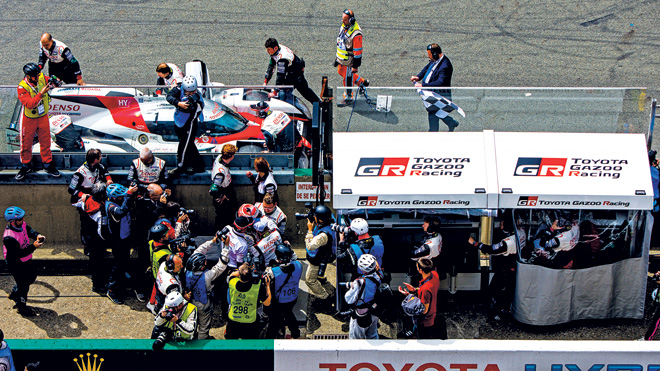
Rule changes for 2017 should play in Toyota’s favor. The LMP1 regulation freeze announced last November hasn’t affected the revisions always scheduled to come into force this season, most notably changes to front and rear aerodynamics conceived to deprive the cars of up to 30 percent of their downforce. The lower downforce TS050 HYBRID effectively has less to lose than the Porsche.
Without the financial resources of its rivals, Toyota has always focussed development on its Le Mans aero. Or as Toyota Motorsport GmbH technical director Pascal Vasselon explains, has to “use most of the elements of the Le Mans package for the high-downforce kit.”
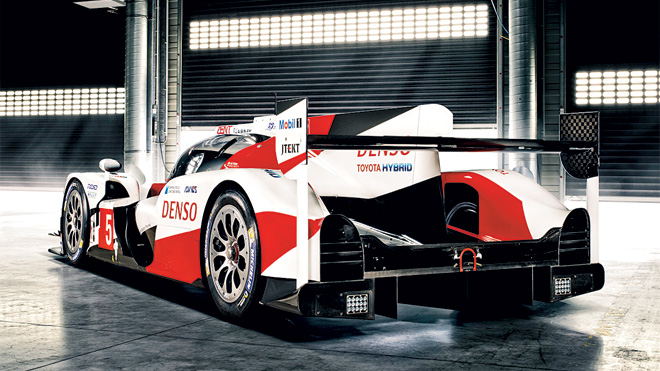
That strategy hurt it harder last year than in previous seasons. The “10 megajoule” reduction in energy allowed each lap – which equated to roughly eight percent less fuel – put the onus on drag reduction for Le Mans.
“All the development we were doing for Le Mans was really hurting the high-downforce version of the car,” explains Vasselon. “As we are not able to put a lot resources into a high-downforce package, we had to live with a baseline car that was conceived to shed drag.”
The changes in the rules – an increase in the rake for the front splitter and a 50mm (2in.) decrease in the height of the rear diffuser – should bring the two specifications of car closer together.
“The new regulations, I would say, better suit our resource limitations,” continues Vasselon. “You’ll have more things in common between the two specs of car.”
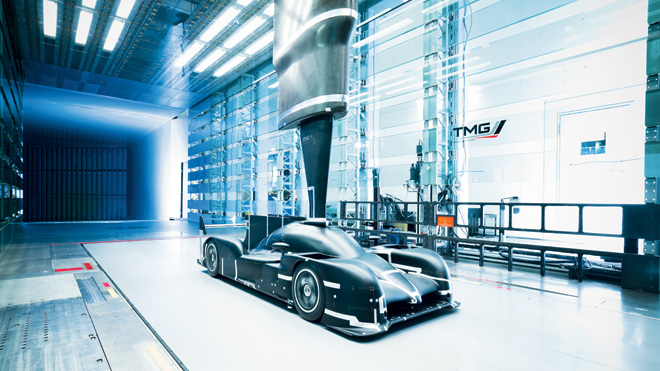
The revised aero rules, conceived to peg back lap times at Le Mans, have come in at a time when there has been a further limitation on the hours each manufacturer can spend in the wind-tunnel. A limit of 1,200 hours per calendar year in 2016 is down to 800 this year. There are, however, no restrictions on the amount of CFD (computational fluid dynamics) development as there are in Formula 1.
The Preview Issue
of RACER magazine, on sale now. Click here to take a video tour of the issue.click here
, or to buy The Preview Issue online, click here.RACER is also available digitally for Apple, Android and Kindle Fire devices. RACER Digital has the complete content of the magazine's print edition formatted for mobile viewing. With RACER Digital, you'll have access to your RACER content all the time, wherever you are.
The RACER app can be found by searching for "RACER Magazine" in the Apple, Android or Amazon App stores. The app is free and includes issue previews and the RACER.com newsfeed. Individual issues can be purchased for $1.99 and an 8-issue annual subscription is $9.99. Back issues are also available.


Latest News

Comments
Comments are disabled until you accept Social Networking Cookies. Update cookie preferences
If the dialog doesn't appear, ad-blockers are often the cause; try disabling yours or see our Social Features Support.