Tech insight: PWC Camaro GT4.R
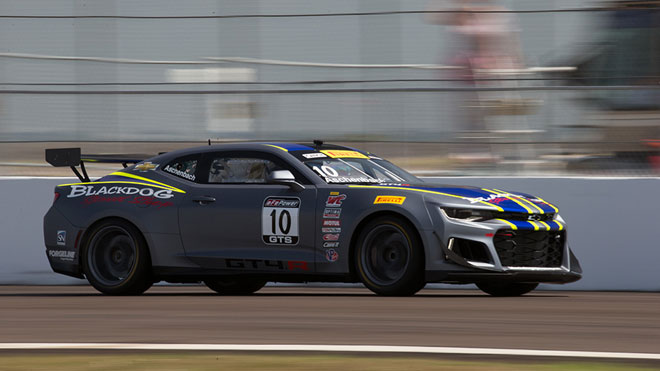
The first round of GT4-homologated cars that showed up in Pirelli World Challenge's GTS class were alien-appearing European marques that few had heard of. In fact, of the GT4 cars that competed in 2016, only the Lotus Evora and, much more rare and quite different from its racing brother, the KTM XBow, were available as road cars in the U.S. That's changing rapidly as the GT4 formula catches on, and now American manufacturers are getting into the GT4 game. Chevrolet was the first to come out with a GT4-homologated racer in the form of the Camaro GT4.R, which Blackdog Speed Shop's Lawson Aschenbach promptly put on the pole for its debut on the streets of St. Petersburg.
Based on the Camaro ZL1, the GT4.R received its final homologation specifications only a bit more than a week before its racing debut. While it will eventually be available to anyone who wants to buy one, for now it's only in the hands of Blackdog Speed Shop to race in PWC and Stevenson Motorsports to compete in the IMSA Continental Tire SportsCar Challenge GS class later this year.
Like General Motors' other production-based racecars such as the GTLM/GTE Corvette and the Cadillac ATS-V.R GT3 that races in PWC GT, the Camaro GT4.R was developed in conjunction with Pratt & Miller Engineering, applying lessons learned by Blackdog and Stevenson in racing previous generations of the Camaro.
"There was actually a lot to be learned from both the GS and the GTS cars," explains Shawn Meagher, Chevrolet's program manager for the GT4.R. "The big thing was understanding what worked well, especially in the suspension setup. We tuned the car knowing what worked the best with the way we tuned the springs and bars in terms of tire life. That's really something that's going to help you win races."
More specifically, Chevrolet relied on two-time GTS champion Aschenbach and his experience. Aschenbach served as the lead development driver for the GT4.R.
"Being part of a development program is any driver's dream, because you're with it from the ground floor up," says Aschenbach. It's an educational experience for sure. I've got so much experience in Camaros already, it was kind of plug-and-play. I knew from being part of a customer-based program in the past, and currently with Stevenson in their program, I kind of have a feel not only for what the car needs to go fast, but from a customer perspective of what a driver is going to want to feel in the car, or the buttons and switches or whatever. It all goes hand in hand."
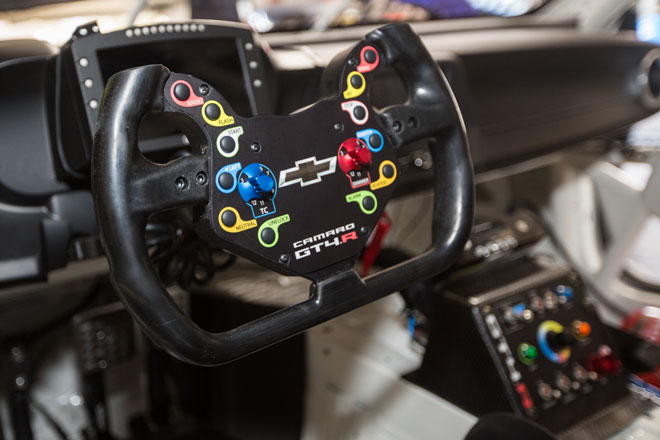
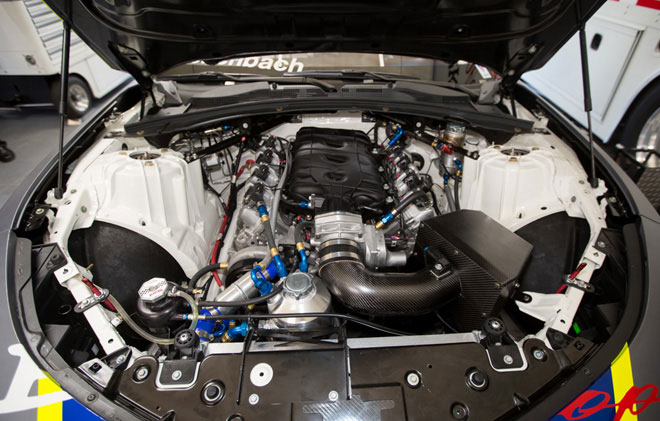
The GT4 regulations are generally more strict than the old World Challenge GTS rules, so there are some key differences such as going from four-way adjustable shocks to a two-way Ohlins damper setup. The car is lighter, largely thanks to Camaro dropping nearly 200lbs in the sixth-generation road car as compared to the previous iteration. The racing version is nearly 700lbs lighter than the road car, but it also has less horsepower than the ZL1 Camaro thanks to the elimination of the supercharger. It uses an Xtrac sequential 6-speed transmission, a big change from the manual in the old GTS car.
Other than the Xtrac gearbox, aero modifications – including new splitter, dive planes and a very adjustable wing (pictured) – the suspension changes and the endurance fuel cell, much of what goes into the Camaro ZL-1 1LE goes into the Camaro GT4.R. That includes the Brembo forged monobloc calipers, albeit upgraded with Bosch's racing M4 ABS system.
Meagher uses the world "robust" often when talking about the car. "We want it to be easier to use and easier to run for the teams so they can spend their time getting the most out of it on track rather than sorting through issues," he says.
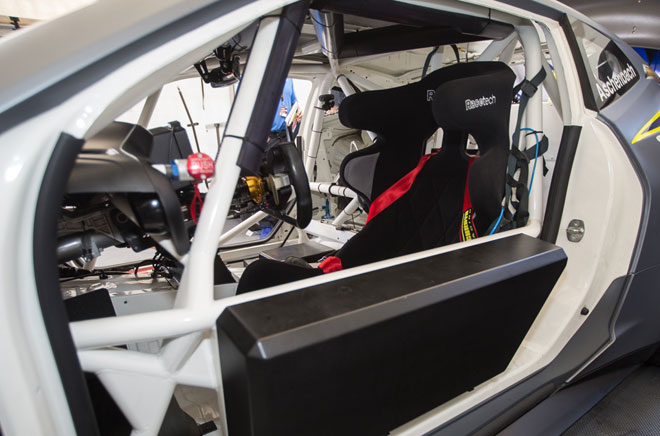
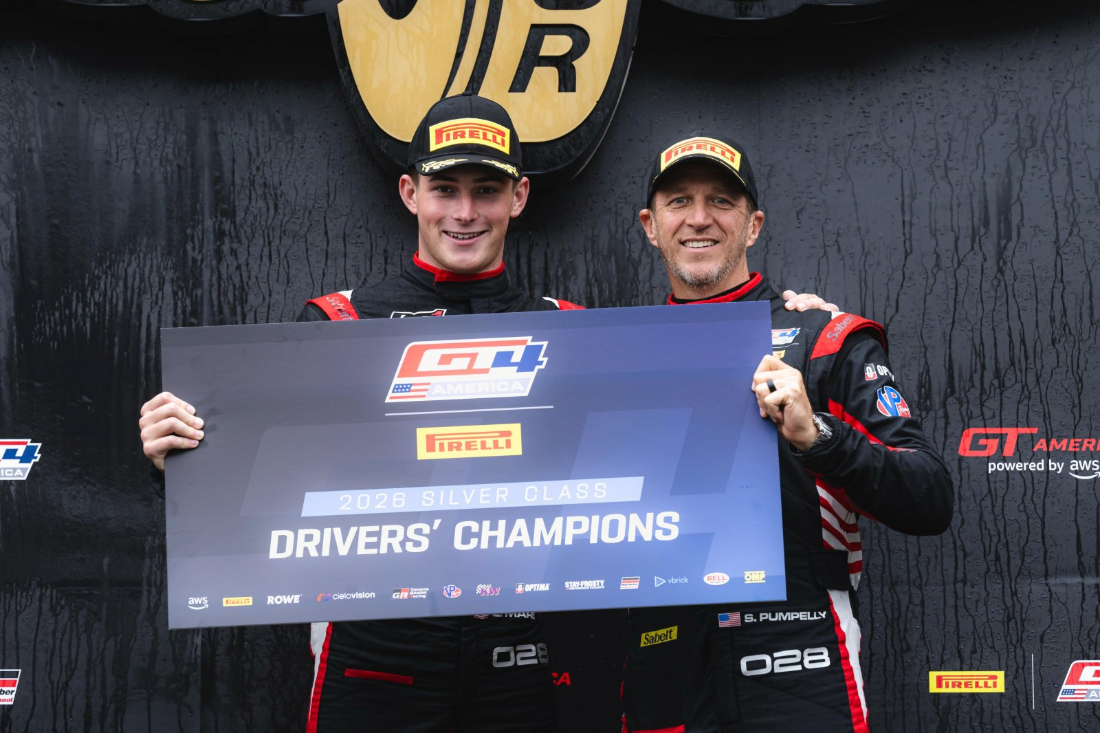
"This car actually has a tendency to be more setup-related like the old [IMSA] GS car," says Aschenbach (pictured). "The Z28 we had over there had a similar feel. But from a driver's experience it's a lot different because we have an Xtrac gearbox, we have paddleshifts and the car has been built for all different types of tires.
"The interesting thing about the GT4 regulations is you have to homologate your springs, your shocks, your swaybars. So you have this window to work in and you have to think about, 'Well, what does that window do when you put this tire on, or that tire on?'. So there are a lot of factors into how you create the setup; but for me, it feels very similar to the old GS car, but a step above that and definitely a step forward."
For now, the car will be raced by Blackdog in Pirelli World Challenge and by Stevenson in GS. But the car is eligible for any GT4 championship around the world. Eventually Chevrolet intends to sell the car to anyone who wants to buy it, whether they intend to race it or not, much like it does with the drag racing-oriented COPO Camaro.
"This is our latest entry into what we anticipate being a customer car program, a turnkey race car – you can pick it up and go racing," says Mark Kent, Chevrolet's director of motorsports competition. "There are two immediate goals. One is the development of the car; we hope at the end of the year, we've ironed out all the bugs so when someone does buy it, 'Here's your owner's manual, here's how you can compete with this car.' The other half, these gentlemen would like to win some races and poles. We hope that we have a steep but effective learning curve."
Kent added that several people have expressed interest in buying cars, both for competition and collecting purposes.
"We've had a lot of tire-kickers. Until we figure out the distribution process, until we figure out the price, it's hard to tell how many of those are serious. We think it's going to be an exciting product and we think there's going to be a lot of interest in racing this in years to come."

Latest News
Comments
Comments are disabled until you accept Social Networking Cookies. Update cookie preferences
If the dialog doesn't appear, ad-blockers are often the cause; try disabling yours or see our Social Features Support.