IndyCar 2018 universal bodywork development update
Continual progress is being made with IndyCar's new-for-2018 universal bodywork. The process began last year on the Phoenix oval and at the Mid-Ohio road course gave the series' technical department a chance to have teams run with and without a number of pieces on the cars to evaluate a new direction it had in mind.
Three key items were set in motion based on the data and driver feedback generated at those tests: Shifting a significant portion of Road Course/Short Oval (RC/SO) downforce production away from using an abundance of wings atop the cars, reducing the overall RC/SO downforce, and reimagining the look of an Indy car emerged as directions the series would follow.
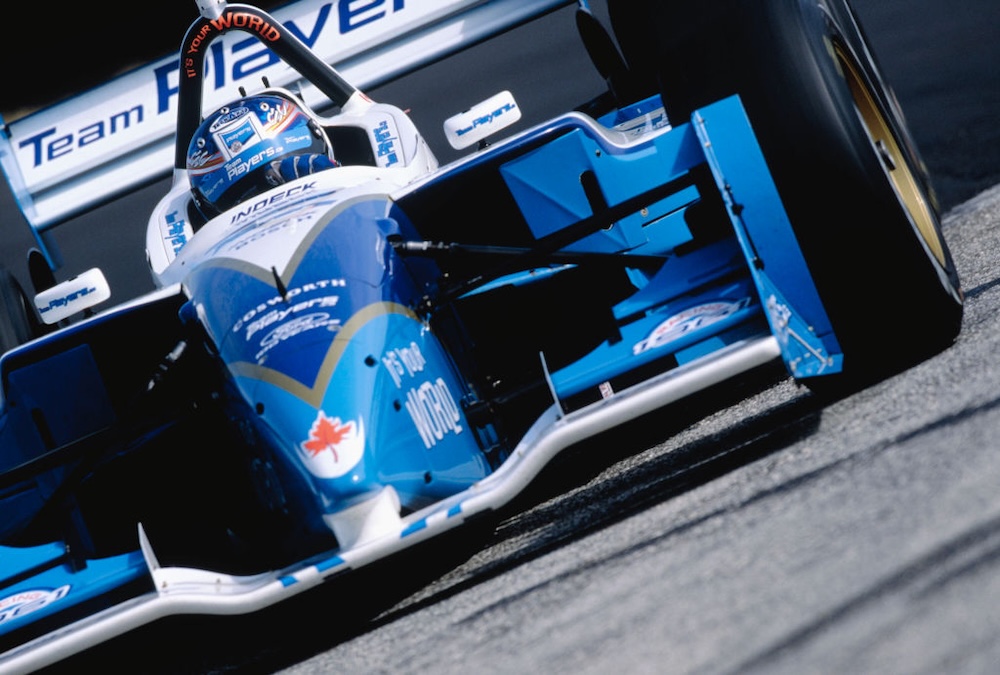
Fewer wings will adorn the universal bodywork; the Dallara DW12's underwing will be relied upon to play a greater role in making RC/SO downforce and, as a package, the 2018 cars will have a decreased maximum downforce figure to work with. A new shape will also come with the bodywork as a low Champ Car-style engine cover and other visual enhancements will mark a clear direction change for the series.
The pace of turning the three main alterations into reality continues to grow, according to IndyCar competition president Jay Frye, as wind tunnel testing is currently taking place with a scale model.
"From those [track] tests then we started designing a car," Frye said. "And we took almost the reverse engineering approach, but we had data to support it, but we did all the stuff we wanted to talk about, with the lower engine cover, and again the rear guards, what do you do with those? [We've tried] on [and] off, that type of thing, so we've come up with some different scenarios.
"So since then we've taken all of our drawings, our data, there's been a couple scale model tunnel [runs] that have went very well, actually surprising well. They exceeded expectations – so far we feel like we're on a good path."
The 2018 universal bodywork design project, which has included direction and oversight from Frye's senior IndyCar competition team members, is moving closer to dressing a DW12 with the new panels to start full-scale testing.
"We had really good people working on this project – Bill Pappas and Tino Belli – but you don't know until you run it," he said. "Even at this point, the [wind tunnel] numbers are great and encouraging in a scale model wind tunnel. The next step is a full-scale tunnel, then the next step is track testing. So far, we're checking off all the boxes. We still have a ways to go."
The exact date could shift, but Frye expects the first track test with the 2018 universal kit to take place somewhere before or after IndyCar's visit to Mid-Ohio July 28-30.
"End of July, first of August hopefully, will be the first step, we hope," he said. "Again, sometimes when you put in a timeline you're just setting yourself up to fail, but so far we feel like we're probably ... there's things we're behind schedule on but there's things we're ahead of schedule on because again so far the wind tunnel numbers have come back encouraging. So we're shooting for that general time frame to get a car on the track."
Once track testing ramps up, new investigations into the raceability of the 2018 RC/SO package will be carried out. By eliminating some of the topside wings, dialing up the underside downforce, and embracing a more streamlined (and lower drag) shape, Frye hopes to find IndyCar's drivers can closer together and complete more passes due to running in less turbulent air.
"That's absolutely what it is," Frye said of the series' goal. "Just to create more underwing ... the downforce is generated by the underwing, not everything on the top. Again, what we did on the track testing was that. We took stuff off and put it on the bottom to see how it would react, how they could up, how they could pass, that type of thing. It went just as we expected, what we were hoping for. So that's what's all been built into the car.
"Especially for these [short] ovals and road courses, there will be an overall reduction in downforce, too. So that's part of this too. To get some downforce out of the car."
Despite the rapid progress, Frye says there's still work to do on the final RC/SO design to meet the series' aerodynamic performance criteria.
"The car in its current configuration has probably a little more drag than we anticipated," he said. "That's one of the things we've talking about having to work through. But not bad. The drag numbers [have] become very important, too. The biggest target we've had is the overall downforce numbers. The [Chevy and Honda RC/SO aero kit] downforce numbers are very high and we're trying to get them back in a reasonable area."
The exact downforce and drag numbers for the universal kit won't be known until the RC/SO package is finalized. Whether it's a 10 percent cut, 20 percent, or more from the 5500 pounds of downforce teams currently have at their disposal will be a point of interest for teams and drivers, as will the drop in drag numbers.
One thing Frye's team is not pursuing, however, is a radical cut in downforce that would make the cars into dragsters that lumber through corners. With something in the region of 700-750 hp in RC/SO trim and a healthy amount of downforce expected to be retained with the universal kit, high-speed cornering should be harder starting in 2018 while still being impressive to watch.
"This thing won't have 900 horsepower, where you can do a drag race down the straightaways then you've got to slam on the brakes ... [and see] who's the bravest one to drive it in the farthest. That's not what we're going for either," Frye said.
"So there's some balance between where we're at and that. We'll be in the middle of that."
Listen to the full conversation on 2018 universal aero kit develop progress with Frye and RACER's Marshall Pruett and Robin Miller starting at the 1m54s mark below:
Presented by:

Latest News
Comments
Comments are disabled until you accept Social Networking Cookies. Update cookie preferences
If the dialog doesn't appear, ad-blockers are often the cause; try disabling yours or see our Social Features Support.