IMSA 2017 Prototype Tech Profile: Cadillac DPi-V.R
• Tech Profile #1: ORECA 07
• Tech Profile #2: Ligier JS P217
• Tech Profile #3: Riley/Multimatic Mk 30
ORIGINS AND PERFORMANCE:
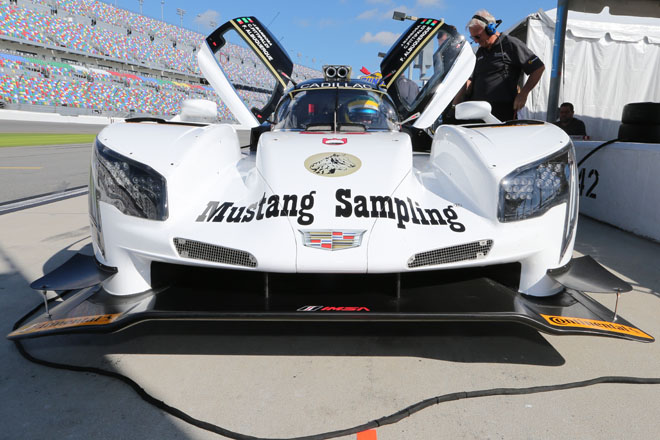
Dallara Automobili produced Cadillac's sharp DPi-V.R using the Italian firm's WEC-spec P217 model as its base, and by all accounts, the General Motors luxury brand should content for championship honors with its new prototype challenger.
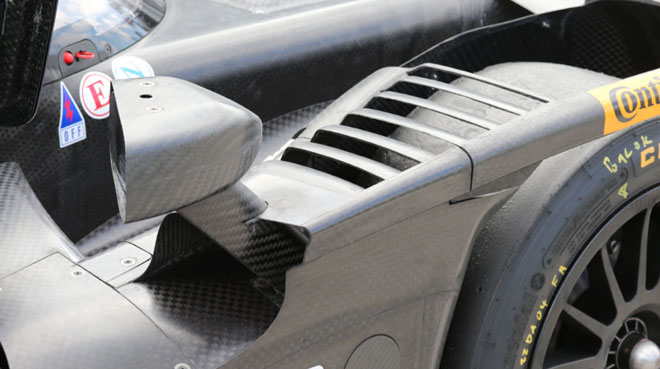
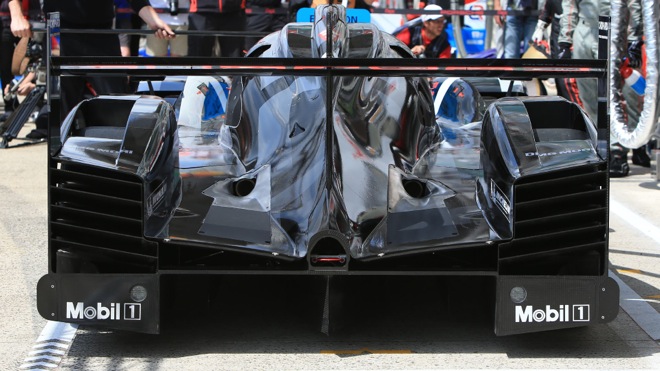
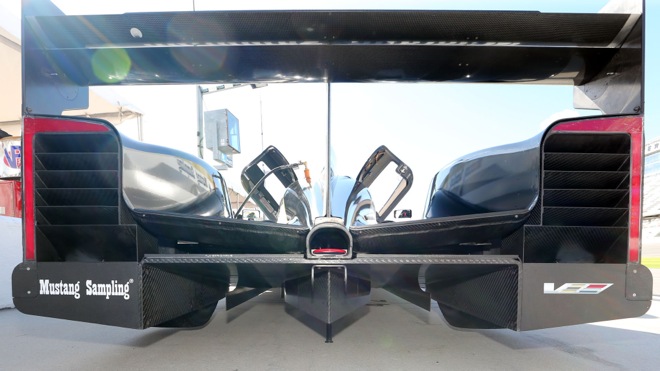
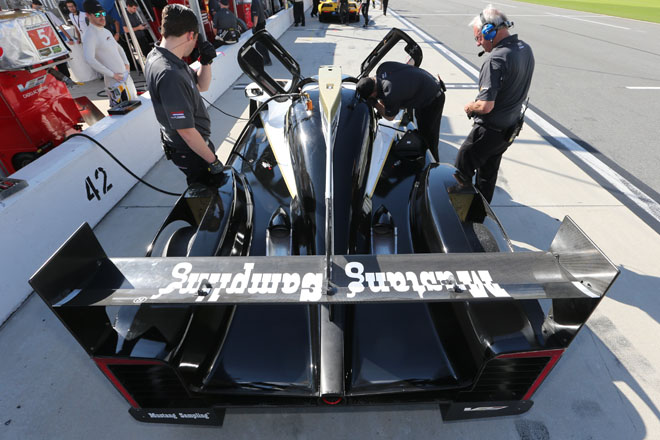
Thanks to its razor-sharp lines and strong resemblance to Porsche's all-conquering 919 Hybrid P1 car, Cadillacs are easy to spot when racing among the other five P2-based models that will compete in IMSA's WeatherTech SportsCar Championship. Although it conforms to the same physical dimensions at the other five, the DPi-V.R looks longer – stretched, somehow – and wider than the rest. It comes as a result of a highly focused aerodynamic approach from Dallara.
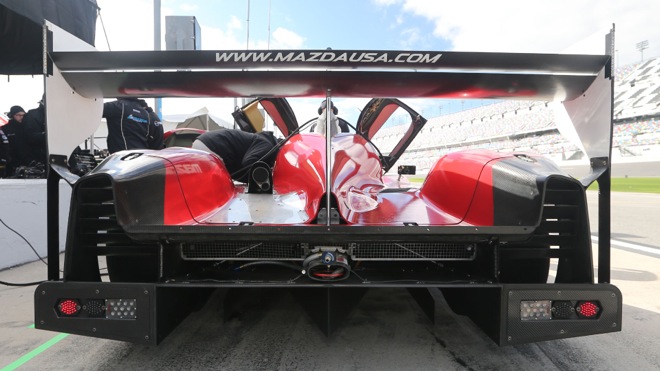
Where almost every other prototype model works hard at some point throughout its bodywork to make the oncoming air bend to its will, the Cadillac takes a more relaxed approach, preferring to work with the wind as it lands on its surfaces. In this regard, Mazda's RT24-P is the unrivaled king when it comes to gentle greetings with the air, but the Cadillac, for all of its rakish lines, isn't so far removed from achieving similar ends while putting up taller fences and guide paths for its air.
Through the mid-December test and the three-day Roar Before the 24 in early January, the combined efforts of the Cadillac DPi program and its two partner teams have shown the car to be fast in every way at Daytona. In light of questions being raised regarding its effort to run as hard as possible in each lap sector at the Roar (where the best DPi-V.R was mid-pack on lap times and top speed), the series made very few concessions to the Cadillacs when creating the Balance of Performance tables for the race.
Once the race gets into a proper groove late Saturday or early Sunday, a number of Prototype teams expect the DPi-V.Rs to cut the anchors and get down to business.
The three combined Cadillacs fielded by Action Express Racing and Wayne Taylor Racing will face the same concerns as every other prototype program heading into the Rolex 24. Of the three DPi brands, Cadillac has demonstrated the highest level of reliability, but that doesn't mean the DPi-V.Rs have been problem-free.
We know the Cadillacs have the speed, and we also know the three DPi-V.Rs turned more total laps than any other model at the Roar. What we won't know until Sunday is whether that pace and durability will ship one of General Motors' finest to Victory Lane.
DAYTONA TEST PERFORMANCE NUMBERS
The aforementioned six prototype models were represented by 12 cars entered at the Roar (3 x ORECA 03, 3 x Cadillac DPi.V-R, 2x Mazda RT24-P, 2 x Nissan Onroak DPi, 1 x Ligier JS P217 and 1 x Riley/Multimatic Mk30).
Cadillac DPi-V.R's Fastest Roar Lap: 1m39.693s (P4 among the six models, P5 of the 12 cars, -0.350s to the fastest lap set by the ORECA 07)
Cadillac DPi-V.R's Best Roar Top Speed: P6, 191.5 mph (-5.6 mph to the top 197.1 mph set by Mazda's RT24-P)
NAMES AND SPECIFIC VEHICLE DATA
Lead Chassis Designer(s): Antonio Montanari
Lead Aerodynamicist(s): Luca dell'Osso
Transmission Vendor: Xtrac
Brake Package Vendor: Brembo
Data and ECU Electronics Package Vendor: Cosworth, Bosch ECU
Engine displacement and cylinder count: 6.2-liter Cadillac V8
Engine air induction system: Naturally aspirated
SPEC 2017 P2-BASED DATA FOR EVERY PROTOTYPE MODEL:
Minimum Weight: All WEC P2s and DPis have a minimum of 930 kilos (2050 pounds) with no fuel or driver for the Rolex 24. 930 kg is also the minimum in the WEC.
Maximum Length: 4750 mm (187 in.), which is 100 mm/4 in. longer than the previous LMP2 max length.
Maximum/Minimum Width: 1900 mm max (approx. 75 in.) to 1800 mm min (approx. 71 in.), which is narrower than the previous maximum of 2000 mm/75-3/4 in.
Maximum Height: 1050 mm (approx. 41.5 in.), slightly up from the previous 1030 mm (40.5 in.) standard.
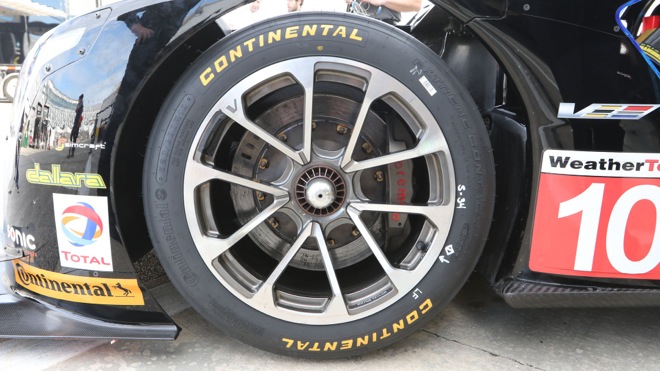
Wheel Size: 18x12.5 in. fronts and 18x13 in. rears.
Tires: All supplied by Continental. Unique use of DP-derived Daytona specification for the Rolex 24, only. Brand-new 2017-spec Continental tires will be used from Round 2 at Sebring onward.
Transmissions: Six-speeds are required for every car. In the WEC, P2 teams are severely limited on the number of gear ratios that may be used (three sets), which will compromise the ability to perfect power and torque curves at some tracks. IMSA has removed the restriction for WEC P2s running in the WeatherTech Championship, and there are no limitations for DPis.
FRONT SUSPENSION
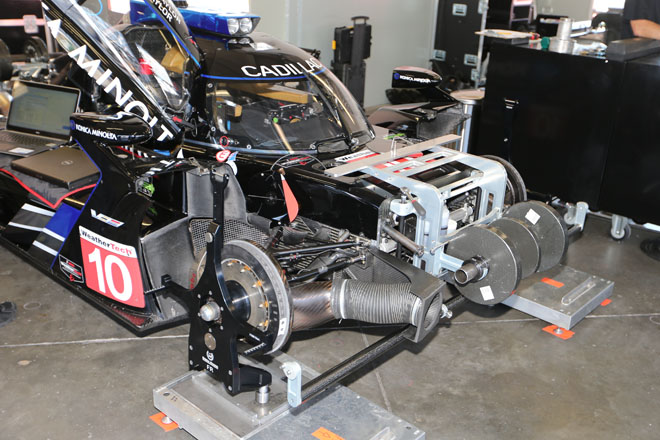
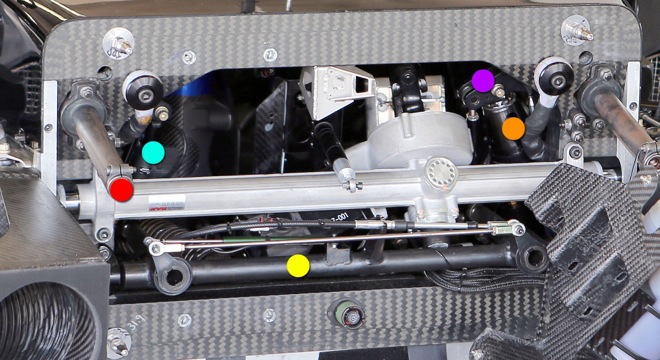
The Cadillac DPi-V.R uses the same torsion-bar suspension found on most 2017 models.
Actuated by pushrods connected to the lower control arms, the torsion bars are twisted by rocker arms that connect to individual dampers. Secondary links connect the dampers and torsion bars to an anti-roll bar. Finally, a front third spring/damper is connected between the rocker arms that controls chassis pitch and dynamic ride height (hidden from sight in the DPi-V.R).
Below: Torsion bars (red, inside their forward housings), rocker arms (purple), dampers (orange), rocker-to-anti-roll bar links (cyan), anti-roll bar (yellow).
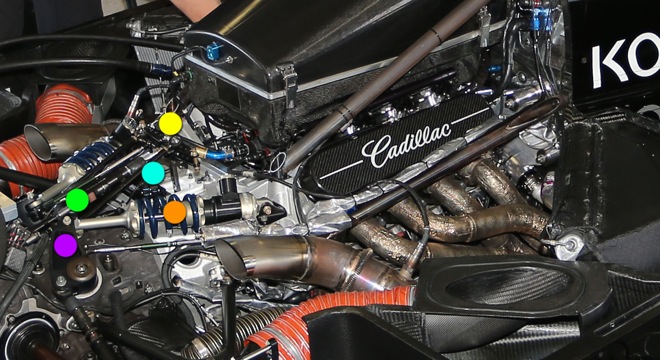
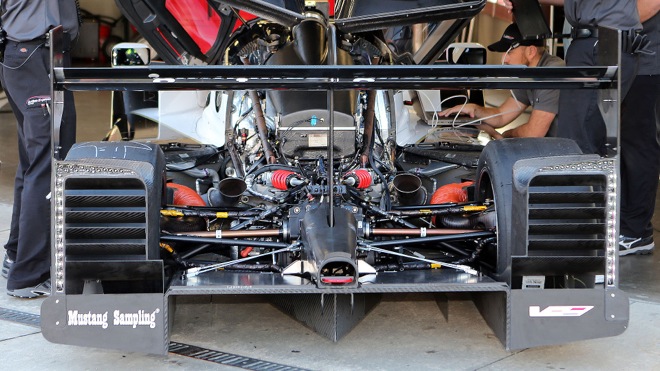
The Cadillac's rear suspension layout conforms to the most conventional choice among 2017 prototypes. Its third spring/damper sits between the primary dampers/shocks, like the ORECA 07.
Below: Rocker arms (purple), dampers with coilover springs (orange), rocker-to-anti-roll bar links (cyan), T-style anti-roll bar (yellow), third spring/damper (green).
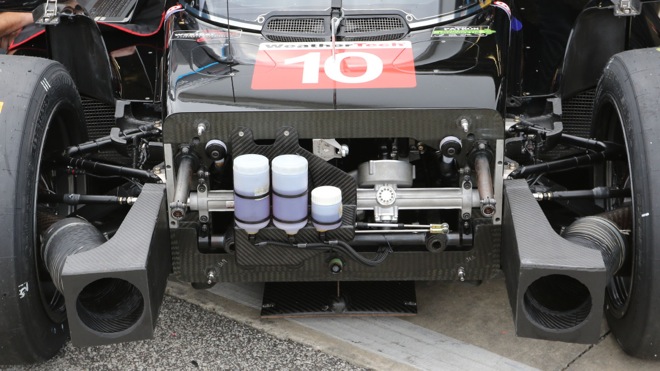
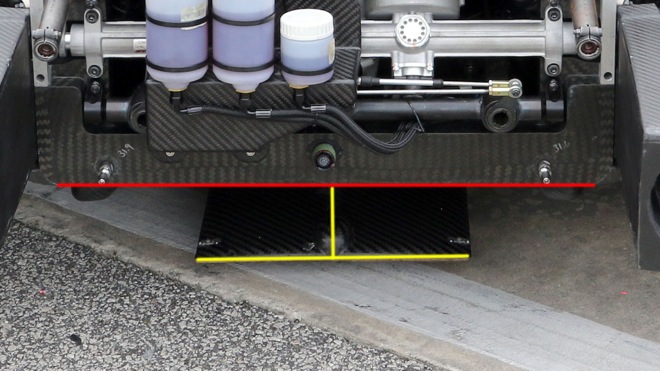
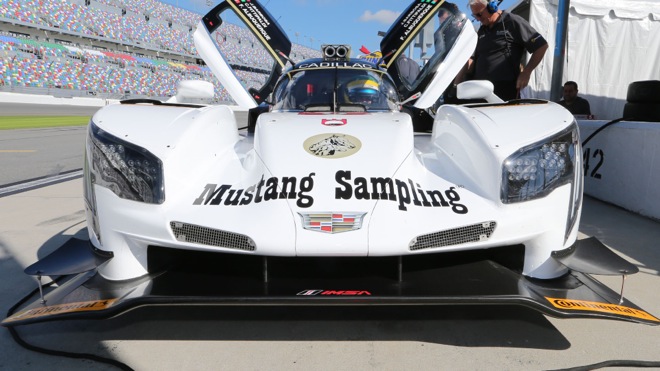
Like every 2017 prototype chassis, the Dallara-based Cadillac DPi-V.R was constructed using a raised forward section of the tub (red) to flow air in from the nose section through the keel (leading edge shown in yellow) and out through the sidepods.
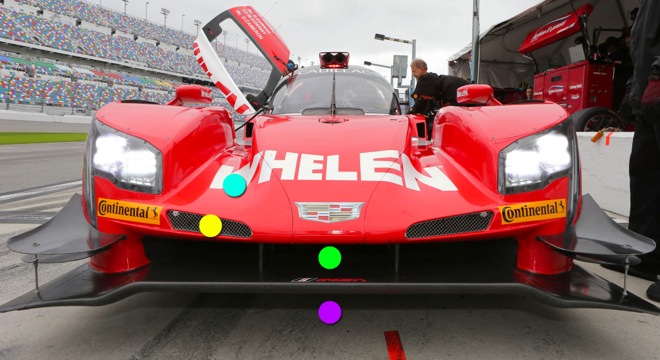
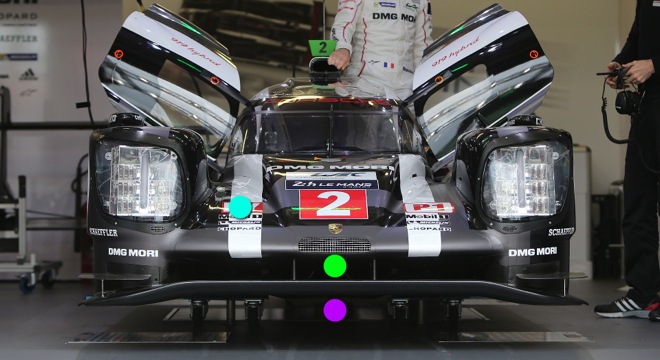
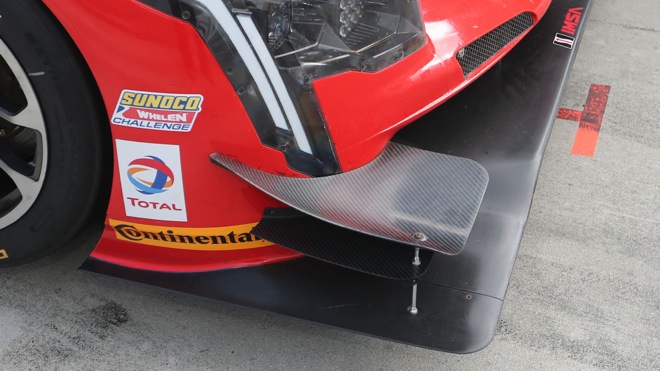
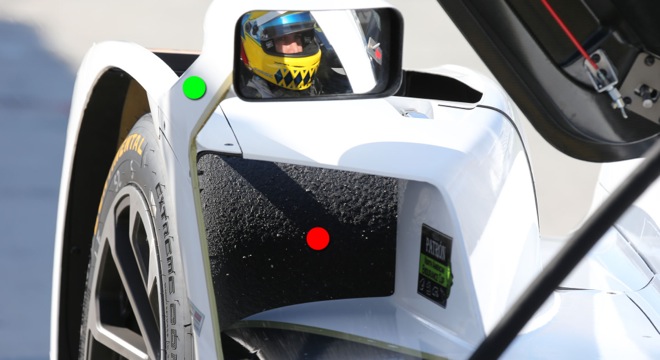
The Cadillac feeds air to the keel between the beam and the top of the splitter (green) and below the splitter (purple). Brake ducts are built into the nose (yellow), and in another nod to the 919, the soft sloping profile on both sides of the nose routes air between the fenders towards the back of the car (cyan).
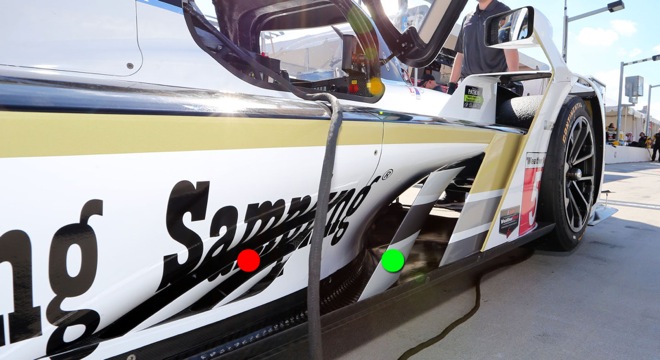
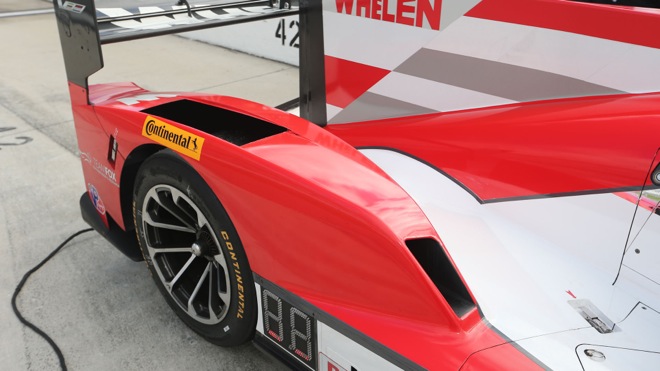
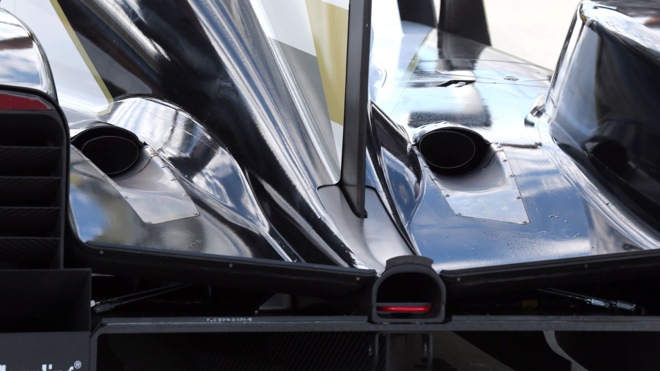
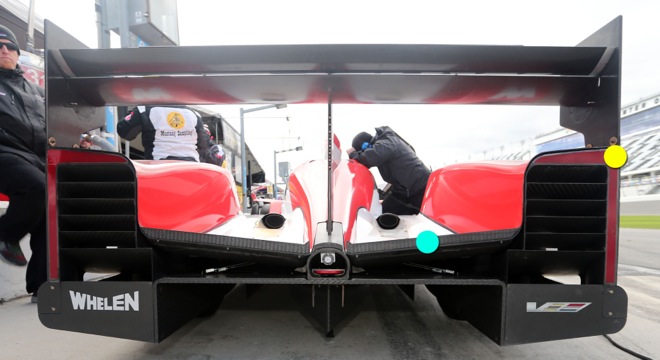
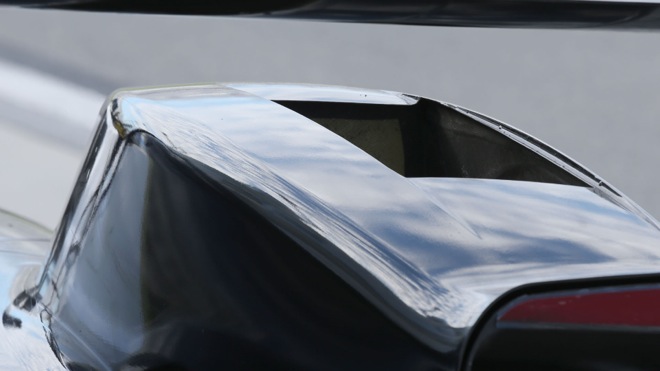
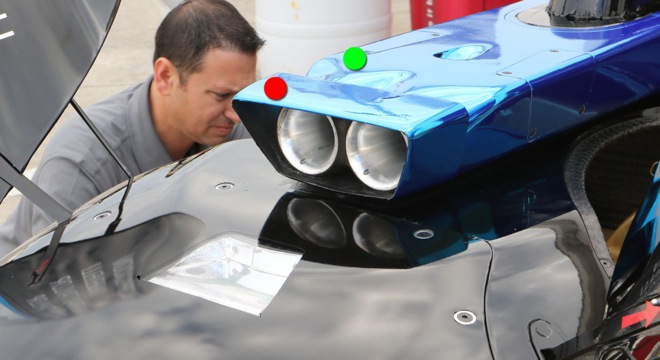
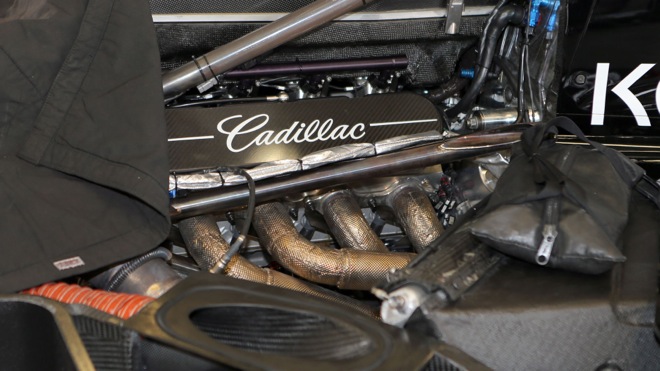
The Cadillac's thundering heart, complete with familiar crinkle heat shrouding on each pipe.
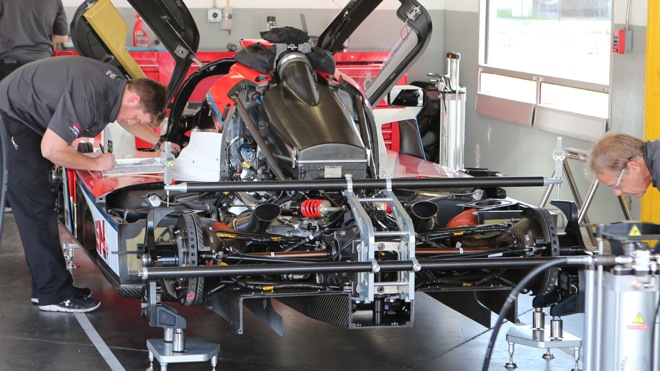
MISCELLANEOUS
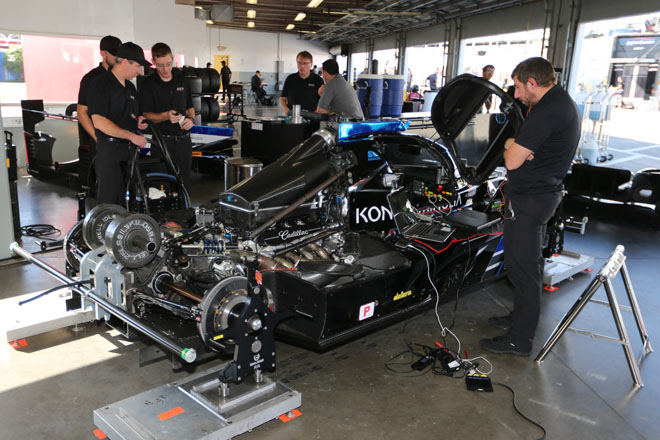
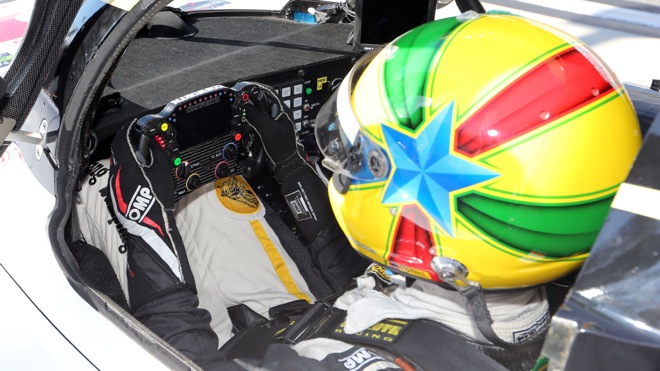
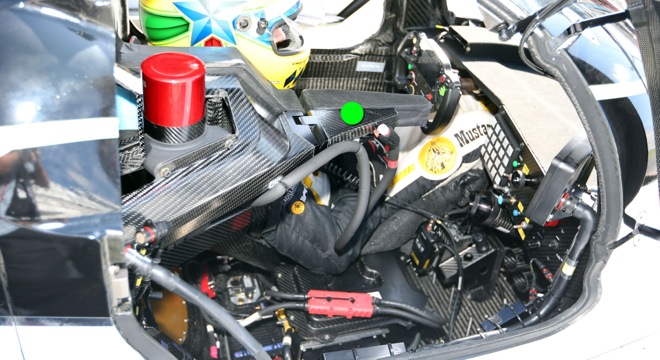
A view of the DPi-V.R office:

Latest News
Comments
Comments are disabled until you accept Social Networking Cookies. Update cookie preferences
If the dialog doesn't appear, ad-blockers are often the cause; try disabling yours or see our Social Features Support.