CRANDALL: Is the Charter system broken?
Cracks are starting to form in NASCAR's new ownership model.
Entering the second year under the Charter system, the positives and negatives of the business model have become evident. While the sport's top teams are still sitting pretty, it remains an uphill battle for the underdogs.
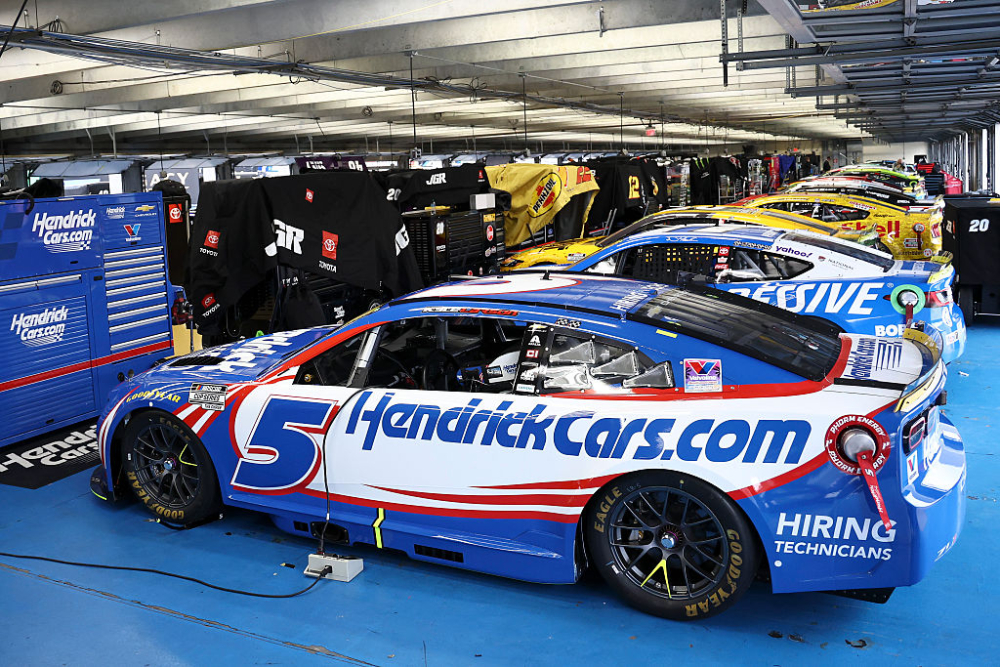
The concept of this system is simple: 36 cars have guaranteed starting spots in every NASCAR premier series race. With a Charter also comes guaranteed revenue. Those without a Charter have to qualify for every race on speed and receive 35 percent per team of what a charter team makes.
In theory, a Charter provides stability. Because the Charters are nine-year agreements, teams can plan long-term competition projects and have a better understanding of revenue, while using the Charter as a pitching tool for sponsors and other partners.
That's the theory. Now let's break down some of the positives and negatives.
Positive: Teams who have shown a commitment to competing each weekend are rewarded with a starting spot, giving NASCAR at least a 36-car field. No longer does it stand to chance that through shenanigans like Talladega Superspeedway in October 2014 will a big name like Ricky Stenhouse Jr. miss the show. The Wood Brothers and Ryan Blaney will not be sent home because of rain washing out qualifying.
Positive: Charters make it harder for smaller teams to enter the series looking only to start and park. It's now simply not worth it.
Positive: The agreement also produced a team owner council, allowing for a more formal input into decisions. As Richard Petty said in January during the announcement, "now we're going to be in the same room talking about the same problems and solving the problems together."
Now go deeper. Is the Charter system delivering on all the hype, specifically when it comes to stability? That was the word repeated over and over when this was rolled out.
Quite simply, no.
Roush Fenway Racing
,Richard Petty Motorsports
andHScott Motorsports
ended up with empty cars after losing their drivers and sponsors.One of the most surprising developments from 2016 was Tommy Baldwin deciding to no longer field his car (pictured, driven by Regan Smith) full-time. The news came less than a year after Baldwin, also deeply involved in the business side of the sport through the Race Team Alliance, spoke of the Charter system's positives and how it would benefit his single-car team.
Baldwin sold his Charter
before the season even ended.Perhaps the glaring negative is that the Charter system has not attracted new owners to the sport as NASCAR hoped.
Prior to the start of the season, Brian France said: "Where we ended up is a very good place because we believe we made the team owner model more reliable, more stable, more open, more open to new investors, with more capital to come into the sport."
In 2016, not a single new team was formed. Nor were there any attempts made by a team to qualify for a Cup race who has not previously tried. It does not appear there will be for 2017, either.
Where would the enticement be for a new team owner? For the amount of money he, she or they would put in just to compete at NASCAR's highest level, the return is not having a guaranteed starting spot and receiving less revenue than the competition.
The assumption by some that having open spots for non-Charter cars will lead to an increase in competition hasn't panned out. If things hold true in that all 36 Charters will be used in 2017, then when it comes to the open cars, there looks to be only two who will attempt to qualify.
We could be moving toward again having a smaller field.
Of course, the struggle for teams when it comes to keeping sponsors and drivers from year to year isn't going anywhere. But if the Charter system has yet to start fulfilling expectations, how much bigger will these cracks get over the next few years?

Latest News
Comments
Comments are disabled until you accept Social Networking Cookies. Update cookie preferences
If the dialog doesn't appear, ad-blockers are often the cause; try disabling yours or see our Social Features Support.