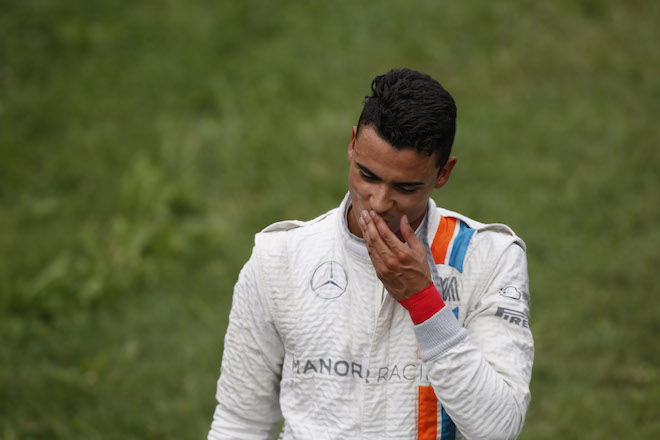
F1: Wehrlein learning from Force India snub
Pascal Wehrlein is focused on addressing the reasons why he was overlooked by Force India for a seat in 2017, even if a Mercedes drive could be the end result.
Wehrlein impressed in his debut Formula 1 season, scoring a point for Manor in the Austrian Grand Prix and reaching the second part of qualifying on a number of occasions. However, the German lost out to fellow Mercedes youngster Esteban Ocon – his Manor teammate for the final nine rounds of the season – in a fight for a vacant seat at Force India next year.
As both drivers had previously tested for Force India, the working relationship was seen as a key factor. Such a snub was disappointing for Wehrlein, but he has used the incident to try and learn what he needs to improve on in future.
Related Stories
"Force India was one option for next year and in the end it didn't happen," Wehrlein told RACER. "Of course I was disappointed at the beginning for a little bit and now I know the reasons and I know what I have to improve from my side. Now it's done and I am just focusing on my job.
"I think it was something more on the personal side. I know that the first impression sometimes of myself can be different than when people know me for a bit longer. I have to work on that. I'm very ambitious and sometimes maybe too much, so there are some people who like the way I am – I'm always pushing and trying to move forwards – but sometimes maybe you deliver it in the wrong way and then it can go wrong."
The missed opportunity could prove to be a blessing in disguise for Wehrlein, as he is currently a front-runner to replace Nico Rosberg at Mercedes next year. Wherever he ends up racing in 2017, the 22-year-old is confident he can rectify any personal weaknesses more easily than anything to do with his driving.
"The most important thing is of course the performance. Everything you do on track, you deliver and do the maximum of what is possible; that is the most important thing, of course. The other side is of course important. In the end I don't know which situation or what exactly was wrong in that test – maybe I said something wrong – but in the end it was something personal and not something which had something to do with the performance.
"Of course it's disappointing, but if I had been too slow and in every race I was half a second slower then I would say, 'OK, I am not fast enough,' and you cannot find half a second in the winter. Then I would be very disappointed. But actually, the problem – if there was a problem – is something that can be solved and I will work on. That's why I asked [for the reasons], that's why I wanted to know and it's something easy to change."

Latest News
Comments
Comments are disabled until you accept Social Networking Cookies. Update cookie preferences
If the dialog doesn't appear, ad-blockers are often the cause; try disabling yours or see our Social Features Support.