Having it both ways
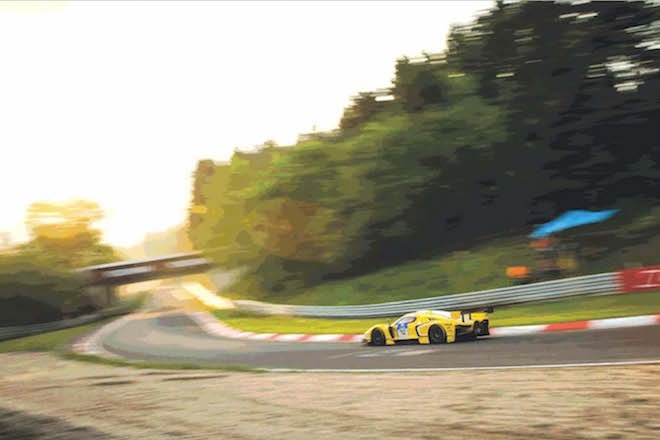
The record will show that James Glickenhaus entered two SCG003 cars in the 2016 ADAC Zurich 24-Hour Race at the Nürburgring under the Scuderia Cameron Glickenhaus team banner. The record also shows that one car finished in 26th place, while the other was crashed out. The record, however, does not tell the story of this remarkable car and the vision that James Glickenhaus has for it.
The tale begins with a different car that was the equivalent of the automotive centerfold-of-the-year in 2006. Known as the Ferrari P4/5 by Pininfarina, it was a one-off creation using a Ferrari Enzo as the base to completely reimagine a modern interpretation of the fabled Ferrari P3/4. Its success gave rise to the latest Glickenhaus vision – the SCG003. Both were born of a romantic vision about what sports cars are meant to be.
“My inspiration was endurance racing as it was in the sixties, when even the prototypes were essentially road legal cars,” says Glickenhaus. “They could be driven to the track, and had to have things like turn signals and two seats. So a car like the Ferrari P4 and others like it were raced at Le Mans and other endurance races in road legal form. That hasn’t been the case for a long time. The current breed of prototype that can race for the win at Le Mans is nothing but a purebred racecar with no purpose other than to race. Even the cars in the GT classes which may be derived from a homologated road-going version can’t be driven on a public road.
“The SCG003 has been created in that spirit where it can be raced in endurance events to a high level, and then when the race is over be simply converted to street legal use,” he continues. “By removing the roll cage, some other bits of safety equipment and swapping the tire/wheel package from slicks to road tires, the SCG003 can be driven on public roads.”
The SCG003 may be an embodiment of the sports cars of yore, but make no mistake, the engineering and design is cutting-edge contemporary. Hand-built in Turin, Italy, the cars are created specifically to suit their purpose. Partnerships are hand-picked with an equal eye on detail, including the wheel collaboration with
Racing in events like the Zurich 24 at the Nürburgring is essential not just to the ongoing development, but to prove the car’s true road/race bona fides. The race’s unique set of car-class rules, along with the punishment of racing around the “Green Hell” is just the ticket.
“There’s nothing else like this race,” says Glickenhaus. “The top class is essentially composed of road-legal cars. On top of that, the Nordschleife is where all manufacturers go to show off their latest super car. The difference is that we are doing it in a race, in front of the public, against other cars, and where we can’t control the conditions for the optimal lap.”
If the SCG003 proves to be what Glickenhaus envisions, the next step is to advance the car to be capable of running in the privateer prototype class at Le Mans.
In Europe the SCG003 will be available under the one-off regulations, while in the U.S. it must be sold as a “home built” car, meaning the owner must undertake final assembly. How much? It doesn’t come cheap, but you can dream. James Glickenhaus did, and it’s coming true.
This advertising feature first appeared in RACER issue 278, July 2016
The tale begins with a different car that was the equivalent of the automotive centerfold-of-the-year in 2006. Known as the Ferrari P4/5 by Pininfarina, it was a one-off creation using a Ferrari Enzo as the base to completely reimagine a modern interpretation of the fabled Ferrari P3/4. Its success gave rise to the latest Glickenhaus vision – the SCG003. Both were born of a romantic vision about what sports cars are meant to be.
“My inspiration was endurance racing as it was in the sixties, when even the prototypes were essentially road legal cars,” says Glickenhaus. “They could be driven to the track, and had to have things like turn signals and two seats. So a car like the Ferrari P4 and others like it were raced at Le Mans and other endurance races in road legal form. That hasn’t been the case for a long time. The current breed of prototype that can race for the win at Le Mans is nothing but a purebred racecar with no purpose other than to race. Even the cars in the GT classes which may be derived from a homologated road-going version can’t be driven on a public road.
“The SCG003 has been created in that spirit where it can be raced in endurance events to a high level, and then when the race is over be simply converted to street legal use,” he continues. “By removing the roll cage, some other bits of safety equipment and swapping the tire/wheel package from slicks to road tires, the SCG003 can be driven on public roads.”
The SCG003 may be an embodiment of the sports cars of yore, but make no mistake, the engineering and design is cutting-edge contemporary. Hand-built in Turin, Italy, the cars are created specifically to suit their purpose. Partnerships are hand-picked with an equal eye on detail, including the wheel collaboration with
Forgeline
. Each partner is chosen for their expertise, rather than for some financial benefit.Racing in events like the Zurich 24 at the Nürburgring is essential not just to the ongoing development, but to prove the car’s true road/race bona fides. The race’s unique set of car-class rules, along with the punishment of racing around the “Green Hell” is just the ticket.
“There’s nothing else like this race,” says Glickenhaus. “The top class is essentially composed of road-legal cars. On top of that, the Nordschleife is where all manufacturers go to show off their latest super car. The difference is that we are doing it in a race, in front of the public, against other cars, and where we can’t control the conditions for the optimal lap.”
If the SCG003 proves to be what Glickenhaus envisions, the next step is to advance the car to be capable of running in the privateer prototype class at Le Mans.
In Europe the SCG003 will be available under the one-off regulations, while in the U.S. it must be sold as a “home built” car, meaning the owner must undertake final assembly. How much? It doesn’t come cheap, but you can dream. James Glickenhaus did, and it’s coming true.
This advertising feature first appeared in RACER issue 278, July 2016

Latest News

Comments
Comments are disabled until you accept Social Networking Cookies. Update cookie preferences
If the dialog doesn't appear, ad-blockers are often the cause; try disabling yours or see our Social Features Support.