Reputation forged
Along with the 100th running of the Indianapolis 500, 2016 is also the 100th anniversary of Dayton Wire Wheels.
As the name implies, the Dayton, Ohio-based company manufactures wire wheels, and in 1916 many of the cars making their way from Gasoline Alley to the start line for the "500" rolled on their creations. In subsequent years, not only were Indy cars riding on Dayton Wire Wheels, so too were the Wright Brothers and Charles Lindbergh, as well as cars from the likes of Duesenberg and Packard.
But despite flying high in its early days, Dayton Wire Wheels was facing closure in 1970, when Jim Schardt stepped in.
"I raced SCCA in the late Sixties, and if you ran a foreign car, wheels were hard to find," says Schardt. "So I began importing some of the better brands as well as built and repaired wire wheels myself. When Dayton Wire Wheels ran into trouble, I took it over with two employees and lots of debt."
Leap ahead to 1994. Dayton Wire Wheels had long since lost their relevance in contemporary motorsport, but Shardt's sons Dave and Steve were both avid amateur racers who, like their father had three decades prior, saw an opportunity. There was a growing demand for custom offset racing wheels, and at that time they were both difficult and pricey to come by.
With Jim's help, Steve and Dave established Forgeline Wheels. American-made, two-piece wheels with custom offsets were now available to domestic racers of any level at a reasonable cost. Very soon, the bulk of the Pirelli World Challenge field was riding on Forgeline wheels, as were many entries in other sports car series.
By the mid-2000s, two-piece technology gave way to three-piece wheels and, again, Forgeline led the way on the American racing scene. At the same time, Jim Schardt sold Dayton Wire Wheels, while Steve and Dave segued from their "day jobs" to fully dedicate themselves to a growing Forgeline.
"Car and tire technology were rapidly developing, so simply having a wheel be lightweight wasn't enough," says Dave Schardt, who oversees all operations for the company. "Aerodynamics and tire grip began making large demands on wheel performance. Around 2013, we tested a Porsche 911 GTD car. Our wheel was a one-piece, and much lighter than the factory wheel, but the test drivers were saying it didn't feel right.
"Stiffness became a bigger issue than weight. We remade the wheels, adding some weight – still well below the factory wheel – but with significantly less deflection under load. The car immediately went over a second per lap faster."
One-piece wheels are now the de facto standard, and the technology keeps evolving and pushing ahead.
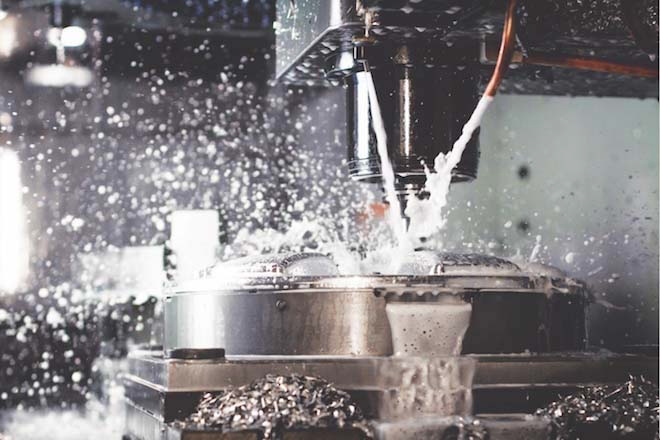
"We've done some work with carbon fiber wheels, but the problem is that the whole wheel has to be molded for every offset," says Dave. "We're in the process of working with another advanced material that, unlike carbon fiber, allows us to machine the centers for a much more practical alternative."
Today, motorsport remains the soul, and key, to Forgeline's business. Noting that what their street car customers desire is driven by what they develop for the race track, Dave Schardt states an unequivocal commitment to racing. Currently,
This advertising feature first appeared in RACER magazine issue 277, June 2016.
As the name implies, the Dayton, Ohio-based company manufactures wire wheels, and in 1916 many of the cars making their way from Gasoline Alley to the start line for the "500" rolled on their creations. In subsequent years, not only were Indy cars riding on Dayton Wire Wheels, so too were the Wright Brothers and Charles Lindbergh, as well as cars from the likes of Duesenberg and Packard.
But despite flying high in its early days, Dayton Wire Wheels was facing closure in 1970, when Jim Schardt stepped in.
"I raced SCCA in the late Sixties, and if you ran a foreign car, wheels were hard to find," says Schardt. "So I began importing some of the better brands as well as built and repaired wire wheels myself. When Dayton Wire Wheels ran into trouble, I took it over with two employees and lots of debt."
Leap ahead to 1994. Dayton Wire Wheels had long since lost their relevance in contemporary motorsport, but Shardt's sons Dave and Steve were both avid amateur racers who, like their father had three decades prior, saw an opportunity. There was a growing demand for custom offset racing wheels, and at that time they were both difficult and pricey to come by.
With Jim's help, Steve and Dave established Forgeline Wheels. American-made, two-piece wheels with custom offsets were now available to domestic racers of any level at a reasonable cost. Very soon, the bulk of the Pirelli World Challenge field was riding on Forgeline wheels, as were many entries in other sports car series.
By the mid-2000s, two-piece technology gave way to three-piece wheels and, again, Forgeline led the way on the American racing scene. At the same time, Jim Schardt sold Dayton Wire Wheels, while Steve and Dave segued from their "day jobs" to fully dedicate themselves to a growing Forgeline.
"Car and tire technology were rapidly developing, so simply having a wheel be lightweight wasn't enough," says Dave Schardt, who oversees all operations for the company. "Aerodynamics and tire grip began making large demands on wheel performance. Around 2013, we tested a Porsche 911 GTD car. Our wheel was a one-piece, and much lighter than the factory wheel, but the test drivers were saying it didn't feel right.
"Stiffness became a bigger issue than weight. We remade the wheels, adding some weight – still well below the factory wheel – but with significantly less deflection under load. The car immediately went over a second per lap faster."
One-piece wheels are now the de facto standard, and the technology keeps evolving and pushing ahead.
"We've done some work with carbon fiber wheels, but the problem is that the whole wheel has to be molded for every offset," says Dave. "We're in the process of working with another advanced material that, unlike carbon fiber, allows us to machine the centers for a much more practical alternative."
Today, motorsport remains the soul, and key, to Forgeline's business. Noting that what their street car customers desire is driven by what they develop for the race track, Dave Schardt states an unequivocal commitment to racing. Currently,
Forgeline
products own a large slice of the Continental Tire SportsCar Challenge GS and World Challenge GTS fields. But, as top-tier sports car racing takes on FIA GT3 and GT4 regulations, Forgeline has targeted increasing its original equipment footprint in order to be homologated for those categories. As a business imperative, it's a top priority, and one that excites this cutting-edge company.This advertising feature first appeared in RACER magazine issue 277, June 2016.

Latest News
Comments
Comments are disabled until you accept Social Networking Cookies. Update cookie preferences
If the dialog doesn't appear, ad-blockers are often the cause; try disabling yours or see our Social Features Support.