INDYCAR: Champ Car-style bodywork set for 2018
The Verizon IndyCar Series will take a page from the days of CART and Champ Car when its 2018 universal bodywork arrives.
from 2018-2020
.That initiative will replace the overhead air intake with a low, sleek engine cover; twin-turbocharged engines from Chevy and Honda (and any new manufacturers that enter the series) will be fed from new intake scoops integrated into the sidepods.
Related Stories
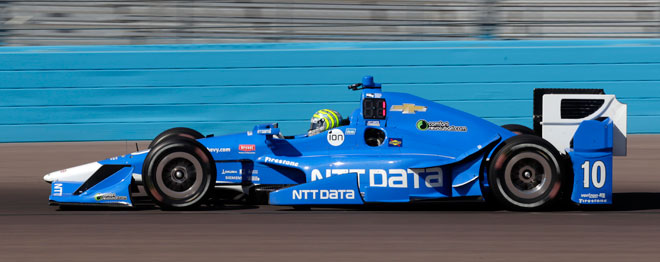
The DW12's current appearance (above), with an overabundance of wings and rear-mounted pieces, will also be simplified with universal bodywork that relies on a new and more powerful underwing that shifts a greater percentage of downforce production below the car.
With the new, full-width underwing in place, it will be covered by more traditional sidepods that extend outward from the sides of the cockpit to fill most of the void behind the front tires. The "sponsor blocker" devices – the floor-mounted units designed to prohibit the interlocking of wheels – would no longer be required with full-width sidepods.
The rear wheel guards are expected to go from full-time use to only being retained for superspeedways, and even then, they will be smaller and less visually intrusive.
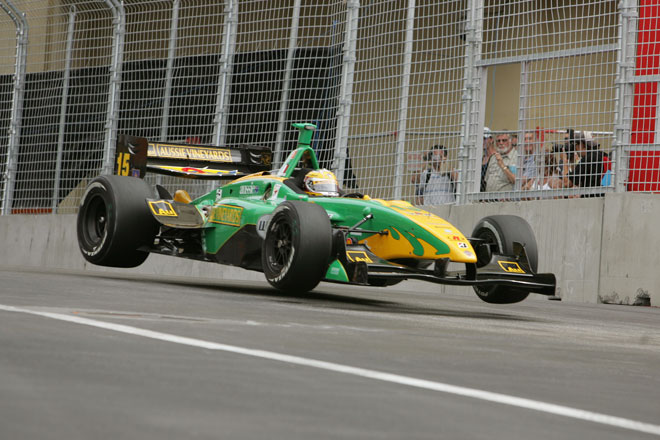
Altogether, the current aero kits, which will continue in 2017 under a development freeze, will be traded for something that takes the DW12 closer to a Panoz DP01 (pictured, top [Simon Pagenaud] and below [Sebastien Bourdais] in 2007) than anything we've seen since Champ Car folded.
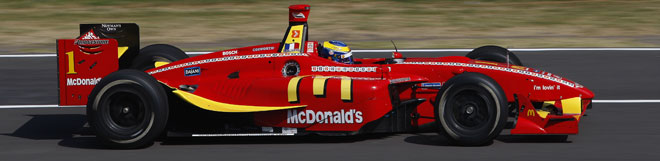
"We want to move most of the downforce to the bottom, get rid of a lot of the topside parts and pieces, and we're looking to maybe get rid of the rear wheel pods."
Frye says there are parallels between IndyCar's approach to the universal kit and the recent spate of retro-themed muscle cars.
"If you take today's Camaro, it looks kind of like the Camaro from the 1960s but it has the big motor, all the electronics, and everything that gives it the retro look but with modern technology," he said. "There's probably some balance in there for what we're looking for with the universal kit. We've taken photos of the Indy cars from the last couple of decades, done side-by-side comparisons on what we like and don't like, and then we've taken some of those ideas to our partners, our manufacturers, and gotten their feedback on what might work on that [retro-modern] theme."
From a technical standpoint, Belli says the move to a more muscular look with the DW12 in 2018 should improve engine performance while increasing the car's visual appeal.
"We want the low engine cover just because we want the car to look more like a traditional Indy car from the '90s," he told Racecar Engineering. "The whole [overhead] airbox thing is really left over from a normally aspirated engine, which we had had for so long. It's good at creating positive pressure so the turbos work less hard, but it isn't the only option available, so we will be moving the [turbo] inlets to the sidepods.
"That will also make the plumbing shorter. So right now you take the air and you've got the pipe down in there – and then it goes back up and there's a lot of pipework and complexity where they are going to put the turbo inlets in the side pods. [We're] making it shorter, lighter and lower. But the advantage of that, it makes the engine cover look a lot more sleek. We want a sleek, low, wide look."
Is that what the fans want, too? Readers' comments here could provide some evidence...

Latest News

Comments
Comments are disabled until you accept Social Networking Cookies. Update cookie preferences
If the dialog doesn't appear, ad-blockers are often the cause; try disabling yours or see our Social Features Support.