INSIGHT: Pagenaud's Jedi Master
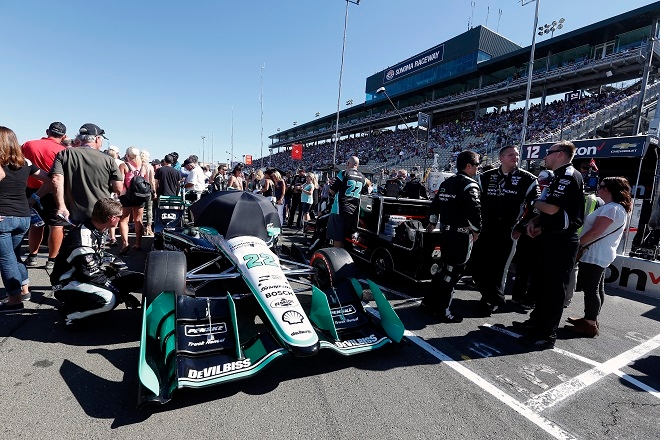
Shortly before he put his No. 22 Team Penske car on pole for the IndyCar season finale at Sonoma, Simon Pagenaud bumped into Gil de Ferran in the paddock.
They hadn't spoken much lately, which was unusual. And they didn't speak much this time, either.
"Gil came up to me, and we said the same thing at exactly the same time," Pagenaud recounts. "He said, 'Just go get the pole and we'll talk later,' and I said, 'I'm going to go and get the pole, and I'll talk to you later.' And I got the pole, and ... no text, nothing after that. So when I finally saw him I was, 'How about that, huh?' And he says, 'Yeah, I guess it was OK.'
"Usually we talk every week. I don't know why, but we didn't talk too much over the last two races. I think Gil wanted to leave me alone and let me do my thing."
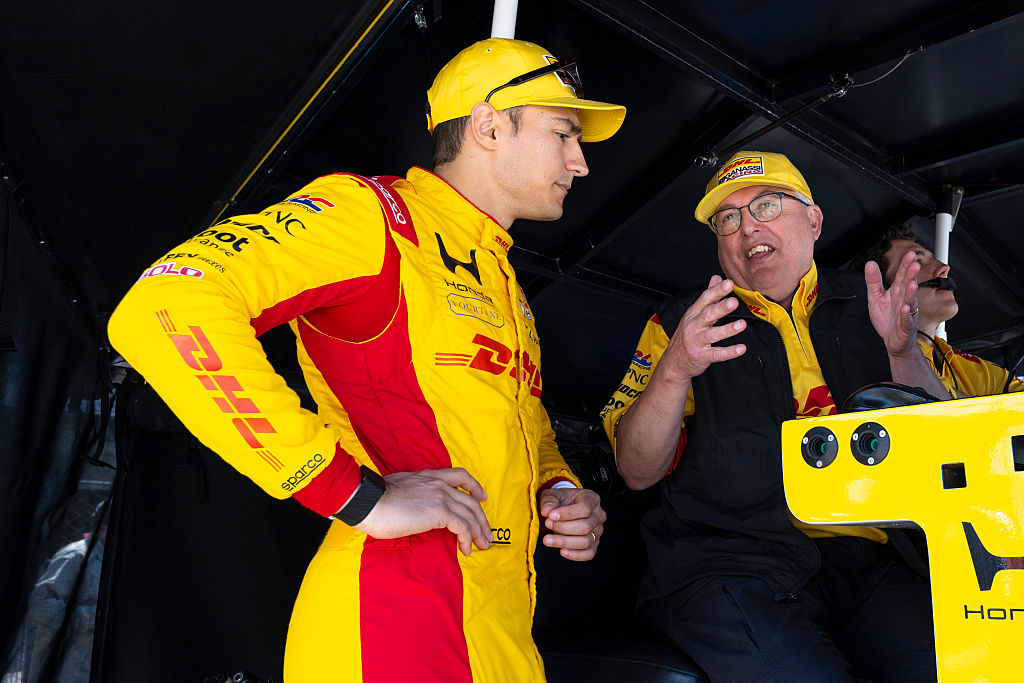
The relationship between de Ferran and Pagenaud has evolved tremendously from its beginnings when Pagenaud – left adrift by the collapse of Champ Car at the end of his rookie year with Team Australia – found a home with de Ferran's LMP2 team in the ALMS for 2008 (pictured). de Ferran's philosophical approach to the sport meshed well with Pagenaud's naturally analytical bent, and the Brazilian's role as Pagenaud's boss rapidly evolved into that of a mentor.
"Gil is such a big part of my success, because he is the one that really molded me into who I am now as a driver," Pagenaud says. "He taught me a lot of technical things on the racecars; lots of things about the mental aspect ... what I have been doing [this year] in qualifying is something we've been talking about a lot: how to find that level of concentration. He was able to do that, too; I've seen him do it when we were in sportscars, and I'm glad I got to his level.
"In life you need a mentor to help guide you through. You might have the right answer already, but you still might want to hear something else from someone else so you can think about it differently. And that's what Gil does. Everybody laughs every time I say it, but he is my Yoda."
From de Ferran's standpoint, Pagenaud's willingness to listen to different ideas in the hope of hitting on the one kernel of information that might help him to improve is one of the reasons for his success.
"It's great to see how Simon has been able to develop himself," he says. "He has obviously got a huge amount of natural talent, but one of the things that I admire about him – and I saw it early on – is that the Simon you see today is not necessarily the Simon you are going to see tomorrow. He is always perfecting his craft.
"It's interesting; I see a lot of kids saying, 'Oh, I'm really fast' ... OK, well, you've reached Level 1, and you've probably got another 10 levels to go before you can call yourself a true champion. Simon has constantly worked on his craft, and he has very few chinks in his armor right now. And I am sure that as years go by, his armor will continue to have fewer and fewer chinks."
Although the pair first worked together in 2008, Pagenaud had come to de Ferran's attention two years earlier when, in his first year of racing in the U.S., he beat a field that included such future stars as Graham Rahal (pictured, with Pagenaud) and James Hinchcliffe to win the 2006 Champ Car Atlantic title. That achievement alone convinced de Ferran eased any doubts about Pagenaud's fundamental talent when he recruited him in 2008, although he admits that at the time he didn't know his new charge particularly well on a personal level. Pagenaud clearly made a good impression on that front, too, because within a short time, de Ferran was grooming him as his successor.
"When I hired him I had an inkling that I might like him as a person, but quite frankly you never really know," de Ferran says. "But I was impressed, even just talking to him, with how analytical he seemed to be and how he went about his business.
"And frankly, I decided not to hold back. I opened myself up the best that I could, because I thought, 'What do I have to lose?' I had no great aspirations as a driver anymore. I still wanted to be competitive, but at the end of the day I was looking for someone to substitute for me; to allow me to retire once and for all. And it was my team, I needed somebody to lead the team, and he seemed like the perfect candidate if I could mold him in the right way."
Those succession plans were derailed when funding problems brought the de Ferran Motorsports ALMS program to a close at the end of 2009, but history suggests that de Ferran's investment in Pagenaud would have paid off: in 2010, the Frenchman moved to Highcroft Racing and won the championship with David Brabham.
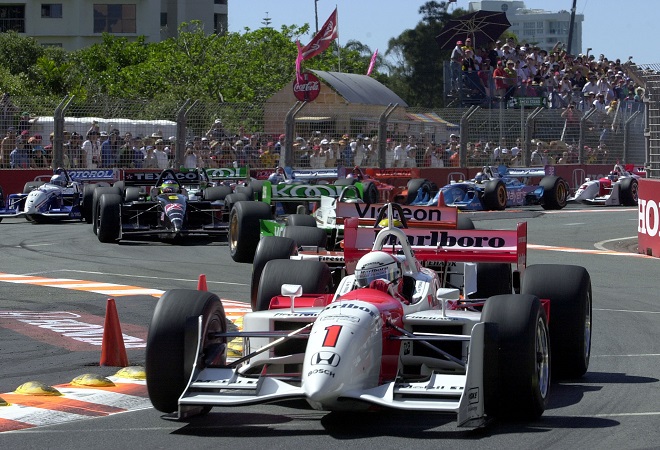
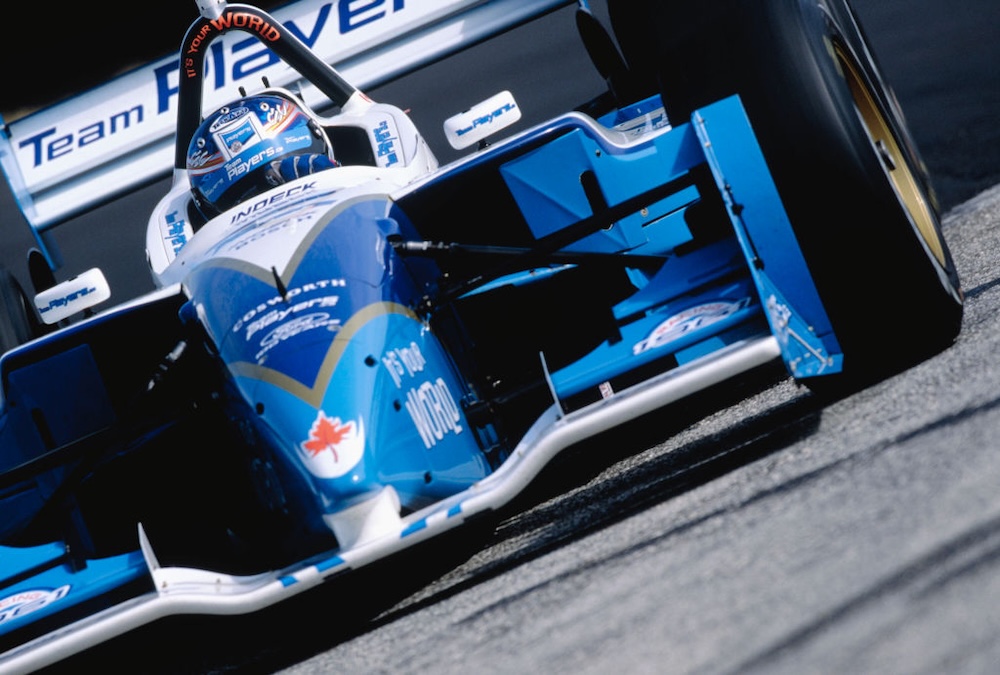
There's a "paying it forward" element to de Ferran's mentorship of Pagenaud. The 2003 Indy 500 winner and two-time CART champion with Team Penske (BELOW: leading at Surfers Paradise in 2001 en route to his second straight CART crown) believes that his own success was directly related to the influence of three figures at different stages of his career.
"Then when I went to Formula Fords in Brazil, the guy who was running me, 'Gigante,' was an ex-driver and an amazing person, and he really helped me a lot; he helped me understand racing, helped me understand competition, and helped me understand myself in many regards.
"And to top it off, how can you get a better mentor than Jackie Stewart (pictured with de Ferran in 1993)? He is a person who understands every aspect of the sport to the nth degree, and really understands the art of being a successful racing driver. So when I look back at how important that was in my development as a driver ... it was massive. Massive. There is no way on this planet that I would have accomplished half of what I did without having some of these key people in my life."
It's a safe bet that some of the lessons that de Ferran learned from Stewart concerned diplomacy and politics, which might explain why – mindful of his own Honda connections – he's coy about celebrating the Chevy-aligned Penske element to Pagenaud's 2016 achievement.
"It's no secret that I have a soft spot for Roger [Penske], and for the whole team," he says. "Those were probably some of the best years of my life, and certainly of my career. The Penske family really embraced me, and my family, when I became part of the team. And to this day, we have a great relationship. So despite my allegiance to Honda, it's hard to say that I'm upset when a Penske car wins a race. And this is a very emotional year, very important year for Roger – it's the 50th anniversary of the team, and it means a lot for Roger to win another championship.
"So Sonoma was an emotional day for me on some level. But when I put my Honda hat on... it would have been nice if Graham had won [the race]. And he was certainly very competitive. But seeing Simon win the race and the championship with Roger was nice. Very nice."
Emotional "on some level"? Pagenaud fills in the rest: "Gil was there partying with us that night..."
Presented by:

Latest News
Comments
Comments are disabled until you accept Social Networking Cookies. Update cookie preferences
If the dialog doesn't appear, ad-blockers are often the cause; try disabling yours or see our Social Features Support.