PWC: The Hammer Stilled
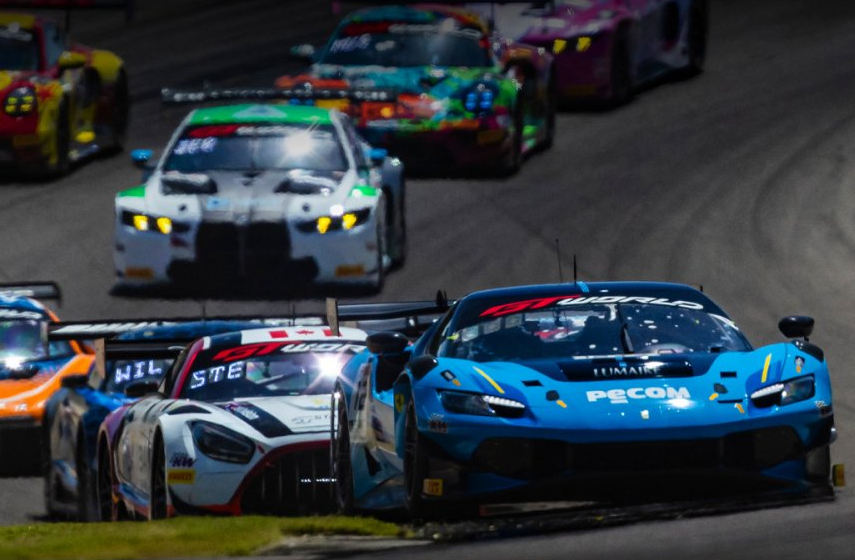
With GT3 standardization in Pirelli World Challenge and extensive testing to come up with a Balance of Performance formula, knee-jerk penalties are a thing of the past.
In the past in the Pirelli World Challenge Championships, domination by one or two makes would have brought some of the wrong kind of attention from the officials. REWARDS weight was always part of the equation, but officials could also make other changes, such as restrictors or ballast, to equalize competition if one car proved too much of a force.
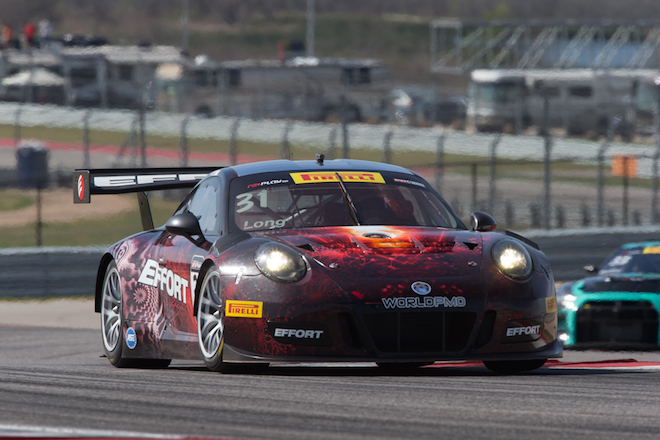
Take early this season, when the newest iteration of the Porsche 911 GT3 R won three of the first four races, with two different drivers (albeit from the same team, the now-dormant Effort Racing – Patrick Long and Michael Lewis) at tracks in two different SRO categories. That would have garnered the wrong kind of attention from officials.
Prior to Rounds 16 and 17 at Utah Motorsports Campus, Porsche now has five victories, equalled by the McLaren 650S's quintet of wins, all scored by McLaren factory driver Alvaro Parente (BELOW). Cadillac has three wins and outlier Acura – the only non-GT3-spec car in the series – two. Regardless of the reason, dominance would likely be met with some kind of performance penalty.
With the adoption of the GT3 formula and World Challenge's alignment with SRO, though, the hammer doesn't necessarily come down hard on a successful car or team the way it once did, no matter how much the competition may grouse.
"You'll always have people complaining about the unfair advantage," explained series Director of Competition Marcus Haselgrove earlier in the season. "But the way the testing structure is, before the GT3s are made, there's a very strict homologation process. After this is done, SRO introduced their own testing concept. They've used [Circuit] Paul Ricard since 2011, reference drivers, same test, same track, same time of year, same climatic conditions. From this we reverse engineer; there are rig tests, there's separate testing that goes on for specific parts. So you're standardizing everything to a Balance of Performance, regardless of team caliber or driver caliber."
Combining that testing with different formula for different types of tracks, from small twisty circuits to more flowing tracks with long straights, and the aim of a level playing field seems more attainable. The Balance of Performance equations certainly aren't perfect. One hitch that may account for Porsche's early dominance was the fact that it's a new car. Every car responds differently to adjustments, be it ballast, restrictors or boost changes. So in the first year of competition for a given car, the officials are still determining how to adjust it. A change may not go far enough, or too far, but every attempt at adjustment adds to the database of knowledge.
There are other reasons for strong performances beyond a car being too good. Long certainly knew the 911 GT3 R inside and out before the car's debut in competition, and likely passed much of that information on to his teammate. Parente also knows his McLaren, but he's new to the series and had a few adjustments to make.
The idea behind the current formula is to not have to take those things into account, that given equal drivers with equal knowledge of the car and circuit, any car should be able to win. The whole system may not be perfect, but it's more understandable and more complaint-proof. Then the teams and drivers can get on with what they want to do – win races without worrying about that hammer swinging down upon them.

Latest News

Comments
Comments are disabled until you accept Social Networking Cookies. Update cookie preferences
If the dialog doesn't appear, ad-blockers are often the cause; try disabling yours or see our Social Features Support.