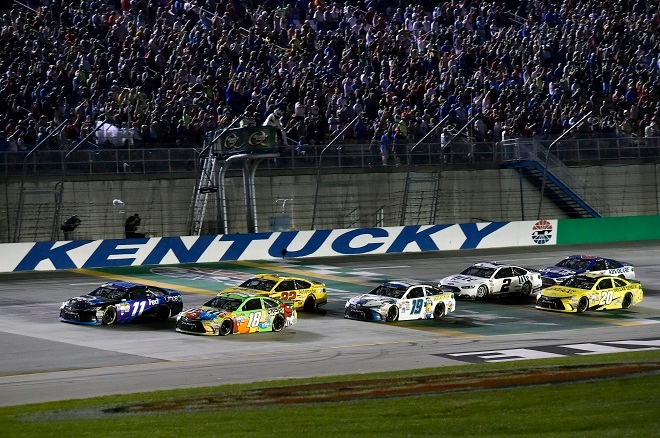
INSIGHT: Kentucky's 2015 race turned the tide
The moment is still too fresh to receive its proper context, but the Sprint Cup race at Kentucky Speedway last season might someday be looked upon as a major turning point in the broader history of NASCAR.
The status quo is awash in communication and collaboration between the drivers, owners and NASCAR, but that's a fairly new addition to the sport's overall landscape. Many of the featured elements present this season were born in the weeks leading up to and following the 2015 Quaker State 400.
For nearly a decade, NASCAR tacked on downforce to its competition package with the Car of Tomorrow and Gen-6. Despite staunch opposition from the Sprint Cup garage, the series went further in that direction, believing it was the key to unlocking a better on-track product.
The trend continued through the spring of 2015 when, at last, NASCAR officials caved and announced a two-race reduced downforce experiment at Kentucky and Darlington. The so-called "Kentucky Package" was the result of two separate meetings between NASCAR and a group of competitors that eventually became the drivers council.
That first race employing the reduced downforce package was a resounding success, with everyone in attendance raving about how it represented the future of the sport. After a popular follow-up at Darlington, NASCAR eventually instituted the aero settings as part of the 2016 rules package, something that would not have happened if NASCAR hadn't been as receptive to engaging in a stronger dialogue with the garage.
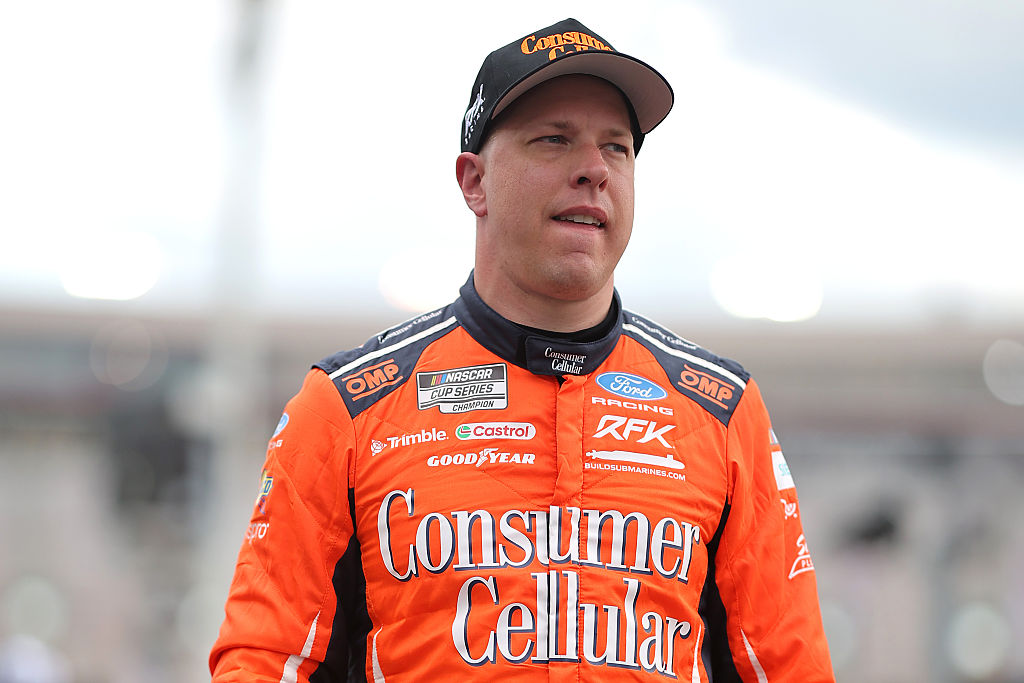
While everyone has continued to praise the product at the highest level this season, Brad Keselowski believes not enough recognition is given to what happened in the Bluegrass State last summer.
"I would say this race a year ago was a huge landmark for our sport that maybe goes a bit unnoticed," Keselowski said. "I say that in the sense that we had a collaborative effort for a rules package and we saw a significant increase, in my opinion, of the on-track product. And I think that showcased a lot of hope for our abilities to work together as a sport that has kind of created a wave of momentum that we're carrying today."
Compared to the previous dictator-like pronouncements that largely made autonomous decisions without always seeking the approval of the garage, the current level of collaboration is unprecedented. It has also produced results. Everything that was successful about Kentucky and Darlington last season has carried over to 2016 with NASCAR taking more downforce off for another two-race experiment this season at Michigan and Kentucky.
This has been one of the most entertaining seasons of recent memory and Scott Miller, NASCAR's senior vice president of competition, says it's a direct byproduct of the increased collaboration between all sectors of the industry.
"A collaborative spirit across the industry has been a major factor this season," Miller said. "From rules package development to the various forums involving drivers, teams, manufacturers and partners, there is definitely positive momentum fueled by genuine collective effort."
And it all started last summer, this weekend, at Kentucky.
"NASCAR has done a really great job at responding to that weekend and implementing a lot of that stuff for this season," Carl Edwards added. "After some of these races, it's got a whole different feel for it. It really has been a good time and there have been great races.
"I would agree with what Brad said, the collaboration has been amazing. It's made all of us stop and realize that we can go talk to NASCAR if we have a gripe or we can talk to a council member and it gets discussed. I think at the end of the day the fans are the ones that benefits. That's pretty dang cool."

Latest News
Comments
Comments are disabled until you accept Social Networking Cookies. Update cookie preferences
If the dialog doesn't appear, ad-blockers are often the cause; try disabling yours or see our Social Features Support.