LM24: Lotterer loving Audi’s extra megajoules
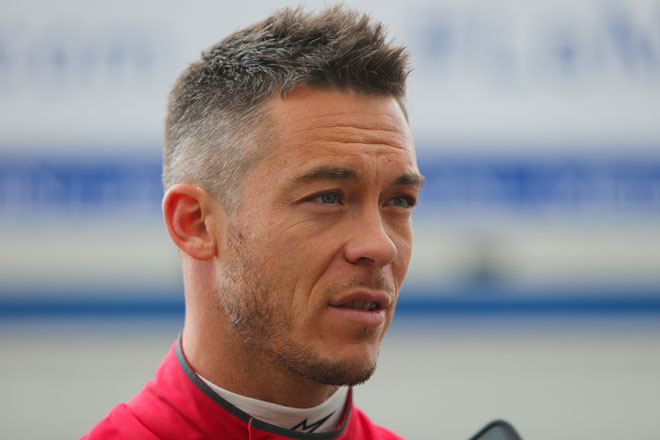
Audi's progression up the megajoule scale has provided three-time Le Mans winner Andre Lotterer with a healthy appreciation for how far the German marque's R18 models have come since its first energy recovery system was deployed.
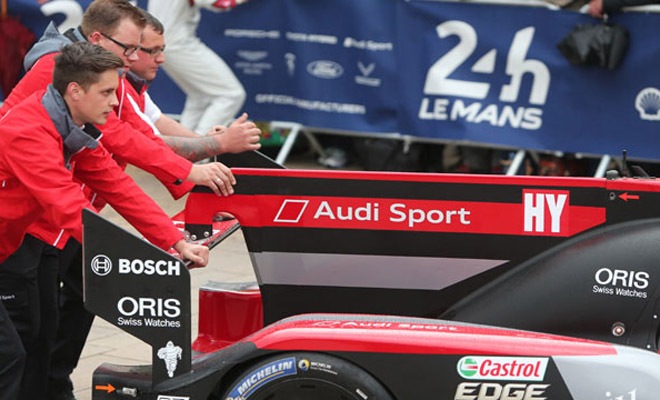
2013's R18 e-tron quattro featured a 2 megajoule system – the lowest output allowed for hybrid LMP1s – and that 2 MJ unit used a flywheel-based energy storage and release device. Even with only 2MJ at its disposal, the powerful, torquey Audi V6 turbodiesel more than compensated for the lack of ERS boost in 2013; the R18 captured a win at Le Mans and the WEC title.
The 2MJ/flywheel system was carried over to the revised R18 in 2014, but the lack of ERS assistance became obvious at Toyota and its 6MJ system ran away with the WEC title. At Le Mans, however, the R18 still delivered. A move to 4MJ with the same flywheel system followed in 2015, but with Toyota at 6MJ and Porsche at 8MJ, the gap became especially noticeable.
The German brand set its sights on an all-new 6MJ system for 2016 to keep pace with its rivals, and finally abandoned the flywheel unit for a harder-hitting battery storage and deployment solution.
INSIGHT: The 1000hp monsters of Le Mans
Lotterer is also loving the traction provided by 6MJ spinning the R18's front wheels while its 4.0-liter turbodiesel engine goes mad on the rears.
"The four-wheel-drive is insane... I think the R18 must be the quickest car out of the corners in the world... It's such a nice thing. It's also a good challenge to work with the engineers, to fine-tune such a beast," he added.
Related Stories
Audi teammate Oliver Jarvis also credits the move from the flywheel to a battery for the spike in accelerative forces.
"One of the limitations with the flywheel system is you had power [but it couldn't] deliver at once, whereas with the battery system, it delivers much more power initially, as soon as we get on the throttle. That means it is much more of a boost sensation," Jarvis said.
As he describes the battery's energy release, it almost sounds like more than the chassis can handle.
"It's not a negative, but something you have to be very careful with not to waste that boost," he continued. "It upsets the car balance, for example. There's no point in boosting early in the corner; you can create understeer. It's not as simple as getting on the throttle, 100% power, because it just wouldn't make sense, it would unsettle the car.
"In certain corners we reduce the torque, therefore we boost for longer periods. Other corners, where the car is slower and straighter we might boost 100% torque for a shorter amount of time. There's a lot of fine-tuning that goes in. It is about sitting with your car crew, sitting with the engineers and really making them fine-tune the key things that make a difference."
Asked if he would like to sample the R18 without any power or fuel restrictions in the engine bay, and maximum ERS deployment on demand, Lotterer flashed a big smile and nodded.
"That would be really crazy, and I think we will pretty quickly reach our physical limits," he said. "Maybe it would be fun to see what separates the men from the boys."

Latest News
Comments
Comments are disabled until you accept Social Networking Cookies. Update cookie preferences
If the dialog doesn't appear, ad-blockers are often the cause; try disabling yours or see our Social Features Support.