MILLER: Dispirit of competition
When the dirt car brigade got its first glimpse of Bill Vukovich and Jim Travers' roadster in 1952, they may not have winced, but they should have.
When Colin Chapman and Jimmy Clark rolled out their Lotus in 1963, all the guys driving roadsters lit up another cigarette and said a prayer.
When Parnelli Jones whooshed down the straightaway in Andy Granatelli's turbine (BELOW) in 1967, all the air went out of Gasoline Alley.
When Bobby Unser annihilated the track record in 1972 by 17mph in Dan Gurney's Eagle, aerodynamics replaced old-school mechanics. In 1979, Jim Hall's ground-effects Chaparral with Al Unser even sent A.J. Foyt running back to the drawing board. And when Roger Penske ambushed USAC with his pushrod Mercedes engine in 1994, the rest of the IMS paddock should have waved the white flag before the green one ever fell.
Throughout the first 90-plus years of the Indianapolis 500, there usually was a driver, a team, a car, a tire or an engine with an advantage. An edge. A discovery. More horsepower. Trick suspension. Better airflow. Smarter weight distribution. More efficient wings. A secret set of shocks. A Gurney flap. Turbocharging an engine.
The heart and soul of the Indianapolis Motor Speedway had been innovation, taking a chance, trying to outsmart the competition and being rewarded for executing any or all of those things.
It was the greatest spectacle in thinking as much as it was racing.
But those days are long gone, replaced by spec cars that have no pizzazz, no distinguishing characteristics and no room for a fresh idea.
Of course, the upside is that for the past four years, IndyCar has featured the best racing on four wheels and spread the wealth in that a talented driver and engineer with good pit stops could beat Ganassi or Penske almost any time.
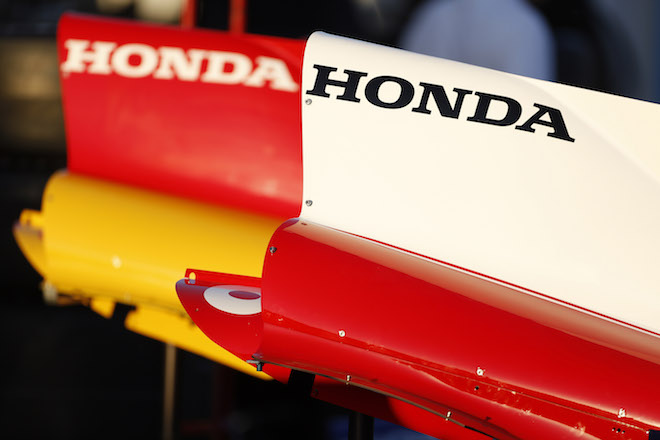
A year ago, to break the monotony and supposedly give Honda and Chevrolet an identity, aero kits were introduced. The Bowtie Boys dominated by winning every pole, leading most of the laps and running 1-2-3 in the Verizon IndyCar Series championship.
IndyCar had a rule in case there was a beatdown that would allow the underperforming manufacturer – in this case, Honda - a chance over the winter to catch up. Two races into the 2016 season and it's pretty obvious they didn't.
So this brings us to our latest firestorm. After Phoenix, Honda professed to be 30 to 40 horsepower behind Chevrolet. After this week's two-day test at IMS, Honda correctly accused Chevy of sandbagging so as to maintain its aero advantage. It's a lot of technical mumbo-jumbo that Marshall Pruett can explain another time.
Anyway, politicking by drivers, teams and manufacturers for relief or to keep their edge isn't anything new – it's the spirit of competition that's changed. It has been replaced by the balance of performance. NASCAR and sportscars have done it forever, but never IndyCar, except for trying to use boost to keep things closer at Indy and last year's introduction of Rule 9.3.
In the '90s if you owned a Reynard and Lola was the hot ticket you either tried to improve your Reynard or bought a Lola. Firestone came in and throttled Goodyear but Michael Andretti, Paul Tracy and Gil de Ferran still managed to win races with an inferior tire. Honda crushed Toyota in the early going until the latter spent more money, bought some big teams and improved its engine.
The point being is that one of racing's fundamentals was doing whatever it took to gain an advantage. And while people might have felt sorry for you if you had the wrong package, well tough, you lived with it and rode it out. Think anybody felt sorry for The Captain after he missed the show in 1995?
It was the essence of competition: doing a better job.
"People can bitch and moan all they want, but most of us have been in situations where we were at a disadvantage," said four-time IndyCar champ Scott Dixon, who drives the No. 9 Target Chevy. "I had a Toyota and we sucked. ... We had to fight like hell to get a top 10. But that's racing, and Chevrolet has done a great job."
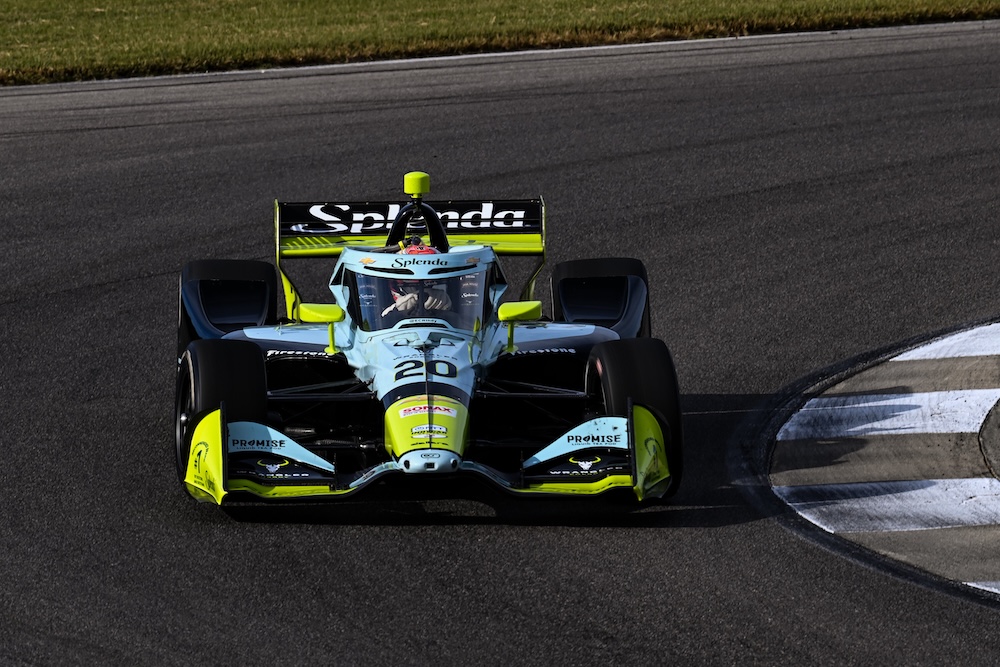
"A lot of people thought I was complaining when I said we were at a bit of a disadvantage but it's a fact right now," said Graham Rahal (BELOW), who was Honda's meal ticket in the Steak 'n Shake Special last season. "But I'm a firm believer if somebody outworks you and does a better job, then they deserve to win and shouldn't be pulled back.
"In my experience racing IMSA it drove me crazy. One minute the BMWs I was driving would be winning and the next minute the guy who sandbagged the best would win. I hate those games. I want to see it all out there and whoever does best job wins.
"I think our aero kit is better than last year's and Honda has a new engine we haven't started using yet so hopefully Phoenix was the worst we're going to see of it. Our little team hasn't been to the wind tunnel yet so hopefully we can make up some ground there and Honda's new engine will be better. I don't want to waste years of my career where we can't win but I think we can win this year."
But here's the conundrum. Unlike the old days when teams and manufacturers could reinvent or replace parts all season, the rules are pretty much frozen. Honda's got some smart people on its teams, but they aren't allowed to touch the cars to try and improve performance.
In the effort to contain costs, the ability to react to your shortcomings is stifled.
On the flip side, this isn't like CART's heyday when it had four engine manufacturers or Indy's golden era when anyone could – and did – build a motor. Sponsors are tough to find and tougher to keep, and Honda's teams can't afford to be the last 11 on the grid every race. Honda has been a great partner, and IndyCar can't afford to lose them because there's nobody waiting in the wings.
It's a slippery slope, and IndyCar needs to make some critical decisions going forward.
"I respect Indy and its traditions, but I think we had great racing and the best on-track show from 2012-'14 before the aero kits and now we're moving towards splitting the field," said Ryan Hunter-Reay, the 2013 IndyCar champ and 2014 Indy 500 winner who wheels the DHL Honda for Andretti Autosport.
Ed Carpenter, who won the pole at Indy in 2013 and 2014 with his little Fuzzy's Chevy team, thinks the dome skids are a good idea, doesn't care if the downforce-helping strakes are mandatory or optional and is tired of all of lobbying and politicking.
"You can't ask the teams what the difference will be because we'll all lie," Carpenter said with a grin. "IndyCar has hired people to make decisions and they'll decide what the racing will be and they'll manage it, and we need to shut up and race."
Somewhere along the way, IndyCar lost its competitive compass and the everybody-deserves-a-trophy mentality replaced "run what ya brung" and "may the best man win."
It's a sign of the times and a reality of the economy of racing, but it still begs the question: Is Indianapolis about having the best mousetrap or balancing performance so nobody gets their feelings hurt?
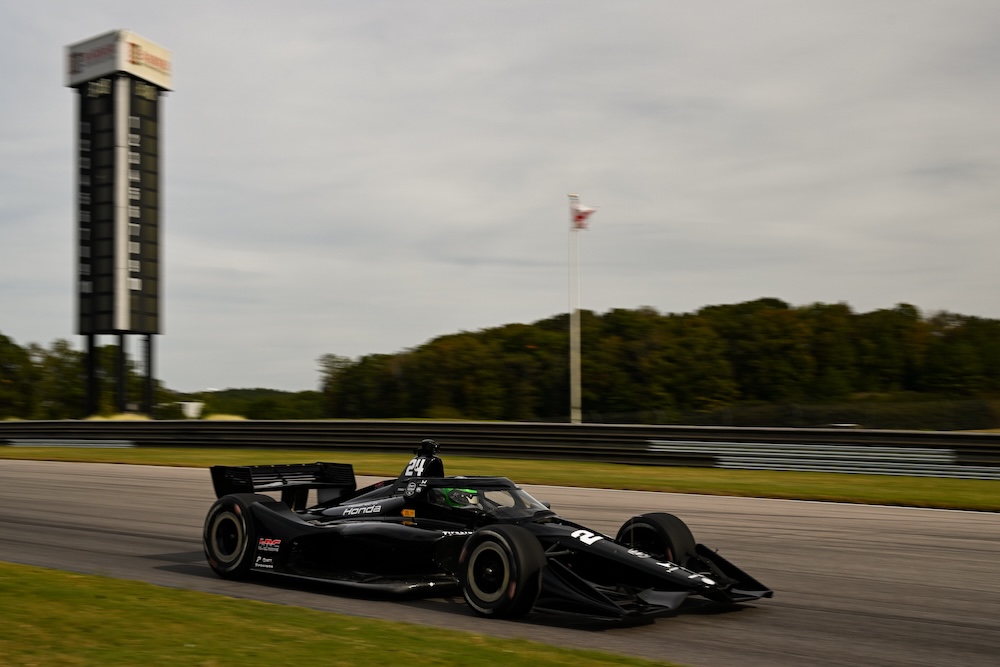
Unless IndyCar gets rid of the aero kits next month, it's likely going to be another Little Bighorn by the Bowtie Brigade, and that's not fair to RHR, Rahal, Andretti, James Hinchcliffe, Takuma Sato, Conor Daly and the rest of Honda's lineup. But who ever said racing was supposed to be fair?
It's certainly not fair for Chevrolet to lose its advantage – it's racing, dammit.

Latest News
Comments
Comments are disabled until you accept Social Networking Cookies. Update cookie preferences
If the dialog doesn't appear, ad-blockers are often the cause; try disabling yours or see our Social Features Support.