F1. Cancer. IndyCar? Dean Stoneman's remarkable fight
New Andretti Autosport Indy Lights arrival Dean Stoneman has no hesitation when asked about the best day of his motorsport life: Tuesday, 16 November, 2010.
On that day, the Brit was at Abu Dhabi's Yas Marina circuit testing a Williams F1 car; his prize for seeing off Jolyon Palmer in the battle for the FIA Formula 2 championship (BELOW). The test went well. Stoneman completed the program set out for him by Williams, and by the end of the afternoon he was less than 0.1s down on Esteban Gutierrez's Sauber, and fifth-fastest overall.
Stoneman's performance attracted attention in the right places. Williams's Patrick Head said afterwards that the team was following Stoneman's progress "very closely", and Stoneman suggests that the gears to get him onto the F1 grid were already turning. "We were in talks with a team about a race seat for 2011," he says. "We were very close, but obviously very far as well."
The worst day of his life followed less than two months later. That's when Stoneman, then aged 20, was diagnosed with an aggressive testicular cancer that he was told would probably kill him.
He hadn't felt well for a while; for 18 months in fact. The whole time that he was winning the Formula 2 title (six wins and seven podiums from 18 races), and lapping Abu Dhabi in an F1 car, he was trying to get to the bottom of an annoying array of seemingly unrelated symptoms.
"I just didn't feel right," he says. "I had all these side effects – spots on my back, heartburn, sore nipples, and then it was pains in my stomach. Which turned out to be a tumor that was getting bigger and bigger.
"When I got diagnosed, it had spread from my right testicle through my liver, lungs, chest and brain. The tumor in my stomach was blocking the aorta, the main blood supply to the legs."
His specialist rattled off some quick numbers. Stoneman was two hours away from losing his legs. Two days away from being untreatable. Seven days away from death.
"Then the specialist said, "I've never done same-day chemotherapy in 35 years, but you're coming with me'," Stoneman recalls. "He gave my Dad a cancer leaflet, and 45 minutes later I was on chemo.
"But before they put me on chemo ... one lump in my stomach was blocking my kidney, so they cut my back open first then went through my kidney into my bladder to free the kidney up before they could put me onto chemo. And there wasn't time to put me to sleep; they just did it. Right before they did, they told me, 'you have a 35 percent survival chance if we treat you now'."
Stoneman's cancer was a choriocarcinoma, and one of its particularly nasty traits is that it doesn't create any symptoms in its immediate area. It's also inherently resistant to drugs, and the prognosis for patients diagnosed with it is poor. There were no lumps or any other of the traditional tell-tale signs. It just quietly spread through his body.
Racing, which had been all-consuming for Stoneman just a few weeks earlier, too an immediate back seat.
"When I got diagnosed, the doctor said, 'the chances of you driving a race car again are zero'," Stoneman says.
"I didn't really think about racing, I just tried to enjoy myself and keep a certain mindset; have fun going out and keeping my mind off the illness. You can just sit there and dwell on it and it will eat you alive and you'll make it worse. So I did everything I could to go out, have fun and keep my mind occupied. I was really just focused on getting well."
Stoneman believes that he'd be a Formula 1 driver now had cancer not intervened, and when you consider his contemporaries – guys like Daniel Ricciardo, Jules Bianchi, Pastor Maldonado, Sergio Perez, Gutierrez, Palmer – it's not an unreasonable conviction to hold.
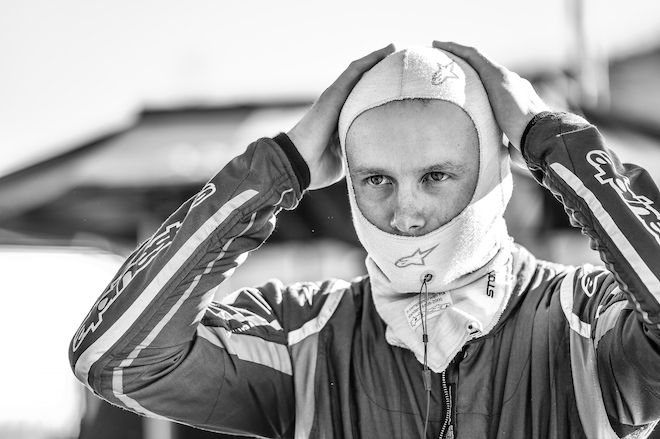
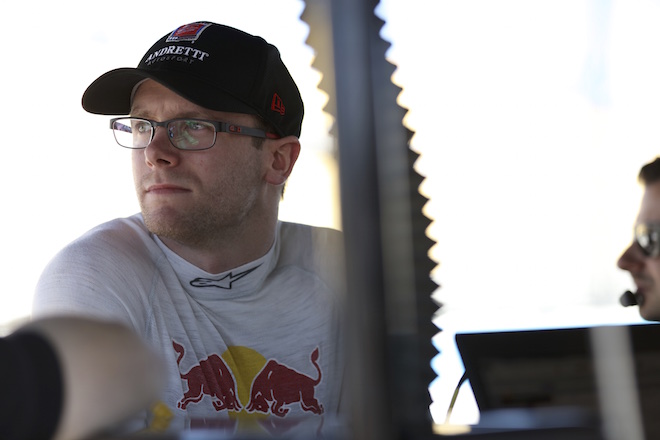
He views the hand that fate dealt him with the same pragmatism as he does everything else – no outward hints of bitterness, just an acceptance that what happened, happened. If there's a streak of good fortune running through the whole thing, it's the fact that the physical conditioning that he'd developed ahead of his F1 test (ABOVE) also made it possible for him to tolerate a treatment program almost as aggressive as the cancer itself.
"My specialist said that if I wasn't as fit as I was, I'd have died," Stoneman says. "And if they'd given the level of medication that I got to an average 30-year-old, it would have killed them in hours. It was that strong. There are so many different side-effects that come from it, and that's what I have to control now. I've had side-effects ever since the chemotherapy. But there are different ways of dealing with it. It's the way you deal with it as a person – you have to adapt; do stuff differently. Your lifestyle changes. But you have to work around it."
"I said to him, 'what should I race?', and he said, 'have a go in a Porsche'. That was on a Saturday evening, and by Tuesday I was testing at Brands Hatch in a Porsche 997. It was that quick. Tim Harvey organized a test, and we raced the Porsche for the [2013 British Porsche Carrera Cup] season."
It's worth noting at this point that he didn't just race the Porsche – he won both races in his comeback weekend at Brands Hatch, and added another three wins over the rest of the year. That planted a seed.
"At the end of 2013 I was in the gym and I turned to my fitness trainer and said, 'I need to get back into a single-seater' because I felt like I'd had something taken from me that I'd never been able to finish," he says.
"So that was why I ended up getting back into open-wheelers. I went to [GP3 team] Korainen for the last round of the [2013] season, and the first time in the car at Abu Dhabi ... to be honest, I wasn't 100 percent in the car. Well I'm not 100 percent now, but I was 70 or 80 percent physically at the time, and got in the car and managed to finish second. And that was my first time in a GP3 car. So it was really good to know that I still had the speed and the ability to do that.
"We decided to do GP3 the following season, which was a good year – we had five wins despite changing teams from Manor Marussia (LEFT) to Korainen for the last two rounds, and took two wins and a second from those last four races."
That led to an invitation to join the Red Bull Junior program and a deal to race in Formula Renault 3.5 with DAMS in 2015 (BELOW), an experience that he describes as valuable even if the results – four podiums, sixth in the points - were not what he'd hoped.
"To go and do that with Red Bull and see how they operate was really interesting and I really enjoyed it," he says. "It was a challenging season; unfortunately we had a lot of bad luck toward the end of the year."
Stoneman found himself in a familiar position: the next logical step was F1; the budget required to make that step was otherworldly. GP2 was not a consideration – that's also expensive, with little guarantee of any return on your investment even if you do well.
"Look at [runaway 2015 GP2 champion] Stoffell Vandoorne," says Stoneman. "He did a great job in GP2 last year and he still can't get an F1 drive. I'm sure his opportunity will come, but it just shows how difficult it is to get there if you haven't got the budget."
Lately, the U.S. racing scene has been cast as the proverbial Plan B for Europeans whose Formula 1 dreams didn't pan out, and at first glance it would be easy to put Stoneman into the same category.
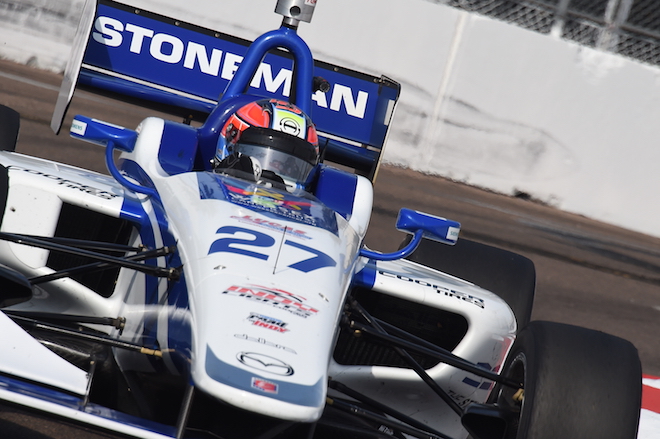
And to a point, that would be fair. But while Stoneman has only now made the move across the Atlantic, it's equally true that America has been on Stoneman's radar for some time. He actually first looked at Lights in 2012 and went as far as testing with Andretti back then, although he believes that in retrospect he tried to do too much too soon.
"It was after my cancer, and I wasn't physically fit enough to do it," he says. "I got in the car to see where I was, but I wasn't physically fit enough and I didn't want to put myself in that position. But after I had my comeback and raced the Porsche in 2013, I had the opportunity to go down the Formula 1 route again, so I had to try that again. So we've been looking at America since 2012, but because we had that opportunity to try to get to the top again, within the European series leading to Formula 1, we had to try that. And then because the circumstances have changed, we've decided that it's time to jump to America.
"The aim now is IndyCar. I've always wanted to do the Indy 500, so to come to America now and start racing Indy Lights is exciting. I feel like I can do a good job this year and I'll be giving it everything I can top win the championship. I'm with a great team in Andretti, it's got a great pedigree. Hopefully it opens some doors for next year."

Latest News


Comments
Comments are disabled until you accept Social Networking Cookies. Update cookie preferences
If the dialog doesn't appear, ad-blockers are often the cause; try disabling yours or see our Social Features Support.