IMSA: 2017 Daytona Prototype international update
RACER met with IMSA vice president of competition Simon Hodgson and IMSA's 2017 Daytona Prototype international project manager Mark Raffauf to discuss the WeatherTech SportsCar Championship's upcoming formula change in its marquee Prototype class.
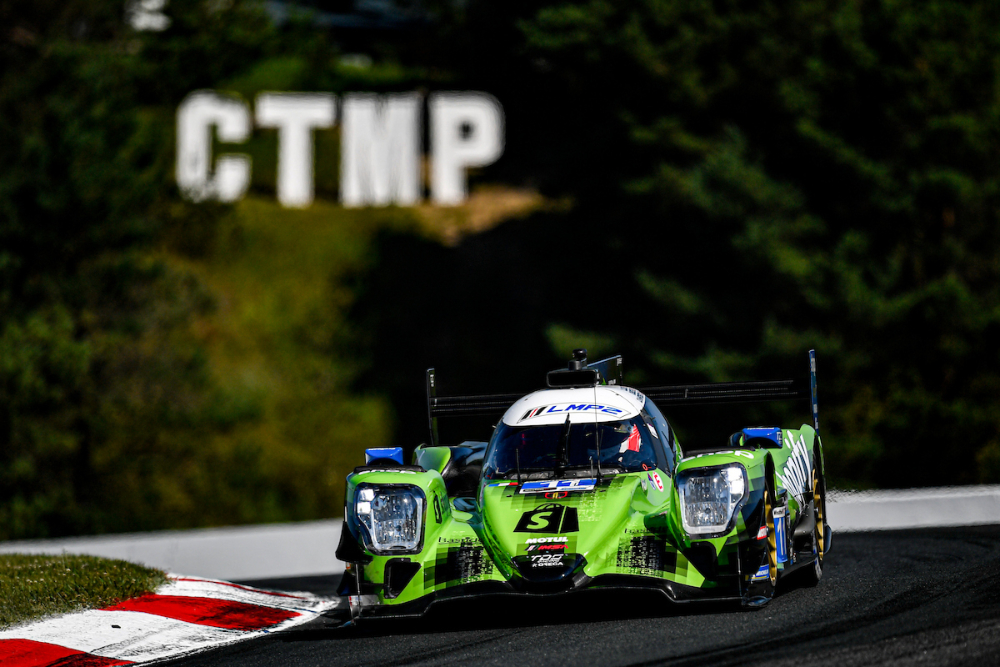
IMSA and the FIA WEC will head in different directions with the 2017 P2 formula: In the WEC, four chassis constructors (Dallara, Onroak, ORECA, and Riley-Multimatic) will supply cars using a spec V8 motor from specialist engine builder Gibson as the European series bars auto manufacturers from its second-tier prototype class. IMSA's approach, using those same four chassis options, embraces manufacturers supplying custom engines and bodywork under the DPi moniker, welcomes independent teams wanting to use a spec Gibson-powered WEC P2, and will allow teams with 2015-'16 P2 coupes to use those cars for 2017 under a one-year grandfather clause.
From the two sanctioning bodies, IMSA has a ton of work to complete as it liaises with DPi manufacturers (who've yet to publically announce their respective P2-based 2017 programs), and according to Raffauf, the four constructors and the manufacturers they're linked with have all the rules and specifications needed to design and build cars.
"On the IMSA front there are two distinct paths here," Raffauf said. "There's the LMP2 car, which is the WEC car, and then there's the DPi version, which is the IMSA's branch off that tree for the application here. Where we are with the chosen constructors on the DPi project, is they are very clear on everything they need to know to proceed on the projects, which has been ongoing since the fall for a number of potential clients. I'm not going to say who they are and who is hooked up with who.
"On that side, we're pretty comfortable with the basic car regulations, though not finalized by the FIA; I was just [in France] Monday for another meeting on the detail stuff. But the basic parameters of the car the constructors need to know to produce a DPi car are pretty much set, fixed, in their hands, and they know what it is and they know if there are questions, who to ask about what, whether it's aerodynamics or installations.
"That's the state we are in. [Constructors can] physically create models of the componentry they're going to use on the common car. The common [WEC P2] car is still a common car, identical in every regard to the four cars that will be homologated as LMP2 cars with the Gibson engine in it.
"On the other side, there are still a lot of details, hence the meeting [this week] and another one coming up in May that are, from my experience, the types of details you have as you are working towards a final set of regulations.How are you going to word what you want to have come out in the end?"
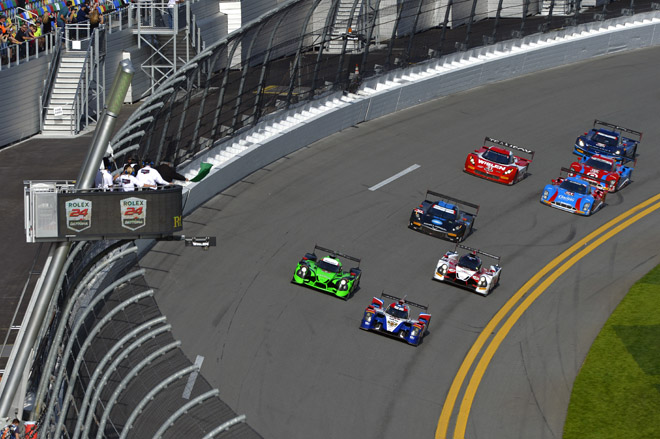
Raffauf says everything is in place for IMSA's DPi formula to make a successful launch in 2017 and grow in the years ahead.
"I think the IMSA side is pretty solid," he continued. "I don't see anybody jumping up and going, 'I don't know what I need to do this.' No roadblocks, no issues, no politics; we are past all that. It's a constant dialogue now between interested parties. There are U.S.-based privateers that want to run a Gibson-powered car here, and there are Europeans that will probably do the same.
"And there's a lot of dialogue obviously with potential manufacturers. Some are well down the path, some on the path, some looking at the path, but again we are looking at this as a five-year process starting this year, through 2020 and hopefully beyond. We are pretty comfortable that the response is positive enough that this has a generational life span of some time."
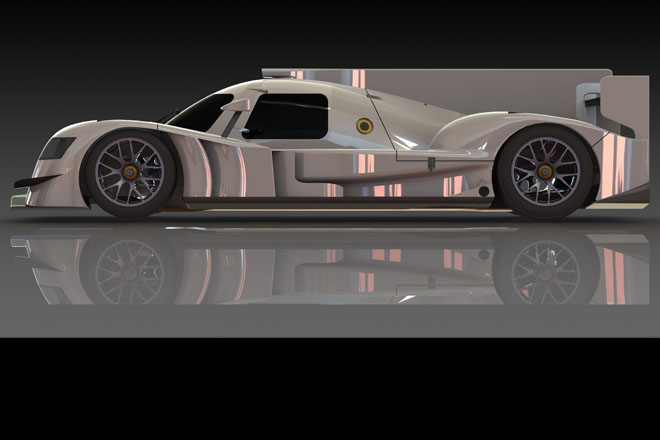
Unlike the current Daytona Prototype formula where engine suppliers are not required to fit cars with bespoke body panels, IMSA is requiring DPi manufacturers to supply engines and custom bodywork with every chassis. Asked if the series is enforcing minimum styling requirements on those bodies, or if the level of individual branding has been left to the manufacturers, Raffauf says the designs he's seen are highly developed.
"Most, if not all, of what is going on now is pretty [expansive], because if you're going to make that commitment, you want it to represent your brand entirely," he remarked. "It would be way easier to get a Gibson-powered [WEC] car and put your name on it three feet high. As far as putting an engine in one of these [DPis], there has been some movement in certain areas to fit the variety of things I think we will see. Everything from large normally aspirated [engines] to small turbos with different cooling needs, different exhaust exits, things like that, (will influence body design).
"Our process is very clearly outlined and really detailed here aerodynamically; we skipped over the CFD and went right to a 40-percent [scale] model, where we can run the pieces made by whoever makes it, whether it is an LMP2 car or whether it is a [DPi] car.
"So we can actually do some pretty significant testing at that scale that will make the step to full scale much more accurate. Then every car will go to Windshear and do a full scale test before it goes on the racetrack. That process, I think, says it doesn't really make a lot of sense to do just a headlight/taillight styling treatment. If you're going to do [custom bodywork], do it."
With multiple manufacturers working from the same aero regulations, IMSA's DPi bodywork could go in the direction IndyCar's aero kits have evolved where those kits from Chevy and Honda look nearly identical. Raffauf believes IMSA's DPi manufacturers will not suffer from the same problems.
"I think the key thing is that the cockpit and the engine cover fin is fixed, so every one of them are going to have that shape, whether we like it or not," he said. "What you can do on the sides and in the front is probably more diverse than what you would do in an open-wheel car, because it is fully enclosed, and you have the opportunity to put higher sidepods and different nose treatments on the car without sacrificing a lot of performance.
"In other words, [making styling changes] is not going to change the aero because the aero is dictated by the splitter, the floor, the diffuser, and the wing and the shape of the cockpit and the fin. The sides of the car, the front of the car and the tail of the car have a bit more latitude than you would have on an open-wheel concept."
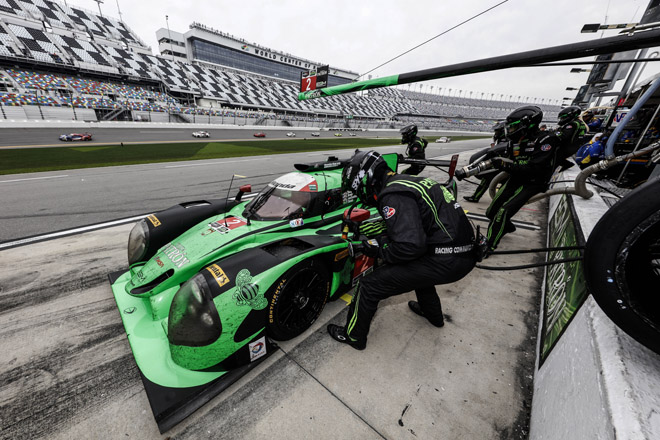
"There's going to be some form or some line of functionality where if the delta gets too far away in the process leading up to it we're going to go, we can say, 'Guys, you're kind of out-of-the-box,'" Raffauf continued. "We have identified an aero box, and if you fall in there you are good to go because we will give you the tools to move within that box. But if you're way out on either side, you're not going to be able to make it.
"We have steps in the process to point that out to say, 'You need to get a little more functionality on this or that.' But I think we've identified the key elements of the car that are sensitive to the performance and I think those are fairly fixed for everybody. So I think the deltas will be manageable. I think there is [design] latitude and I think you'll see some differences.
In other words, it allows them to achieve their branding goal without sacrificing the performance. When you see what we have seen, it is unmistakable what that brand is."
Hodgson added: "From the interest that we have had, and from what has been shown to us, it is exactly what we expected and what we hoped for with some diversity and some identity."
Raffauf and Hodgson have an anticipated schedule of 2017 DPi activities in the works for later this year.
"We have three blocks of time of Windshear for the full-scale car tests," Raffauf said. "The first one is as early as September. There is already one [manufacturer] scheduled for then. We have a normal fall series-wide test in November. We have an additional December test for these cars exclusively.
"It's a lot of moving parts, but I believe by mid- to late-summer it is highly likely some of these cars will be on the ground running. Maybe not in their final configuration, but at least running systems checks. They would still have time then to change things because they don't need to go to the tunnel.
"In December, we have the last opportunity to do a full-scale tunnel test and on track close together within a week, pretty much focused on these cars alone and not the rest of the series. That would really be the point in time where the last changes or adjustments could still be done."
DPi manufacturers and teams will have the chance to do all the testing they need as the first race of 2017 nears.
"I think the sooner they get on the ground running, the better, and that means the longer they get to test," Raffauf said. "They are exempt from any testing regulations here because it is a new car. They could go and test, which we would obviously encourage. The more track time and the more run time they have the better that they will be by time we get to January. I think that's where we are at. It's fairly accurate that everybody is working hard to try to get their cars running by late summer."
IMSA anticipates a few manufacturers will appear in 2017 with new DPi cars, and more could follow for 2018 and beyond.
"There's a number of interested parties obviously whose corporate cycle and budgeting and stuff doesn't necessarily jive with our [2017] calendar year," he explained. "Again, by looking at this, it could be 2018, it could be 2019. We have a process that we think will work [for manufacturers wanting to come in for] the middle of 2017, the end of 2017, the beginning of 2018, the beginning of 2019, and the beginning of 2020. It will be the same process. So there's no advantage or disadvantage other than getting your stuff out on the racetrack as soon as you can."

Latest News
Comments
Comments are disabled until you accept Social Networking Cookies. Update cookie preferences
If the dialog doesn't appear, ad-blockers are often the cause; try disabling yours or see our Social Features Support.