MILLER: Relaunching IndyCar at Phoenix
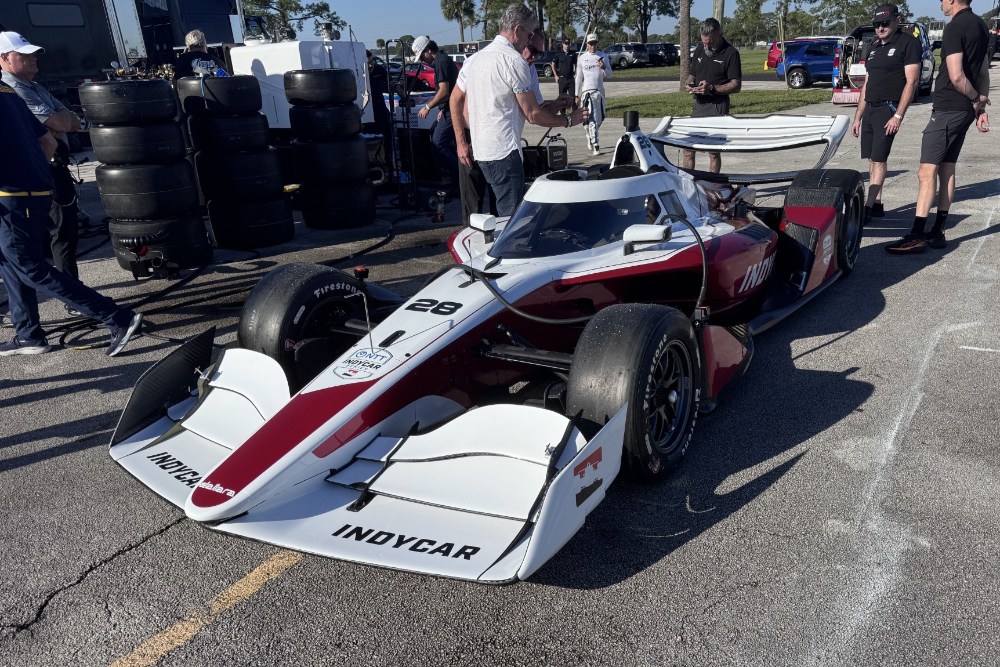
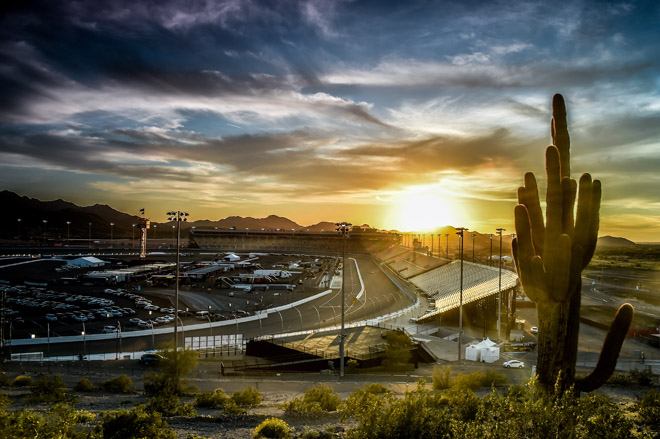
In 1995, the CART race at Phoenix International Raceway (LEFT, Marshall Pruett photo) was overflowing with paying customers and enthusiasm. Race personnel had to leave their hotel rooms by 7 a.m. just to get into the infield and avoid the traffic. Steve des George, the likeable and efficient PR man back then, said a record crowd of 60,000-plus was expected.
Fast forward to the IRL race in 2005. PIR was a ghost town as maybe 6,000 people ventured into the legendary oval that had been purposely built for USAC Indy cars in 1964. And half of them came to listen to Slash of Guns 'N Roses after the race.
That was the death knell for open-wheel racing on the one-mile oval that hosted Foyt, Mario, Parnelli, Ruby, Rutherford, Johncock, Sneva, Mosley, Mears and the Unsers. The Split in 1996 had divided and eroded the fan base and the track that featured the Jimmy Bryan Grandstand had now been replaced by NASCAR and the Jeff Gordon Grandstand.
It was a sad reality that this bastion of great racing for Indy cars for 45 years was now property of ISC twice a year and most of the younger NASCAR fans had no clue it had ever been anything but stock car territory.
But, thanks to the persistence of IndyCar's Jay Frye, the willingness of PIR's Bryan Sperber and their friendship, IndyCar is going to get another shot at resurrecting what was always a staple of open-wheel.
"Credit this to Jay," said Sperber (LEFT, ISC photo) during IndyCar's two-day test over the weekend in preparation for the April 2 return. "We've known each other for a long time and he called me and said to take a fresh look at having an IndyCar race.
"Now, you'll recall that ISC had a lot of IRL races and then we didn't have any. And we pretty much got dumped because the only date we were offered in 2006 was during August. Hmm, August in Phoenix, I can take a hint."
Frye invited Sperber and his people to the 2015 finale in Sonoma.
"I didn't know how we'd be treated and I was a little concerned we might get the cold shoulder," continued Sperber, who became PIR president in 2002. "But within seconds those fears were gone because the teams, drivers, sponsors and officials welcomed us with open arms.
"My team left there energized and said: 'OK, we've got to do this.'"
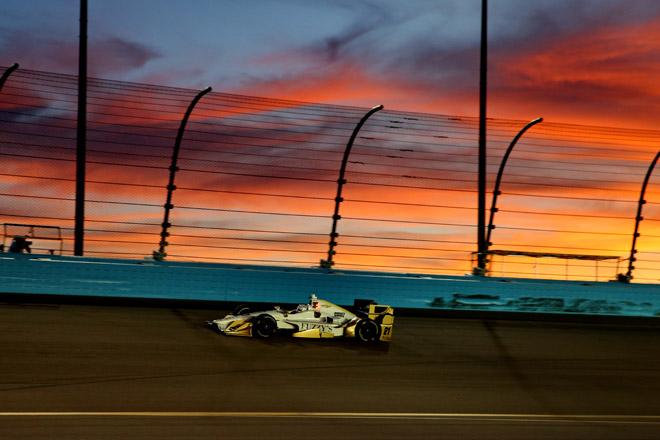
One of the attractions for PIR was a return to night racing.
"The Sprint Cup race at night was extremely popular with the fans and we wanted to bring big-time night racing back to Phoenix," continued Sperber, whose two Cup races now conform to NASCAR's early-afternoon starting times. "I think the fans want night racing and these cars will look amazing under the lights at the speeds they go."
Returning to a venue after an 11-year absence is challenging on many levels but calling it the 'Phoenix Grand Prix' might seem to be pretty confusing. "I think if we'd called it the Phoenix 200 it would have been confusing, because Valley race fans have only known NASCAR for the past 11 years, so I thought 'Grand Prix' would create a differentiation," responded Sperber when asked why he used the universal term for road courses and street circuits.
"A grand prix is a big event and it's different from NASCAR, because the drivers are more cosmopolitan and diverse and the crowd is more sophisticated, so we can maybe get the Scottsdale types that don't come to a stock car race."
The toughest sell is likely going to be the date, because the race is scheduled to take the green flag about the same time the ball goes up in one of the NCAA basketball semifinals. So pray Arizona and Arizona State don't make the Final Four.
But April was imperative and Sperber says: "You can't schedule in a vacuum. There are other players and stakeholders to consider and this was the date we chose."
Of course, other than Dave Allen and his people at Fontana, it always appeared that ISC went through the motions and didn't give the IRL much love, or publicity. But, from the press conference to announce the race to ads at NHL games to billboards to social media to the PIR website to printing 30,000 tickets for the test, Phoenix is treating IndyCar with a big-game promotion.
"We are spending the same amount of money to promote IndyCar that we do on NASCAR," said Sperber. "This thing came together late and everything is working against us and, sure, we'd like to make a ton of money but we don't expect it. We're not looking to take a check out of here – this is a partnership and we're committed for three years.
"We don't have a title sponsor yet but there is some interest, I would have loved to have a year to sell one. But we're doing OK on ticket sales."
Based on history and the current malaise towards ovals, if 20,000 people turned out it would be a major success and 15,000 might be considered damn good. There were more people at PIR on Saturday night than Fontana drew with its Saturday in June date last year.
And when you consider that Indy cars go 47 mph faster a lap than Jimmie Johnson's track record of 143 mph, it could bring out some curious NASCAR types or bring back some of those 60,000 that quit coming after 1995.
The most important element would appear to be Sperber's enthusiasm. He seems genuinely juiced about IndyCar and you know it probably wasn't an easy sell to his ISC bosses. But he spoke of a "partnership" with IndyCar, so one can imagine Frye made him a sweetheart deal and that's fine, because IndyCar belongs at PIR.
"This race has historical significance," says Sperber. "Can we re-establish this event for the long haul? That's our goal."

Latest News
Comments
Comments are disabled until you accept Social Networking Cookies. Update cookie preferences
If the dialog doesn't appear, ad-blockers are often the cause; try disabling yours or see our Social Features Support.