ROLEX 24: Saturday notebook 2016
IMSA's new standalone data monitoring system fitted to each car gives the series the ability to monitor real-time information through telemetry, and as some teams found during Friday morning's one-hour final practice, the WeatherTech Championship's "eye in the sky" is paying close attention to violations. Turbocharged cars in Prototype, GT Le Mans, and GT Daytona were on high alert as IMSA made constant calls for drivers to serve drive-through penalties for overboost violations. With such a large portion of today's 54-car grid comprised of turbo-powered cars, we could see penalties assessed for something other than the usual pit lane infractions or errant driving.
• On top of being alert for overboost penalties, watch for an increased number of cars being off the pace in the first few stints. Friday's session was the first sunny outing this month; the Roar was either wet or overcast and cold, and through Thursday, every session was wet or less than optimal. Friday's session started with drivers complaining about a dire lack of grip on the green track surface, but by the end of the hour, most were satisfied as rubber was put down. Put it all together, and other than the latter portion of the final track session prior to the race, teams have done very little running in the weather they'll face today and tomorrow. Optimizing chassis setup for this weekend's weather could, for some, require more extensive tweaks during pit stops than tire pressure adjustments or other fast changes.
• Wayne Taylor Racing finished third at the end of the 2015 Rolex 24 At Daytona, but a post-race drive-time infraction where IMSA determined one of its drivers failed the complete the minimum amount of time behind the wheel led to the No. 10 Corvette DP being moved to the bottom of the Prototype field. Of all the things the team wants to achieve this weekend, ensuring another drive-time penalty is avoided is at the top of the list.
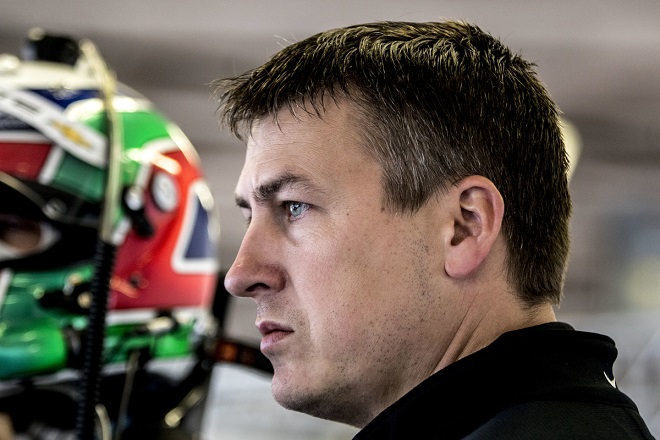
"Since our issue last year, the steps we've taken has involved putting in multiple checks and balances," he said. "We put in a monitoring system that is going to be watched by three engineers. And each of the three engineers also has a separate system that he will be running, so each individual will be communicating with each other to make sure there is no driver time missed. It involves software that they've written themselves – each one has their own and there will be one that they'll share, so there will be checks and balances between each person and each of the systems. So there's a redundancy for each system we have in place. There are different variations to how each engineer tracks the time, and there is a system by which everybody can track driver time.
"We also use IMSA's input, as well. IMSA sends out times for each driver when their stint official starts and stops, so we will go back and use this information. One of our partners has software that is now a part of this. Basically, once we receive information from IMSA Timing and Scoring, it goes into the systems we have developed. And then we have added a human element, so if any of the systems goes down, there is information manually entered onto a spreadsheet. This is now standard procedure for each and every race we run."
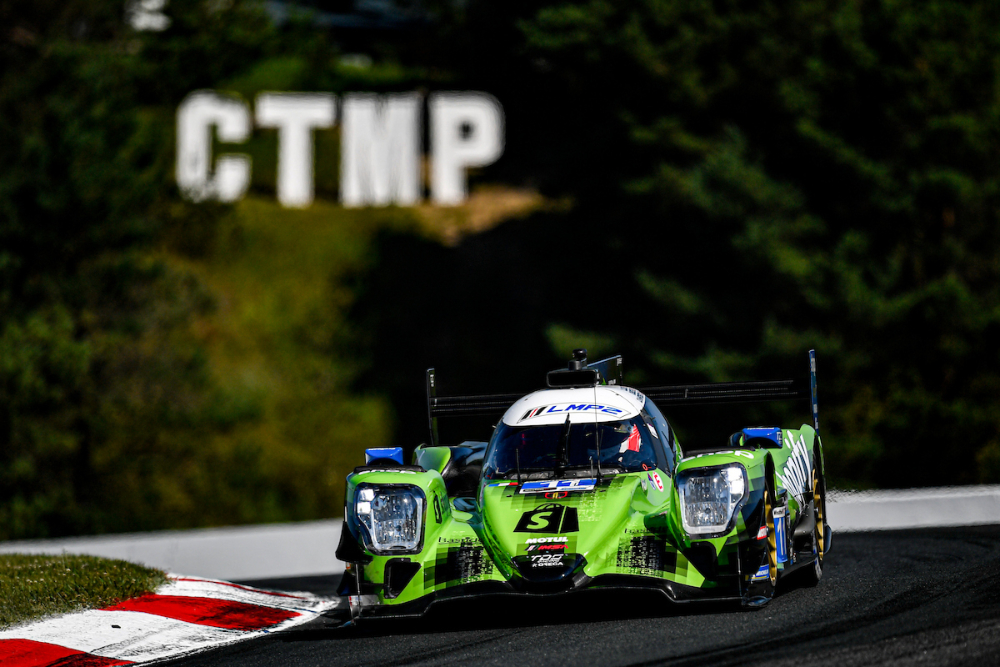
• It's worth mentioning the team with the highest top speed doesn't necessarily mean it's capable of turning the fastest lap, but it is interesting to look at the raw numbers that came out of Friday's dry session. More than 1000 individual laps were turned, and of the 1000-plus, P2s or the DeltaWing owned the top-28 laps in terms of highest top speeds. Tequila Patron ESM's Johannes van Overbeek led all cars with a 195.27mph blast through start/finish in his Ligier JS P2-Honda, followed by Olivier Pla in Michael Shank Racing's Ligier-Honda (194.342) and Katherine Legge in the DeltaWing DWC13 (192.967). The fastest DP trap speed belonged to Chip Ganassi Racing's Scott Dixon in the No. 02 Ford EcoBoost DP (191.612).
• Alex Job Racing's Shane van Gisbergen (TOP) is back for his third Rolex 24 At Daytona after earning more wins and vying for the 2015 V8 Supercars championship in Australia. The New Zealander says he enjoys his annual visit to America before the V8 season launches.
"I think there's a lot of reasons why it is fitting, but for me it's really good to come and do a race before my season starts and get so many laps in," he said. "I think the last two years I've done it have been pretty good, nice and consistent, no mistakes, and we all get along well together so it fits well. And we are all tall, so we just slide in and drive in the same position, so it is pretty easy in that respect too."
SvG is moving to a new V8 entry this year fielded by the dominant Triple 8 team, and welcomes the increased resources he'll have while partnering with Jamie Whincup and Craig Lowndes.
"I have been in there every single day looking at it and getting used to the new team," he added. "Yeah, it's all foreign but I have gone from a team of eight people to 60 something. A pretty big change. We also have two benchmark teammates. It is a proven outfit, but I don't have any expectations for it. My first drive in two weeks. We will see where that goes. The car I have had the last few years is made by that team, so it will be interesting to feel the difference from a satellite team to a factory one. With the Ford team going so well with four cars, you have to try and step up to compete so it was logical for [Triple 8] to get another car."
Indy Lights rookie Felix Rosenqvist blitzed the series' test earlier this week in Homestead
, and then drove north to partake in his first Rolex 24 At Daytona. The versatile 24-year-old, who is managed by countryman Stefan Johansson, said swapping a turbocharged Dallara IL15-Mazda open-wheel car for an ORECA FLM09-Chevy PC car (RIGHT) is something he'll learn to master in short order."As a racecar driver, you get used to jumping from one car to another," the 2015 FIA European F3 champion told RACER. "The last couple of years, I've spent all my time in a Formula 3 car so I'm quite happy to be able to jump back and forth. It's a good skill to have, if you can make that transition really quickly and I think it's working fine. But the Indy Lights car and the PC car are completely different. One is a formula car with more downforce and the other is a much heavier prototype car. But both have their charm! I'm planning to do a split program this year, doing two series at the same time, so I should get used to it."
Driving for Peter Baron's Starworks Motorsport IMSA team, Rosenqvist's PC experience will undergo a massive spike once the race starts.
"It was difficult [Thursday] with all the rain – the lap times were way off from what they are this morning (Friday)," he continued. "Everything feels fine, though it's difficult when you don't drive much before the race. You just have to take it slowly at the beginning of the race but once everyone gets going, it should be fine. The track is a bit green from the rain but once it comes in, the car should be very similar to what it was at The Roar. In this race, you have to be a bit lucky, too. Even if you lose two or three laps, it's possible to get them back. It's just about staying on the track."

Latest News
Comments
Comments are disabled until you accept Social Networking Cookies. Update cookie preferences
If the dialog doesn't appear, ad-blockers are often the cause; try disabling yours or see our Social Features Support.