ROLEX 24: Spotting for 24 Hours at Daytona
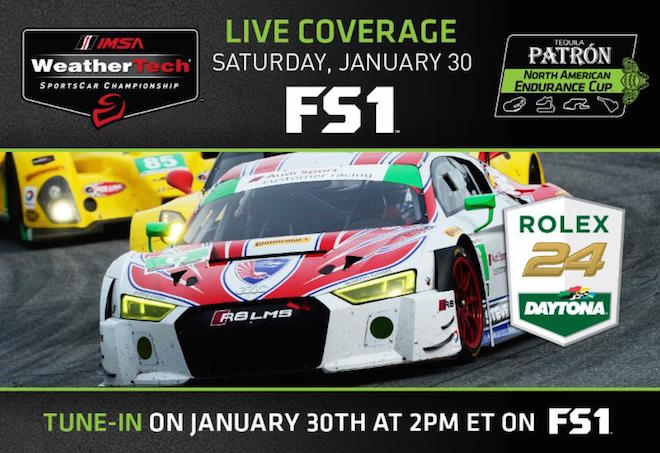
For race fans that tune in to FOX Sports 1 or who get the chance to see the Rolex 24 At Daytona in person, the efforts of the drivers, as well as the pit crew members, are fairly clear for all to see. But there is another group that plays a very active role in every lap of the Rolex 24 that most never see: the spotters.
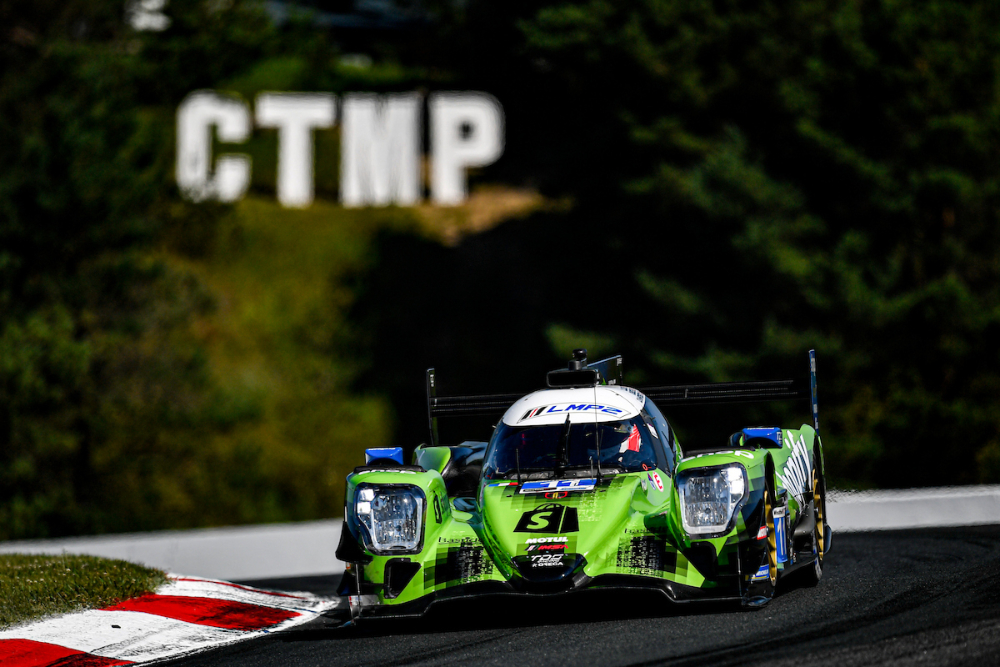
Barry Waddell has been on the spotter stand for Michael Shank Racing for nearly 10 years, and is a key part of how the team not only executes on race day, but also contributes to the team effort with his role as driver coach and engineering support as the team develops the No. 60 Honda-powered Ligier through the Roar Before the 24 and into the Rolex 24 race week.
With a long-established career as an instructor, spotter, and driver coach, as well as seven starts as a driver in the Rolex 24 that include two overall podium finishes, Waddell is a well-established asset for Michael Shank Racing as the team pursues another victory at Daytona International Speedway.
After making his last start as a driver in 2002, Waddell returned to DIS in 2006 as part of his role of driver coach for RuSport, the Colorado-based IndyCar team that had Justin Wilson and AJ Allmendinger on their roster. The duo was making their first start in the Rolex 24, and went on to score second place along with Michael Shank Racing drivers Mark Patterson and Ozz Negri.
"That first year (2006), I was just on the coaching and consulting side, they had someone else in place to be on the radio," said Waddell. "I came into this race from an open-wheel background, and it was my job to help get Justin (Wilson) and AJ (Allmendinger) to think in the way that you need to think so you can finish a 24-hour race rather than the sprint mentality."
For Waddell, when he heads up top for the race, there is one key focus, one that has not changed since he was behind the wheel for the huge endurance challenge.
"Protect the car, protect the car, protect the car," says Waddell. "That's it. It is a 24 hour race, so any mistake, any miscommunication with a GT car or any car contact that happens, that can have a long term devastating effect on your chance to win or even finish the race."
The race has changed since he made his last start in 2002, but that mantra is still the same.
"When I was racing here, it was all about getting the car to the 18-hour mark, and then, seeing where you were and maybe having a different approach to the risks you were willing to take," said Waddell, who ran in both Prototype and GT machinery. "Now, since the Daytona Prototype era, the race still has that core concept of making sure you are smart to race through the night. But now, the cars simply are more reliable so you can get away with pushing them harder through more of the race. That creates a lot more of a sprint mentality. That means for the drivers, there is more pressure in traffic, more pressure when going out on cold tires, and more pressure to stay on the lead lap."
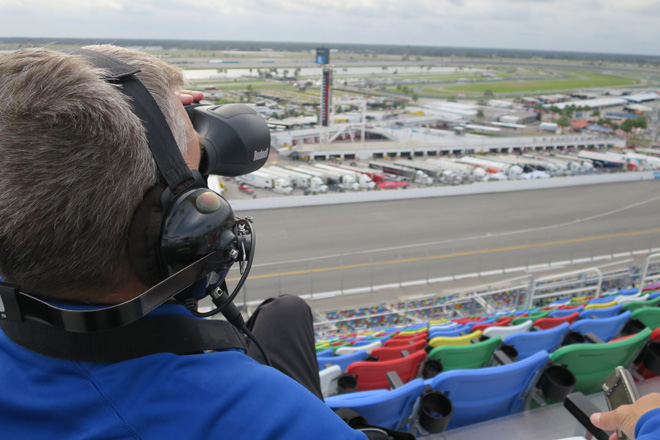
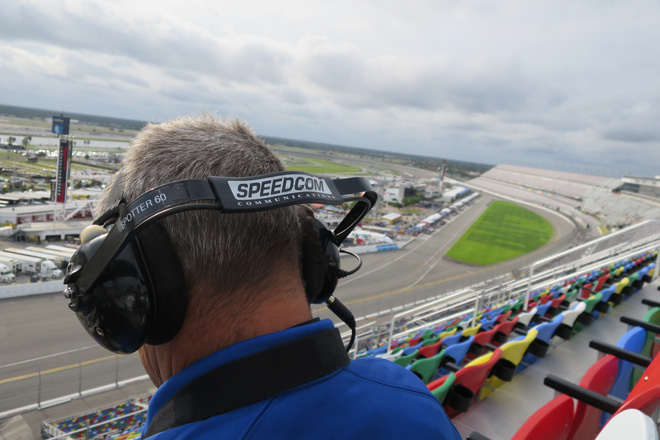
"Being up there, I can see where my drivers can't see, and my job is to alert them to things down the road that they need to avoid," said Waddell. "That can be particular GT cars, debris, or just a rut of traffic that they will have to be working through in a lap or two."
Being up top for the race start is really the culmination of several weeks of work, as Waddell's background of coach and instructor also sees him in on every Michael Shank Racing engineering session through the build up to the event.
"Running the 24 is so unique from an engineering perspective," says Waddell. "To develop a car that four guys-with sometimes four different driving styles – that everyone can be comfortable with. That's a huge challenge. So I just try to be a part of the process: watching in-car video, going through data, listening to the driver feedback, to make sure that everyone is on the same page and we don't go losing a guy through the week as far as how the set-up evolves. I enjoy doing that not only because it comes naturally to me, but I also feel like I can contribute as a team member. As a competitive person, that's something I really enjoy."
What part of the track is the toughest? Without hesitation, Waddell shoots back that it is the Bus Stop.
"That is by far the most vulnerable the car gets, every lap. You are pretty much cornering through the entire section as the car is basically never straight through there. You are coming in at 180+ mph and carrying over 100mph through there. So if someone drops a wheel and throws dirt on the track, or leaves a car part, or there are cones or someone spins, you really have a very small window to avoid something like that. As a driver you want to leave a little percentage in reserve in case there is something there that you don't expect, particularly at night. But of course, it is also a very key series of corners to carry that speed through all the way back to turn one, so you have to make that balance work for you every lap."
With the spotters now generally able to find shelter inside during the 24-hour race, things have improved vastly for Waddell and his fellow roof-dwellers.
"I learned a long time ago, indoors is the way to go! The big thing of course is to be out of the elements. It is COLD up there!" says Waddell with a laugh. "And now, you can have all your radios charging during the whole race as well as having timing and scoring up. That gives you not only a much better picture of the race overall, but it can be important as far as advising the team on what to do under the yellows and with the pace car procedures that IMSA has."
The other question most will ask... do you stay up all night?
"I've done the 'full pull' before, and I can tell you, I'm not eager to do it again! We are fortunate with Shank to be able to work with other spotters so that we can take breaks and rest up at certain points of the race and trade off. It just helps you do a better job overall-just like the drivers, you need to be as sharp as possible."
Watch for Waddell, high above the start/finish line, as the Michael Shank Racing team sets after its second Rolex 24 win beginning at 2:40 p.m. ET Saturday.

Latest News
Comments
Comments are disabled until you accept Social Networking Cookies. Update cookie preferences
If the dialog doesn't appear, ad-blockers are often the cause; try disabling yours or see our Social Features Support.