The Single Life
Multi-car teams are de rigueur in modern-day Indy car racing. So how did a solo Rahal Letterman Lanigan effort nearly win the championship?
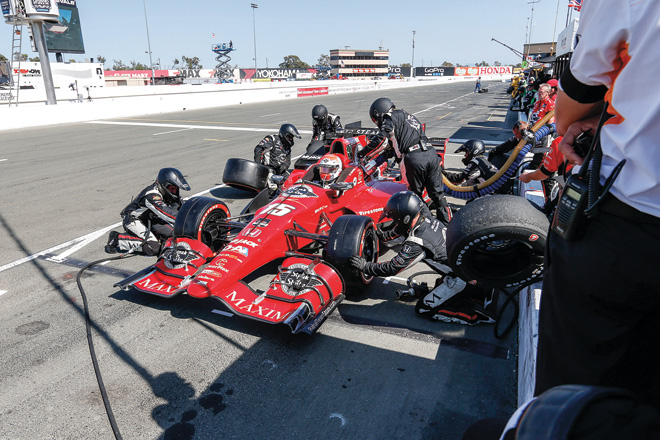
It was an image we saw time and time again through 2015 IndyCar season: fleets of Penske, Ganassi and, on a good day, Andretti Autosport cars fighting it out at the front, and in their midst, Graham Rahal in the solitary Rahal Letterman Lanigan entry, almost iconic in his isolation.
But how did RLL do it? How did it overcome the fundamental disadvantages of operating a single car – substantially higher fixed costs, lack of access to anyone's data other than your own – and almost win the championship? And this coming in a season defined by a new technical package which should have put a team like RLL even more firmly on its solitary back foot?
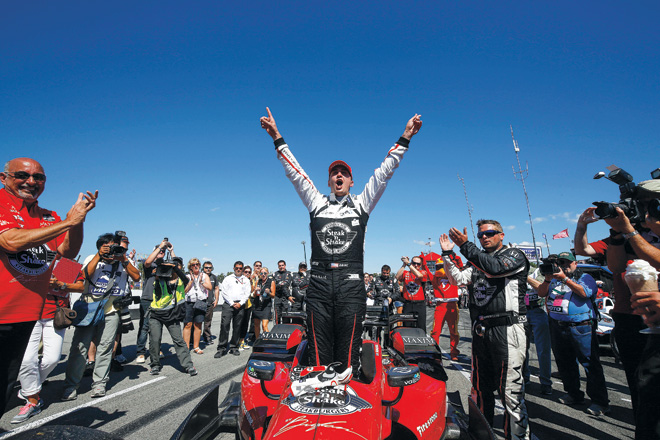
"It does make it simpler in a lot of ways," he says. "You have only one driver to focus on, his input is key, and you adjust the car purely for what he's saying.
"That helped us out to a large degree this year. It's funny – you can get more data points [with more cars], but more data points can also confuse you. I think we did a good job of focusing on the simple things, just trying to make our car better, not looking at what everybody else was doing. Basically, listening to what Graham had to say, and then trying to make the car better for Graham."
Put in those terms, it all sounds relatively simple. But translating that approach into a real-world competitive environment is an entirely different proposition. If it's a given that RLL suffered the same disadvantages as the other Honda-aligned teams through the shortcomings of HPD's Wirth Research-designed aero kit, it's still remarkable that it was able establish itself as the strongest member of the Honda camp, despite Andretti Autosport having four cars and having done all of the pre-season development testing. Looking back, Nault believes that the Rahal crew forged a siege mentality during the pre-season that proved to be one of the foundations for its subsequent success.
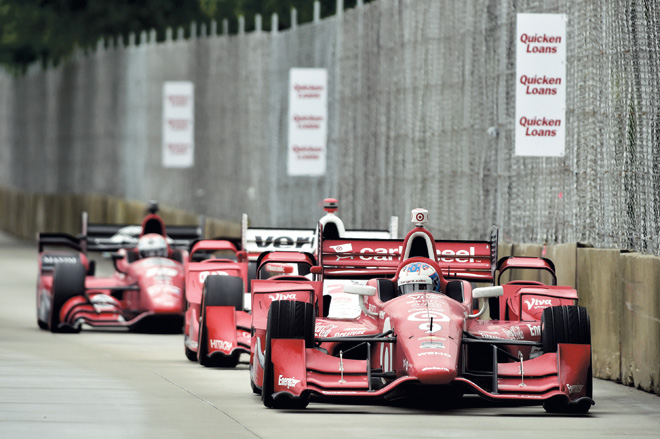
"But because we weren't able to test the aero package [before the season], we were able to take a hard look at what we did last year, and what we were going to do this year, and just concentrate on getting the basics right. And it says a lot for the guys that we were able to come together, decide what we wanted to attack, attack it well, and be able to communicate well enough what worked and what didn't. We just...didn't get lost."
Get the full version of this article and much more in The Technology Issue IV of RACER, on sale now. Click here to take a video tour of the new issue.
click here
, or to buy The Technology Issue online, click here. To learn where to buy RACER in your area,click here
.RACER is also available digitally for Apple, Android and Kindle Fire devices. RACER Digital has the complete content of the magazine's print edition formatted for mobile viewing. With RACER Digital, you'll have access to your RACER content all the time, wherever you are.
The RACER app can be found by searching for "RACER Magazine" in the Apple, Android or Amazon App stores. The app is free and includes issue previews and the RACER.com newsfeed. Individual issues can be purchased for $1.99 and an 8-issue annual subscription is $9.99. Back issues are also available.

Latest News
Comments
Comments are disabled until you accept Social Networking Cookies. Update cookie preferences
If the dialog doesn't appear, ad-blockers are often the cause; try disabling yours or see our Social Features Support.