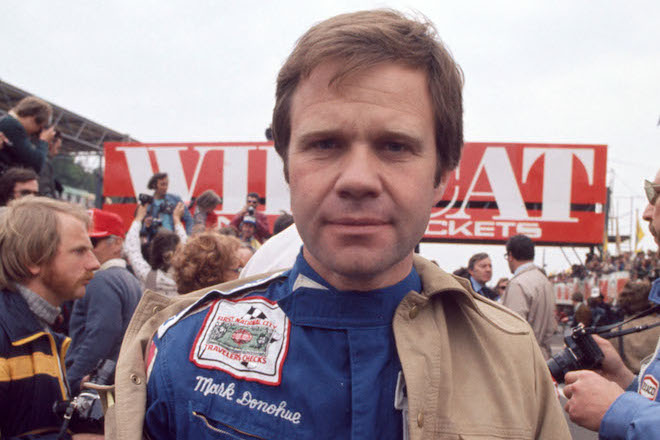
MILLER: Remembering Mark Donohue
Sitting in the bar alone at the Holiday Inn at Ontario, Calif. in March of 1974, Mark Donohue seemed as dark as the room’s lighting. At the zenith of his fabulous career in sports cars and Indy cars, “Captain Nice” had suddenly quit driving after his wildly successful 1973 season.
Roger Penske had given his protégé a team manager kind of job and it didn’t look like retirement was sitting well with the 1972 Indianapolis 500 winner. I’d interviewed him several times since 1969 but really didn’t know him. He was always polite and well spoken, yet guarded and only seemingly comfortable in the Team Penske environment. But he was drinking alone so I sat down and asked the obvious question.
“I didn’t think I’d miss driving this much but I can tell you it’s no fun watching,” replied Donohue. “I feel so far removed from everything. I’d be happy just testing cars again. I appreciate that Roger is keeping me involved but it’s just not the same.”
It was a short retirement because Donohue took over Penske’s Formula 1 car for the final two races of 1974 and then launched a full-bore F1 assault in 1975.
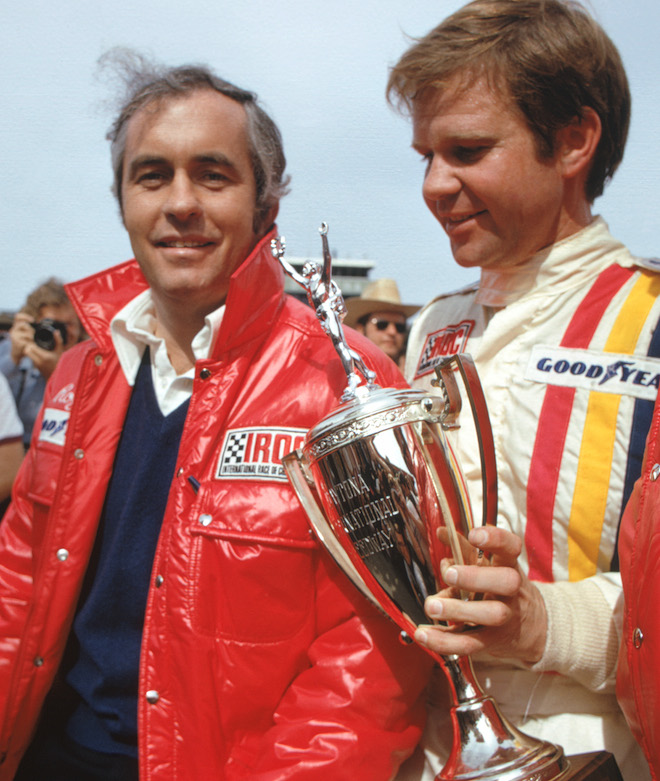
Of course what we should remember most about Donohue isn’t how he died but rather how his talent, logic and I.Q. helped change the face of all forms of racing. A graduate of Brown University with a degree in mechanical engineering, the soft-spoken New Jersey native became Penske’s protégé in sports cars and Trans-Am stock cars and they conquered everything during the next decade.
When the polished Penske and educated Donohue first arrived in Gasoline Alley in 1969 it was amid a few snickers and rolled eyes. The crew dressed in pressed Sunoco shirts, they polished the wheels and garage floor and the driver talked about oversteer, understeer, shock rebound and rake.
It was a foreign language to a majority of the USAC drivers who understood push and loose but little else involving the dynamics of how a chassis worked.
When Donohue scored the first of Penske’s 16 wins at Indianapolis in 1972, he ushered in the era of wings and aerodynamics and seemed to know more than anyone else working on the cars – let alone driving them.
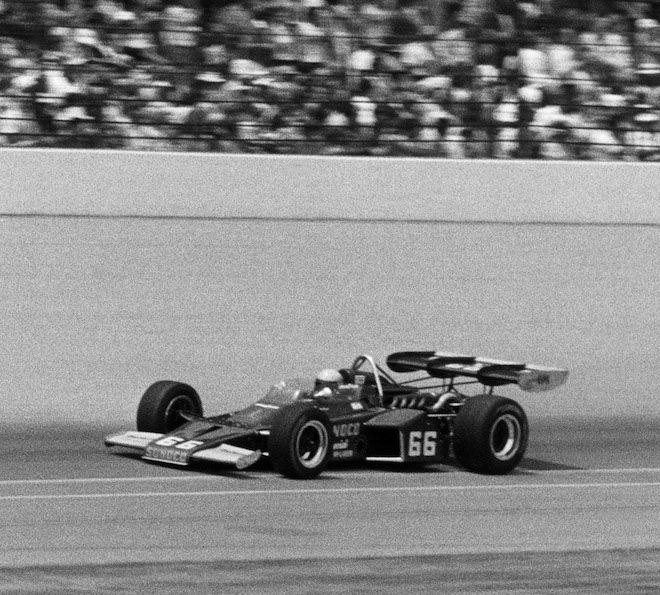
An undying memory was seeing Donohue with a tape measure under the rear wing of journeyman Al Loquasto during Indy practice in 1973 trying to help him get up to speed. Or how he was always treated so respectfully by USAC’s board of directors – A.J. Foyt, Mario Andretti and the Unsers.
“He was waaaaaayyyy ahead of most drivers at that time when it came to understanding a racecar,” says Uncle Bobby.
Although Indy would be his third and final Indy car win (Pocono and Michigan in 1971 were his others), Donohue turned his road racing talents to Can-Am where he and his Porsche 917 obliterated the competition in 1973.
He also captured Penske’s initial NASCAR win in ’73 and was the 1973 IROC champion before, at age 37, he walked away.
Donohue only made it to 38 but left some indelible memories during one of the most prolific runs in motorsports history.

Latest News
Comments
Comments are disabled until you accept Social Networking Cookies. Update cookie preferences
If the dialog doesn't appear, ad-blockers are often the cause; try disabling yours or see our Social Features Support.