.jpg?environment=live)
INDY 500 RETRO: Luyendyk’s rookie run
Arie Luyendyk – better known as "Hairy Lunatic" – was an instant favorite among the six-deep field of rookies at the 69th Indianapolis 500. The Dutchman arrived at the Speedway with a strong junior open-wheel resume, had shown a particular knack for ovals, and had everything he needed to show his skills on the sport's biggest stage. Kind of.
"Well, it was really difficult because we had a team of primarily English guys," the two-time Indy 500 winner told RACER. "Dave Sims ran the team, and he brought them all over. None of them had ever seen the Speedway, including the engineer! So here we are, as rookies, as a rookie driver with the rookie team and a rookie engineer. It was really tough. We had one car, we had a small budget. We could not afford to make any mistakes or crash."
With Sims, who famously served as Jim Clark's lead mechanic at the Lotus Formula 1 team, Luyendyk had one of the best in the business looking after his car. The European import was a blur during the 1984 SCCA Super Vee season, winning the championship in the low-powered open-wheelers, but with nearly quadruple the horsepower and a massive spike in speed to handle on his Indy debut, the learning curve was nothing less than daunting.
And despite the group's collective lack of Indy experience, was put through its paces at a measured rate while Luyendyk & Co. learned their way around the Speedway.
Related Stories
"I had some oval experience with the Super Vees but nothing like the Speedway," Luyendyk said of trying to tame the Provimi Veal team's No. 91 Lola-Cosworth. "Jumping from a Super Vee into an IndyCar, at the time I thought it was a really big jump. For me it was an eye-opener and I had to really take baby steps – to get up to speed and be smart about it. That is what I was. That was a good thing."
The 1985 Indy 500 was a single-supplier affair with Goodyear looking after the entire field. Tires using radial construction were still on the horizon at Indy, and their predecessors – the dreaded cross-plys – were delightfully inconsistent. For a rookie like Luyendyk, they added another element of frustration for the merry group of first timers.
"You'd go out and the car was, ah, pretty nice...and then the next set the car was loose...the next set the car was under steering," he said as the unpleasant memories returned. "So the cross-ply tires were kind of a nightmare for a small team. I could see where Penske was able to manage that, but we certainly had trouble doing that."
A busy month of high-speed education primed Luyendyk for each new phase that filled the schedule, and while it wasn't a big deal at the time, he credits a brief introduction to Indy car racing in 1984 for relieving most of the pressure that would have come leading into the 500.
"Back then I was driving for Provimi Veal and I had a good relationship with Aat Groenevelt, the team owner; he listened to what I asked and what I wanted," he explained. "One of the things he said was let's just go and test at Milwaukee in 1984. We did a 200-lap race distance with pit stops and everything in an Indy car in 1984, then I did a race in Elkhart Lake, it was my first race. At the end of the year we also tested in Vegas by Caesar's Palace there. Actually, that test went really well. I think I was in the top four, and all the teams were testing, and I really, on the short oval there, I was doing a good job.
"And the good thing about my deal with Provimi was there was no pressure. It wasn't like a big team loading all this pressure on you like you have to run up front or you have to perform now. I think that helped me a lot, where I could ease into Indy rather than be pushed to go to the front right away."
Time trials saw Luyendyk capture 20th on the grid – fastest of the rookies – and finish an impressive seventh in the race. Rookie of the Year honors followed, and as he explains, leaving Indy intact was all that mattered.
"We went out, basically, we were just trying to survive the month, get through qualifying, get in the race and be conservative – which I was," Luyendyk admitted. "I mean, I remember getting out of the car and my legs were half numb because it was always... I was never sure that week leading up to qualifying about the setup. I would be driving with a car I wasn't really that confident in. But it came and it got better and better as we did more laps. But it was pretty scary to begin with.
"But I was smart about it. And I remember really well that as the race progressed, I was getting more and more into a rhythm. I remember my last stint, this thought flashed in my mind – I really liked this place, because it was going so well and I knew then I had overcome all those barriers, mental barriers with Indy of how frightening it can be. At the end of the day, I was feeling really happy about my performance and about me and the track. I really liked it."
The "Flying Dutchman" would go on to claim the 1990 and 1997 Indy 500s, and for a road racer from Holland, the art of American oval racing became second nature. But why?
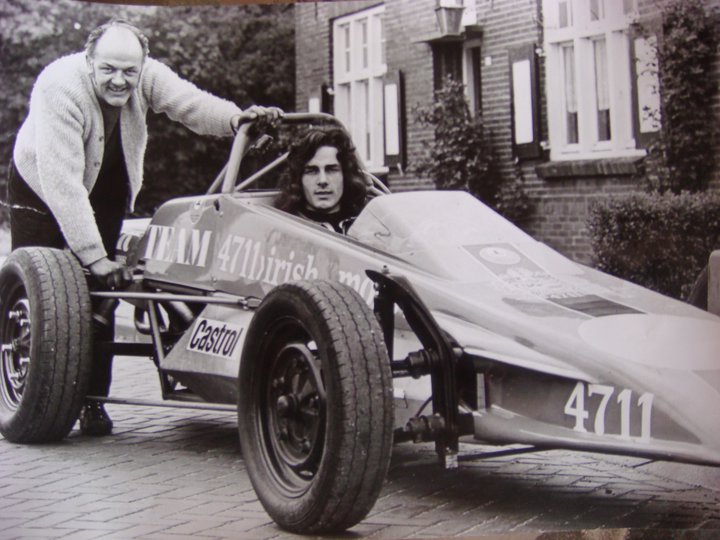
"I think it was my love for going fast; everybody likes to go fast, but there were tracks in Europe that are like Zeltweg or Osterreichring or Zandvoort or Monza where you had these extremely quick corners in fifth gear or sixth gear, and I just loved going as fast as I could through these fast corners," he said. "I was good at going hard and fast through a really high-speed corner. I think that is why I became good at ovals, just because I liked the high speed.
"I was not necessarily good in the first-gear hairpins. Hate those. Always hated them, like the Long Beach hairpin. I was never good at that, that first gear type corner. Some guys excel in that, some guys are better, then they come through the fast corners and they just back off a little bit, and I'd look in my mirror and I'd see, I'd pull about two car lengths, I'm going, yeah, gotcha. I love fast corners and that was why I excelled on ovals later."

Don't miss a moment of the Indy 500. Get the new INDYCAR 15 app with in-car cameras, real-time dashboard and live team chatter.

Latest News
Comments
Comments are disabled until you accept Social Networking Cookies. Update cookie preferences
If the dialog doesn't appear, ad-blockers are often the cause; try disabling yours or see our Social Features Support.