IMSA: Heinemeier Hansson petitions for pit stop safety improvements
Related Stories
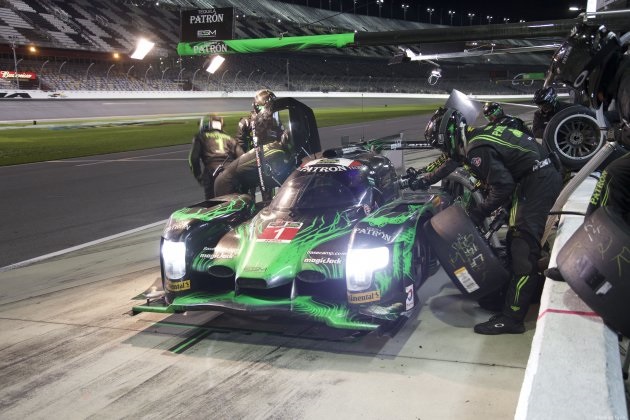
Tequila Patron ESM driver David Heinemeier Hansson earned his success in the digital world and has taken his concerns about IMSA's pit stop regulations to the place he knows best for change: the Internet.
The Dane has raced in most major sports car categories – the ALMS, WEC, and the TUDOR Championship – and would like to see the American sanctioning body either return to the pit stop practices used in the ALMS or, on a similar note, adopt the rules mandated by the ACO and FIA for international endurance racing.
Outside of IMSA, those rules call for cars to be turned off during a stop, and for refueling to be completed before tire changing can begin. Once the process has been completed, the car can be refired and return to action. The constant is the need to turn off the engine. Whether a team opts for a fuel-only pit, or to change a tire, the car cannot be running while the procedure is happening.
Under the fuel-first-then-tires model, additional time is required to complete the stop, and when a driver change is taking place – as Heinemeier Hansson notes – it provides more time for seat belts to be connected and tightened before rushing away from the pit box.
Granted, this isn't the first time we've heard these suggestions, nor is DHH the first to raise the topic, but after a 24-hour race last weekend at Daytona where hurried pit stops raised a few safety concerns, his points are worth considering.
"For me, coming off the Rolex 24, I came away thinking this wasn't right," DHH (LEFT) told RACER. "My team, Tequila Patron ESM, told me we needed to perform driver changes in under 25 seconds because that's all we had until tires and fuel were completed, and that 23 seconds was even better. I asked myself how that was possible. It puts drivers in a position to try and go before they really should. I'm a gentleman driver, I've been fortunate to race in the best sports car series in prototypes and GT cars, and I know there's a safer way we can do things."
With the former ALMS/current WEC pit stop rules in place, DHH – and more than 300 people who've signed his petition – believe a safer environment for pit crew and drivers would be created. His ESM team had a problem during one stop last weekend where the car was left in gear, which left the rear wheels spinning at a high rate of speed. That problem would be solved by turning off the engine. And in light of the rush to leave pit lane when the crew is done, the risk of drivers pulling away without their belts fully tightened would be less of a concern.
The last item is hard for IMSA to police without in-car cameras in every vehicle and a team of replay experts tracking each stop, but after fans saw some of the drivers in the Porsche/Corvette/Ferrari pit lane pile up at last year's Petit Le Mans thrown forward in the car due to loose belts, extra time would reduce the likelihood of the situation being repeated.
"Is it necessary for all the extra pressure on the teams and the drivers to get away as fast as possible the reason we do these races?" DHH asked. "Of course, I don't think this should be easy or slow, but we always want to be as safe as possible, and therefore the risk you take to beat the other cars away from the pits is really something to consider only when it is safe and everything is ready. So if we take a few more seconds because the fuel is separate from the tires, and it makes the driver change safer, it would be beneficial for every team. And the series."
Drivers and team owners have had some success in using private communications to affect changes from IMSA. A united ownership or driver group in a particular class can, if the request is deemed valid, nudge the series in a different direction, but with sweeping changes like DHH is requesting, a wider network of input and support could be more influential.
Based on some of the signatures and comments from sports car racing's past and present members, along with interested fans, it appears DHH has more than a few allies on his side.
Tommy Kendall: I'm signing because I agree on both counts. On matters of safety that are conflicting with things that are faster, the series has to save drivers from themselves!
Colin Braun: This would no questions make the sport safer for both drivers and crew members... It is a no brainer!
Michael Avenatti: Both proposals will increase safety and also add a strategic element to the series.
Johannes van Overbeek: This change will put the emphasis on "doing it right" rather than "doing it quickly" when it comes to getting belted in.
John Pew: Safety.
Ben Yohe: It's been proven effective in the ELMS and WEC, plus we don't want to injure and/or lose someone for as something that can be fixed so easily.
Ryan Howell: I've been run over in a pit stop when the car got bumped into first gear.
Memo Rojas: Totally agree, we've been doing it like this for years and during my run at Ganassi we had one crew member getting injured because a driver accidentally hit 1st gear while doing a driver change. Also I was caught literally on fire once at a Daytona 24 pitstop due to the rush of getting the driver change and fuel at the [same] time.
Craig Watkins: I'm signing because these simple changes like this can save people from unnecessary injuries or worse. The cars are far more complex than they used to be and a simple mistake by the entering driver, or dropped and told to leave prematurely, puts crew at unnecessary risk.
John Hindhaugh: Totally agree with this, sensible and well argued
Jeff Braun: This proposal will make the racing safer and more interesting for the fan due to the strategic addition of double stinting tires or not. It's a win on both counts.
DHH's petition has also attracted a few doubters, which is worth a read at Change.org. If he's successful, IMSA's decision to opt-in with the global standard would be a significant adjustment with few apparent negatives to consider.
"I love racing in America, I love racing in this series, IMSA's been receptive to input in the past, and I'm not asking them to redesign the cars or anything like this," he said. "This is how things were done two years ago here and it's the way it's done in Europe. It's nothing new—it's a return to something that has worked in the past and a lot of people feel is safer.
"Spinning wheels that can hurt crew members: Bad idea. Drivers pulling away from the pits before they're strapped in: Bad idea. I think we should go with better ideas."

Latest News
Comments
Comments are disabled until you accept Social Networking Cookies. Update cookie preferences
If the dialog doesn't appear, ad-blockers are often the cause; try disabling yours or see our Social Features Support.