IndyCar 2014 Review: P1 - Will Power
Robin Miller says…
If you lead the most laps or win the most races, you’re usually the champ, right?
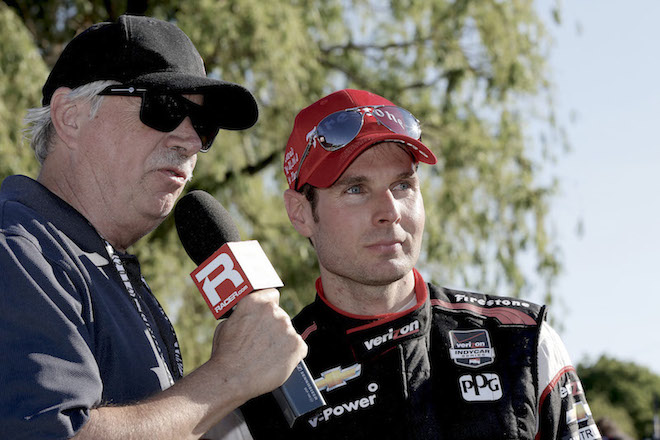
But the 33-year-old Aussie weathered a spin at Sonoma and a shockingly bad qualifying run – he almost pushed up to the wall on his first lap – at Fontana to finally seal his elusive prize. And, if there is such a thing as justice in motorsports, it was served in 2014 to the guy who has consistently been the Verizon IndyCar series’ quickest driver the past five seasons.
Power led the most laps and scored wins at St. Pete, Detroit and Milwaukee while stringing together a trio of runner-up finishes to hold off his teammate Helio Castroneves. Nobody won more races in 2014 and nobody was more deserving of wearing No. 1 as he led over 200 laps more than anyone else.
Sure, there were pit speed penalities, a spin into the wall coming down for the green at Toronto and a couple of aggressive moves that he got away with, but Power proved he could finish the job.
The key to his breakthrough came on what use to be his downfall – ovals – as he dominated Milwaukee from qualifying to the checkered flag (leading 229 of 250 laps) and building a points cushion over Castroneves that held up.
Then, after recovering from his spin at Sonoma to salvage 10th, Power set quick time in practice at Fontana only to qualify almost slowest. He did what was necessary come the race, however, gradually worked his way to the front before – totally against his grain – backing off to finish ninth and grasping the Astor Cup.
And you know what they say about finally getting that first one….
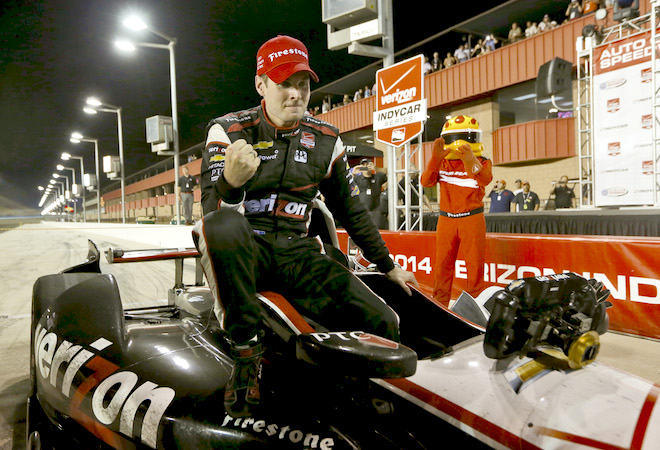
Of all the skills possessed by Will Power, and there are many, his mental acuity and observational awareness could be the greatest keys to his success. We know he’s one of the fastest drivers in the Verizon IndyCar Series, and one of the hardest racers, but those aren’t unique traits.
We can say the same about Scott Dixon, Ryan Hunter-Reay, Tony Kanaan, Sebastien Bourdais, Juan Montoya, Simon Pagenaud, and a few others on occasion, so it's safe to suggest he didn’t win his first championship based on a higher level of talent or racecraft.
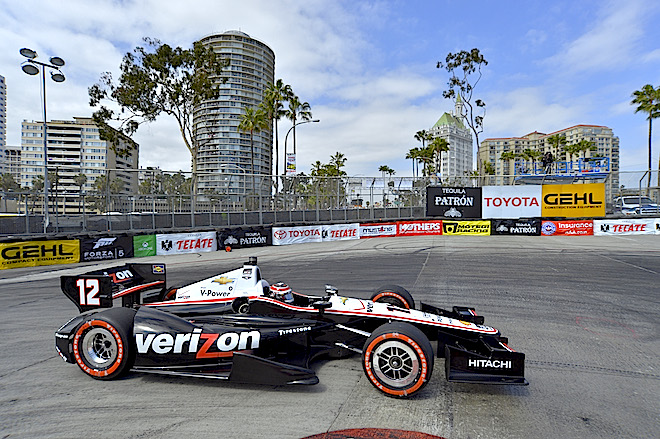
Behind the scenes, Power’s unquenchable curiosity, frank personal assessments, fact-gathering efforts and introspective nature put him in an elite category – one he shared with retired four-time IndyCar champion Dario Franchitti. During their many heated exchanges and years of wheel-to-wheel battles, Franchitti held the upper hand, and it would be fair to say his greater degree of experience with the mental side of the sport is what separated the two.
With more time, miles, and hard-fought lessons to draw from, Power’s 2014 season was a testament to his personal and mental maturation, and it was hardly a coincidence the Toowoomba-native finally turned years of runner-up finishes into his first title-winning performance. Power was schooled by Franchitti, whose obsessive/compulsive approach to his craft mirrored his own motor racing OCD, and of all the lessons the Scot imparted that Power finally took to heart, it was the formula to winning championships.
Will Power the risk-taker made frequent appearances through 2013, but in 2014, that swashbuckling persona was rarely on display. His previous attempts to win the championship by crushing the field at every race was replaced with Franchitti’s formula: Win when possible; score as many points as possible when victory is out of reach.
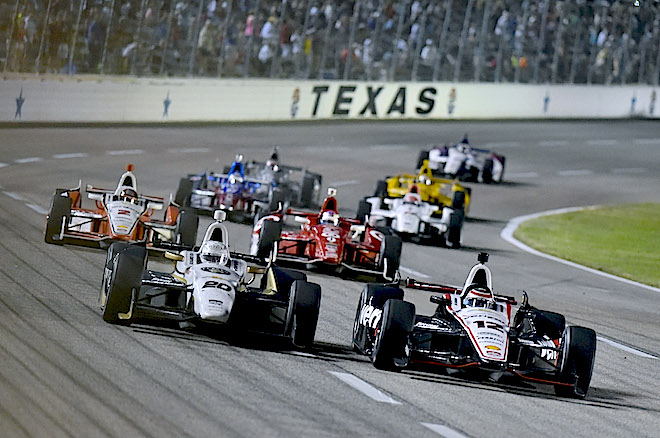
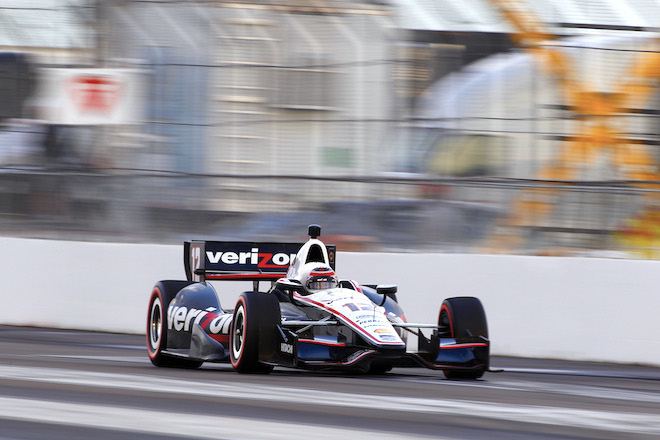
Will’s pre-season plan was executed with great efficiency: The No. 12 Verizon Wireless Chevy finished inside the top-10 15 times in 2014. The three race finishes outside the top-10 were an 11th and two 14ths. With his conquering mindset traded in for a championship outlook, Power achieved something we all knew was inevitable. Add in Team Penske being at the top of its game all season and Power’s mastery of ovals and, for the first time in his career, there were few mental weaknesses to exploit or performance shortcomings to keep him from his goal. When he did get things wrong, he brushed it off and kept moving.
His execution was almost flawless and, with every one of those 18 races having a finish of 14th or better, Power’s record was better than every IndyCar champion since 2008. The 2007 champion went one better than Will with a lowest finish of 13th…some guy named Franchitti.
With the torch now passed to Power, I’m sure 2014 will be remembered as his first of many titles.
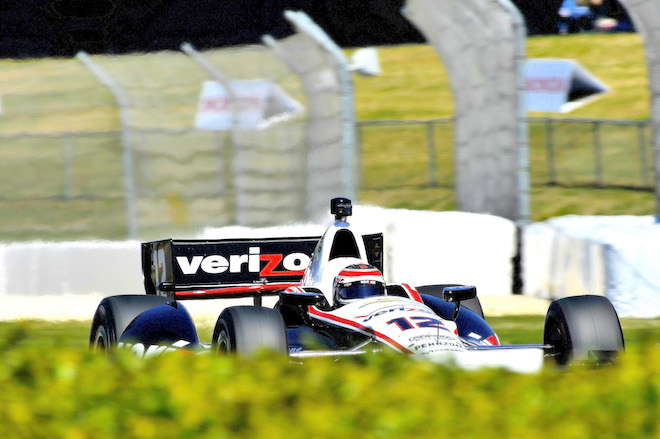
So he finally did it. I never doubted he would somewhere along the road, but there was a single 24-hour period in July when I wondered if 2014 was Will Power’s year.
Considering 1) he only briefly lost P1 in the points table, 2) how “together” Team Penske was this year, 3) how composed his pit crew was, and 4) how powerful and reliable the Chevrolet engines were, perhaps it was odd to have any doubts…barring the Monty Python-style boot of Fate descending on him as it did at Kentucky in 2011. But it's hard not to occasionally wonder about a driver who tries so hard to not just win every race but win every moment in every race. More Tom Sneva than Rick Mears, more Michael Andretti than Al Unser Jr.
Power could and did still play it smart – he confesses he settled for second in Long Beach and Detroit 2 rather than risk it all, and was also relatively subdued at Mid-Ohio in a car that wasn't quite on the pace. But, equally and counterproductively, his eagerness to exploit the days when he had one of the best cars occasionally came at the expense of his points tally.
Instead, he incurred a drive-through penalty for the block and dropped to 10th…on a double-points day. Helio’s runner-up spot was enough to draw him level in the points table. And at Iowa, as the pair of them struggled on the final restart with worn tires, Will clipped a wall and damaged a tire, limping home to 14th. When these two pieces of misery were followed by that rain-drenched non-start at Toronto that saw the No. 12 car aquaplane into the wall before the green flag had even flown, that was the low point of his season. And that's when I thought Castroneves might finally sneak an IndyCar title.
That idea was banished the next morning. On the “real” start the next day, Power was at the back, and drove hard to reach ninth despite a shortened race. Castroneves clocked second, and the gap was now 28 points…but that was as big as it ever got. Later that day in Race 2, it was Power on the podium, Castroneves who made the misstep that sent him back into the wild throng of crazies who embroiled him in an accident.
“From that moment between the races,” reflected Power at the end of the season, “I was so determined not to finish behind Helio ever again.”
I refuse to condemn him for
). At every moment, he was trying to maximize the great car he had for 85 percent of the season, rather than think big picture; he was reveling in racing, not just leading from the front, and he’d sharpened these skills through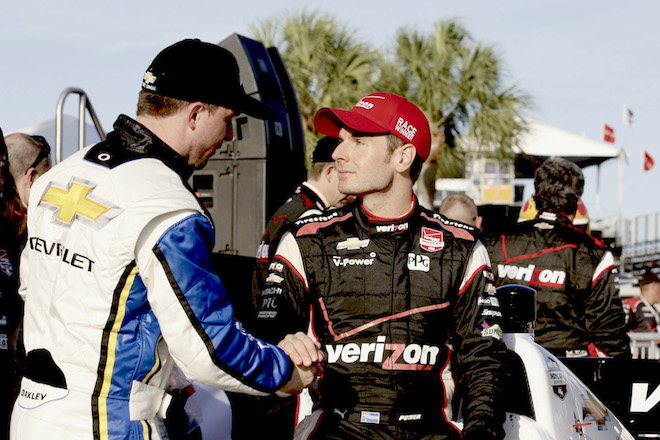
(RIGHT, with Andy Gryczan, his Ilmor-Chevrolet engineer).
Of course the penalty he didn’t receive for mistakenly nudging Simon Pagenaud into the tires at Long Beach gave certain factions a chance to claim Power was getting exemption because his car, like the series, was sponsored by Verizon. The list of penalties above – plus another for when a crew member left a wheelgun hose in his path during a pit stop at the Grand Prix of Indianapolis – proved that was nonsense. In truth, what really aggravated his critics was the number of times Power reached the sharp end of field no matter where he was placed by circumstance, race control or unfortunate pit strategy/yellow flag combinations.
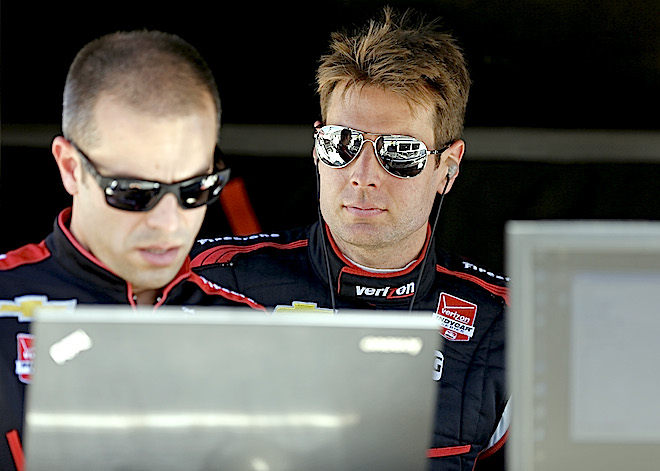
You see, this was the year where the traditional mystique surrounding Will’s qualifying performances faded a little, only to be replaced by a different and arguably more useful reputation; that of being near-unstoppable on race day. He still won more poles than anyone else, naturally, but there were also days where he and race engineer Dave Faustino (ABOVE) went for an ambitious setup in qualifying, searching for one extra tenth of a second…and lost three or four! They were not alone in this (see Ryan Hunter-Reay and Ray Gosselin in Sonoma as a recent example), but it did mean that the No. 12 was sometimes having to come from uncharacteristically deep in the pack.
Importantly though, this irritated Power and Faustino but didn’t panic them; they just worked even harder on race setup, and team president Tim Cindric pulled out his Little Book of Good Strategies. In Long Beach, Will started 14th and finished second; in Detroit 1, he started 16th for the first race and came through to win; at Houston 2, he started 18th and was running third before one-third distance! On that day, an ever-worsening suspension issue (a parts failure) that had made the steering impossibly heavy, persuaded Power that third would have to do. Fate played a cruel trick on him, however; the part failed completely with just two laps to go, condemning him to an 11th-place finish.
But as well as racing from the back, Power knew how to control from the front, too. St. Petersburg was his race from the moment he put the pass on polesitter Takuma Sato – a maneuver Will admitted he learned from Dario elbowing his way past in 2011! And at Milwaukee, he scored arguably the most dominant win of the season (Bourdais at Toronto 1 is the other contender) and arguably the most significant win of his career – not just because it’s a short oval, not just because it’s flatness makes it so tricky, but because it’s so extremely rare for a win at the Milwaukee Mile to come through luck. Winning at America’s oldest race track is the near-exclusive preserve of an Indy car era’s top echelon of drivers.
And that’s where Power is. Of course, even his critics admit he’s been there for quite a few years, but now, at last, the Astor Cup proves it. There could not have been a more deserving 2014 Verizon IndyCar Series champion.


Latest News
Comments
Comments are disabled until you accept Social Networking Cookies. Update cookie preferences
If the dialog doesn't appear, ad-blockers are often the cause; try disabling yours or see our Social Features Support.