.jpg?environment=live)
IMSA: Should LMP3 replace PC?
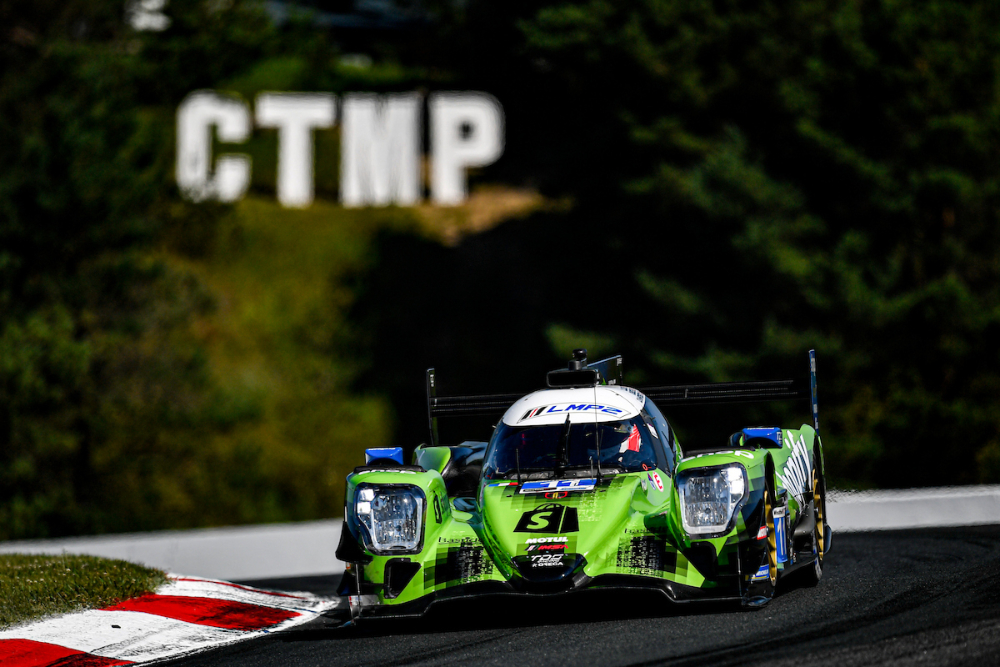
The ACO's new-for-2015 LMP3 class features carbon fiber coupes, a spec V8 engine producing 420hp, and has been created from the outset as a budget-minded entry into the world of prototype racing. It's Europe's answer to IMSA's Prototype Challenge (PC) cars, and with a host of similarities shared between the concepts, the sleek P3s could be a smart upgrade for the TUDOR United SportsCar Championship to consider in the coming years.
It's on the series' radar, according IMSA's managing director of technical regulations, but don't read much into things at this point.
"It could be a 2017 PC replacement, but who knows," Scot Elkins told RACER. "Anything that we do on this front will involve waiting and seeing how the P3 cars perform, what they're like to run and own, and the costs that are involved.
"For me, the thought is to let it work itself out and see where it goes. We're in no rush to change anything. With a new car like this coming online, you want to see it get up and running before you think about making any suggestions to go away from what we currently have."
Ginetta-Juno-LMP3
The P3 concept is an interesting one as it centers on using the modern looks and safety aspects found in a P2 coupe, but in a smaller package. As many as six manufacturers are expected to produce P3s featuring spec 5.0-liter Nissan V8s, paddle-shift gearboxes from Xtrac, and done at a cost-capped price of 195,000 euros (approximately $250,000) with the rolling chassis coming in at 135,000 euros and the engine/gearbox/electronics package costing €60,000.It compares favorably to the ORECA FLM09 PC car's original list price of $397,500 when the Chevy V8-powered cars were introduced by the ALMS for 2010. Recent purchases of new PCs have been closer to $350,000 and used PCs change hands for around $250,000.
The PC car, which is based on a 2004 design from French constructor Courage, has worn many badges over the last decade and has proven to be an incredibly versatile prototype. Launched as the Formula Le Mans car in the European Le Mans Series, the FLM car had a limited lifespan in Europe, yet soon took off as a perfect stopgap measure to boost crashing P1 and P2 car counts in the ALMS at the end of 2009 (BELOW). The first American test of the FLM09 took place in front of prospective buyers the morning after Petit Le Mans in 2009, and since that introduction, FLM cars have gone on to thrive and bring many new teams into sports car racing.
On the surface, there's no need to replace the FLM09-Chevrolet with something new – at least not right now – but with IMSA moving toward a P2 coupe formula in 2017 with its Prototype class, it's worth considering whether a similar update to its PC class would also suit the series.
P3s will be eligible to run in Asian Le Mans Series and the European Le Mans Series in 2015, yet like the PCs, they aren't welcome at Le Mans or in the WEC. For domestic series like the TUDOR Championship, however, PC/P3 is a great fit. IMSA recently confirmed the PC class will remain in place through 2016 and, with changes coming to Prototype the following year, Elkins says class structures, the number of classes, and whether PC will exist after 2016 is up for discussion.
"I think it's one of those things where you look at [P3] for '16 and see where it goes and what happens to it, and maybe it's even a replacement for the IMSA Prototype Lights car," he suggested. "Maybe we add it to that and that's where it goes in '16, then see what we do with the Prototype in '17, because if it becomes something that people want, it could go one of two ways.
"You could either make the LMP3 a replacement for PC and keep the classes exactly the way they are, or try to have a Pro and Pro-Am class with the new [P2] Prototype cars in '17 so everybody uses the same car with different driver championships, so you have more of a population of cars in the same class. It's hard to say at this point. Again, you've got to see where the P3 class goes next year and if it first takes off first in Europe before considering anything here."
After speaking with a cross-section of the PC paddock on whether they'd support a move to P3 cars in the near future, it's clear IMSA has plenty of opinions to consider.
"The short answer is if it's not broke, don't fix it," said Morgan Brady, who oversees the championship-winning CORE autosport PC program. "We think PC is a great fit for the series. The current categories seem to be working well, but as the series evolves in 2017 with a new Prototype, it would definitely be an interesting idea to look at bringing in a new type of PC chassis."
Performance Tech Motorsport team principal Brent O'Neill disagrees.
"To be quite frank, it would be asinine," he said. "They have more than a dozen PC cars running here already. I have a half-million-dollar PC car, with all the spares and everything else, already sitting in the shop. Am I going to spend another half-million on a LMP3 car if they decide that's what they want? Maybe some guys can throw away their [PC] investment, but not me, and not most of the guys who own PC teams. I can tell you I would not buy a P3 car and start over again. I'm sure plenty would, but I won't be one of those guys."
RSR Racing owner Paul Gentilozzi shares O'Neill's opinions on staying with the current package.
"The FLM09 is a great car and I'm not sure the P3 car is right for America," Gentilozzi stated. "My money would be on tuning up the PC car instead of changing to something different. The thing we need is for an engine manufacturer who is engaged to come into the PC class and put some support behind the business portion of the PC class. If it was there, we would have seen 15 or 16 PC cars in the series this year. I'm not against change, but there has to be facts behind it and I don't see the facts to support the P3 car will be better or faster than the PC car."
Starworks Motorsport owner Peter Baron has an entirely different take on whether the future direction for the PC class.
"I'd be OK with doing away with the PC class after 2016," said Baron, who runs a two-car PC program. "My theory is by the end of 2016, they'll have given us three years to prepare for a change. You have to look at what's best for the series. They spoke volumes when they limited the PC class entries this year and said only 10 cars will be allowed. There's no factory involvement and we need factory involvement to survive. It's not growing. We've only had eight cars at some races this year and it was embarrassing.
"And now you have a thing where the cars are getting kind of old. They're five years old already. By the end of 2016, that'll be seven years on the same chassis. I'm not a scientist, but that's a lot of miles on a carbon fiber chassis. The PC class has only been guaranteed through 2016, and we know IMSA's going to one type of Prototype in 2017. There's a message being sent about the sustainability of PCs by IMSA, and after 2016, I think we need to cut bait and move on."
Of the additional concerns expressed by O'Neill and Gentilozzi, annual budgets, P3 chassis selection, and manufacturer support were mentioned.
"It costs just over a million dollars to run the PC cars for a season," said O'Neill. "Everyone knows it's the best deal in any IMSA class. Going to new cars always costs more money, and would you be getting more performance for it? Take the [air] restrictor off the PCs, and we'd be running with the DPs and P2s. The cars are just fine the way they are, and if they want something faster, the PC cars are capable of doing it today."
"One of the great things about PC," Gentilozzi added, "is it's a single chassis, and with P3, there's going to be what, six to choose from? Which one is the right one? Can you afford to make the wrong choice? I don't know many teams that can."
Chassis options aside, Gentilozzi closed the conversation with a suggestion that would sway his opinion toward P3.
"I don't know if Nissan cares about this class in North America, but if they put a million dollars into the pot, said they're going to pay prize money, give away some cars, and really get behind the class with money and promotions, I'd be in favor of changing cars," he remarked. "If they wanted to make a big thing about P3 and put their muscle behind it, then it would be the right time to make a change."

Latest News

Comments
Comments are disabled until you accept Social Networking Cookies. Update cookie preferences
If the dialog doesn't appear, ad-blockers are often the cause; try disabling yours or see our Social Features Support.