.jpg?environment=live)
Derrick Walker answers questions on: Race procedures-1053
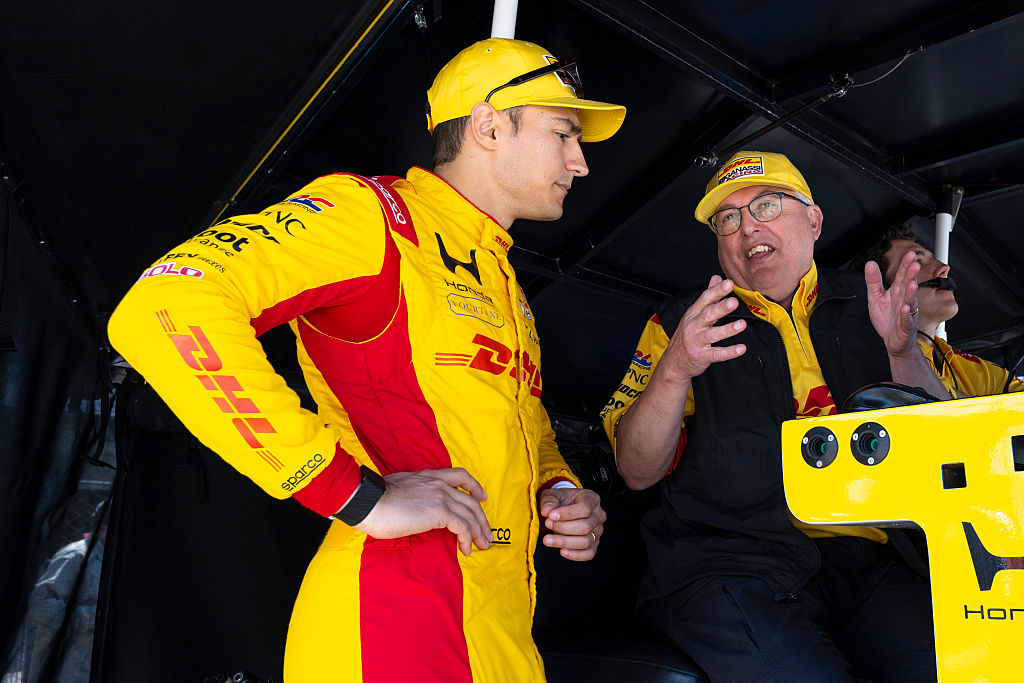
We offered RACER.com readers the chance to send in questions for IndyCar's president of operations and competition, Derrick Walker [ @DJWIndyCar ] and we're serializing his replies according to topic. Today, Derrick answers your questions on IndyCar procedure, ranging from standing starts to oval qualifying to unapproved engine changes.
DW: Option 2 isn't viable because everyone would spend rounds 1 and 2 trying to get a tow, so no one in front would want to be in front, so they'd all start backing off and the whole thing would get messy and dangerous.
However, Ed's point that it needs to be more entertaining is correct. We need to look at some of the things we've done in the past and re-evaluate them, and come up with alternatives for next year. And those alternatives might need modifying from track to track: what works at, say, Fontana, wouldn't necessarily work at Iowa.
DW: On the anti-stall, there is more work to be done to get it fully functional – or rather, to get it where it works every time for both manufacturers. But it is high up our priority list.
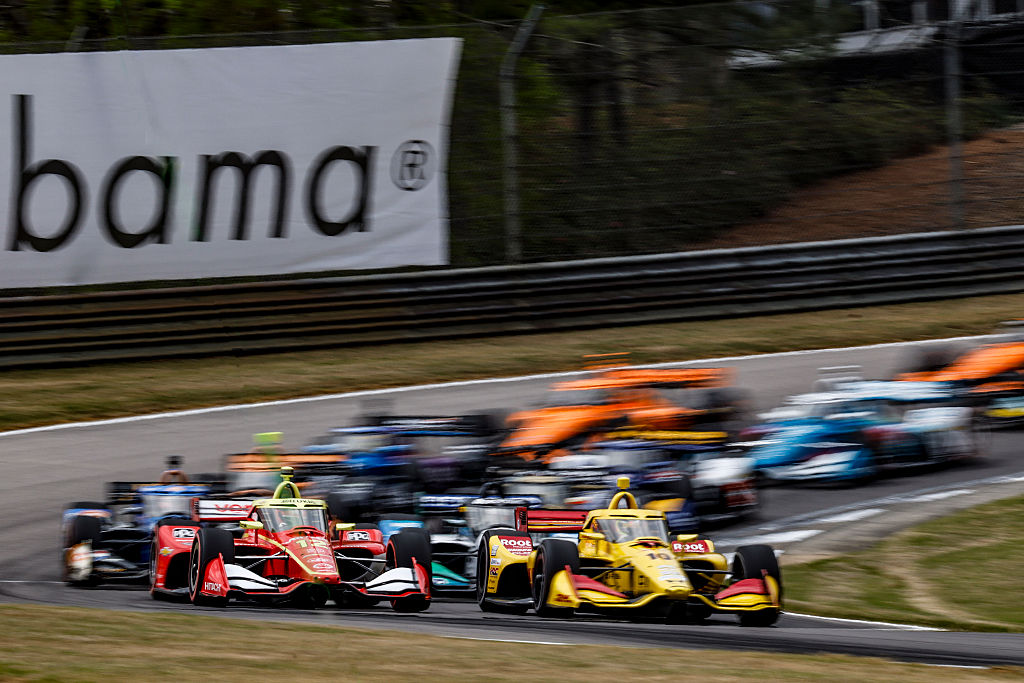
As for the standing starts, it is scheduled for one of the races in Toronto and one of the races in Houston, and it is what I call a pilot program. Some fans will ask, “How hard can it be?” and that's a fair question but what we don't want is to have a situation where the equipment which has been designed to do this cannot in fact deliver as flawlessly as we'd hoped. We want the engine manufacturers and the teams and the drivers to do their parts, but I don't want them to build their whole weekend of practice around this concept and then discover the equipment can't cope. So that's why we'll only do one standing start at each venue, while the other will be a conventional rolling start. Then, afterward, we'll pool data and assess how much extra work is required to make this a more regular method of starting our road and street course races. Plus we think fans might like to see one kind versus the other at the same event; variety is good.
I really want to get this point across: Although we don't always tell the media or the public, we truly are continually evaluating what we're doing to see what did or didn't work from our perspective, from the participants' perspective and from the fans' perspective.
DW: Er…I think it could be quite difficult, because ovals are designed to go one way, often quite subtly but in terms of pit entry and exit, etc., quite majorly at some tracks. But more importantly, I'd flip the question and ask, “Why would you want to?” Sure, we could engineer ourselves to go the other way 'round, but I don't see the value in it.
DW: I completely agree. But in defense of our Safety Team, they have a different situation to deal with every time they go to rescue a stranded car. At Milwaukee, for example, Marco Andretti's car had electrical problems that caused the car to jam in gear and it took ages to shift him. And so afterward we came up with a procedure that would have moved the situation on a lot quicker – this comes back to what I just mentioned about assessing ourselves constantly.
On my priority list is to sit down with the Safety Team and revisit these situations to help make the clear-ups quicker without compromising safety at all. Make no mistake, the team understands the urgency of getting back to a green-flag situation as soon as possible, and I just need to understand how we might help them be quicker. I'm aware that we're losing good TV time and we're losing the more casual fans if the full-course cautions seem endless.
DW: I think the fans deserve to see a race finish under green, and it's something I intend to examine for the future. Every fan wants to see a race to the checkered flag. I'm all for tradition, as mentioned elsewhere in these Q&As, but as exciting as the Indy 500 was this year, I guarantee that the most exciting laps would have been the last two laps under green, with Tony Kanaan versus three Andretti cars, and no one being entirely sure when or where they wanted to be leading because of the draft effect. It would have been an amazing finish if it had gone to a green-white-checkered finish.
DW: I think the reason we migrated away from a lot of practice was to save the teams some expense, but I do think the IndyCar teams should get more track time; race days where you don't have an early morning warm-up, for example, mean there's not a lot of chance for fans to see the stars and cars.
I agree that increasing practice time would be more beneficial and it would make more economic sense than having more test days between races. You're at a relevant track, you have the full Safety Team, you're running against your competitors, and you have to be there anyway. It would save on the expense of a separate trip to Sebring or wherever. That way, the fans benefit by seeing their heroes on track more often. I will be talking to teams to get their input and evaluating this in the off-season.
DW: No, I don't see any reason not to have them now that the drivers have learned to respect each other, and double-file restarts add an element of excitement by opening up more chances to pass. They're here to stay.
DW: First of all, why is the rule there? Because the engine manufacturers wanted it there and because the teams and the IndyCar Series wanted a penalty for unapproved engine changes. The teams pay quite a bit of money for their engine leases, and to keep within the budget of that lease fee, we have X amount of engines guaranteed by their manufacturers to complete Y amount of miles. If you didn't have that – again, let's emphasize that the manufacturers wanted this – they'd be able to change engines every time they wanted to. Well, we've been there, seen it, done it, back in the wild and decadent days of CART, when manufacturer costs would be high and so they charged the teams accordingly. It was cubic dollars, and to avoid going down that route again, a safeguard of some sort had to be imposed.
And unfortunately, this 10-place grid penalty was the only one that the series and manufacturers could agree on. I personally don't like it because although it does do what it's supposed to for the manufacturer, it's not right to punish the drivers and teams. If I'm a driver going for the championship and I lose 10 places on the grid at a track where it's difficult to pass, or then get wiped out in a Turn 1 pile-up while I'm midfield, I'm going to be angry. And it's not good for anyone to see titles or even races decided that way. So something needs to be done that restricts the manufacturers and penalizes them for changing engines too early, without affecting the driver.
So, this winter, we'll examine this once more and consult with everyone involved to try and find a better solution. Actually, if there's anyone out there with a better solution, let's hear it now!
Presented by:


Latest News
Comments
Comments are disabled until you accept Social Networking Cookies. Update cookie preferences
If the dialog doesn't appear, ad-blockers are often the cause; try disabling yours or see our Social Features Support.