
The RACER Mailbag, November 18
Q: I think Colton Herta is a good driver, and it’s not outrageous that a driver of his talent level would be driving in F1. But I feel like Cadillac’s handling of Herta’s FP1/Super License situation and his F2 performance this year is doing a disservice to both Herta and the F1 team if they run him next year in the Bottas seat. Could this situation have been handled any worse from a perception standpoint?
We seem to have arrived at a place we know who will be in the top eight in some order with Audi, Racing Bulls, Haas and Alpine fighting for the rest of the points. It feels like Cadillac, Williams and Aston Martin are racing because they can, and with the charter system in place, they are financially secure enough to not fold.
With how long the F1 season is, the impact of one big surprise result is diminished, I'm wondering what the long term implications are of having a third of the grid that shows up without the potential to score points or running rookie drivers?
Will, Indy
CHRIS MEDLAND: On Colton, my intel is the team has decided against making a change, and that Bottas keeps his seat. I think partly for the reasons you mention – the timing just isn’t right. Colton has the potential, but this year has been tough in F2, and has been limited in F1 outings (aside from FP1 – the intention had been to do plenty more TPC running than he was eventually allowed to do), so it would be putting him in a position where he’s still learning a lot but when the team is also learning.
The Super License handling is one such thing. There’s so much Cadillac needs to focus on and improve, and it ended up not getting its numbers right and having to run an extra FP1. It was a small detail that was easily covered off, but when you have so many plates spinning then those sorts of things can fall through the cracks.
That did make it all seem a bit messy, but at the same time I think everyone agrees Colton’s IndyCar performances and results should have been enough for a Super License anyway, and he shouldn’t have needed to chase one in that way. To that end, the FIA has changed the weighing for IndyCar that means it would be easier to get a Super License in future.
What it really should just have come down to is whether he was the best option for that seat next year, and I think that’s the decision Cadillac has now ultimately made. It’s not that he isn’t deserving of one, but the timing just hasn’t worked out from both his own career momentum and the team’s development.
As for the teams scrapping for points, that’s always been the way and I don’t see any long term implications. A couple of years ago, Audi – then Stake – was not in the frame for points, and Aston was close to the top four teams. It always moves around like in any sport, and I don’t see any one team being the perennial backmarker, even if it will take Cadillac the longest to move forward.
Q: Colton Herta now has a Super License. If he is not in Formula 1 next year, will he lose one year of his point total, thus leaving him short? Or, once he has a license does he get to keep it?
Mark, Niagara Falls, NY
CM: He will keep the Super License if he applies for it and makes an FP1 appearance, as that will prove his ongoing ability in modern machinery. Drivers keep them for three years, although need to renew the license each season.
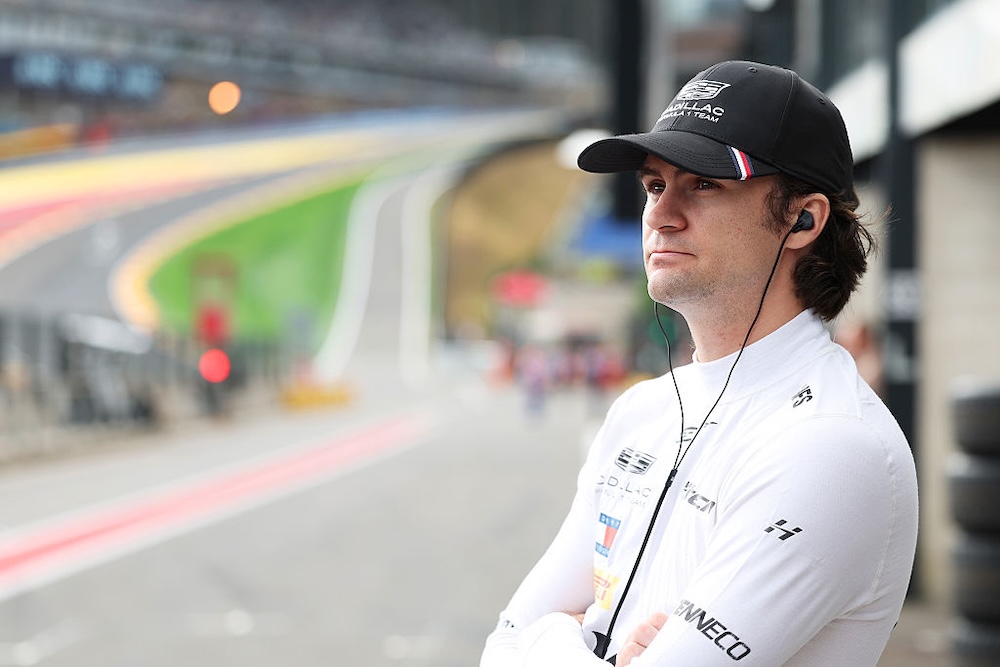
Herta will keep his Super License next year, although it's looking increasingly unlikely that he'll get to use it. Dom Gibbons/Getty Images
Q: How long is it going to be until Fernando Alonso retires from Formula 1? It stinks he has to (eventually) end his career with Aston Martin powered by a pathetic Honda engine.
Kurt Perleberg
CM: I genuinely don’t know the answer to this one, Kurt! It’s impressive that he continues to dedicate himself to it despite the uncompetitive machinery, and I really would love to see him get a properly strong car to at least fight for another win before he retires. He’s signed up for next season at the very least, but I actually think as long as he is performing at a high level and wants the seat then the Aston drive is his.
He was announced as doing Dakar with Aston next year too, so his hunger to take on challenges and drive as much as possible certainly hasn’t diminished!
Q: What car-to-pit data transmissions does the FIA monitor in real time? All of us techno-geeks would love to see real time tire temps and pressures. If there are concerns about competitive issues, merely withheld it from the live broadcast, and add it to the F1TV broadcasts replays starting one hour after the race completion.
Ken
CM: I’ve actually put this to the FIA to get an accurate answer on what they have in real time within race control, so I will provide an update next week if it doesn’t come back to me today, Ken. But what the FIA has is less important, as it’s what F1 has (Formula One Management, aka FOM) as that is who chooses what is broadcast and available. F1 would have to get the teams onside with giving it access to more data, and then distributing it publicly, but it is always an ongoing discussion point to provide more to fans.
Q: I was reading about that pointless jab at F1 from Formula E folks, saying that F1 should be in a museum. And I think it’s hilarious because Formula E is the series that will end up in a museum, because whenever an EV tech that is good enough for F1 to use appears, Formula E will have no reason to exist anymore.
But that made me think... OEMs would rather be at Le Mans. So, if WEC used that H24 EVO and turned it into a battery car, with some quick battery swap method, wouldn’t most of the FE programs go to WEC instead? Formula E would be screwed. But for WEC, it would be a massive win. These could replace the GT class and maybe even be a full professional class from day 1 instead of relying on rich gentlemen drivers. So, is Formula E at the mercy of the ACO/WEC?
William Mazeo
DOMINIK WILDE: There’s quite a bit to unpack here. Firstly, Formula E has an exclusivity agreement with the FIA ensuring it is the sole all-electric single seater series until at least 2048. That agreement was extended by 10 years just last year, and there’s another five year option on that with no indication it won’t be taken up. So even if F1 wanted to go all-electric, it couldn’t. Both have to co-exist. And with all the discourse in F1 around engine sound, I doubt the powers that be would want to make that move anyway.
On that second point, they’re entirely different types of racing with different objectives and different fan bases – not to mention different budgets with Formula E teams and manufacturers subject to strict cost caps – so even if WEC was to hypothetically go in that direction, it’s not a given that manufacturers would immediately jump ship. They’d have to weigh up costs, marketing, and what image they're portraying.
And while yes, in its current form we've seen the likes of BMW leave Formula E and switch to the top level of WEC, Nissan’s gone in the other direction, Jaguar only has eyes for Formula E, Porsche cut its top-level sports car program in favor of an increased focus on Formula E, and Audi ditched both for F1, so I don’t think it’s as clear cut as saying “OEMs would rather be in WEC” over Formula E. The reality hasn't really been entirely one way over the other.
Personally I think it’s time the F1 v FE (and I guess, WEC) comparisons stop. There’s room in the world for all of them. To me, the future isn’t all electric, but electric will have its place. Mobility will have many facets in the future: combustion, electric, hydrogen, renewables, maybe even still fossil fuels in some places. And each one will work for specific applications. Motorsport should reflect that wide range. FE or F1? How about both? And if you have a longer attention span, WEC will be right there for you too.
THE FINAL WORD
From Robin Miller's Mailbag, November 18, 2020
Q: I have followed you for a long, long, long time – since my days as a carrier for the Star/News. You often refer to yourself as “grumpy” I don't really see you as “grumpy,” more just “matter of fact.” Why do you think you are grumpy?
Last mailbag, someone asked why NASCAR TV ratings are better than IndyCar. You immediately referred to the Split. It is my contention that 1994 was the beginning of the shift in popularity for one reason: It was the first year for the Brickyard. The wall that separated IndyCar sponsors from NASCAR sponsors was breached, and at the time, supposedly, Cup teams were cheaper to run so the money followed.
While the split certainly did not help, open wheel had more TV coverage than EVER! What say you?
Troy Strong
ROBIN MILLER: I say it probably didn’t help IndyCar that NASCAR was allowed to share the promised land, but in 1995 the CART crowds, ratings and sponsors were still neck-and-neck with NASCAR. In 1996, you could have shot a cannon on practice and qualifying days at IMS and that was the beginning of the TV ratings free fall that only peaked once in 2005 with Danica.
I’m only grouchy when someone refers to NASCAR drivers as the best in the world after they all crash on a straightaway.
Presented by:
Marshall Pruett
The 2026 season marks Marshall Pruett's 40th year working in the sport. In his role today for RACER, Pruett covers open-wheel and sports car racing as a writer, reporter, photographer, and filmmaker. In his previous career, he served as a mechanic, engineer, and team manager in a variety of series, including IndyCar, IMSA, and World Challenge.
Read Marshall Pruett's articles
CORR 2026/2027 | Round 2 - Firebird Motorsports Park | Livestream
Live
How the Blue Oval tamed the Green Hell
Latest News
Comments
Comments are disabled until you accept Social Networking Cookies. Update cookie preferences
If the dialog doesn't appear, ad-blockers are often the cause; try disabling yours or see our Social Features Support.