Passion above all: How Oliver Solberg’s WRC near-miss made his world champion dad proud
An Instagram post Petter Solberg put out shortly after the running of the final round of the 2026 World Rally Championship, the WRC Rally Italia Sardinia, said it all: “Oliver was amazing. To take the championship fight to the final stage of the final rally in their first full WRC season is just incredible. The motivation to win and passion for rallying I see from Oliver is more than I ever had.”
WRC rookie Oliver Solberg and co-driver Elliott Edmondson came extraordinarily close to snagging the ’26 world championship. On the very final Power Stage and while charging towards the final stop line of both the rally and the season, Solberg ran wide in a tight left-hand turn a mere two corners from the end and pitched the duo’s Toyota GR Yaris Rally1 into the bushes. Literally. The championship lost, it was a time of profound emotion for both Oliver and his father Petter, the winner of the 2003 World Rally Championship.
The disappointment at seeing the opportunity for the Solberg men to become the first father and son world championship combo slip away like that can only be imagined by anyone but them. And yet, Petter’s reaction in that post radiated joy, not sadness. Is that just how the Solbergs roll?
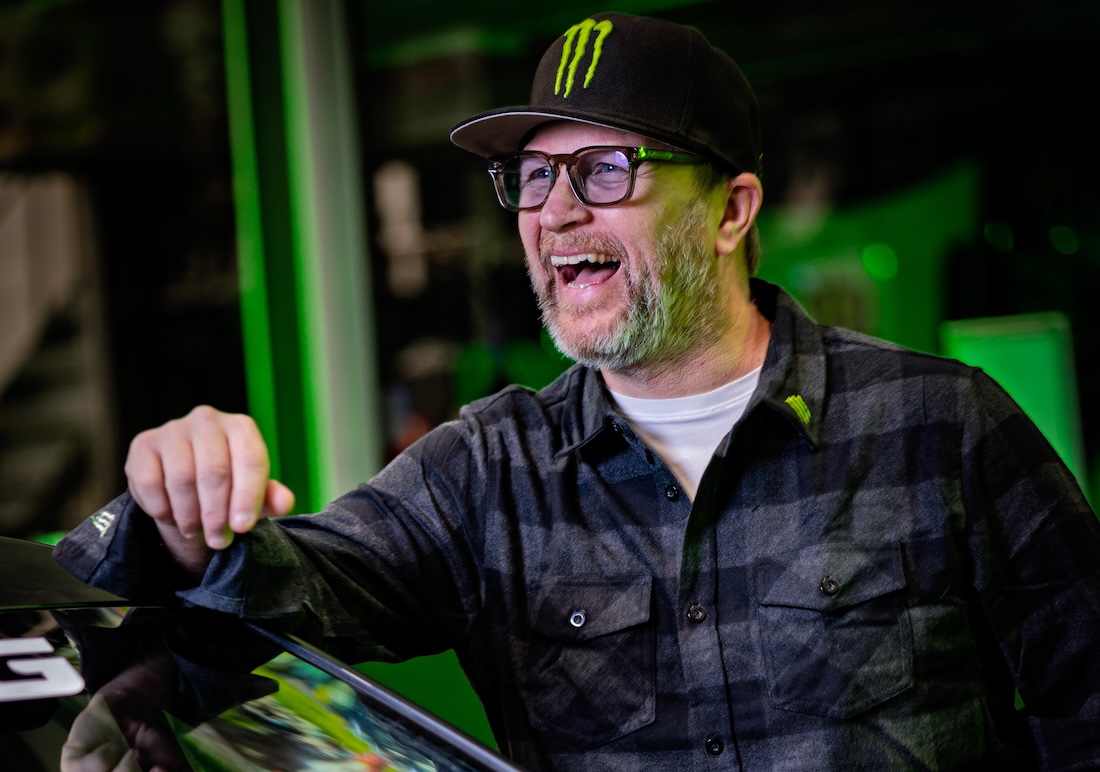
“Well, in some sort of way it must be because, mentally, Oliver is very strong,” explained Petter (pictured above). “And with the second generation, they have grown up with a little bit different lifestyle. It seems like Oliver doesn’t care what his father has done in the sport or anything. He’s thinking about his own name and his own future. He had the motivation in his first year to win and to try and beat Sebastien Ogier. It’s been a crazy time. I can’t even believe it myself. It’s the family. It’s the motivation of winning. It’s an incredible feeling.”
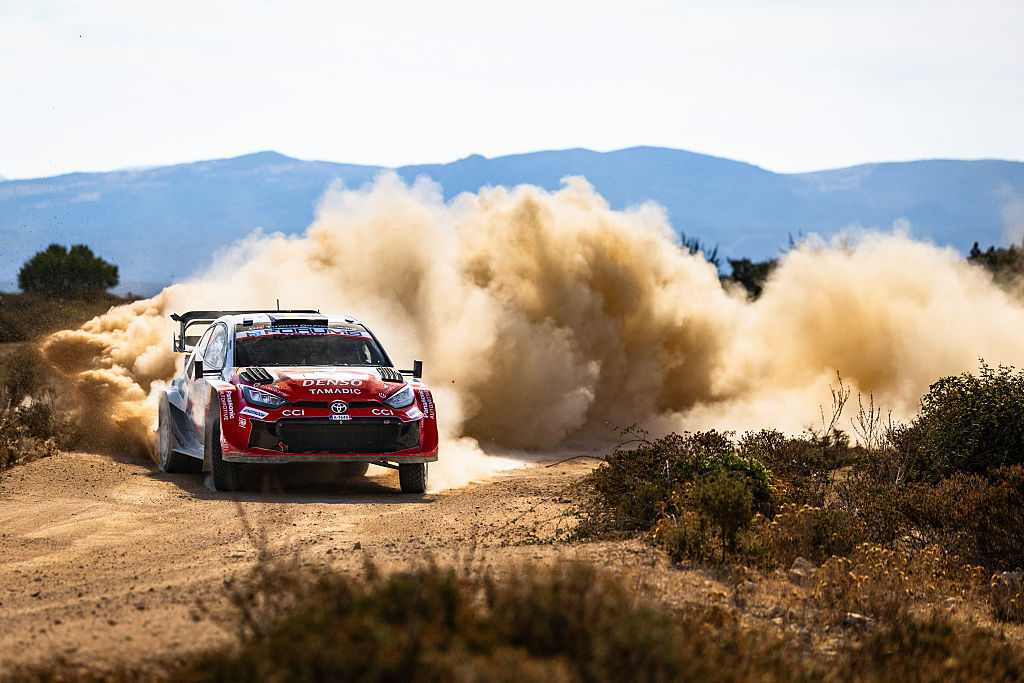
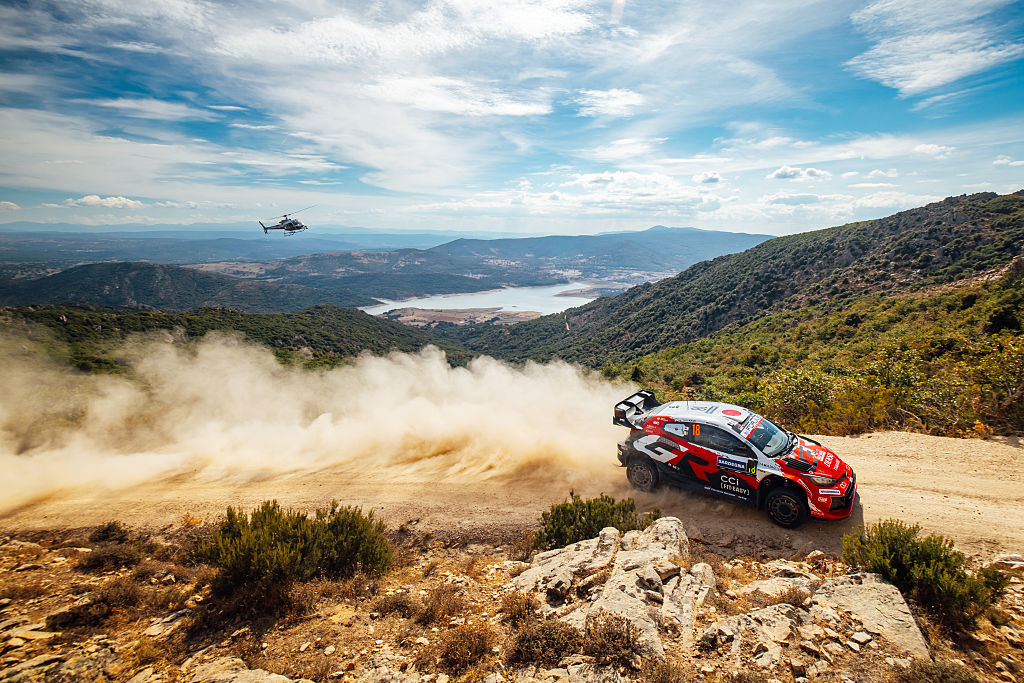
No title honors for Oliver Solberg in Sardinia but he went down fighting, and his dad wouldn’t have had it any other way. McKlein/Getty Images
The WRC destiny for Solberg coming so close to being fulfilled in Sardinia that the Solberg family was asked to gather around the stop control – the designated point past the finish line of a special stage where a rally car must come to a complete stop to have its official time recorded – to meet their conquering son. How did that play out?
“I was having two TV crews around me and I was at the finish line, but I walked down to the water and I saw the last bit of the rally,” explained Solberg, a 13-time WRC rally winner and 20-year veteran of the sport. “Oliver was up 1.9 seconds and then he was just a few hundred meters to the finish line and he had it in his hand. When Oliver came out and turned left by the beach, the road characteristic was a little bit different. Before the start of the stage, they raised the car 25 millimeters and the car was not behaving the same. I was running towards the finish line and I just saw on the left a big plume of dust coming, you know? And I thought, ‘F---!’ I was jumping around. Not for winning, but for disappointment.
“Yeah, there was a lot of crying after the finish line. It was a big, big disappointment, especially for Oliver. He told me, ‘I’m sorry Dad. I wanted to be the first father and son to be world champions together and I failed.’ I said to him, ‘You didn’t fail! This is incredible what you have done.’ He was still crying. And I understand – 150 meters before the finish. But if Oliver didn’t push as hard as he did, he would have never been in that position. He didn’t have a choice but to go flat out and give everything.”
Raised on a Norwegian farm, the elder Solberg launched his motorsports career by becoming the Norwegian champion of radio-controlled cars in 1987. From there he won national titles in autocross before gravitating towards rally. But, did Solberg ever envision becoming a world champion?
“No chance!” he declares. “Honestly. We were born on the farm and we were driving in the fields. We had a lot of pigs and animals and it was hard work to live on the farm. Radio-controlled cars were a lot of our passion at that time. I was the youngest ever Norwegian champion in radio-controlled cars. But I was a mechanic. Me and my brother, we were building cars and engines. That’s basically where everything started. Then we just had fun. We did autocross and hill climb and things just basically happened. I tried to make a name for myself to continue because my parents had zero money. It was impossible. I had determination at that time and I thought everything was possible. That’s why my company is called ‘Petter Solberg 110%’ – it’s named that because nobody believes that you can do more than 100 percent. I always believe it’s possible, you know?”
So in this form of motorsport like no other, at times does a driver need to try and rise above 100 percent?
“Exactly. And I think rallying is such a different sport compared to circuit racing or whatever,” he says. “You have to use all of your senses at the same time that you are trusting the car and the setup and the co-driver. There are so many factors involved. At the end of the day, they are jumping 60, 70 meters with these cars. It’s like a Formula 1 car on gravel in the corners because of the aerodynamics.
“I was in the car with Oliver earlier this year and I honestly almost s--- myself! The speed in the corners, it was crazy. You have to be flat-out from the first meter, basically. In rally, conditions are changing. It can rain halfway. It can be stones. It can be ruts. It can be watersplashes. The margin is quite small. Everything is new all the time when you’re driving. You have to be sharp to use your senses. To not just listen to the codriver, but you have to read the road and the terrain yourself to judge.”
Petter got his big break when Ford signed him for its WRC factory team in 1999.
“I was teammates with Carlos Sainz and Colin McRea in 1999. That was my first team. It was fantastic,” he recalls. “I was good friends with Carlos and Colin. I looked up to Colin so much. We were best friends. Fantastic guy. We had good fun. And he taught me so many bad things at the same time! He also taught me good things.”
In mid-2000, Solberg stunned the WRC community by signing a contract with Subaru.
“I got an offer from Subaru two or three times and I said no and I told the Ford guys about it,” he explains. “My new contract with Ford never came as we planned. I signed with Subaru Japan and then I won the world championship with them. I was there with Subaru and Fuji Heavy Industries for nine years. It was a fantastic relationship. Incredible times. If somebody is wishing to try to get Subaru back in the world championship, that is definitely me.”
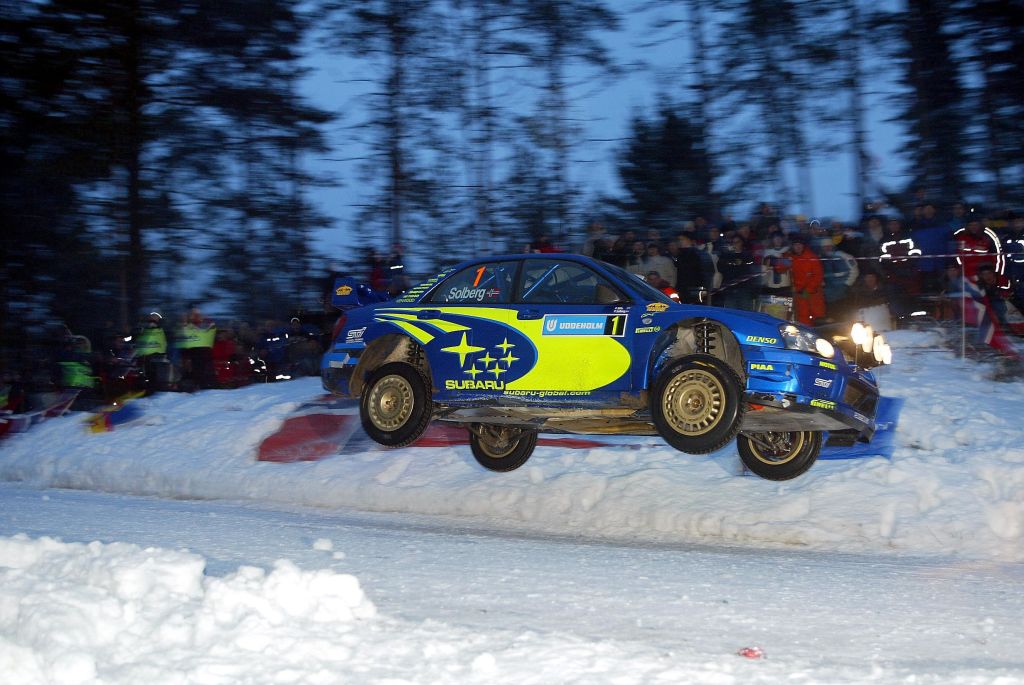
Solberg was flying high with Subaru in 2003. Sutton/Getty Images
Solberg’s title came in 2003, although he admits he still had a lot to learn at that point.
“I was still pretty young and I knew I was fast. That was no problem. I was maybe lacking a little bit of experience,” he says. “At the same time, when you have a good rhythm and a good feeling with the car and everything, you’re right there. And it was a different points system at that time. Everything was close. We were four people trying to win the world championship in the last round. It was pressure until the last day. We always believed in it. If you don’t believe, there is no point to be there.
“To win the championship was incredible. I mean if you look at the TV pictures from that time after the finish line and all the people around, it went manic. Even in Norway, the king and the prime minister were at the biggest football match in Norway the same day as the final rally. The king and the prime minister stopped the match and watched the final stage live on the big TV screens in the football arena. It was absolutely crazy. Over 10,000 people came to my hometown when I won it. It went bonkers. I won all the sports prizes that you can get in Norway. It was an incredible.”
The following year was less incredible, but again, Solberg drew personal satisfaction despite the harder times.
“In 2004, 100 percent, I was much faster than everyone, but we had a lot of technical problems,” he recalls. “I won six of the races and was leading four more. For sure in 2004 I should have won it easily, but when the developed the new car, it went backwards. I told them, ‘We will not win with this car, so we should use the old car and I can win the world championship for you again.’ It didn’t happen. Sometimes it’s politics in the sport, and that’s a part of the game.
“I’m quite sure I could have many more, but the package of the car and the philosophy has to be right, you know? You don’t need to make the fastest car all of the time, but as long as you can drive fast on every stage. This is what Toyota does with Oliver. They give him everything he needs to be happy and you see the results.”
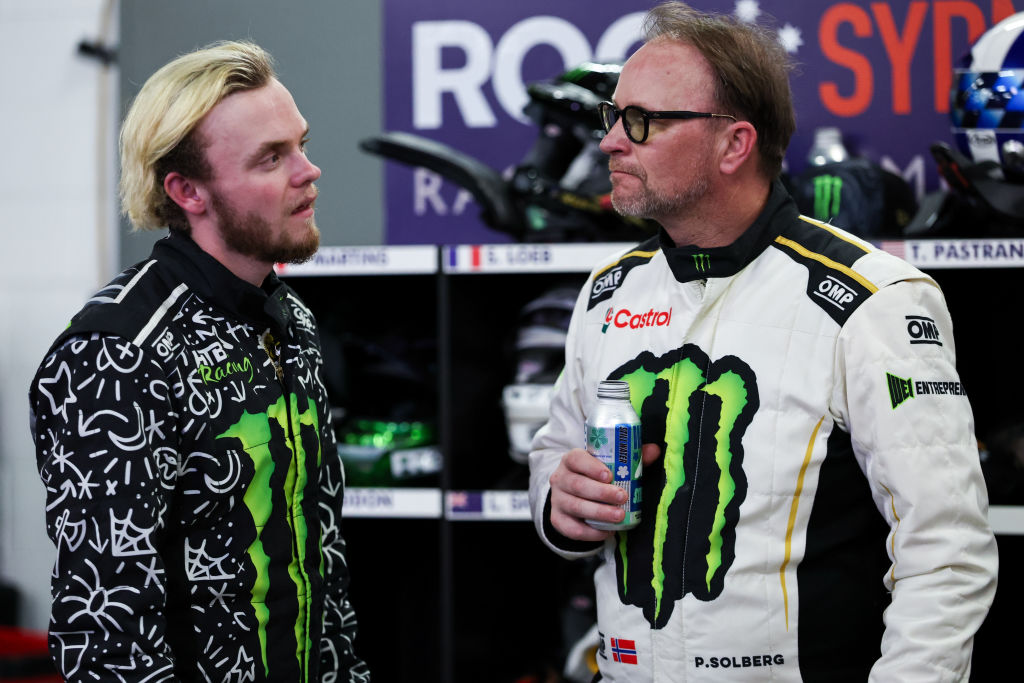
Two very different Solbergs…but with some key similarities. Qian Jun/MB Media/Getty Images
While Petter knows his son marches to a different drum, he says there are clear similarities in how Solberg Sr. and Jr approach the WRC game.
“I think with the driving style and the setup, we are very similar,” says Petter. “He always beats me now. He’s doing something in the mid-corner that is different to me. I try to copy it, but I can’t do it. It’s details. I can’t beat him now. It’s hard!”
Petter Solberg switched from WRC to the FIA World Rallycross Championship in 2013, winning the championship a year later. He remains just as passionate about that branch of rallying.
“I think it’s a great sport,” he says of Rallycross. “It’s a lot of horsepower and a lot of big competition and a lot of technical details. We built the car ourselves at that time. 620 hp and zero to 60 miles per hour in 1.8 seconds. It’s a fast car. I was the first one to win the world championship in two different type of categories. It’s an awesome achievement and I’m very proud of that.”
Whatever he was driving, Solberg was passionate about his driving style and wanted fans the world over to know he was keen to entertain them with what the magic he could perform. And at age 51, he still does.
“I love to make a show, you know?” says Solberg. “That’s what I did in Goodwood this year with Valentino Rossi and Lando Norris with the cars and the show. You know we’re enjoying what we are doing. I’m just a proud ambassador to take care of people all around the world. I try to make people happy.”
While Oliver Solberg’s 2026 WRC campaign ended in heartbreak, the family has totally shaken it all off and focusing on the season ahead.
“I think with the learning of what they have done this year, Oliver is going into next year with huge confidence of strategy, speed and determination,” warns Petter. “I think people are scared of him, that’s for sure.”
Eric Johnson
Born and raised in the rust belt to a dad who liked to race cars and build race engines, Eric Johnson grew up going to the races. After making it out of college, Johnson went into the Los Angeles advertising agency world before helping start the motocross magazine Racer X Illustrated in 1998. Some 20 years ago, Johnson met Paul Pfanner and, well, Paul put him to work on IndyCar, NASCAR, F1, NHRA, IMSA – all sorts of gasoline-burning things. He’s still here. We can’t get rid of him.
Read Eric Johnson's articles
Latest News
Comments
Comments are disabled until you accept Social Networking Cookies. Update cookie preferences
If the dialog doesn't appear, ad-blockers are often the cause; try disabling yours or see our Social Features Support.