James Moy Photography/Getty Images
How Toyota brushed adversity aside to bounce back in WEC
Pretty much every sporting powerhouse shares similar traits: they're relentless in pursuit of their goals, ruthless in decision-making, effective in their use of resources, and strong enough to turn disappointment into motivation to get up and go again.
It's what helped Tom Brady, Bill Belichick, and the New England Patriots win six Super Bowls; Michael Jordan's Chicago Bulls win six NBA Championships; and Nick Saban's Alabama Crimson Tide take home six NCAA National titles.
Toyota Racing's performance this year, in the face of adversity, mirrored that of those standout players, coaches and organizations.
After Ferrari celebrated its first Hypercar manufacturers’ world championship in Bahrain last November, and James Calado, Alessandro Pier Guidi, and Antonio Giovinazzi partied into the night after securing the drivers’ title, Toyota’s years of dominance and its status as the benchmark in the Hypercar class appeared to be fading into the past.
The Italian manufacturer had taken another significant step forward, winning four races (including a third consecutive 24 Hours of Le Mans), and looked to be well on track to cement itself as the team to beat through to the next ruleset's debut in 2030.
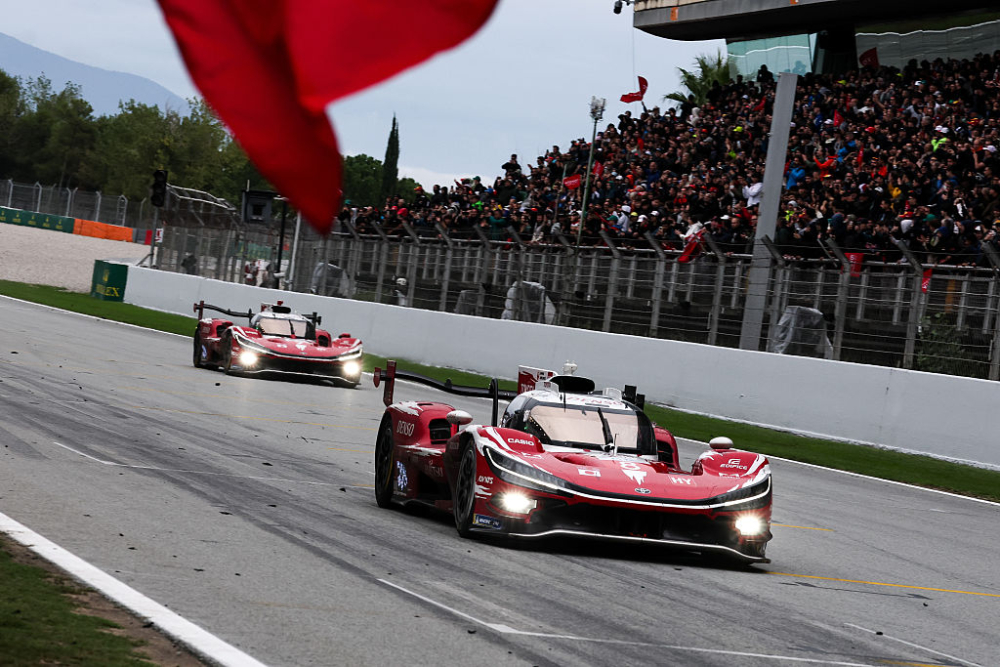
In the 11 months since, though, Toyota has flipped the script, adding a sixth Le Mans victory to its record and securing an eighth WEC manufacturers’ world championship, clinching the latter in dominant fashion with a race to spare in Barcelona. In response to its toughest WEC season, Toyota produced what has arguably been its most impressive campaign yet.
It spent the offseason analyzing its shortcomings, developing an evolution of its Hypercar and making targeted changes to its organization rather than tearing up the existing structure. There were no rash decisions or sweeping changes to its driver lineup. Instead, it took a methodical, businesslike approach to 2026, and the result was a return to the top of the sport, with Le Mans and both Hypercar world titles secured.
“I think this year, we have been strong, consistently,” said Kamui Kobayashi, Toyota team principal and driver of the No. 7 car. “We've not had the best car sometimes, but we scored big points. As a team, we just took a big step this year. Of course, the car has been better, but we also changed from GR to Toyota Racing this year; there have been organizational changes. We worked hard.
“We struggled in Le Mans recently, and everybody said that when the competition was back in the World Endurance Championship, Toyota was not strong enough. But this year, we showed that, winning Le Mans and the manufacturers' title again.”
The 2026 season also brought a new, more opaque approach to the WEC’s Balance of Performance, leaving outsiders with little insight into how the system was shaping the competitive order. We may never know precisely what the BoP tables looked like throughout the year, but Toyota’s return to the top cannot be explained by a single factor.
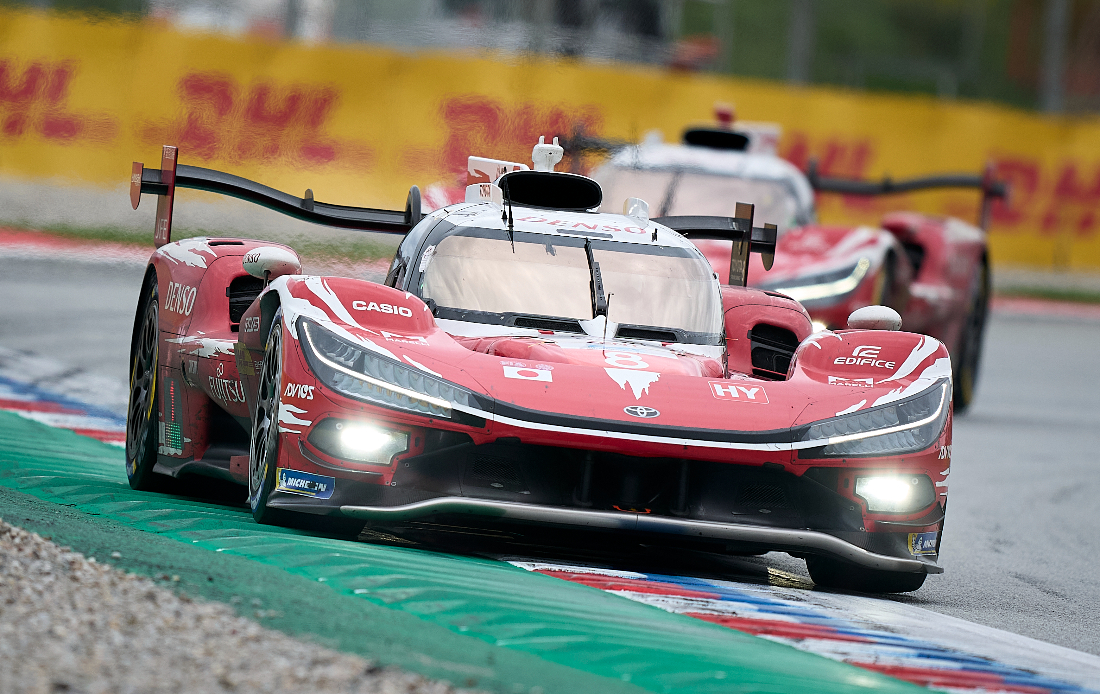
Sunday's 6 Hours of Barcelona was the one race in which the Japanese manufacturer looked clearly superior to the rest of the field, seemingly untouchable in pursuit of a 1-2 finish. Whether the BoP played the main part, the circuit suited the strengths of the Toyota, or its closest rivals were undone by mistakes and misfortune is open to debate. All three likely contributed.
What was clear, however, was that Toyota arrived with a package capable of blowing everyone else out of the water. The TR010 remains arguably the strongest Hypercar in the field when it comes to managing tire degradation across a range of conditions, a crucial advantage on Barcelona’s notoriously abrasive surface.
Beyond a small time penalty for a race-start infringement for the No. 8 car, Toyota executed its race with characteristic precision. The combination of tire management, consistent pace and clean execution made the outcome feel increasingly inevitable by the halfway mark.
Even the scale of the advantage caught the race-winning crew by surprise.
“We were nervous coming in,” Brendon Hartley said. “We thought we’d have a big disadvantage here as we didn’t test. I think some of it did come down to tire degradation though, as it’s historically been one of our strongest points.
“It wasn’t an easy task, but it shows the massive turnaround in the team from last year. We’ve had a few tough times, so I’m proud of everyone and proud to be a part of a project like this.”
The performance was the culmination of a season in which Toyota won races and repeatedly found ways to score heavily, even when it lacked the outright pace to dominate. That consistency has been just as important as the improvements made to the car itself.
Toyota’s resurgence has also been helped by the inability of its closest challengers to sustain their own title challenges.
BMW emerged as a genuine contender following the introduction of an updated M Hybrid V8 package for WRT. The German manufacturer won races and fought for victory at Le Mans, with the No. 20 crew particularly impressive during the early part of the campaign.
Ferrari, meanwhile, remained a threat despite a comparatively disappointing season. Its factory 499Ps combined for three podiums and a victory, and the Italian manufacturer appeared well placed to challenge for further honors on home soil at Monza.
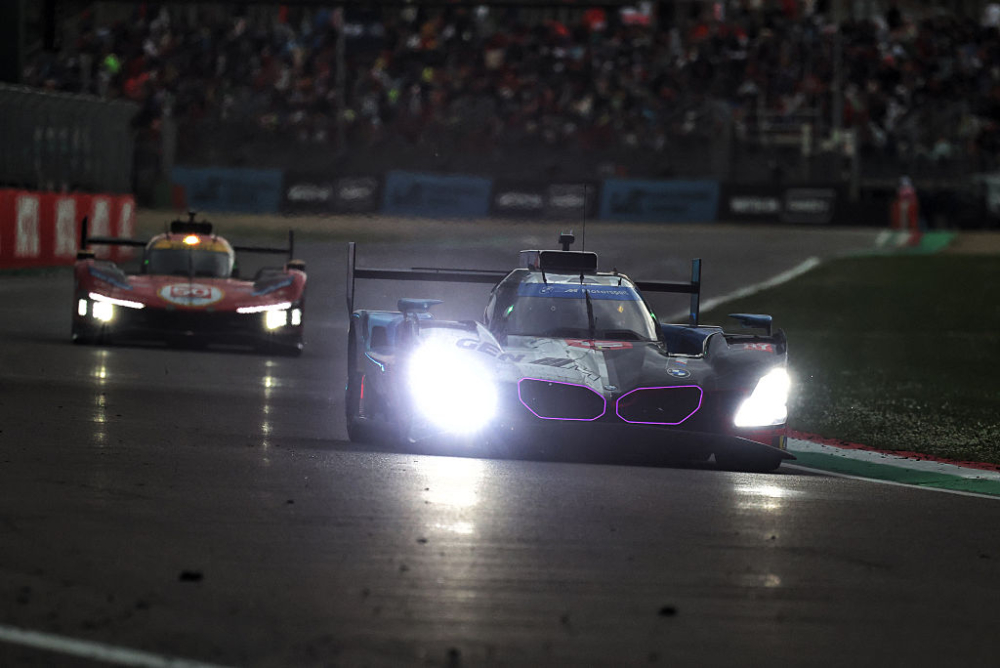
BMW and Ferrari's challenge to Toyota faded. James Moy Photography/Getty Images
Ultimately, neither could maintain the pressure on Toyota.
BMW’s early-season momentum faded and swung between its two cars, while Ferrari proved unable to match Toyota when it mattered most. The contrast was particularly apparent in Barcelona, where the two Toyota crews finished first and second to settle the manufacturers’ championship with a round remaining.
“When they’ve needed to go fast, they (Toyota) go fast,” Ferrari driver Miguel Molina, who finished third on the road in the No. 50, told RACER. “They showed it in Le Mans and again here. When they need to open the throttle, they open it. It was a good chance for them to win the championship here, and they did it with first and second.
“Their pace was so consistent, it wasn’t even about degradation; it was about pure pace. They were one second faster in all conditions.”
The result leaves BMW with a solid foundation on which to build. It is expected to carry the same package into 2027, aiming to take another step forward by applying the knowledge gained during its most competitive WEC campaign yet.
Ferrari, by contrast, is pursuing a more substantial technical response, with testing of a new aerodynamic package already underway. Having seen Toyota transform its fortunes through targeted development and a disciplined offseason, Ferrari will hope that its own changes can deliver a similar shift in momentum.
Neither manufacturer is starting from scratch, but Toyota has demonstrated just how much progress can be made when a team identifies its weaknesses and addresses them methodically.
Beyond the manufacturers’ crown, Toyota’s Barcelona success also ensured that one of its two crews will take the Hypercar drivers’ world championship. The strength of its six-man full-season driver roster has left Toyota as the only manufacturer with a mathematically viable shot at the title heading into the finale at Monza.
For BMW, which had briefly looked capable of challenging the established order, that is a particularly frustrating outcome.
“It does feel like a missed opportunity,” BMW’s Sheldon van der Linde told RACER. “You never know if or when you’ll get the chance again, so you want to grab it with both hands when it comes along.
“Experience matters; we’re obviously a lot newer to the championship. It’s not easy to come here and start smoking guys like Toyota and Ferrari, even if we were closer and put together a positive few months.”
Van der Linde’s assessment captures one of the underlying advantages Toyota continues to enjoy. Its experience, established operational structure and ability to extract results even when the car is not the fastest have helped it weather a difficult season and return stronger.
The drivers’ championship remains to be decided, however, and Toyota has no intention of letting its two crews’ battle for the title become a formality.
Hartley was keen to emphasize that Barcelona’s success was a collective achievement, describing the occasion as a “day about the team” rather than an opportunity to focus on individual championship ambitions.
Kobayashi, meanwhile, confirmed that there will be no team orders in the final race, with both crews free to fight for the title.
“We can fight big time in the last race,” he said. “Then we’ll see who is going to Shanghai for the (FIA) awards gala!"
That final point is perhaps the most significant. Toyota has reclaimed its position at the front of the WEC, but it knows the competitive landscape is about to become even more demanding.
The 2025 season raised questions about whether Toyota could maintain its place at the head of the Hypercar field as more manufacturers established themselves. Its response has been emphatic: a Le Mans victory, a manufacturers’ championship secured early, and a guaranteed shot at adding the drivers’ title.
Toyota did not achieve that turnaround by abandoning its established approach. It did so by identifying where it had fallen short, improving its car, refining its organization and delivering consistently across the season.
The challenge now is to repeat that performance against a field that will only grow stronger, with McLaren and Ford on the way and its current competitors all busy assessing where they can improve.
Stephen Kilbey
UK-based Stephen Kilbey is RACER.com's FIA World Endurance Championship correspondent, and is also Deputy Editor of Dailysportscar.com He has a first-class honours degree in Sports Journalism and is a previous winner of the UK Guild of Motoring Writers Sir William Lyons Award.
Read Stephen Kilbey's articles
Latest News
Comments
Comments are disabled until you accept Social Networking Cookies. Update cookie preferences
If the dialog doesn't appear, ad-blockers are often the cause; try disabling yours or see our Social Features Support.