How IAAPS shortens the simulator-to-racetrack gap
Simulation technology is nothing new. Develop something – or indeed someone – on a simulator in the virtual world, then move onto the track to confirm your findings.
Well now the line between the two is being blurred with IAAPS, a research institute near Bristol, UK, pairing a state-of-the-art driver-in-loop simulator to a real four-wheel physical propulsion system.
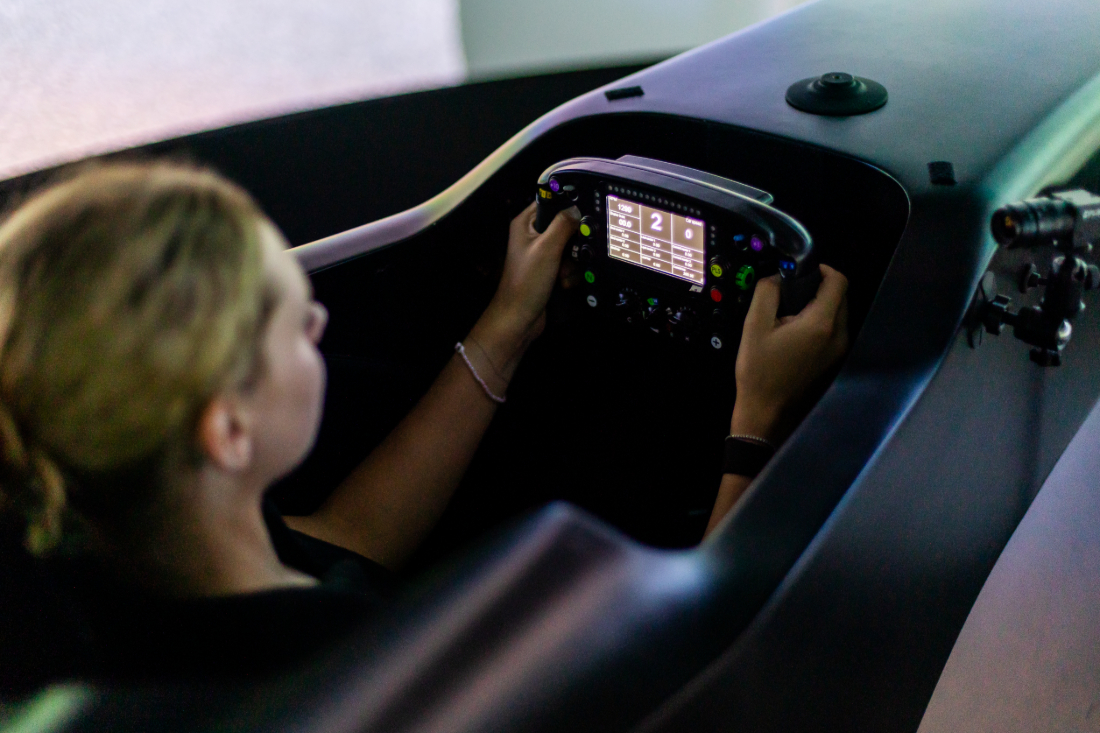
The setup combines Ansible Motion’s Delta S2 simulator (pictured below) with IAAPS’ 1,800 kW four-wheel-drive powertrain test facility, bringing simulation, human driver inputs, and real-world powertrains all together in a single environment, enabling a real time evaluation of propulsion and vehicle systems, and how their affected by human driver inputs in real time. It allows for more realistic data that you’d otherwise get from a fully simulated environment, where the inputs are determined from set parameters.
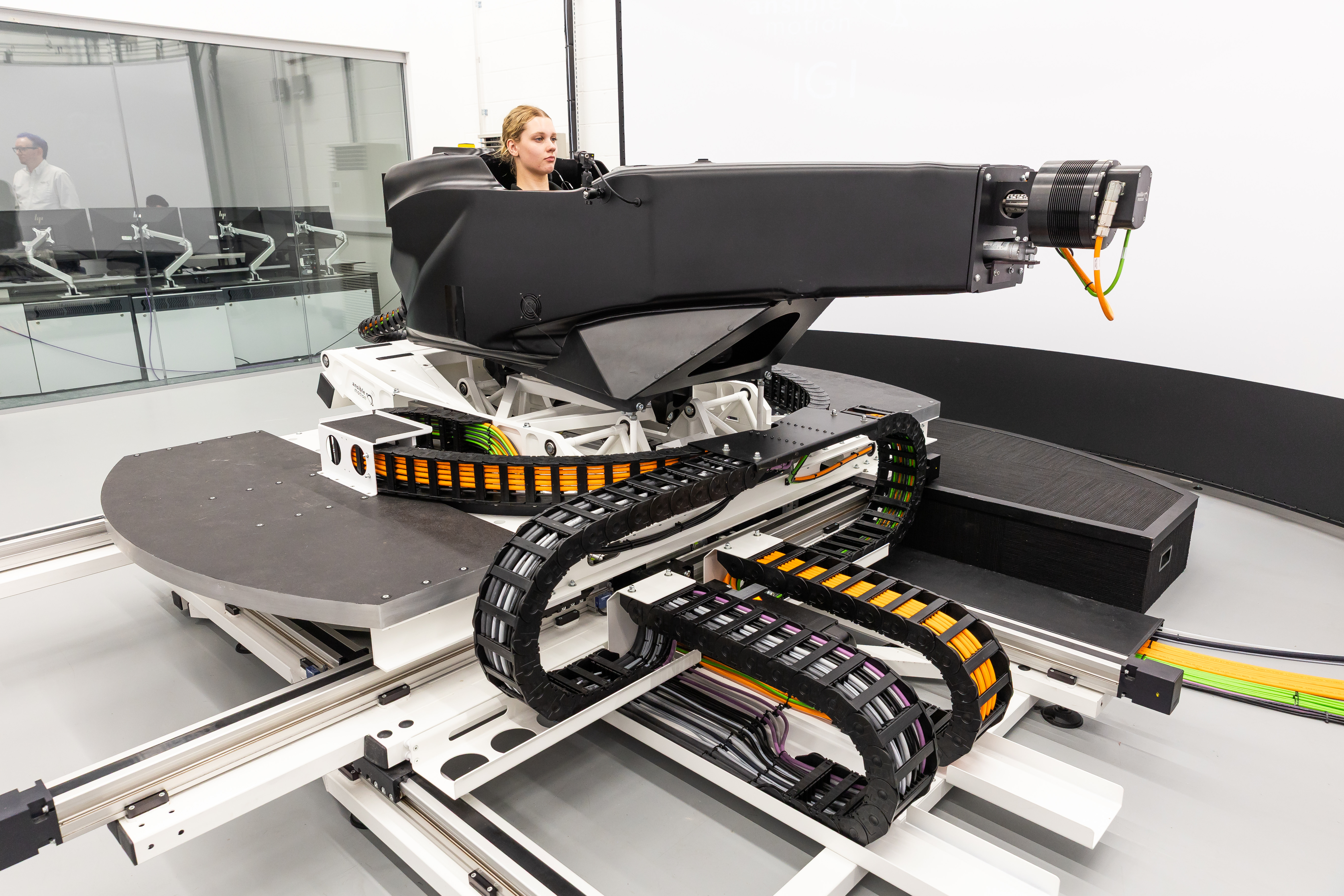
“Instead of you having a parameterized driver, you could have the driver here, which is then feeding into that same physics model, which is then outputting and doing the same on the powertrain rig,” Andy Lewis, principal engineer for powertrains at IAAPS, explains to RACER. “So, pedal input here is going directly to a robot or an input onto the pedal in there. The torque generated on the powertrain rig is then informing the model of how much torque you’re generating and where the next speed set point is, and that’s updating all your imagery and everything for the driver in here.
“So that then gives you that real-time driver interaction, and that’s where you can start looking at the drivability type calibration and optimizing it for the powertrain, based on a real driver’s input rather than a known scenario that you're doing.
“And then the advantage of that is that your hardware, you're developing all the hardware and control systems for the real powertrain control, whilst getting the interaction with a real driver.”
When it comes to prototyping, and developing high-performance road cars in particular, the technology allows manufacturers to have something of a head start in the development phase when it comes to building test mules and sending them out for real-world testing.
“I think a lot of that stuff, like the drivability, would typically be done relatively late in the program,” Ciaran Branney, an ex-Mercedes HPE and McLaren engineer now serving as principal engineer for digital systems at IAAPS, tells RACER. “In my experience of high-performance road cars, you need to get a prototype with a pretty good base engine calibration before you can even start doing drivability because you need to do a certain level of calibration.
“Typically, the engine and the propulsion system will be ready at some point – maybe not in a full car – so we can start doing drivability calibration with this setup as soon as you’ve got an engine or a propulsion system, or a mule vehicle, all these kind of things that make it earlier and earlier in the project, which makes it a bit cheaper, faster, and you don’t find any nasty surprises by the time you’ve gone to production and we can’t change everything, and we can’t make it feel the way we want it to feel.”
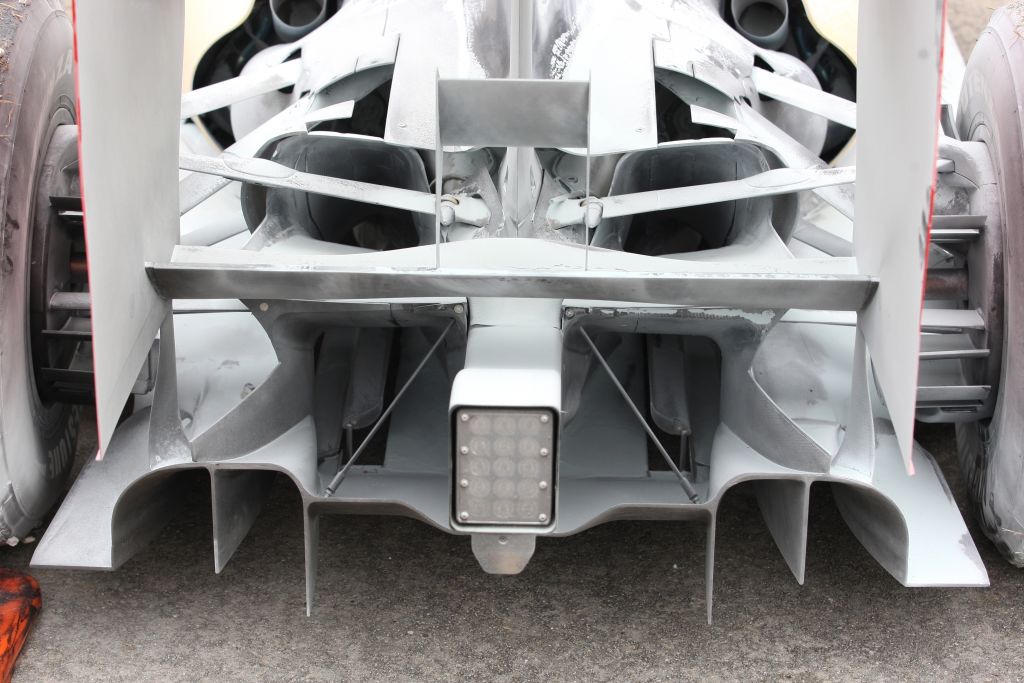
2010 F1 aero development could have saved a few steps with IAAPS tech. Daniel Kalisz/Sutton via Getty Images
Branney recalls the blown diffusers of early-2010 Formula 1 cars as something that could have benefited from this sort of simulator mated with the real world technology, as those mean that engines were run in an unconventional way that meant that the true picture of what was going on couldn’t really be seen until the cars hit the track for real.
“We were running the engines in quite an extreme way that wasn’t really what they were designed to do, generating lots of exhaust gas flow and heat,” he says. “It was really difficult to model the behavior of the torque of the engine, and they were really undrivable, but the lap time was better because of the downforce. They lost a bit of lap time on the drivability, but until they actually drove on the track, didn’t really know because we were doing speed following traces. The dyno followed the same speed trace, and then the driver tries to do that and realized you can’t actually really do that.
“So I’d have loved this kind of facility back then because we could have done so much more evolution of the drivability side; we could only do it at the track because there was no way of getting physical driver feedback on how it felt until they drove in the car. At that point your ability to make changes was quite limited because consistency was kind of the key at race weekends.”
It’s not just with vehicle development where there are benefits, but driver development too. Whereas drivers will get it as a tool if they reach a top team in a top series, they can now use it earlier on in their careers so, if they reach those heights, they can hit the ground running rather than learn how to use it once they get there.
“I think it’s really vital because ultimately, if the drivers want to get to the top end, F1, WEC, WRC, they’ll be expected to know how to use these tools,” says Branney. “I think in the junior series, you just don’t get that amount of exposure to that. It’s expected as you get on, you get better and better at it, and I think if you don’t have exposure to it, it’s really challenging to get better at it.
“A lot of the drivers that we’ve had in here are actually doing motorsport engineering courses, which seems to be quite common in some of the drivers now because they understand you just have to know about this stuff, and I think give exposure to that as soon as possible.”
State-of-the-art simulator technology is something widely used across the top echelons of motorsport, but at IAAPS’ headquarters, it’s accessible to a wider group, allowing those on the lower rungs of the motorsport ladder to profit – and we were able to sample it, too, running a handful of laps around the Silverstone Grand Prix circuit in a Formula 4 car last week.
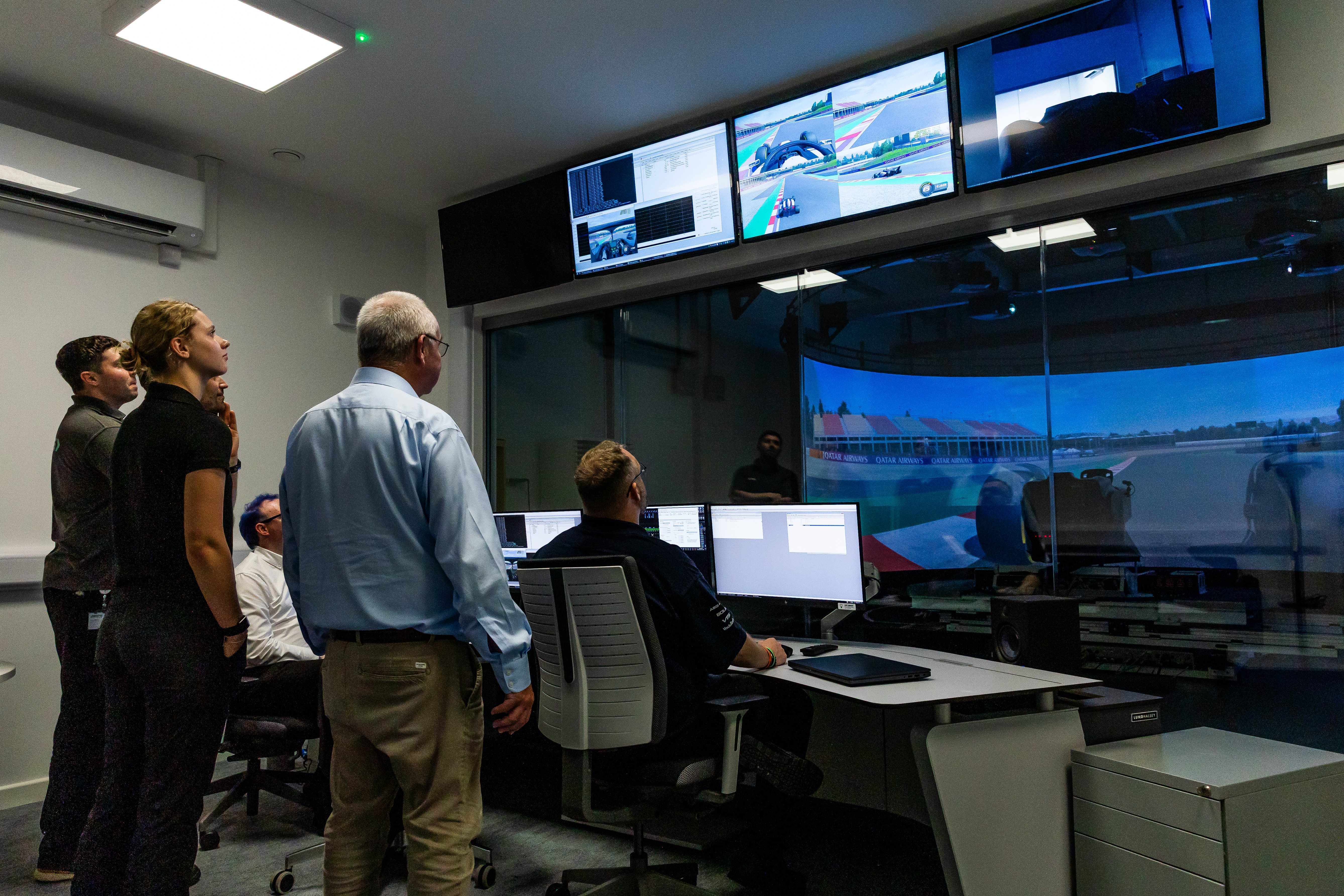
Drivers and engineers alike can learn together with IAAPS' system.
“This simulator as a service could be quite useful for young drivers if they could come as a group of five or six of them,” Lewis says. “Then you’ve got the ability for them to go in, do 10-20 laps, jump out, get their data. We can then have a look at that while someone else is doing their 20. And so in a day, you could have five drivers doing 20-minute slots and getting quite a lot of learning out of that. And then combine that with making setup changes and their ability to sort of talk to each other about how the setup changes, make the vehicle feel different, so that you can do a lot of learning here.
“One of the things we’re looking at is how we can use this with some of the motorsport schools and things like that as part of their course. But then there’s no reason why you couldn’t do that with teams, so people coming with a performance engineer if they want to. Then they’re working together to look at the data and then feel how that changes in the simulator. It’s something that we see as a massive benefit to these young drivers learning about all this stuff.”
As well as drivers, engineers can learn too. In a world where drivers are chasing performance and most likely spending money to do it, engineers have very little time and opportunity to experiment and earn their stripes.
“Potential race engineers have the same problem that if you want to learn how to race engineer and get that on that pathway, even if you’re race engineering a junior series, here's only maybe 16 races a year. It’s not a huge number of times to try things,” he says. “Again, we think you could get a group of race engineers here, and you could get a driver, and they could each try and learn, how to interact with a driver, how do you build a relationship.
“You could almost roleplay: The driver is going to give you some weird feedback, so how do you translate that using the data into setup changes? And they can then feel safe to explore because I imagine it’s even harder for the engineers if they want to try something with the ride heights and the dampers. If you get a driver that’s paying to race, they’re not going to be like, ‘Yeah, yeah, sure, we’ll use a couple of my sets for you to learn your stuff.’ They just want to learn performance stuff.
“So I think it’s really hard for race engineers to get real exposure, and similar to the drivers, they’re going to be expected to know how to use the stuff at the top end. So the quicker they can get exposure to it, the better.”
Dominik Wilde
Dominik often jokes that he was born in the wrong country – a lover of NASCAR and IndyCar, he covered both in a past life as a junior at Autosport in the UK, but he’s spent most of his career to date covering the sliding and flying antics of the U.S.’ interpretation of rallycross. Rather fitting for a man that says he likes “seeing cars do what they’re not supposed to do”, previously worked for a car stunt show, and once even rolled a rally car with Travis Pastrana. He was also comprehensively beaten in a kart race by Sebastien Loeb once, but who hasn’t been?
Read Dominik Wilde's articles
Latest News
Comments
Comments are disabled until you accept Social Networking Cookies. Update cookie preferences
If the dialog doesn't appear, ad-blockers are often the cause; try disabling yours or see our Social Features Support.