Alex Pantling/Getty Images
Can we just let racing series have their differences?
Thanks to some trackside commentary commitments, I had a weekend off from most of my writing duties in Azerbaijan. A bumper Formula 2 schedule on top of the Formula 1 running meant most of each day was spent stood up above the main grandstand rather than down in the paddock, so I’m only getting back to the keyboard in anger today, and the anger part is almost factual…
Much of the first half of the grand prix commentary involved reminders that a race in Baku always has the potential to spark into life at any second, and Alex Albon duly delivered that spark when he crashed at Turn 5.
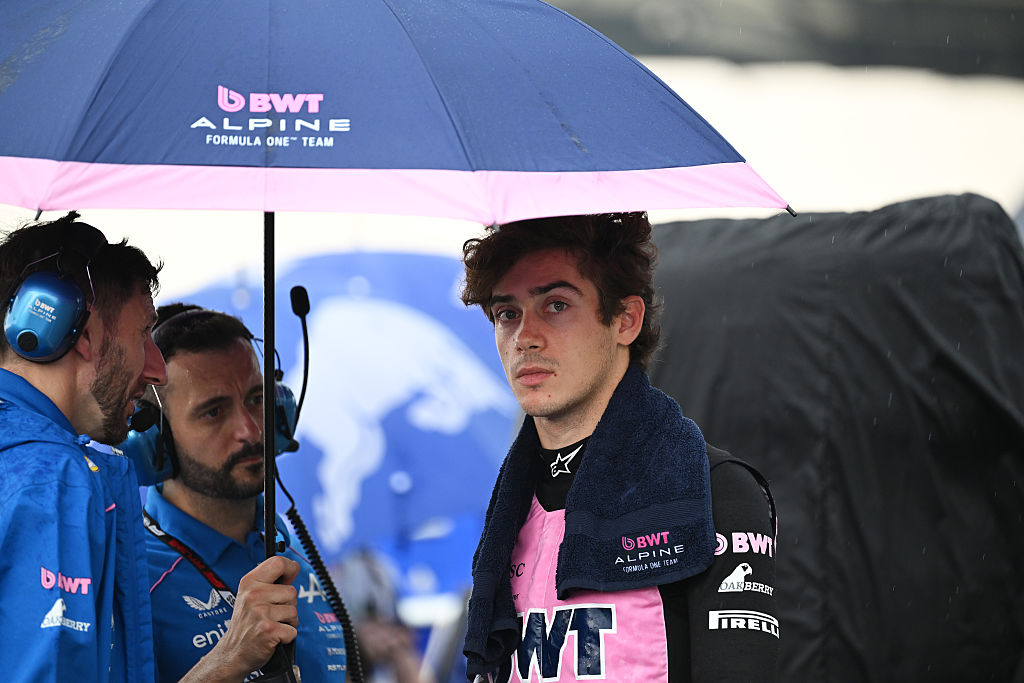
It had been dull up until that point, but cautions breed cautions, and then we got the 10-pin bowling restart that saw Franco Colapinto wipe out Pierre Gasly and Lando Norris, while Arvid Lindblad tried similar but could only spin his teammate Liam Lawson.
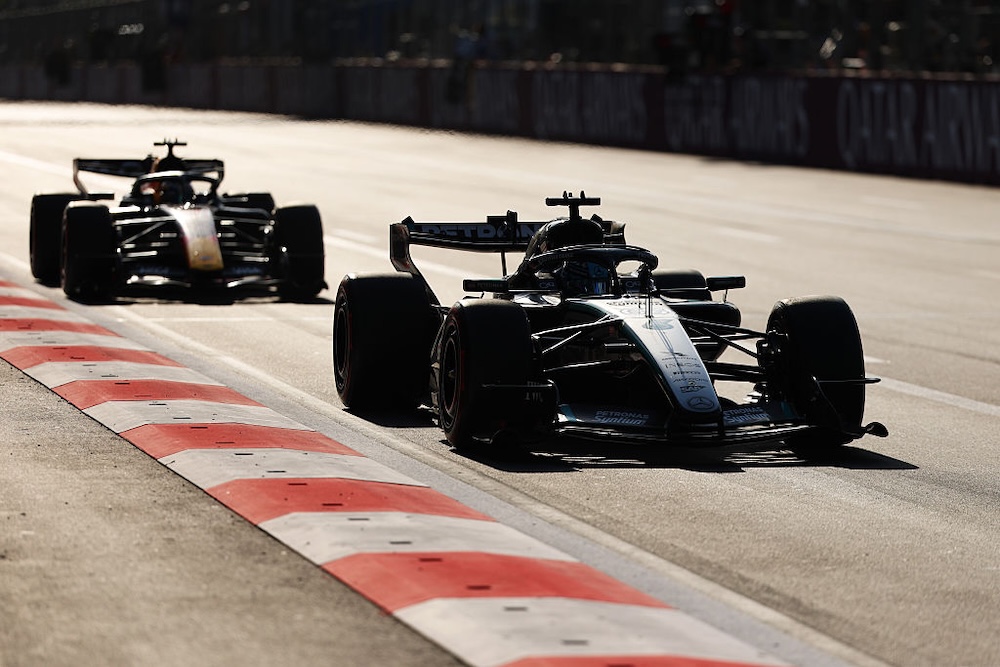
While those were not the greatest examples of driver skill we’ve ever seen, what followed was much more like it as Max Verstappen and George Russell disappeared into the distance, pushing lap after lap without error. Whether you’re a fan of the current ruleset or not, there was no yo-yo overtaking, just two drivers not letting up and barely putting a wheel wrong as they tried to get the other to crack.
With Russell suffering from a bit of turbo lag after a yellow flag zone on the final lap, Verstappen - who was never more than 0.906 seconds at the line at any stage of the final stint - was closer at Turn 16 than at any other stage, and would surely have been sending one into Turn 1 had the finish line not come a few hundred meters earlier.
The winning margin read 0.1s on the truncated timing tower, with the full gap actually 0.196s. F1 posted a graphic on social media highlighting how that was the narrowest winning margin in terms of time in more than two decades, dating back to a staged photo finish for Ferrari - at Indianapolis of all places - in 2002.
And I highlight Indianapolis, because it’s a few IndyCar and NASCAR responses that then caught my eye.
I’m sure there were more comments, but seeing journalists responding with lists of the closest NASCAR finishes in the same period suggested the post was being latched onto, and then I noticed my fellow Panthers fan (I know I’m just further undermining any lingering respect you might have had for me) Scott McLaughlin also take issue with it.
“Weird flex but OK”, he wrote.
I’m a big Scotty Mac fan. I love how much he wanted to head across and prove himself in IndyCar after his Supercars success, and how he’s embraced every aspect of being able to be part of the series and American culture. I’m also probably being a bit harsh highlighting that sort of comment that simply opens the door for others to be critical rather than is critical in itself, but maybe that’s because he definitely knows racing, and he knows how different categories can be from each other.
If it was a flex, it was a flex based on what F1 is. In the post there was no alluding to any other form of motorsport, no dig at how other races sometimes finish, just a reflection on what is normal in F1, because F1 is different to other series.
Not better, not worse, not the only series that is different. They’re all different from each other, and that’s a good thing in my book.
Different power unit manufacturers, different chassis designers, different track characteristics - with F1’s set of ingredients, side-by-side finishes for a victory are extremely rare. And even with the Baku finish line being at the end of a long straight, there were still a good few car lengths between Russell and Verstappen on Saturday, too.
But regardless, it was a tense and thrilling run to the finish, as Verstappen nearly stole his first win of the year after a relentless chase, and Russell came close to having an impressive weekend ruined at the last.
The gap itself isn’t everything - it was far more exciting than the 0.011s when Michael Schumacher wanted to orchestrate a dead heat and ended up handing Rubens Barrichello a win as they cruised over the line in 2002 - but it was hardly a strange move to celebrate having uncertainty over who would win right up to the flag. After all, this is a series that demands teams build their own cars and where multiple engine manufacturers compete, so it’s far more often that we see massive margins based on the general lack of conformity. That’s simply part of the USP.
IndyCar and NASCAR both have their own aspects, and compared to F1, racing on ovals is certainly one. Seth Eggert pointed out that in NASCAR there have been 103 closer finishes in terms of time since F1’s 2002 figure, but on a road course there have been none. That still means next to nothing, though, because a NASCAR on a road course is very different to an F1 car, and therefore so too are the gaps.
Comparing the enjoyment of different series is natural, and it’s also fine to call out an attempt to put a positive spin on a negative situation, such as if the margin had been due to a Safety Car finish like in Silverstone. But can we just accept racing series have their differences and be allowed to celebrate them sometimes?
It wasn’t a small time margin in IndyCar terms, and it wasn’t a small time margin in NASCAR terms. But it wasn’t a race on IndyCar terms, or NASCAR terms. It was an F1 race, and in that context, it was a close finish.
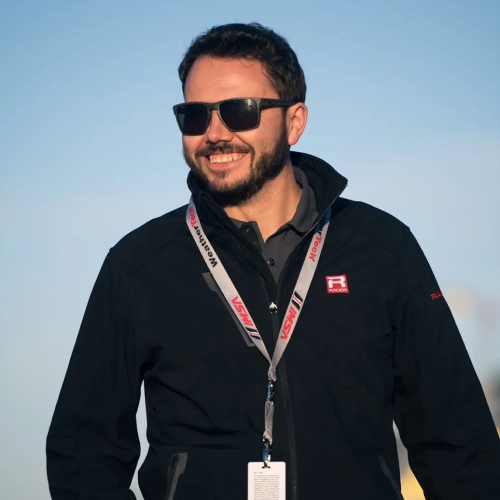
Chris Medland
While studying Sports Journalism at the University of Central Lancashire, Chris managed to talk his way into working at the British Grand Prix in 2008 and was retained for three years before joining ESPN F1 as Assistant Editor. After three further years at ESPN, a spell as F1 Editor at Crash Media Group was followed by the major task of launching F1i.com’s English-language website and running it as Editor. Present at every race since the start of 2014, he has continued building his freelance portfolio, working with international titles. As well as writing for RACER, his broadcast work includes television appearances on F1 TV and as a presenter and reporter on North America's live radio coverage on SiriusXM.
Read Chris Medland's articles
Latest News
Comments
Comments are disabled until you accept Social Networking Cookies. Update cookie preferences
If the dialog doesn't appear, ad-blockers are often the cause; try disabling yours or see our Social Features Support.