Images courtesy of MissionH24
Toyota expands MissionH24 collaboration with engine supply deal
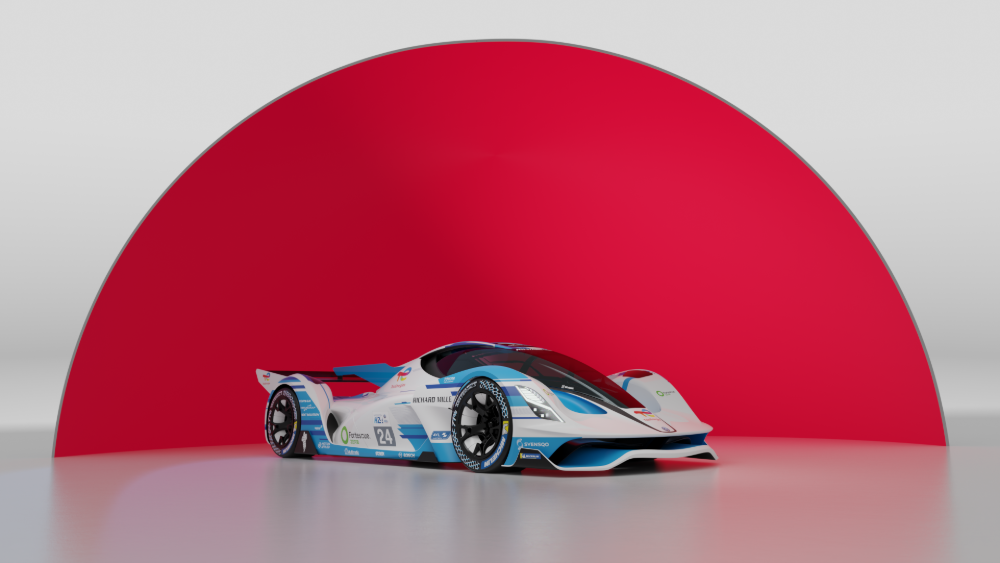
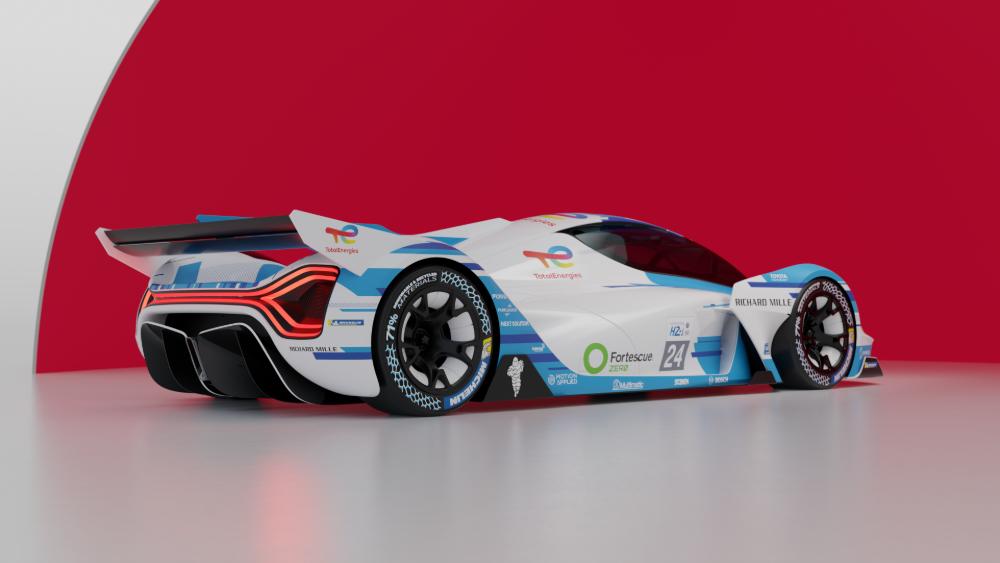
Toyota Racing is set to supply a hydrogen combustion engine for MissionH24's H24EVO prototype, as part of an expansion to its collaboration with the ongoing ACO-backed project.
This major step forward for the H24EVO was announced on Saturday afternoon during a press conference at the Fuji Speedway, hosted by ACO President Pierre Fillon, with senior representatives from both MissionH24 and Toyota Racing.
The news follows the initial partnership between MissionH24 and Toyota that began last year, in which the Japanese car giant has been assisting on cooling and aerodynamics solutions for the car.
The Toyota Racing engine bound for the H24EVO, is based on a 3.5-litre V6 developed specifically for motorsport. When paired with the prototype’s hybrid system, it is expected to deliver a maximum power output of 650 kW, significantly boosting the H24EVO’s performance and bringing it closer to LMP2 performance levels, a significant step up from the LMGT3 performance level targeted by its predecessors.
After the original LMPH2G technology demonstrator and the short-lived H24 car from MissionH24, both of which used gaseous hydrogen and fuel cells, the H24EVO picks up the baton with a more traditional combustion engine, fuelled by tanks storing liquid hydrogen, with the powertrain including a Fortescue Zero-developed hybrid drive system.
MissionH24 was launched in 2018 as a collaborative program between the Automobile Club de l’Ouest as a project to promote hydrogen in racing. The initiative, through several peaks and troughs, has reached a significant stage in its development, and its role in the road to the introduction of hydrogen-powered prototypes competing in the FIA WEC and at the Le Mans 24 Hours from 2030.
"This new collaboration between MissionH24 and Toyota Racing reflects our respective commitments, shared by all MissionH24's partners, to successfully achieve the energy transition. Hydrogen is one of the solutions for decarbonizing mobility," Fillon said.
"This pioneering program involves various phases. We stated this from the very beginning, hence the name 'MissionH24', because while we know our goal, we do not necessarily know every step we will need to take to get there. Gaseous and liquid hydrogen, fuel cells, and engines all offer opportunities for hydrogen storage and utilization. Toyota’s support demonstrates MissionH24’s determination and ambition."
Kazuki Nakajima, the vice chairman of Toyota Racing GmbH, added: "This is an important milestone for Toyota Racing since our mission is the continuous pursuit of the possibilities for combustion engine development, including hydrogen technology, and to deliver its potential to a wider range of stakeholders.
“This is a great step for the future after the demonstration of the TR LH2 Racing Prototype back in Le Mans in June, and I'm grateful to see the expansion of hydrogen technology possibilities."
Jean-Michel Bouresche, CEO of H24Project and co-president of MissionH24, believes that Toyota’s expanded partnership adds further credibility to the project.
"I am delighted that, via Toyota Racing, the world’s leading car manufacturer and a long-standing pioneer in hydrogen technology, is stepping up its commitment to MissionH24 by supplying its hydrogen combustion engine for the H24EVO. This sends a powerful signal to all stakeholders in the hydrogen sector and to all MissionH24 partners," he said.
“Using Toyota Racing's engine will allow us to reach a major milestone. It is a source of great satisfaction and immense motivation for all our partners and the entire MissionH24 team."
Bassel Aslan, the technical director of MissionH24, confirmed that work is already underway to integrate the engine into the H24EVO chassis.
"This work includes, in particular, designing the mechanical interfaces between the engine, chassis, and gearbox; and defining the communication architecture, electrical interfaces, controls, and associated software requirements,” he said.
"This engine also offers high efficiency, a key asset for optimiing the use of onboard liquid hydrogen and, consequently, the vehicle's range, which is a major advantage in endurance racing.”

Stephen Kilbey
UK-based Stephen Kilbey is RACER.com's FIA World Endurance Championship correspondent, and is also Deputy Editor of Dailysportscar.com He has a first-class honours degree in Sports Journalism and is a previous winner of the UK Guild of Motoring Writers Sir William Lyons Award.
Read Stephen Kilbey's articles
Latest News
Comments
Comments are disabled until you accept Social Networking Cookies. Update cookie preferences
If the dialog doesn't appear, ad-blockers are often the cause; try disabling yours or see our Social Features Support.